SpinyheadPlay free
Threat display
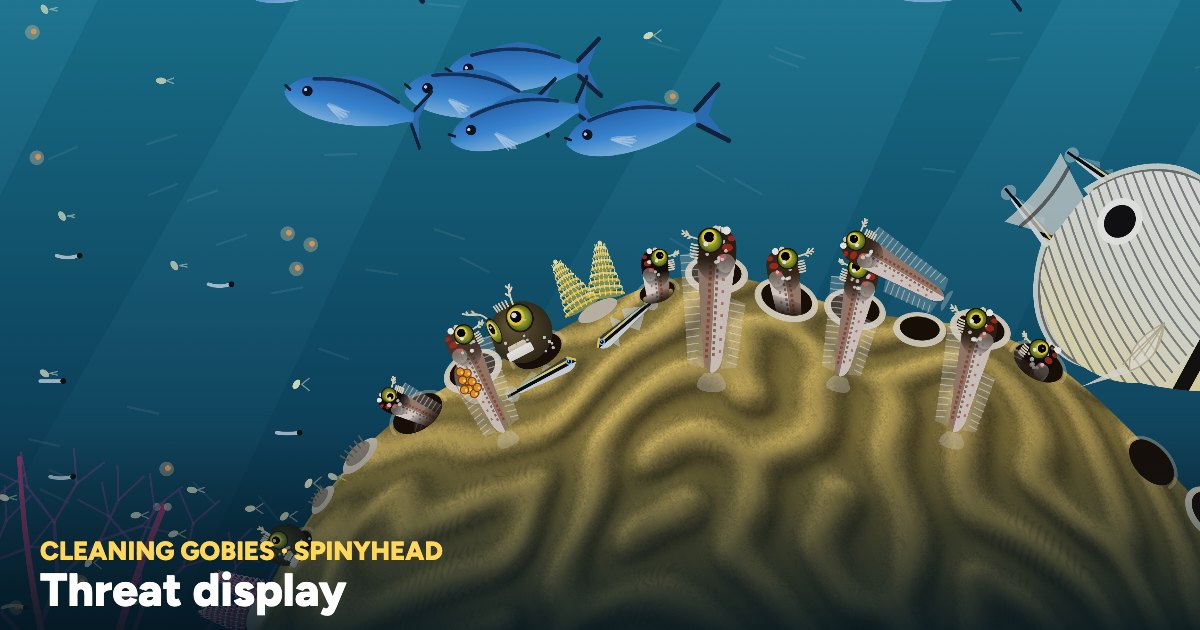
Behavior: Threat display (ritualized agonistic display in territorial defence)
A resident goby holds its body very stiff, fins flared and head pointing slightly down, and slowly circles an intruder of its own sex. Threats often come before biting.
Species involved
- sharknose goby Elacatinus evelynae resident that threatens same-sex intruders
About threat display (ritualized agonistic display in territorial defence)
A threat display is a stereotyped posture or movement that signals an animal is ready to attack, usually given before or in place of physical fighting. In this notebook entry, a resident sharknose goby holds its body stiff, flares its fins, tilts its head slightly down and slowly circles an intruder of its own sex. The display is directed at same-sex conspecifics, which are the most likely competitors for space and mates. Biting often follows if the intruder does not back off, so the display is an early step in an escalating sequence.
Why it matters
Displaying lets a resident announce ownership and fighting readiness at a lower cost than a real fight, which risks injury, costs energy and takes time away from other activities. If the intruder retreats, both animals avoid damage. If it does not, the display may still give each animal information before they decide whether to escalate. For a cleaner goby, defending a small patch of reef matters because the patch is where it works. Holding a good site helps it keep access to clients, food and mates. Across a population, such contests help space individuals out over the available habitat.
On coral reefs
A diver would see a very small fish on a coral head or sponge suddenly go rigid and spread its fins while facing another goby of the same species. The two may circle one another, and one may dart in for a quick nip or chase the other away. These gobies are tiny and quick, so the display is easy to miss without patient, close watching.
Who studied it
The idea that animals use ritualized displays to settle conflicts goes back to the classical ethologists, including Tinbergen and Lorenz, who studied threat postures in fishes and birds. Later, game-theory work such as Maynard Smith and Price's 1973 paper on the logic of animal conflict explained why contests often stay at the display stage. The game's entry cites Harding's 1993 M.S. thesis from Oregon State University for the goby behaviour.
Elsewhere in the animal kingdom
Threat displays are widespread. Male three-spined sticklebacks use a head-down threat posture, Siamese fighting fish flare their gill covers and fins, and many cichlids and damselfishes show lateral displays. Outside fishes, Anolis lizards extend a dewlap and do push-ups, and many mammals and birds use stiff postures, bared teeth or raised plumage.
Doubts and open questions
Biologists still debate how much information displays carry. Some may honestly signal size, condition or motivation, while others may be bluffs that only work some of the time. It is also unclear how well a given display predicts whether the displayer will actually attack.
Related behaviors
- territorial aggression This is the broader defence of space, of which threat display is one early, low-cost stage, with chasing and biting as later stages.
- appeasement or submission display This is the opposite signal, given by a subordinate to reduce attack, rather than by a dominant to warn of one.
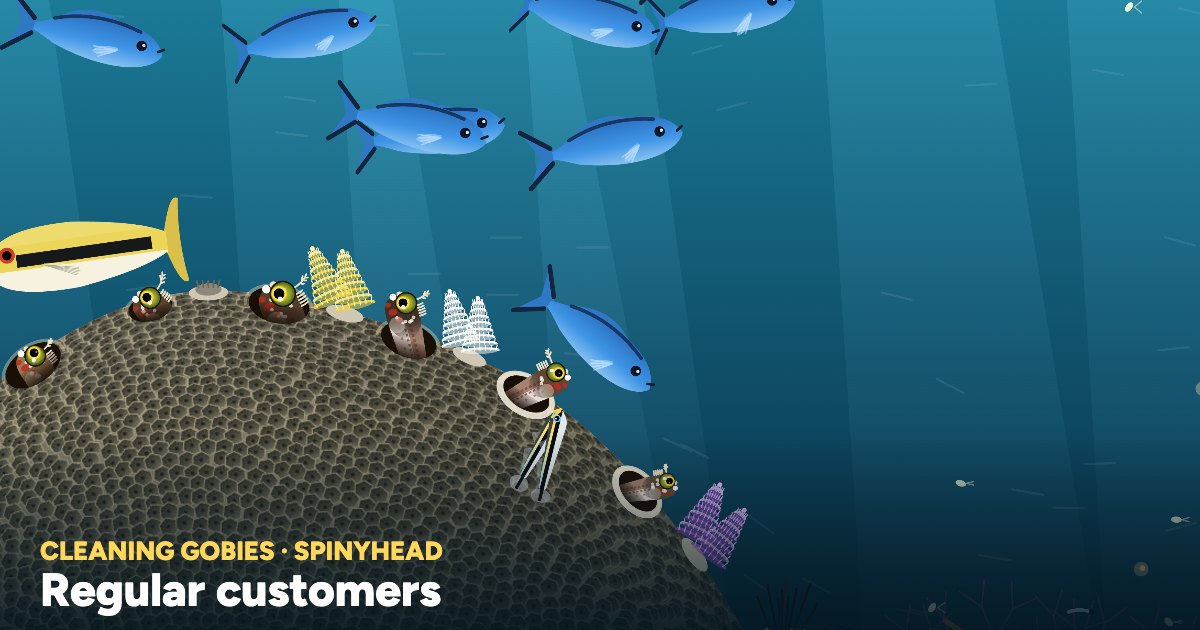
- cleaning symbiosis This is cooperative removal of parasites from client fish, not conflict between rivals, although both happen around the same cleaning stations.
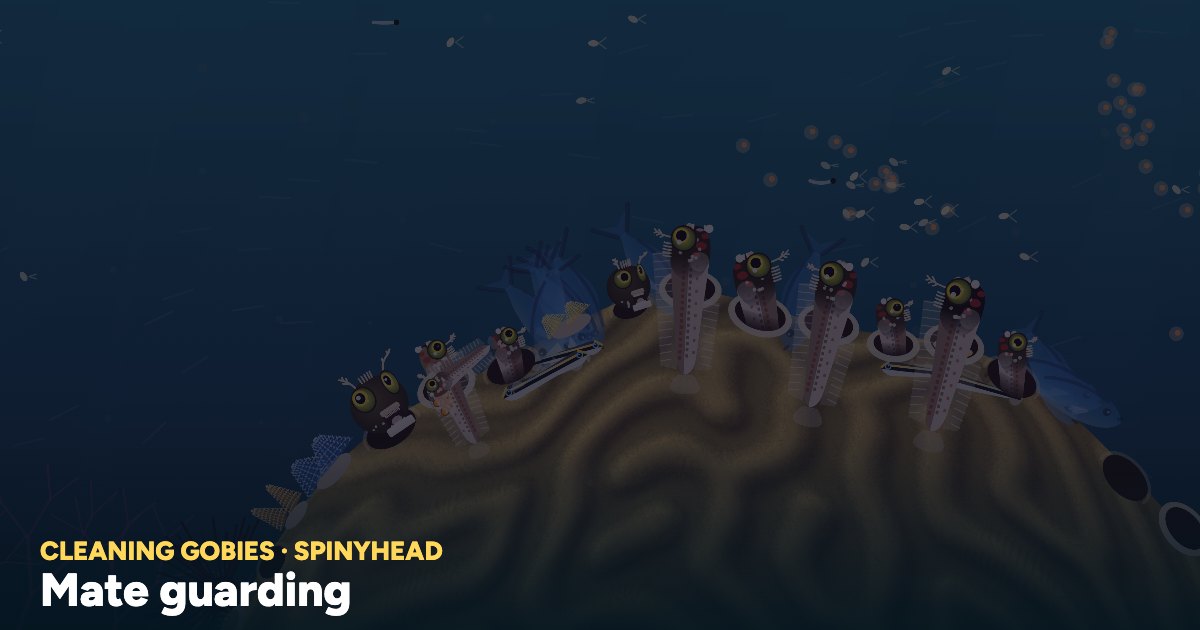
- mate guarding Here a animal defends a partner rather than a site, though it may use similar threats against rivals.
Spinyhead is a free game you play in your browser: you are a spinyhead blenny, a fish about 3 cm long living in a worm hole on a Caribbean coral head. Feed, fight for a better hole, court, raise eggs and dodge predators, while everything around you behaves the way field biologists have seen it behave. Every behavior in the game is backed by a published study or careful observation; there are 71 on these pages, and more in the game’s field notebook waiting to be found.
More cleaning gobies
Other reef behaviors to discover