SpinyheadPlay free
A full meal
Behavior: Urchin predation (durophagous predation with satiation)
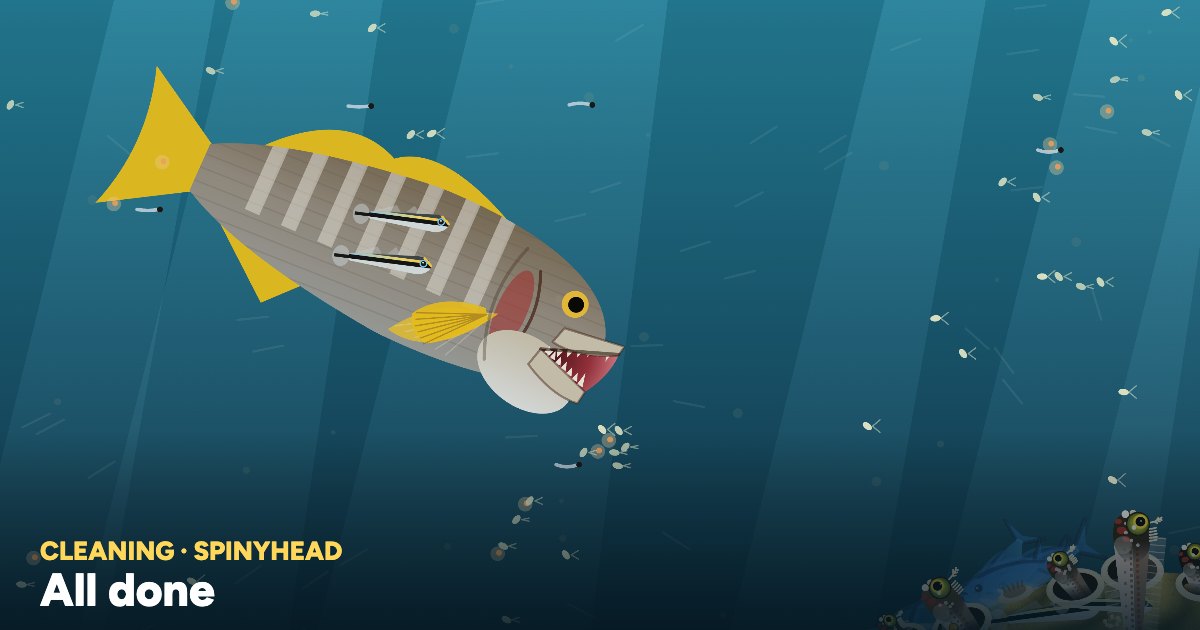
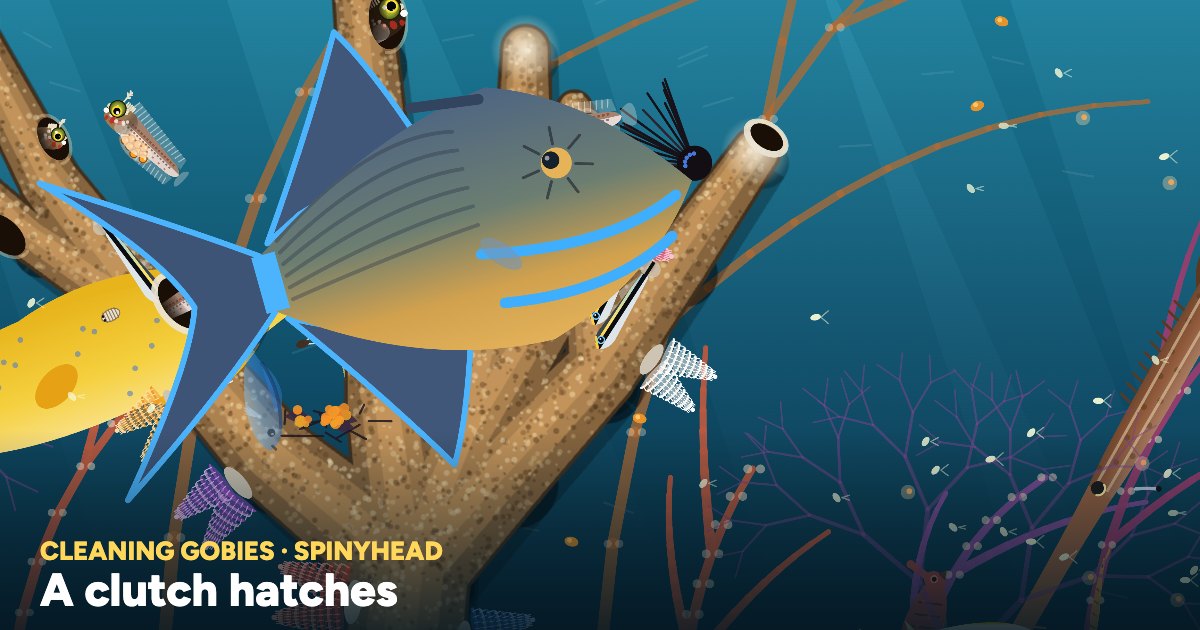
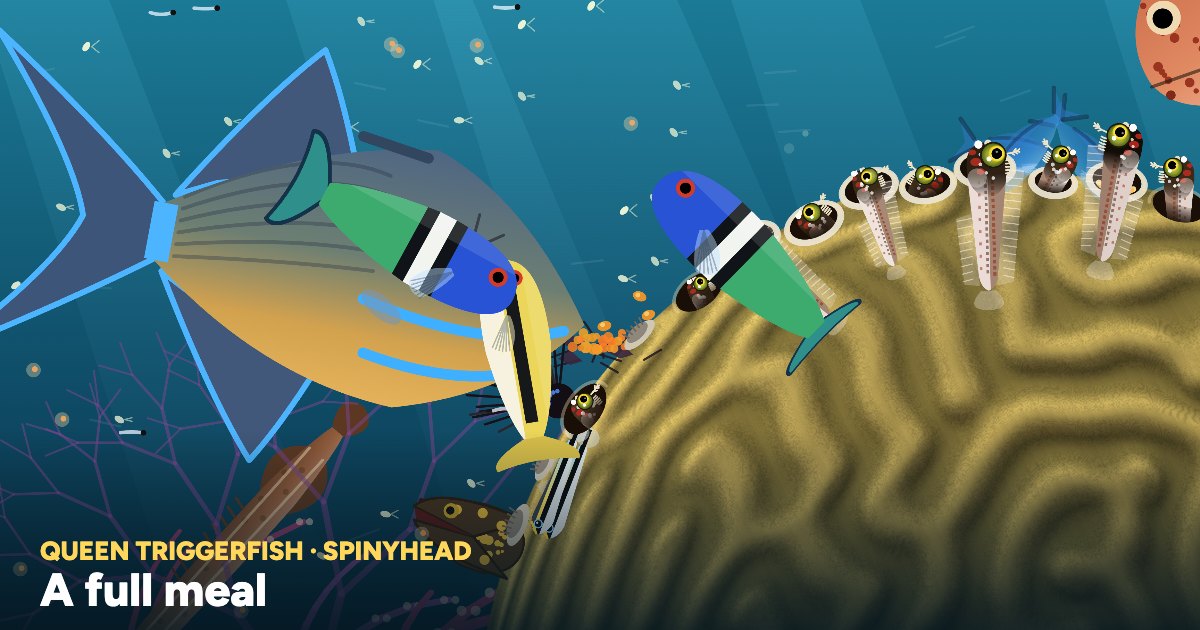
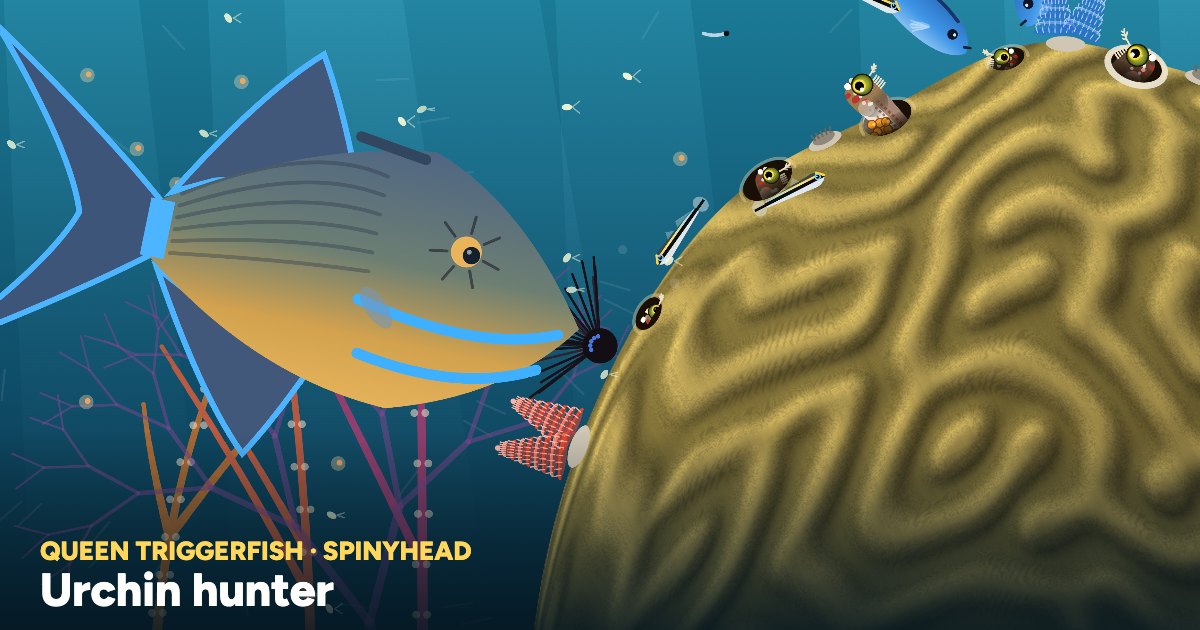
A queen triggerfish eats most of the urchin it has opened, not just a taste, and then it is satisfied for a good while: it stops hunting urchins and often drifts off to digest.
Species involved
- queen triggerfish Balistes vetula predator that opens and eats the urchin, then stops feeding
- long-spined sea urchin Diadema antillarum prey that is overturned and eaten
About urchin predation (durophagous predation with satiation)
Predation on armoured or spiny prey is called durophagy when the predator must break through a hard or defended body. The queen triggerfish is a well-known Caribbean predator of sea urchins, including the long-spined urchin. The notebook entry describes the end of such a hunt: the fish eats most of the opened urchin rather than sampling it, and then stops hunting urchins for a while. This post-meal pause is satiation, in which feeding drive falls as the gut fills and returns as digestion proceeds.
Why it matters
For the triggerfish, a large meal from a well-defended prey item that few other fish can handle is an efficient return for the effort of getting past the spines, and resting afterwards lets it digest. For the urchin population, each kill removes a grazer, and a satiated predator takes fewer urchins in the following period, so predation pressure comes in bursts rather than continuously. On the reef community, urchins graze algae, so the number of urchins eaten can influence how much algae covers the reef and how well corals and other organisms can settle and grow. The effect of triggerfish on urchin numbers is probably modest compared with that of disease or of other factors.
On coral reefs
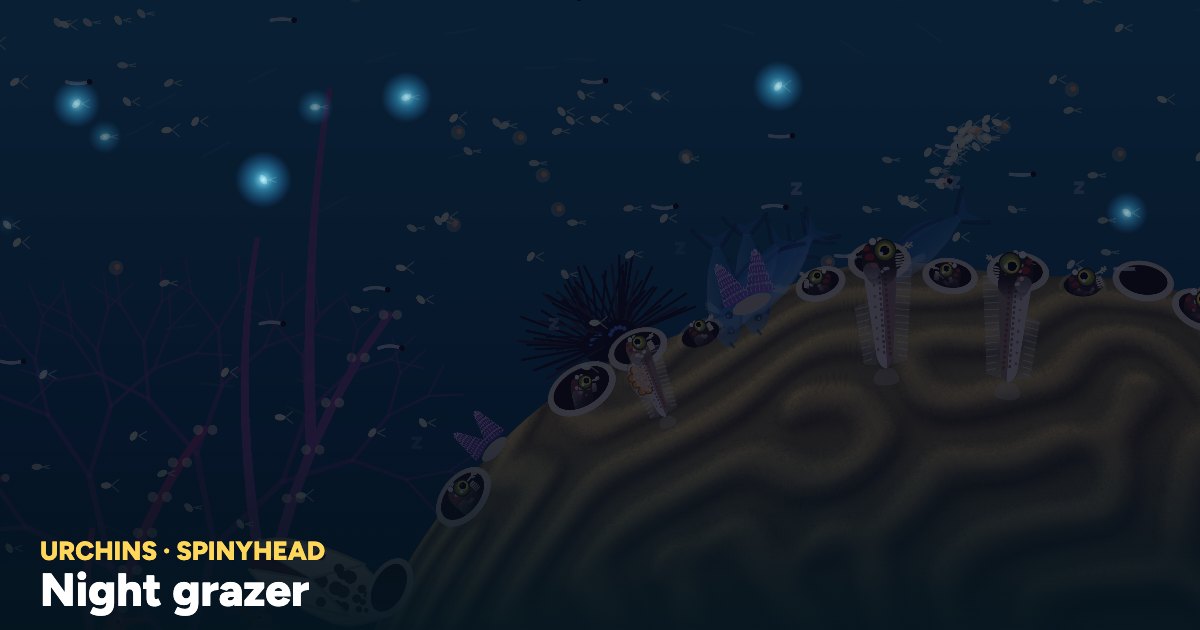
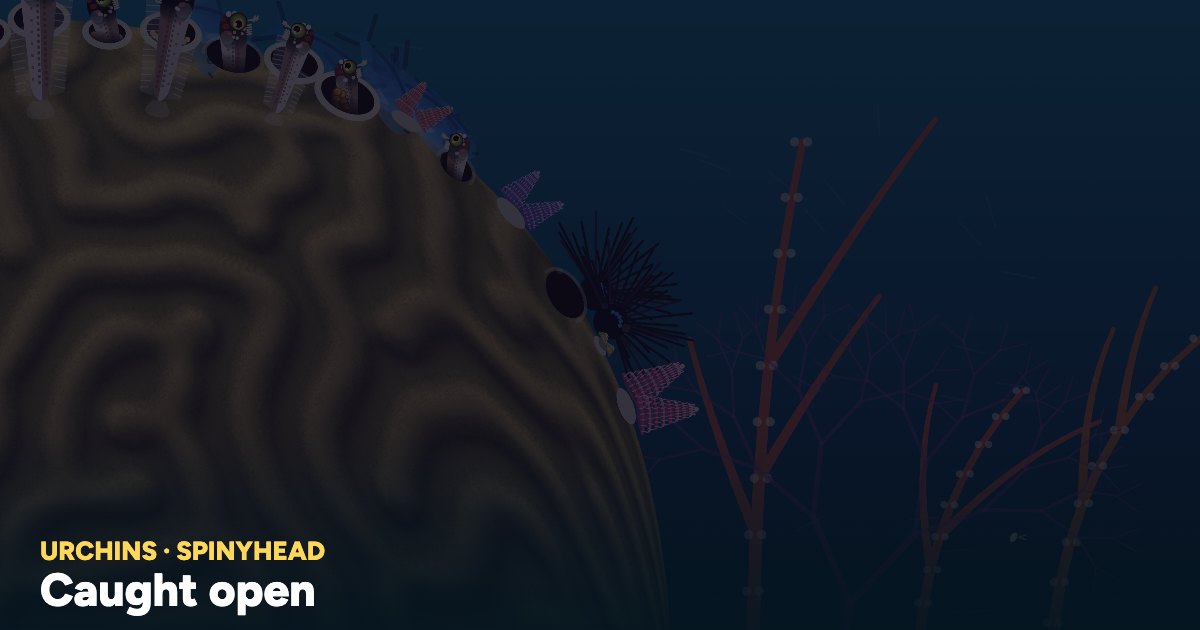
A diver may see a queen triggerfish working over the reef bottom, sometimes blowing jets of water or flipping an urchin to reach its less-protected underside. Afterwards it may be seen swimming slowly, or hovering near the bottom or a ledge, with broken test fragments and spines left behind. The fish often ignores urchins nearby for some time.
Who studied it
The notebook gives no source. Triggerfish feeding on urchins has long been noted in natural history accounts of Caribbean reefs, and the idea that predators stop feeding when satiated is a general principle in foraging ecology, covered by optimal foraging and functional response theory.
Elsewhere in the animal kingdom
Durophagous predators of urchins occur in many seas: other triggerfishes, pufferfishes, some wrasses such as the California sheephead, sea otters in kelp forests, and sea stars and crabs eating various shellfish. Satiation after a large meal is widespread, seen for example in snakes and sharks that eat infrequent large meals.
Doubts and open questions
How much predators such as triggerfish limit Diadema populations on reefs is debated, especially since the mass die-off of Diadema in the 1980s was caused by disease, not predation. The timing and length of the satiation period in the wild is not well measured for this species, so the notebook's 'a good while' should be taken as a general description.
Related behaviors
- prey handling and processing This covers the techniques used to get past prey defences, whereas satiation concerns what happens after the meal.
- herbivory by grazers The urchin's own feeding on algae is the other side of the interaction and is a different behaviour from predation on the urchin.
- ambush predation This involves waiting and striking at mobile prey, rather than searching for and opening defended, slow-moving prey.
Spinyhead is a free game you play in your browser: you are a spinyhead blenny, a fish about 3 cm long living in a worm hole on a Caribbean coral head. Feed, fight for a better hole, court, raise eggs and dodge predators, while everything around you behaves the way field biologists have seen it behave. Every behavior in the game is backed by a published study or careful observation; there are 38 on these pages, and more in the game’s field notebook waiting to be found.
More queen triggerfish
Other reef behaviors to discover