SpinyheadPlay free
The pair’s greeting
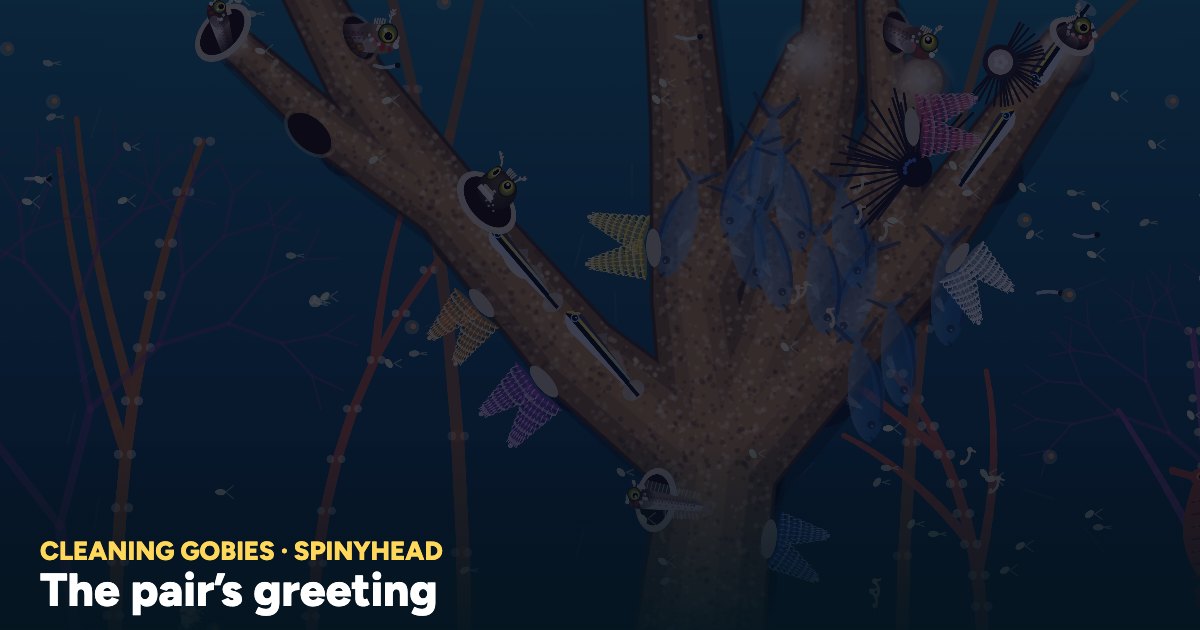
Behavior: Pair greeting display (a pair-bond or mate-recognition display)
Paired sharknose gobies often greet each other with a distinct wiggling display that seems to signal mate recognition. They rarely give it to strangers.
Species involved
- sharknose goby Elacatinus evelynae paired fish performing the wiggling greeting
About pair greeting display (a pair-bond or mate-recognition display)
A greeting display is a short, stereotyped signal that members of a bonded pair give each other, usually when they meet or reunite. In the sharknose goby, a small cleaner fish living on coral heads and sponges, the notebook describes it as a distinct wiggling of the body. Paired fish often give it to each other but rarely to strangers. This suggests the display carries information about who the receiver is, and not just a general social or threat message. It fits a wider pattern in which animals that live in stable pairs use ritualised signals to confirm and maintain the bond.
Why it matters
A greeting that is aimed at a partner and mostly withheld from strangers could help a pair confirm each other's identity, reduce aggression between them, and keep the bond intact between bouts of cleaning and foraging. A stable pair can share a home site and cleaning station, and the male guards the eggs, which are laid on a hard surface in a crevice or similar shelter. Time spent on reliable cooperation with one partner may improve breeding success. The notebook only says the display seems to signal mate recognition, so these functions are plausible and not demonstrated.
On coral reefs
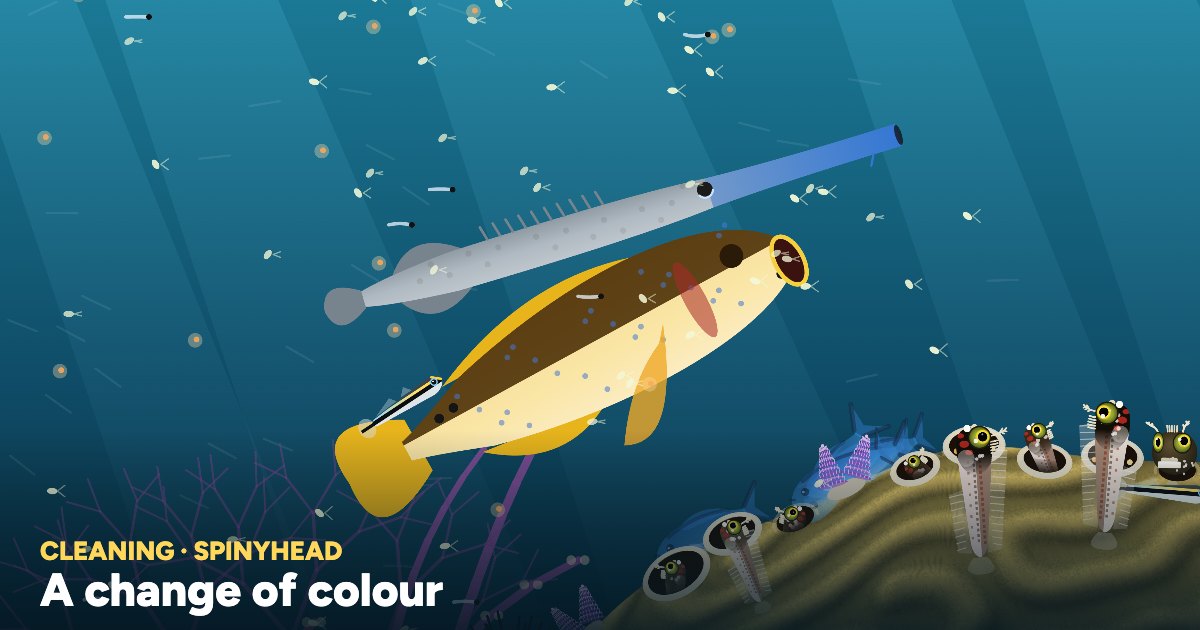
A diver watching a cleaning station on a coral head may see two small, striped gobies perched close together. One of them sometimes gives a quick, wiggling shimmy toward the other, which may answer in kind. The movements are small and easy to miss. They are most noticeable when the pair is not busy picking parasites off visiting fish.
Who studied it
The notebook's source is Harding's 1993 M.S. thesis at Oregon State University, which recorded the behaviour of sharknose gobies. Cleaner gobies of the genus Elacatinus (formerly Gobiosoma) have long been studied as cleaning symbionts and for their social organisation, and researchers have asked how often they live as pairs and how often in groups. The display itself has had little attention compared with their cleaning behaviour.
Elsewhere in the animal kingdom
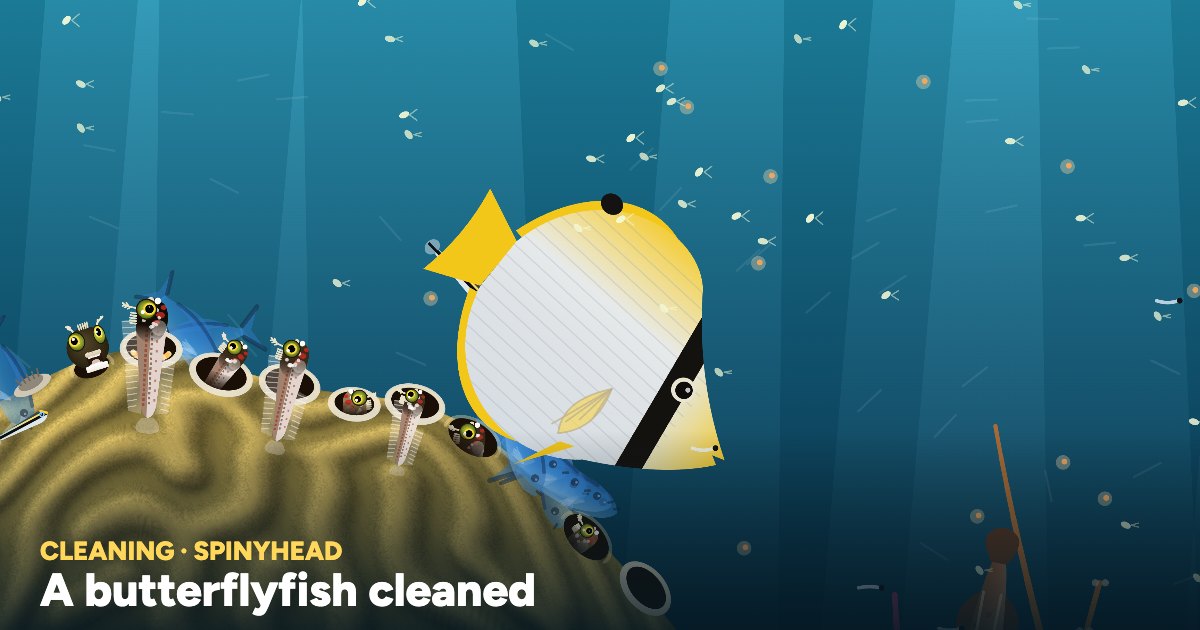
Greeting or reunion displays between bonded partners are well known in birds. Examples are the triumph ceremony of geese, studied by Konrad Lorenz, and the mutual displays of penguins and albatrosses. Many pair-forming reef fishes, such as butterflyfishes, also stay together and interact in ritualised ways, though the signals differ between groups.
Doubts and open questions
It is not certain that the display is mate recognition and not a more general affiliative, appeasement or courtship signal that happens to be given mostly between partners. Evidence from a single unpublished thesis is thin, and gobies' social systems vary between sites and group sizes. Controlled tests, such as presenting partners and strangers, would be needed to show true individual recognition.
Related behaviors
- Mate guarding The male stays close to his partner to prevent other males from mating with her, whereas a greeting display is a signal between partners.
- Courtship display Courtship signals attract or stimulate a mate before spawning, whereas a greeting display keeps an existing bond going.
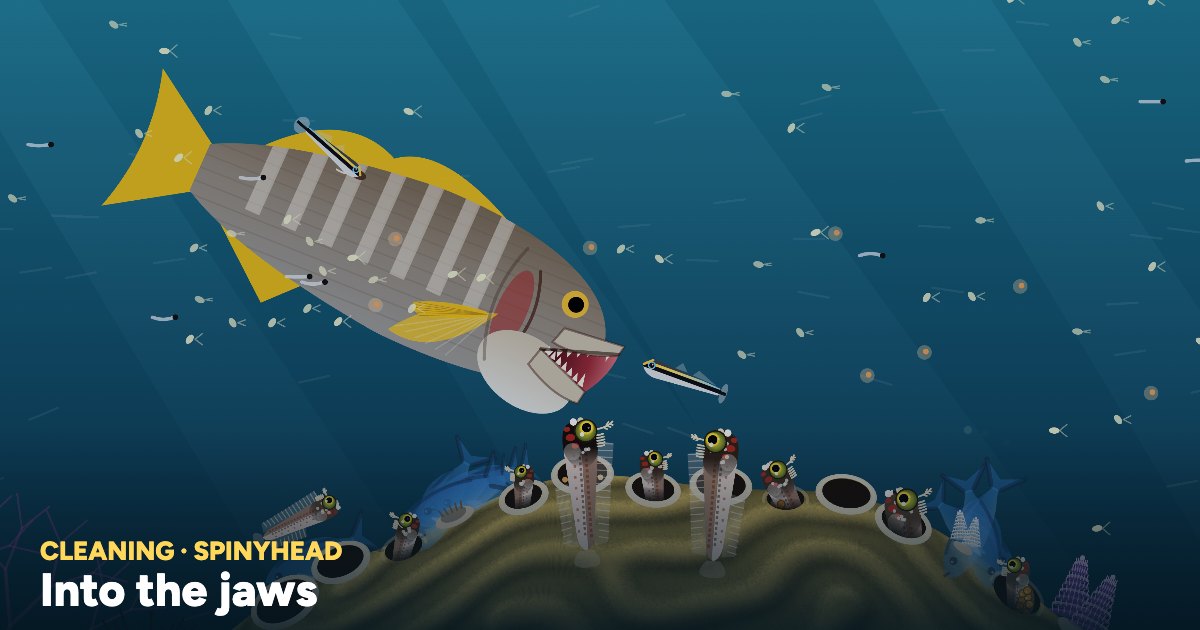
- Cleaning symbiosis Cleaner gobies remove parasites from client fish in a cooperative exchange between species, not a signal between pair members.
- Individual recognition This is the broader ability to tell familiar from unfamiliar animals, which a greeting display may depend on.
Spinyhead is a free game you play in your browser: you are a spinyhead blenny, a fish about 3 cm long living in a worm hole on a Caribbean coral head. Feed, fight for a better hole, court, raise eggs and dodge predators, while everything around you behaves the way field biologists have seen it behave. Every behavior in the game is backed by a published study or careful observation; there are 38 on these pages, and more in the game’s field notebook waiting to be found.
More cleaning gobies
Other reef behaviors to discover