SpinyheadPlay free
Posing for the cleaners
Behavior: Posing by clients at cleaning stations (client posing within cleaning symbiosis)
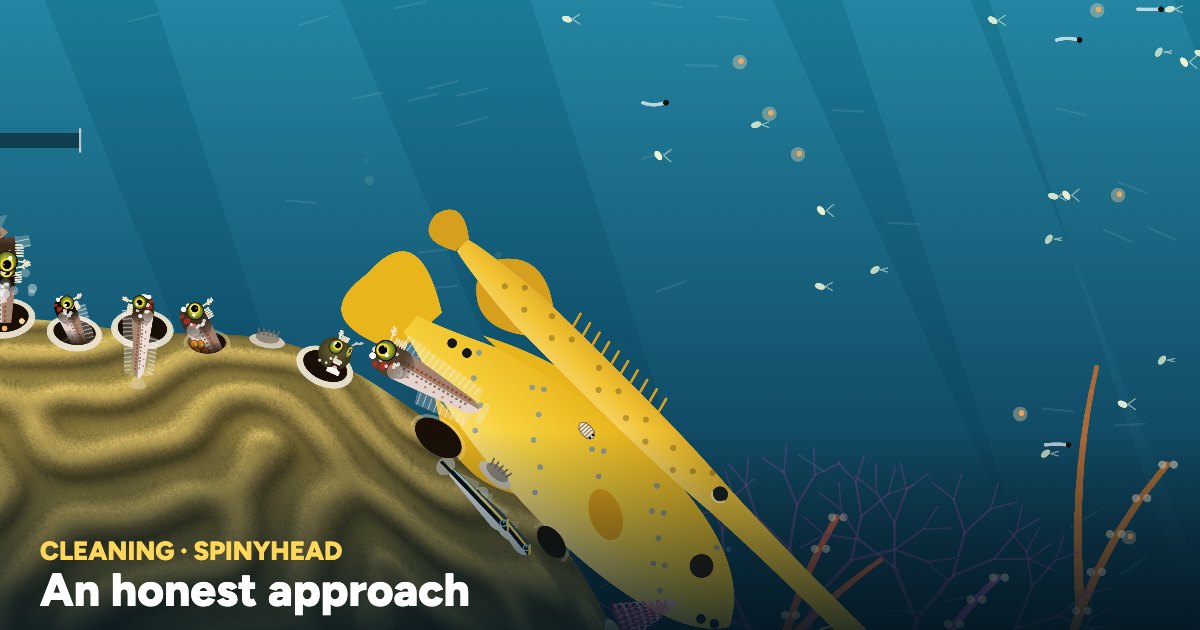
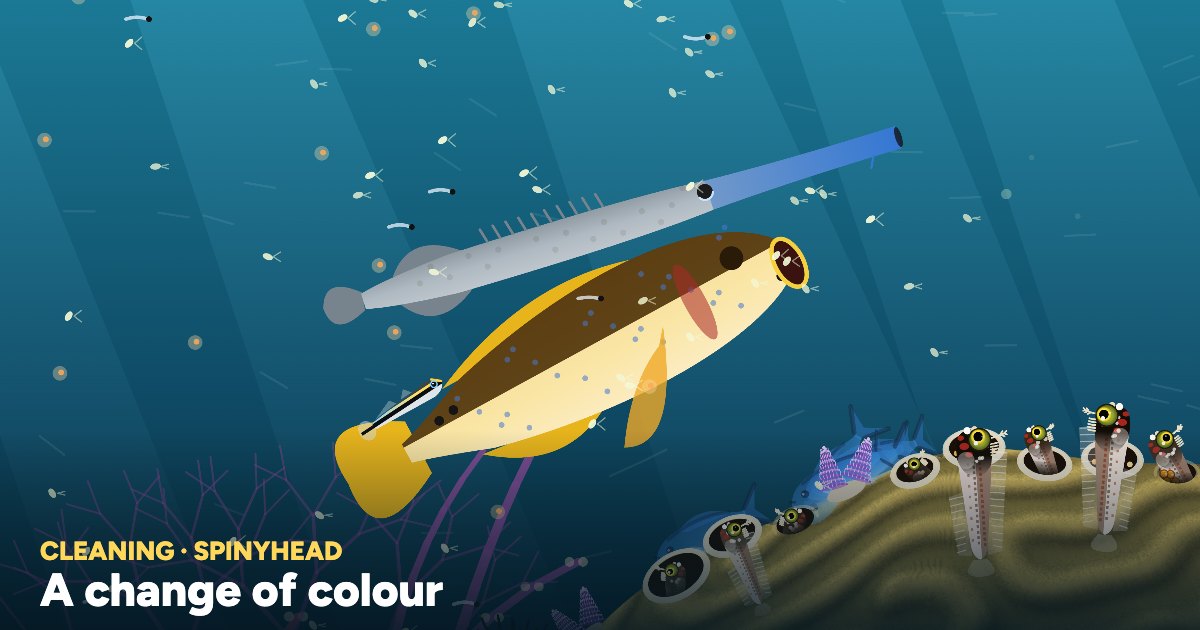
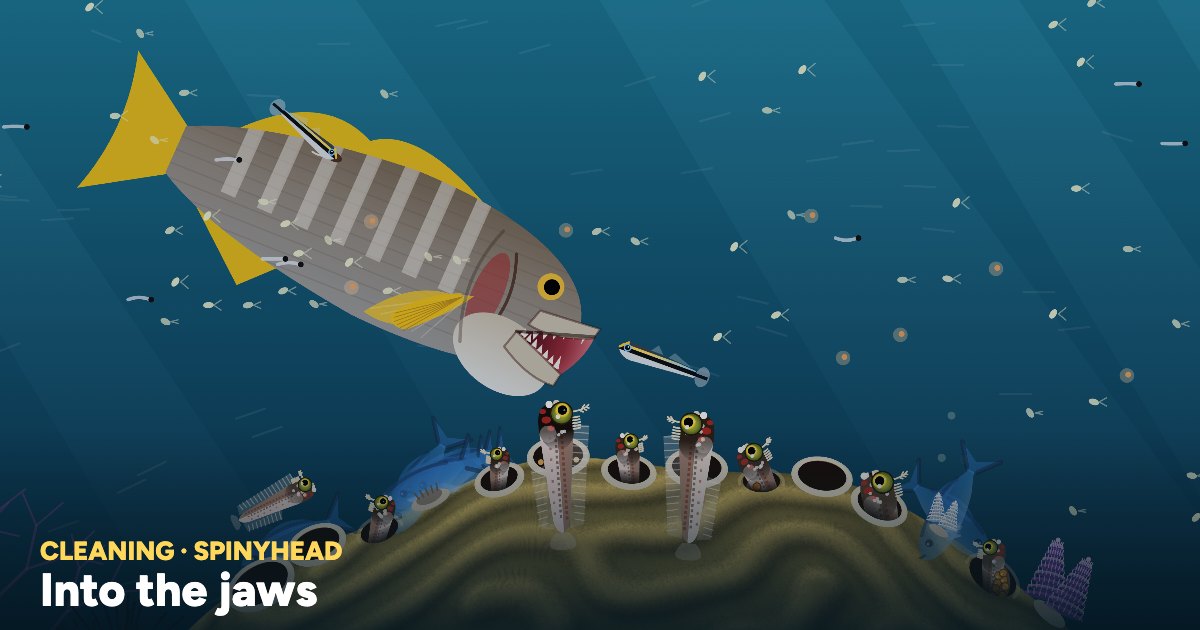
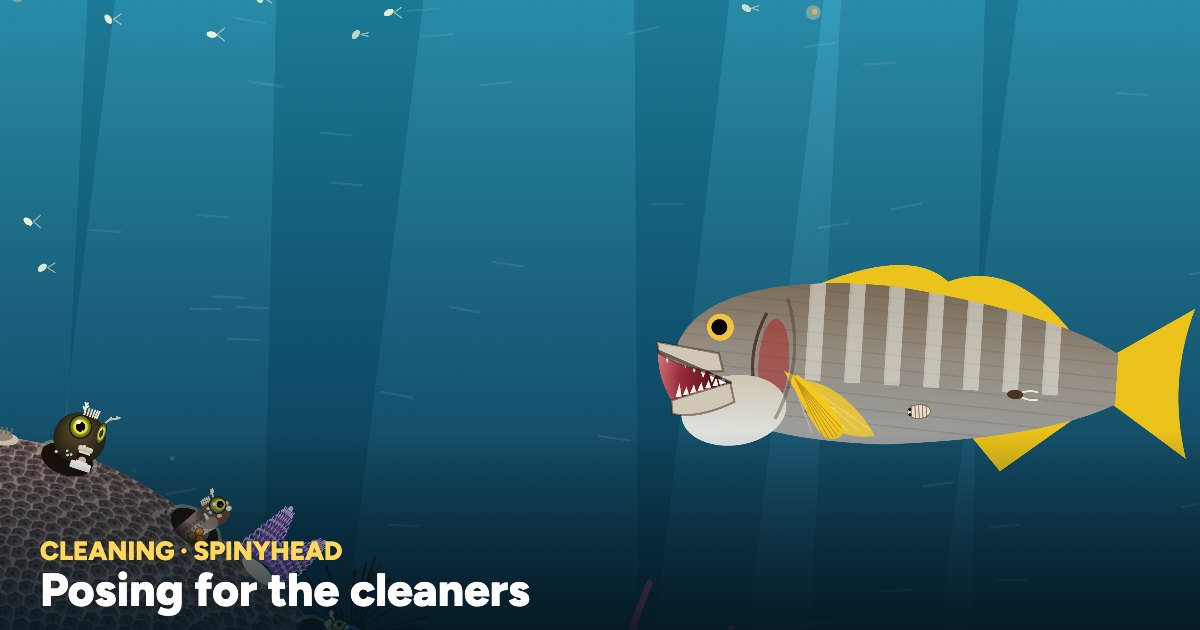
A predator hangs still, fins spread, mouth and gill covers open, while cleaning gobies pick off its parasites. Predators being cleaned are less aggressive toward fish nearby.
Species involved
- sharknose goby Elacatinus evelynae cleaner that picks parasites off the posing client
- graysby Cephalopholis cruentata predatory client that can pose for cleaners
- coney Cephalopholis fulva predatory client that can pose for cleaners
- schoolmaster snapper Lutjanus apodus predatory client that can pose for cleaners
- parasitic copepods Copepoda parasites eaten by the cleaner
About posing by clients at cleaning stations (client posing within cleaning symbiosis)
Posing is the stereotyped display a fish gives when it wants to be cleaned. It holds nearly motionless at a cleaning station, often with fins spread, and frequently opens its mouth and gill covers so the cleaner can reach the gills and mouth lining. It is part of cleaning symbiosis, in which small cleaner fish and shrimps eat ectoparasites, mucus and damaged tissue from larger 'client' fish. The posture signals that the client is not hunting and invites inspection. Clients may also pose with their body tilted or head up or down, and the cleaner often begins by touching or inspecting the client.
Why it matters
For the client, posing allows parasite removal, and cleaning is generally thought to reduce parasite load and may improve health. For the cleaner it provides food. The notebook's source study reports that a predatory client being cleaned becomes less aggressive toward other fish nearby. This suggests that cleaners may indirectly protect small fish near a station, and it may help explain why potential prey tolerate approaching a station that is visited by predators. Because cleaners and their clients meet repeatedly, posing also shapes the biology of a station: how long a client stays, whether it is cleaned, and whether the cleaner is eaten or left alone.
On coral reefs
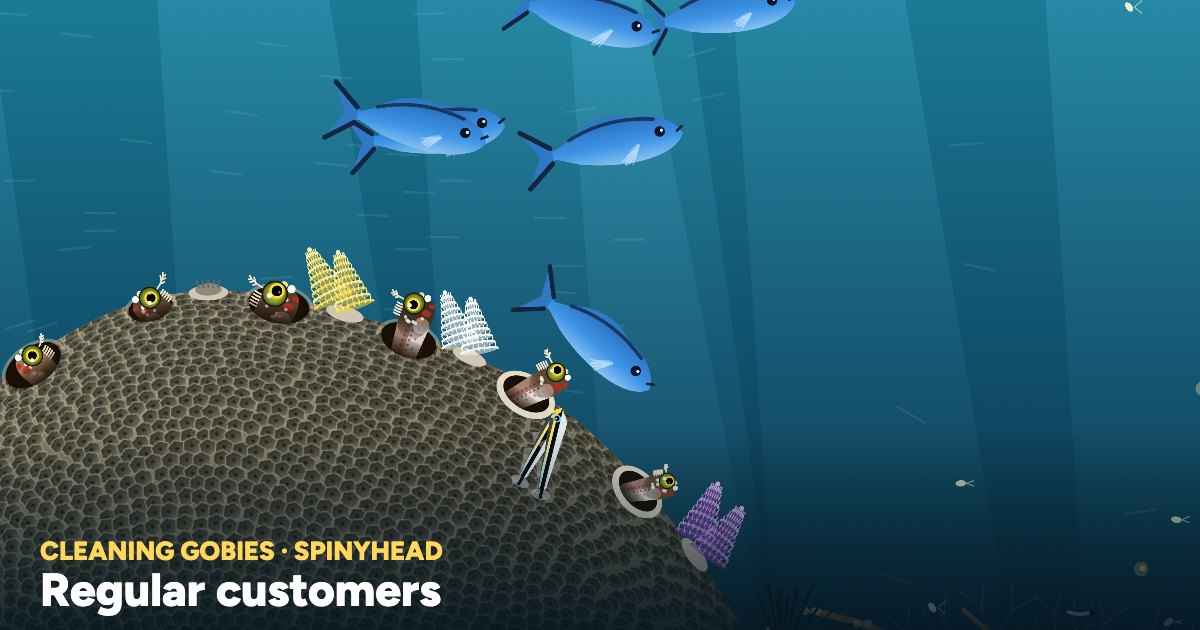
A diver may see a grouper or snapper hanging almost motionless above a coral head, mouth agape and gill covers flared, while a small striped goby works over its body, fins and gill region. Sharknose gobies on Caribbean reefs typically occupy stations on a coral head or sponge and attract clients by dancing or wagging. Fish queue or hover nearby waiting for their turn. When a cleaner finishes, or a client is disturbed, the client closes its mouth and gills and swims off.
Who studied it
Cleaning symbioses were first studied systematically in the mid-20th century, with early work on Caribbean cleaning by Conrad Limbaugh (1961) and a broad review by Feder (1966). Later work by researchers such as Losey examined the signals clients use and the proximate causes of client behaviour. The notebook's own source is Cheney, Bshary & Grutter 2008, Behavioral Ecology 19:1063, which examined how cleaner fish affect the aggression of predatory clients toward bystanders at cleaning stations.
Elsewhere in the animal kingdom
Cleaning symbiosis and client posing occur in many marine groups. The best known cleaner is the Indo-Pacific bluestreak cleaner wrasse Labroides dimidiatus, whose clients, including predatory groupers, pose and open their mouths for it. Cleaner shrimps such as Pederson's cleaner shrimp are cleaners on Caribbean reefs. Cleaning also occurs between non-marine animals, such as birds that remove parasites from large mammals, but the stereotyped posing display is best known from reef fishes.
Doubts and open questions
It is debated how much cleaners really benefit clients' health versus how much cleaning is a trade-off with cleaners sometimes biting mucus, a form of cheating. The reduced aggression toward bystanders has been explained as a side-effect of the cleaning interaction, so how far it is a function that has been selected for is open. In the game, how this applies to each named predator should be read as the notebook's general statement rather than a record for each species.
Related behaviors
- Cleaning symbiosis The wider mutualism between cleaners and clients, of which posing is only the client's signal.
- Aggressive mimicry by false cleaners Some fish imitate cleaners to approach clients and bite them, exploiting the trust that posing relies on.
- Partner choice and client choice Concerns how clients and cleaners select each other and avoid cheats, not the posing posture itself.
- Cleaner dancing The cleaner's own advertising display to attract clients, rather than the client's invitation to be cleaned.
Spinyhead is a free game you play in your browser: you are a spinyhead blenny, a fish about 3 cm long living in a worm hole on a Caribbean coral head. Feed, fight for a better hole, court, raise eggs and dodge predators, while everything around you behaves the way field biologists have seen it behave. Every behavior in the game is backed by a published study or careful observation; there are 14 on these pages, and more in the game’s field notebook waiting to be found.