SpinyheadPlay free
On guard
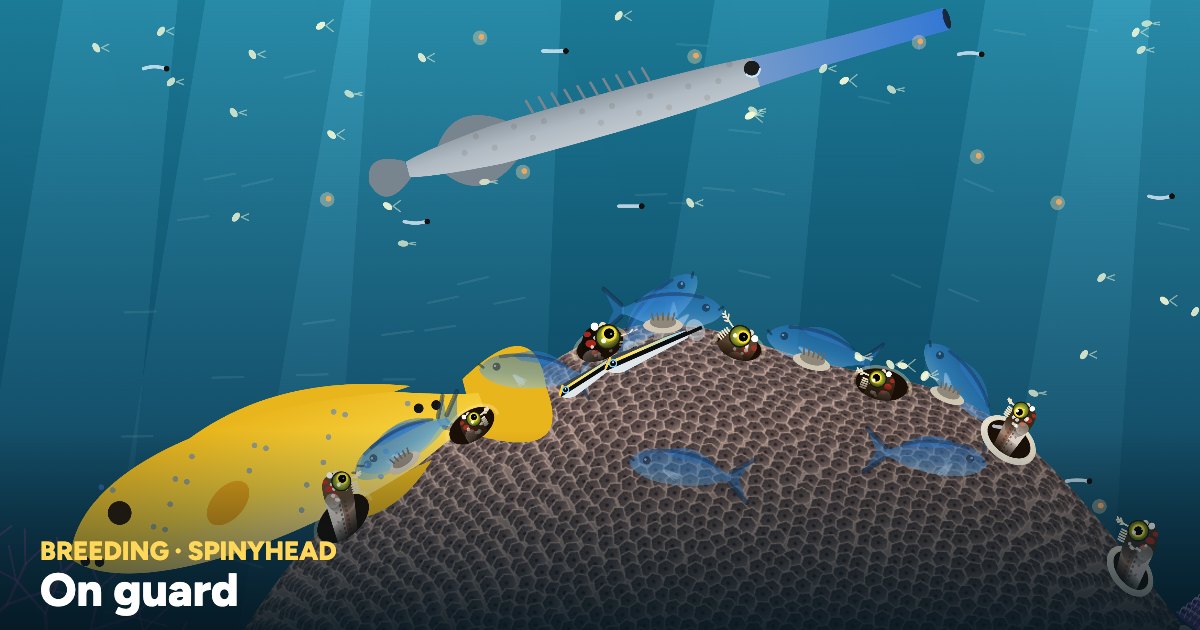
Behavior: Paternal care (male egg guarding and fanning)
The father stays with his eggs, fanning fresh water over them and guarding them until they hatch.
Species involved
- spinyhead blenny Acanthemblemaria spinosa male guards and aerates the eggs in his shelter
About paternal care (male egg guarding and fanning)
Paternal care means that the father, not the mother, looks after the eggs after spawning. In many small reef fishes the female lays eggs on a hard surface or inside a shelter, and the male stays with them until they hatch. His work typically includes fanning the eggs with his fins or body movements to keep water flowing over them, removing debris or dead eggs, and chasing off animals that would eat them. In tube blennies and their relatives the eggs are usually laid in or at the entrance of the hole the male occupies, so he can tend them without leaving home.
Why it matters
Moving water brings oxygen to the dense egg mass and carries away waste, which helps the embryos develop. Guarding lowers losses to egg predators, which on a reef include many small fishes and invertebrates. The father pays a cost, because time spent tending eggs is time not spent feeding or defending territory, and in many species he may eat less while guarding. Males that guard well can be favoured by females, so care may be tied to mate choice. For the population, good egg survival depends on males holding suitable shelters, which links the behaviour to the availability of holes in the reef.
On coral reefs
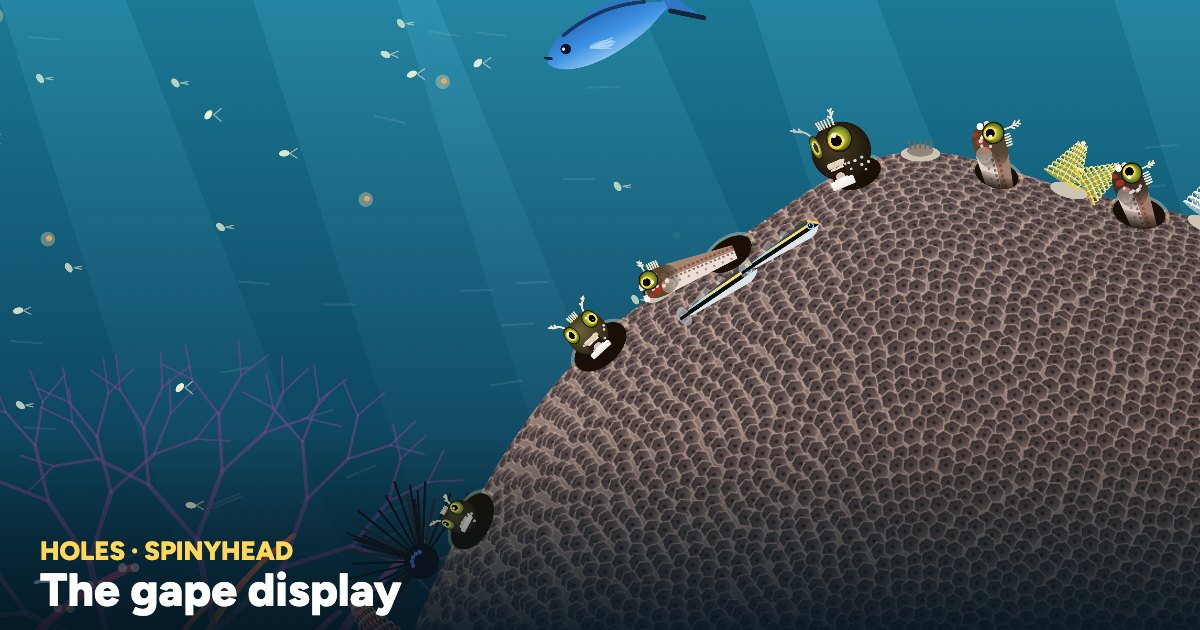
A diver may see a small blenny sitting at the opening of its hole in the reef rock, head out, and defending the entrance against intruders. During breeding the male may be seen near a patch of eggs in or by the hole, making small body or fin movements that stir the water. Such fish are small and wary and often retreat into the hole when approached, so the behaviour is easy to miss.
Who studied it
Biologists have long noted that male-only care is the most common form of parental care in fishes that care for their eggs, and this became a classic topic in studies of mating systems and sexual selection. Work on many families, such as sticklebacks, gobies, damselfishes and blennies, showed that egg fanning and nest defence raise hatching success. The notebook entry gives no source, so no specific study is attributed here.
Elsewhere in the animal kingdom
Male egg guarding is widespread in fishes: sticklebacks, gobies, damselfishes, clownfishes, sunfishes and many blennies all do it. Seahorses and pipefishes carry the eggs in a male brood pouch, a more extreme form of paternal care. Outside fishes, male care of eggs occurs in some frogs, such as midwife toads, and in birds such as ratites (emus and rheas), and in some giant water bugs where males carry eggs on their backs.
Doubts and open questions
One question is why paternal care is so common in fishes with external fertilisation, with explanations including territoriality that makes guarding cheap, and the certainty of paternity compared with internal fertilisation. Another is that guarding males sometimes eat some of their own eggs, which suggests care has costs that males balance against benefits.
Related behaviors
- filial cannibalism The guarding parent eats some of its own eggs, rather than protecting all of them.
- maternal care The female, not the male, tends or carries the eggs or young.
- brood pouch care (male pregnancy) The male carries the developing eggs on or inside his body, as seahorses do, rather than guarding eggs laid in a nest.
- nest defence Focuses on driving off predators and competitors, whereas fanning is about water flow and oxygen supply.
Spinyhead is a free game you play in your browser: you are a spinyhead blenny, a fish about 3 cm long living in a worm hole on a Caribbean coral head. Feed, fight for a better hole, court, raise eggs and dodge predators, while everything around you behaves the way field biologists have seen it behave. Every behavior in the game is backed by a published study or careful observation; there are 14 on these pages, and more in the game’s field notebook waiting to be found.
More breeding
Other reef behaviors to discover