SpinyheadPlay free
A stick among sticks
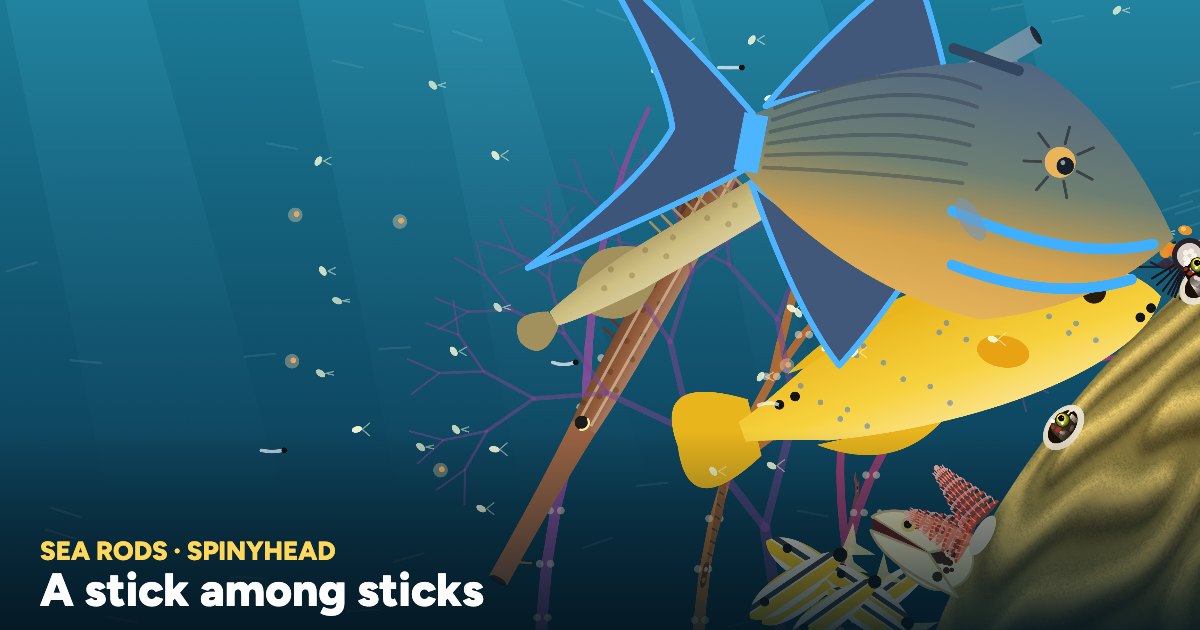
Behavior: Aggressive mimicry and ambush predation (camouflage as a vertical 'stick' among gorgonians)
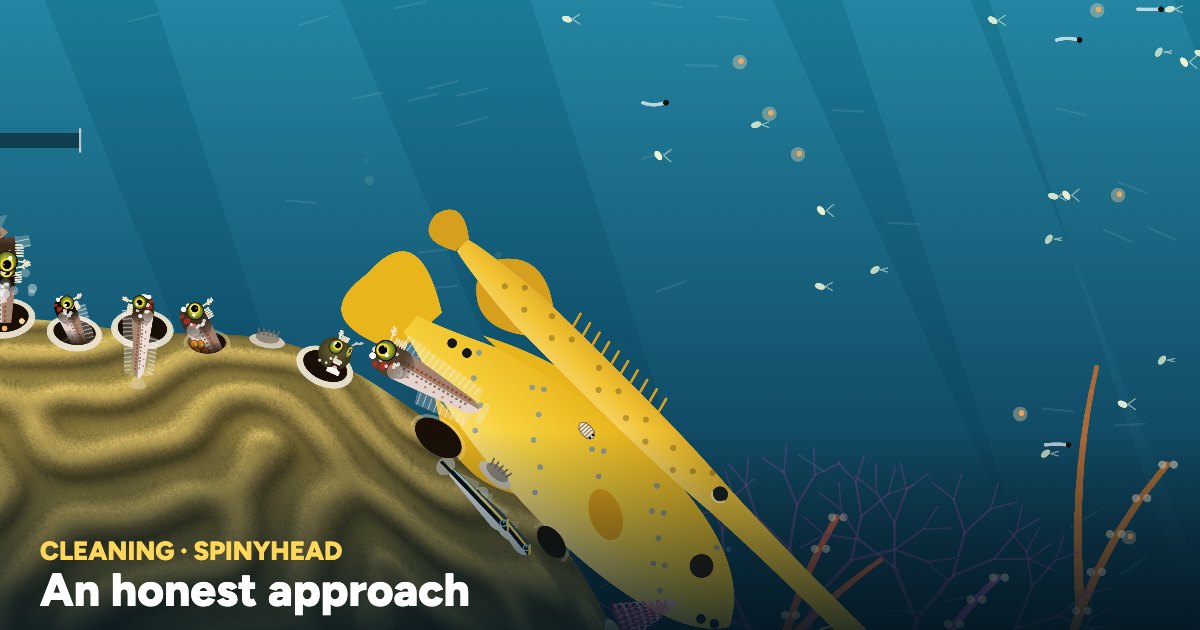
A brown trumpetfish hangs head-down among gorgonian stalks, swaying with them, and waits for small fish to pass its snout.
Species involved
- trumpetfish Aulostomus maculatus ambush predator that hangs head-down and imitates a sea rod
- sea rods (gorgonians) Plexauridae the model or backdrop the trumpetfish blends with and sways among
About aggressive mimicry and ambush predation (camouflage as a vertical 'stick' among gorgonians)
Some predators resemble harmless or uninteresting objects in their surroundings so that prey do not recognise them as a threat. The trumpetfish is a long, thin fish that can hold its body in a vertical, head-down posture among upright gorgonian stalks, where its outline and swaying movement resemble the branches around it. From this position it waits until small fish come within range of its tubular snout. It is a sit-and-wait (ambush) predator rather than a chaser. Strictly speaking, the behaviour combines camouflage with posture and movement that match the habitat, and it is often described as a form of masquerade or aggressive mimicry.
Why it matters
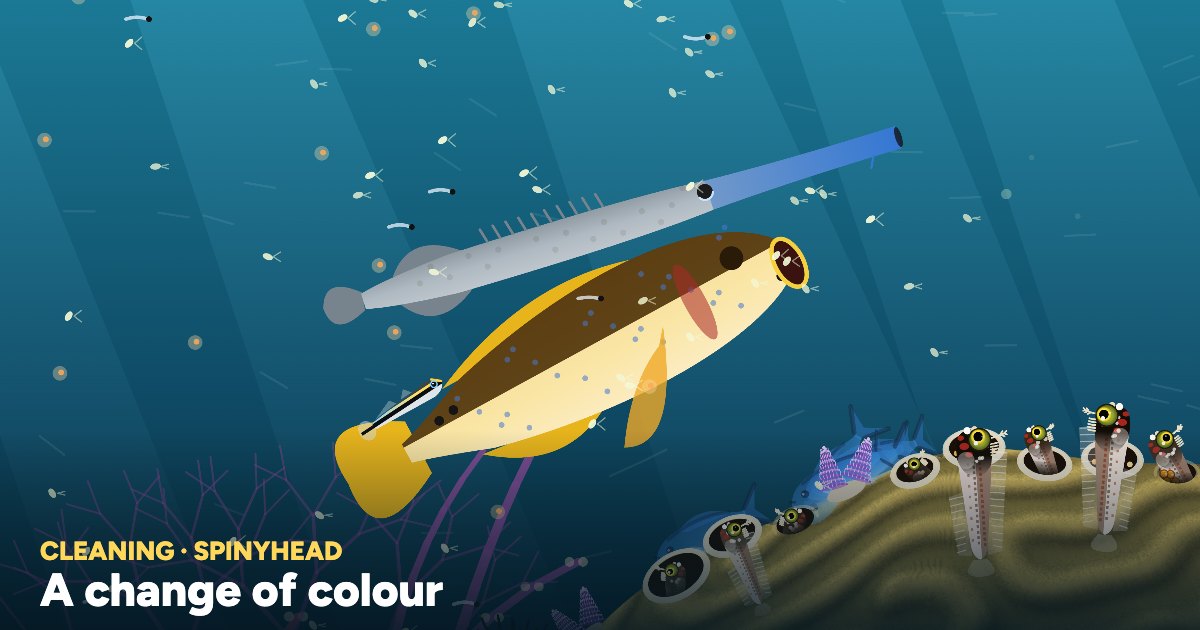
For the trumpetfish, resembling part of the habitat lowers the energy spent on hunting and lets it get close to wary prey. Small fish that are fooled can be taken in a rapid strike in which the mouth expands and sucks prey in. The same disguise may also reduce the chance that larger predators notice the trumpetfish. At the community level, ambush predators like this add predation pressure on small reef fishes, and these fishes may adjust where and how they forage as a result. The trumpetfish's colour can vary between individuals, and some are brown while others are yellow or other shades, which fits the idea that the disguise is matched to the surroundings.
On coral reefs
A diver may see a trumpetfish hanging motionless and nearly vertical among sea rods or sea plumes, often with its head pointing down, drifting back and forth with the surge. Sometimes it is easy to overlook until it shifts position. Trumpetfish are also known to drift alongside or behind other fishes, using them as cover, which is a related but separate tactic.
Who studied it
The idea that predators use resemblance to harmless objects or to other species has been discussed in biology since the 19th century, and aggressive mimicry was long used as an example of deception in predator-prey relationships. The trumpetfish itself is described in standard Caribbean field guides, including the notebook's source, Humann & DeLoach's Reef Fish Identification, which documents its appearance, colour variants and habits. Further detailed studies of its hunting tactics exist, but I do not cite specific ones here.
Elsewhere in the animal kingdom
Camouflage-based ambush occurs in many animals. Pipefishes and seahorses blend with plants and corals, leafy sea dragons resemble seaweed, and stonefish and frogfishes look like rock or sponge. On land, stick insects, mantises and some snakes are well known for resembling vegetation, although they do not all hunt in the same way.
Doubts and open questions
It is not always clear whether the trumpetfish is mimicking a specific object, a sea rod, or is simply cryptic against a visually complex background. Distinguishing true mimicry from general camouflage requires evidence on what prey perceive, and this has not been fully resolved for the trumpetfish.
Related behaviors
- Shadowing (following other fishes) The predator hides behind a larger, harmless fish while approaching prey rather than blending with fixed structure.
- Camouflage in a lure-using predator Frogfishes combine camouflage with a lure to attract prey, while trumpetfish simply wait.
- Masquerade The animal resembles a specific uninteresting object, whereas general camouflage means avoiding detection against a background.
Spinyhead is a free game you play in your browser: you are a spinyhead blenny, a fish about 3 cm long living in a worm hole on a Caribbean coral head. Feed, fight for a better hole, court, raise eggs and dodge predators, while everything around you behaves the way field biologists have seen it behave. Every behavior in the game is backed by a published study or careful observation; there are 14 on these pages, and more in the game’s field notebook waiting to be found.
Other reef behaviors to discover