SpinyheadPlay free
Into the jaws
Behavior: Cleaning symbiosis (cleaner fish entering the mouths and gill chambers of large predatory clients)
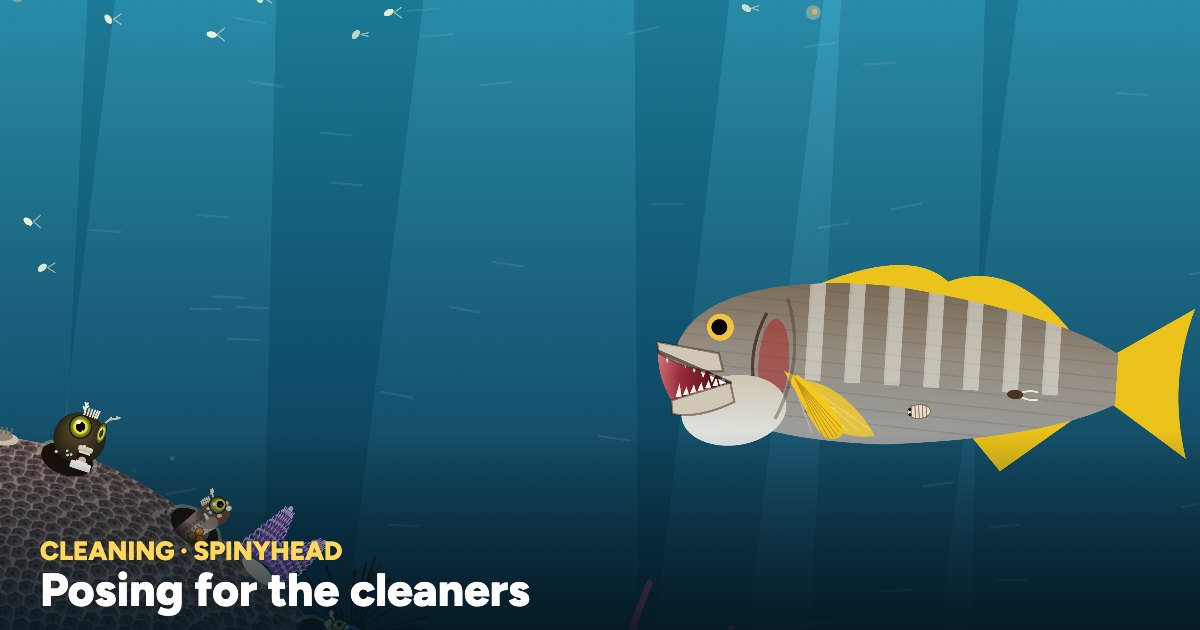
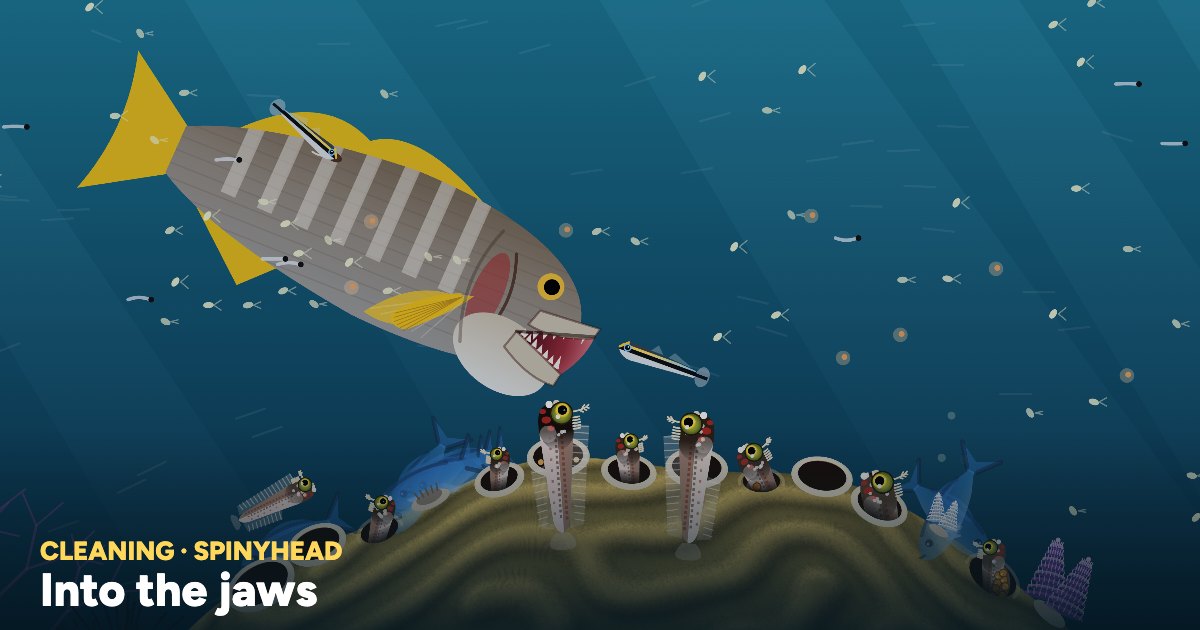
A cleaning goby swims head first into the mouth of a predator many times its size, cleans inside, and comes out again unharmed.
Species involved
- sharknose goby Elacatinus evelynae cleaner that enters the client's mouth and gill chamber
- graysby Cephalopholis cruentata predatory client that is cleaned
- coney Cephalopholis fulva predatory client that is cleaned
- schoolmaster snapper Lutjanus apodus predatory client that is cleaned
- spotted moray Gymnothorax moringa predatory client that may be cleaned
- parasitic copepods Copepoda parasites removed from the client
About cleaning symbiosis (cleaner fish entering the mouths and gill chambers of large predatory clients)
Cleaning symbiosis is an interaction in which a small animal, the cleaner, removes parasites, mucus and damaged tissue from the body of a larger animal, the client. Some cleaners work not only on the skin and fins but also inside the mouth and under the gill covers. Here a small cleaner goby enters the mouth of a fish that would normally be able to eat it. The client holds still, often with its mouth or gill covers open, while the cleaner works, and then the cleaner leaves unharmed.
Why it matters
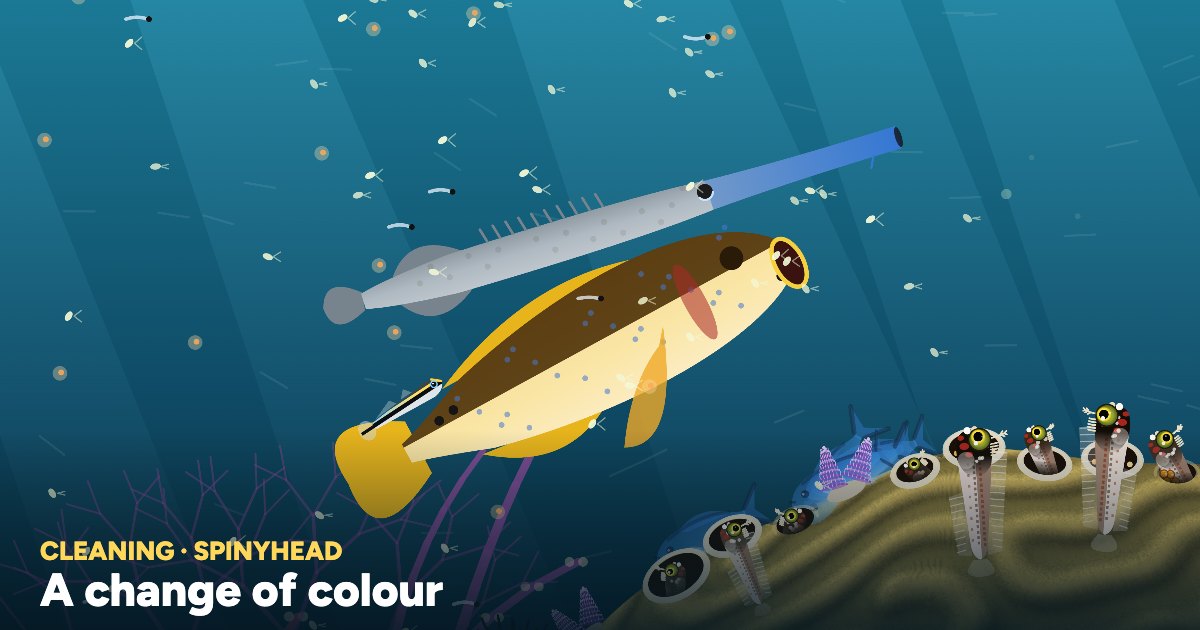
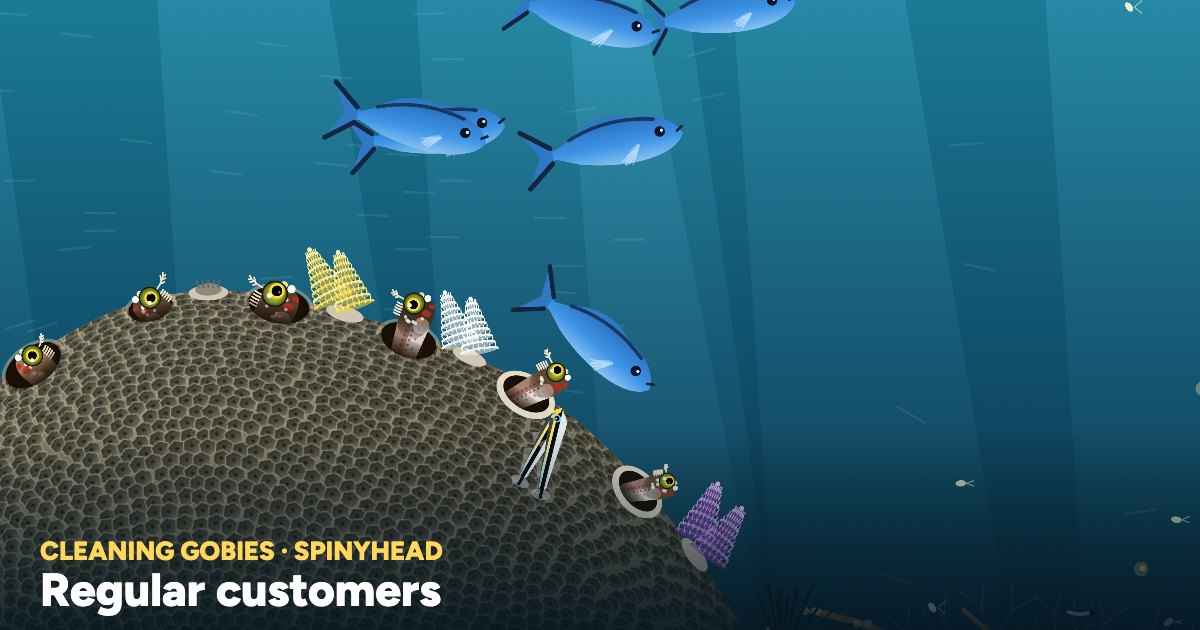
The cleaner gets food, and the client loses parasites such as copepods and gnathiid isopods, which can irritate the skin and gills and may carry infection. For this reason cleaning stations are thought to matter for the health of local fish, and some studies suggest they influence how many fish live on a reef patch. The client's restraint is the key puzzle: cleaners are food-sized, yet predators almost always refrain from eating them. A cleaner that cheats by biting mucus or skin instead of parasites may be chased or punished, and clients can leave or switch cleaners, which helps keep the cleaning honest. Cleaners are also typically recognised by clients, aided by their bold colour pattern and a dancing movement.
On coral reefs
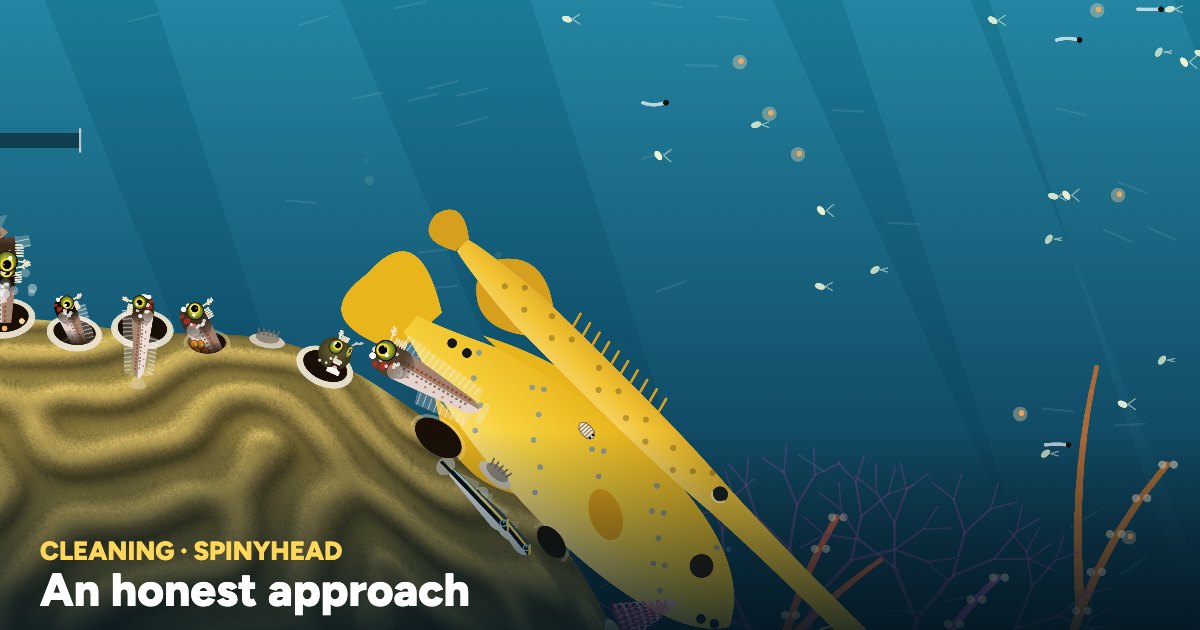
A diver may see a large grouper or snapper hanging almost motionless, often head-up or head-down, at a regular spot on a coral head or sponge. A small slim goby with a bright stripe darts over its body and then slips into the open mouth or under the gill cover. The client may flare its gill covers or open its jaws wide and then drift off. The interaction usually lasts seconds to minutes.
Who studied it
Cleaning symbioses were noticed by naturalists long before they were studied, and at first the stories of fish entering the mouths of predators were treated with doubt. Careful observation and experiments in the twentieth century established that cleaner fish and shrimps really do remove parasites and that many clients actively seek them out. The Caribbean sharknose goby is among the best-known cleaner fish of Atlantic reefs, and the sharknose goby is the cleaner goby of this game.
Elsewhere in the animal kingdom
The best-known cleaner is the cleaner wrasse Labroides dimidiatus of the Indo-Pacific, which also works inside the mouths of large predatory fish. Cleaner shrimps occur on reefs worldwide, and cleaning is also known in some freshwater fish, in birds such as oxpeckers that pick ticks from mammals, and in some cleaner relationships of sea turtles and reef fish. Cleaner fishes usually receive a feeding gain and a safe passage in return.
Doubts and open questions
Researchers still discuss how much clients benefit overall, since evidence of lower parasite loads is stronger in some studies than in others, and how much cleaners also take mucus, which clients may find costly. Another open question is how far cleaning is a true mutualism and how far it is a negotiated conflict of interest.
Related behaviors
- aggressive mimicry a predator or parasite imitates a cleaner to approach or bite clients, rather than genuinely cleaning them
- mutualism the broader category of interactions in which both partners gain, of which cleaning is one example
- commensalism one species benefits while the other is neither helped nor harmed, unlike cleaning where both gain
- ectoparasitism the parasite's side of the interaction, in which the cleaner's food source harms its host
Spinyhead is a free game you play in your browser: you are a spinyhead blenny, a fish about 3 cm long living in a worm hole on a Caribbean coral head. Feed, fight for a better hole, court, raise eggs and dodge predators, while everything around you behaves the way field biologists have seen it behave. Every behavior in the game is backed by a published study or careful observation; there are 14 on these pages, and more in the game’s field notebook waiting to be found.