SpinyheadPlay free
Sharknose goby Elacatinus evelynae

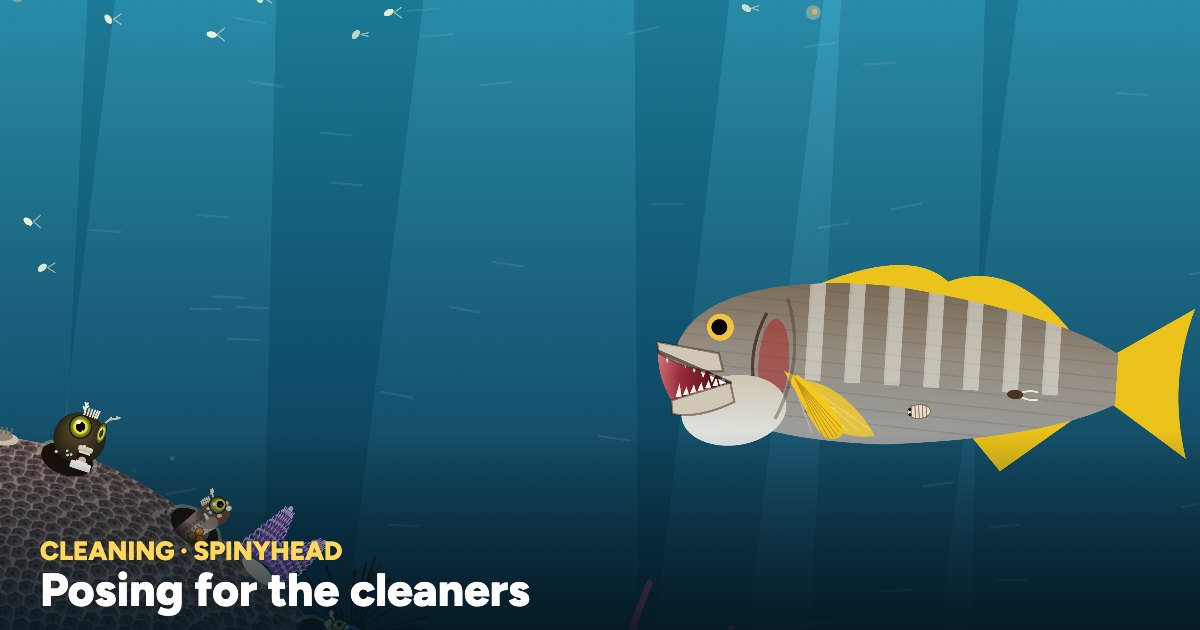
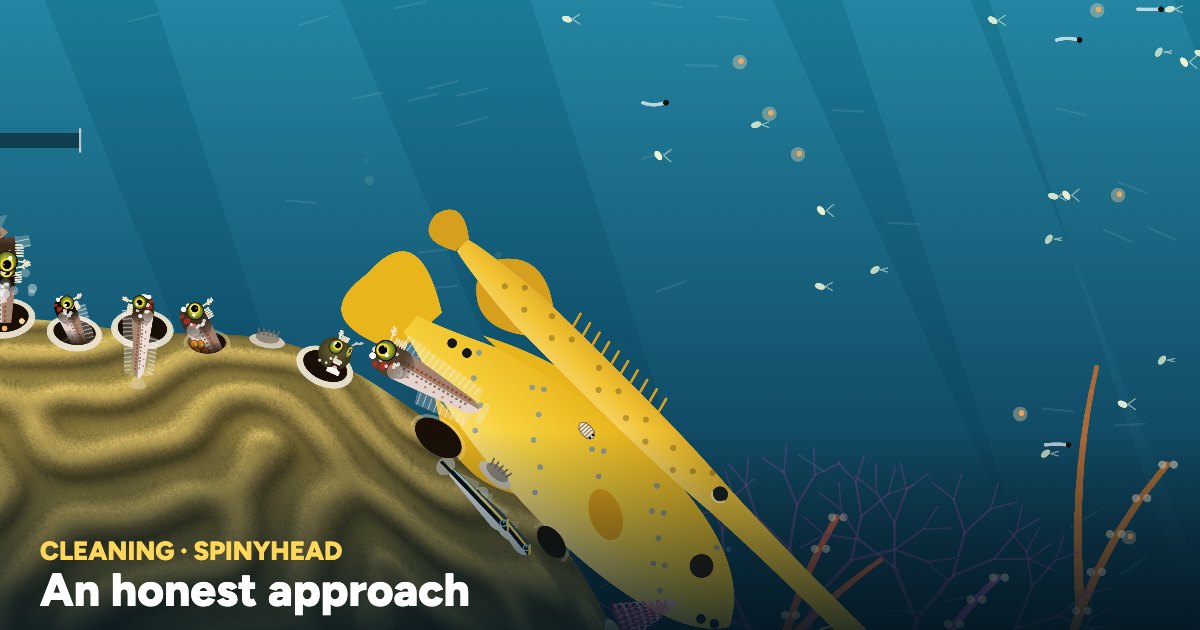
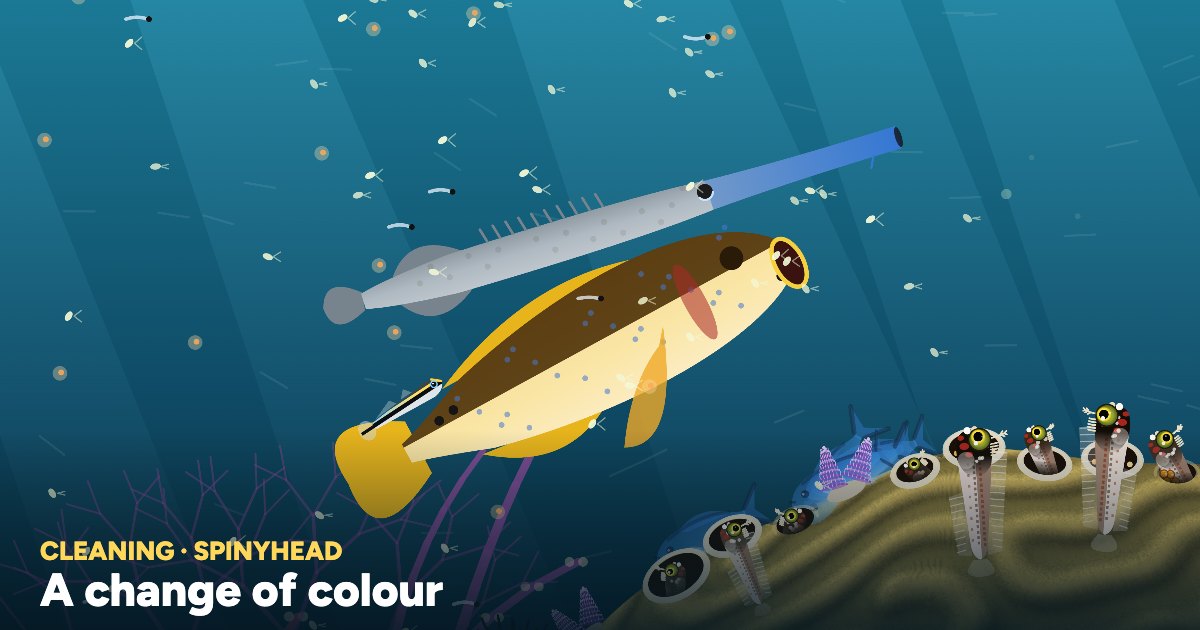
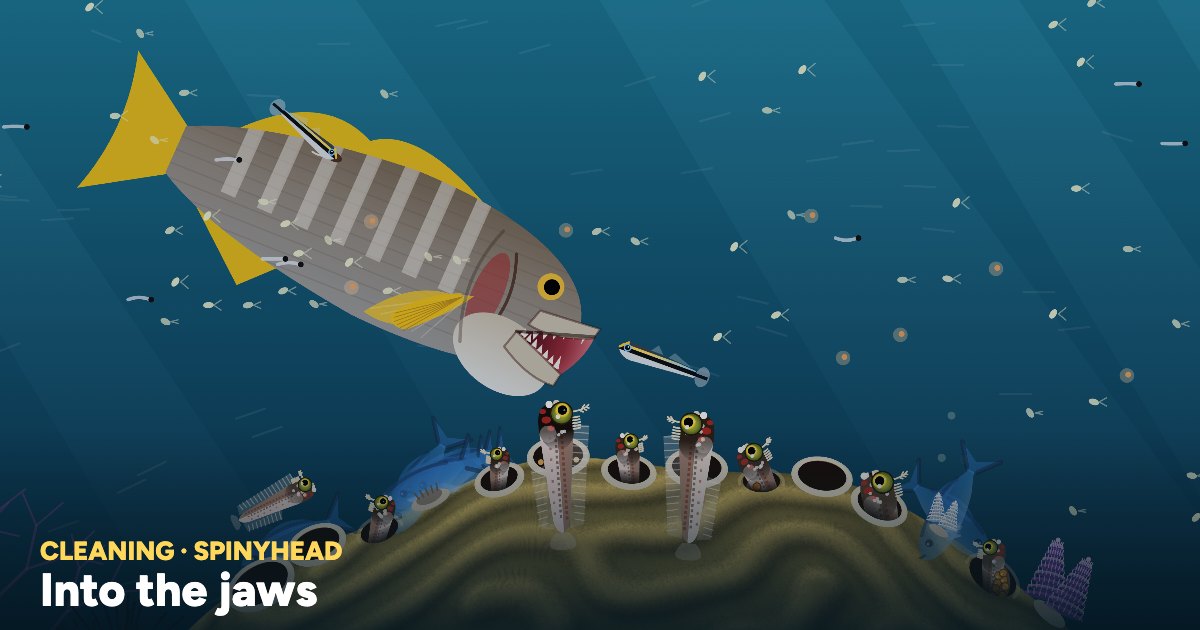
The sharknose goby is a tiny, slender, dark-bodied goby that spends its life perched on coral heads and sponges. It is best known as a cleaner, picking parasites and dead tissue from the skin, gills and mouths of larger reef fishes. Fish that visit its cleaning station often pose and hold still while it works. It is bold and active, and often hovers or darts just above the surface it lives on. The pointed snout and the pale stripe along its dark body make it easy to recognise.
How to recognize it
- tiny elongated body
- dark body with pale lengthwise stripe
- stripe runs from snout along the back
- pointed, shark-like snout
- stripe white to bluish, sometimes yellowish
- perches on corals and sponges
- often at cleaning stations with clients nearby
| Size | Typically about 2.5 to 4 cm long; maximum about 5 cm. |
|---|---|
| Range | Tropical western Atlantic, mainly the Bahamas and Caribbean islands, and parts of the southern Caribbean. Stripe color varies between regions. |
| Habitat | Coral reefs, living on the surface of coral heads, large sponges and other solid structures. Found from shallow water to moderate depths, typically from about 1 m to roughly 40 m. |
| Diet | Feeds mainly on external parasites such as small crustaceans (including copepods and gnathiid isopods) picked from the skin and gills of client fish. It may also take mucus, dead tissue and some small planktonic prey. |
| Conservation | Not considered threatened; it is generally assessed as Least Concern. Local threats include reef degradation and collection for the aquarium trade. |
Life and behavior
Sharknose gobies hold a fixed cleaning station on a coral head or sponge and live singly, in pairs or in small groups. Clients visit the station, and the goby inspects and cleans them, often touching them to start the interaction. Like other gobies, they lay small eggs on a hard surface inside a crevice or hole, and a parent guards them until they hatch. The larvae drift in the plankton before settling onto reefs. Cleaning is probably part of their daily routine for much of their lives, and individuals often stay on the same reef patch.
Its family: Gobies (Gobiidae)
Gobies are small, mostly bottom-dwelling fishes, and the family is one of the largest groups of marine fishes. Many have pelvic fins joined into a sucker-like disc that helps them cling to surfaces. They typically have two dorsal fins and a blunt or pointed head. Most lay eggs on hard surfaces and guard them.
Similar species
- Neon goby Elacatinus oceanops Has a bright blue stripe running along the body, and the belly is white. The sharknose goby has a dark body with a paler stripe.
- Cleaning goby Elacatinus genie Another cleaner with a dark body and pale stripe. It is best told apart by the stripe's color and pattern and by its range.
- Yellowline goby Elacatinus horsti Has a strongly yellow line along the body, whereas the sharknose goby's stripe is usually paler (white to bluish) and its snout is pointed.