SpinyheadPlay free
A change of colour
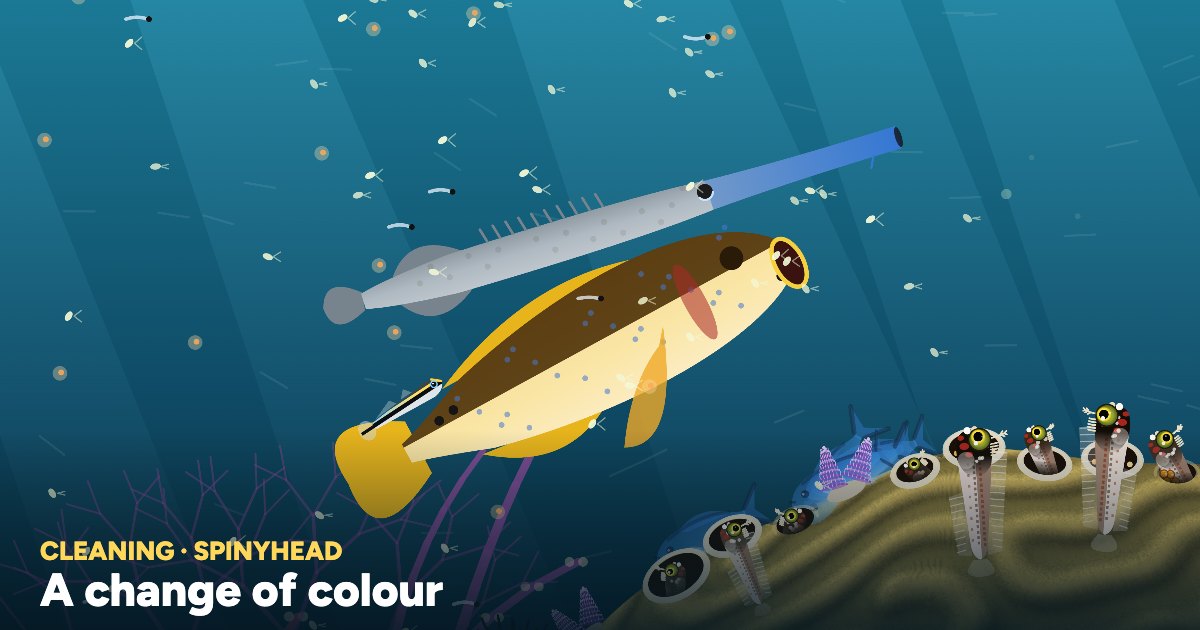
Behavior: Cleaning symbiosis (client posing, with a shadowing predator leaving during cleaning)
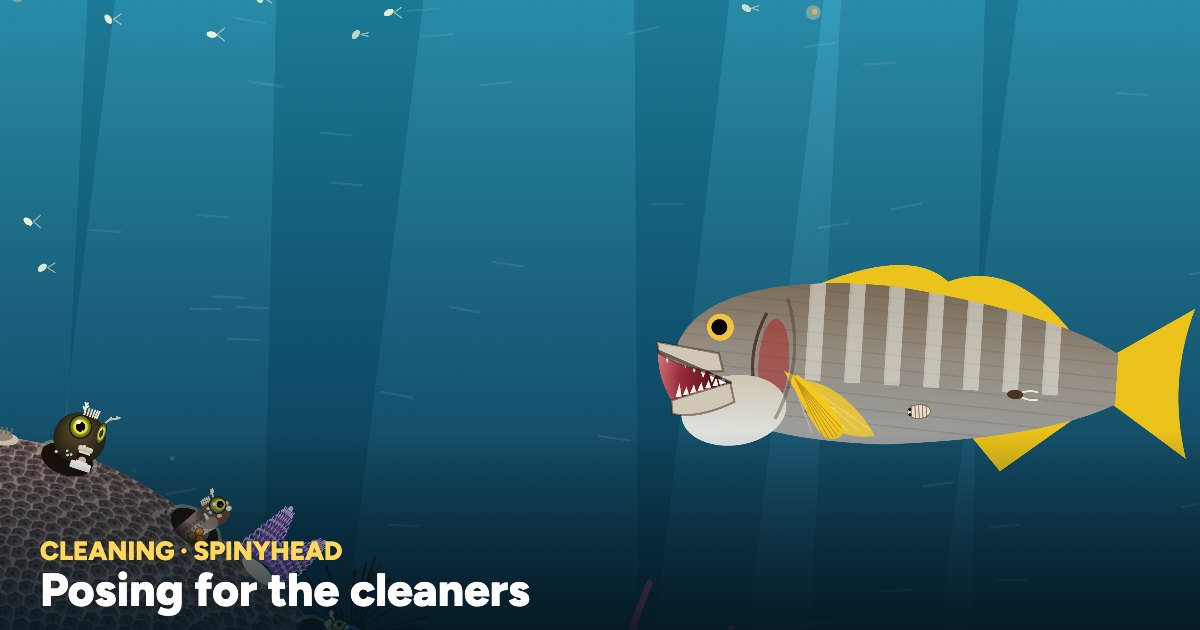
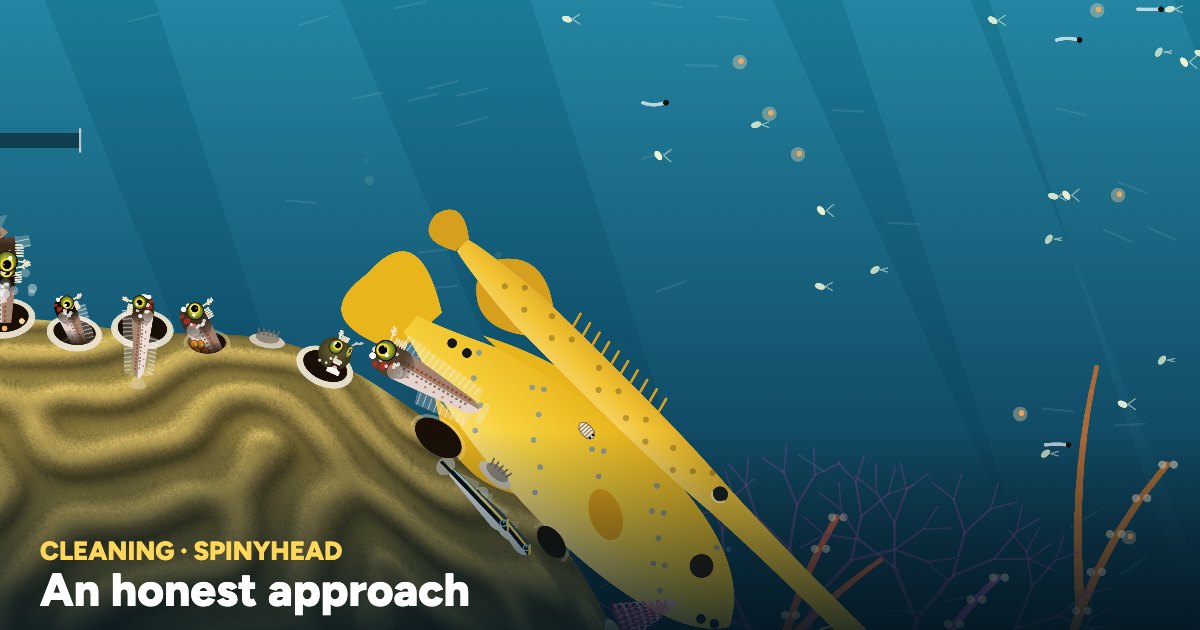
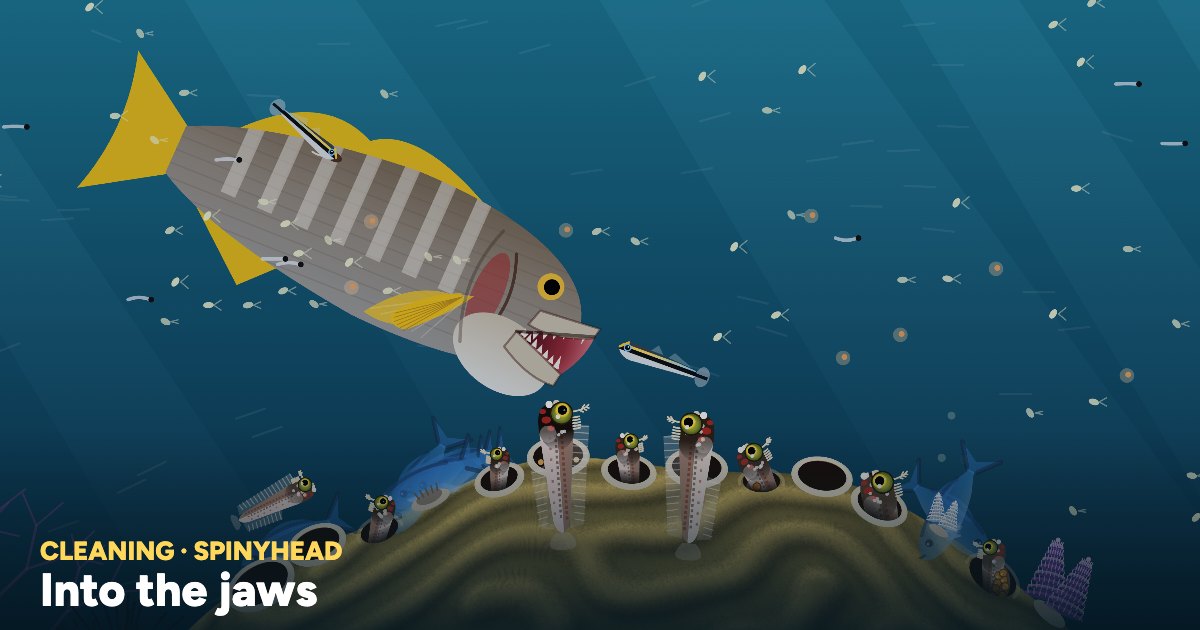
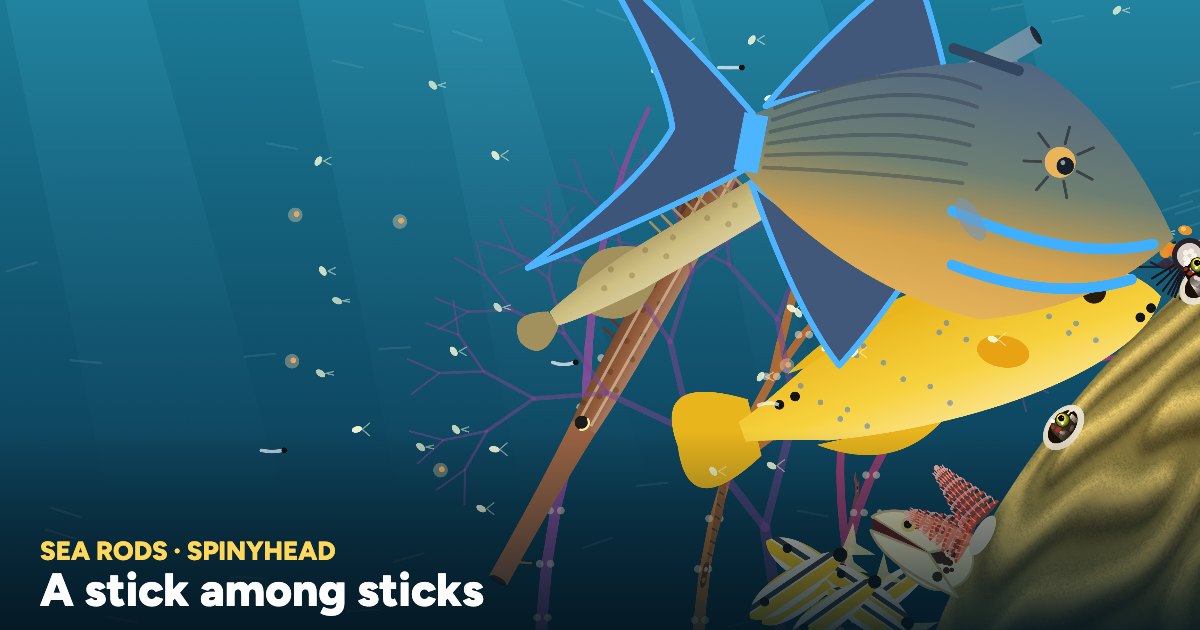
The coney can switch between a red-brown, a golden and a two-tone colour phase. Posing for the cleaners, it turns dark above and pale below, a bold pattern the gobies can’t mistake. A trumpetfish riding it slips off and waits nearby until the cleaning is done.
Species involved
- coney Cephalopholis fulva client that changes colour to pose for cleaners
- sharknose goby Elacatinus evelynae cleaner that removes parasites from the client
- trumpetfish Aulostomus maculatus predator that rides along with the coney and steps aside while it is cleaned
- parasitic copepods Copepoda parasites removed from the client's skin and gills
About cleaning symbiosis (client posing, with a shadowing predator leaving during cleaning)
Cleaning symbiosis is a relationship in which small cleaner animals pick parasites, dead tissue and mucus from larger fish, called clients. Clients often signal that they want to be cleaned by posing. They hold still, spread their fins or open their mouths and gill covers, and some change colour. The coney can shift between several colour phases. In the notebook's account it turns dark above and pale below when posing, a conspicuous pattern that the cleaner gobies recognise. The trumpetfish part of the entry is a separate behaviour. Trumpetfish often hover alongside or ride on larger fish to approach prey unseen.
Why it matters
For the client, cleaning reduces its load of external parasites and may help clean wounds. For the cleaner, clients are a dependable food source. A clear, bold posing signal lets cleaners find clients quickly and reduces the risk of misunderstandings, so both sides save time and energy. A predator such as the coney normally does not eat its cleaners, which is the basis of the partnership. A trumpetfish that rides on the coney gains cover for hunting. Moving off while cleaning goes on avoids disturbing the session, and it does not break the partnership. Cleaning stations can also influence which fish gather in an area and how parasites spread through the local fish community.
On coral reefs
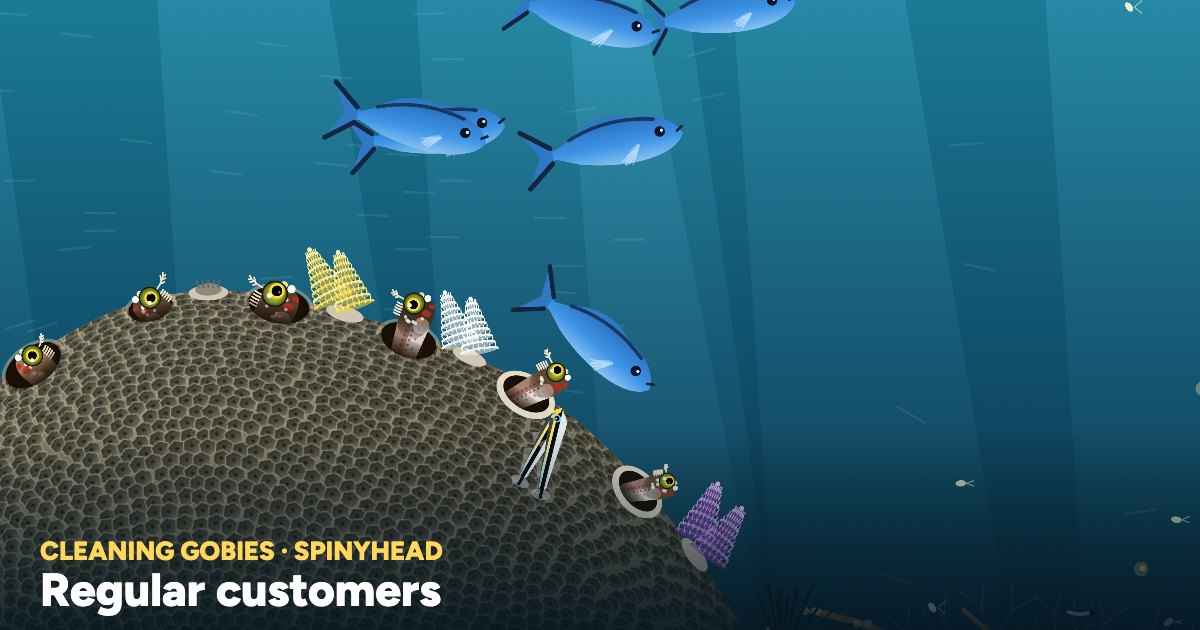
A diver sees a fish hanging motionless, often tilted head-up or head-down, while a small goby, usually sharknose or other Elacatinus species, crawls over its body and into its gill chamber. Cleaning stations are often at a particular coral head or sponge, and clients queue up or return regularly. Groupers such as the coney, and other large fish, will tolerate cleaners working at their mouths. Colour change in a posing fish is a subtle detail, usually seen when the fish is watched at close range for some time.
Who studied it
Cleaning symbioses were first described from natural history observations, and from the 1950s and 1960s field studies and reviews examined how widespread they were. Later work used experiments to test whether cleaners reduce parasite loads and why clients tolerate them. Theory on mutual benefit between unrelated partners, such as Trivers's 1971 paper on reciprocal altruism, often cited cleaning as an example. The notebook cites Côté, Arnal & Reynolds 1998 (J. Fish Biol. 53A:256), a study of cleaning by gobies. I cannot reliably summarise its details, and the colour phases and trumpetfish behaviour here are the game's presentation of the topic.
Elsewhere in the animal kingdom
Cleaning symbiosis occurs on reefs worldwide. The bluestreak cleaner wrasse (Labroides dimidiatus) of the Indo-Pacific is the best-known cleaner fish, and cleaner shrimps such as Pederson's cleaner shrimp work Caribbean reefs. On land, oxpeckers on African mammals are often cited as a comparable case. Shadowing of larger animals by hunters occurs in several other predatory fishes besides the trumpetfish.
Doubts and open questions
It has been debated how mutual the relationship really is, since cleaners sometimes bite mucus or skin, which clients dislike. Researchers also disagree about how much clients actually benefit and how far posing and colour signals have evolved specifically for cleaning rather than serving other functions. It is not certain how common colour change is during posing across species.
Related behaviors
- aggressive mimicry A predator or parasite imitates a harmless or useful animal to get close to prey, whereas in cleaning symbiosis the cleaner's service is real.
- shadowing or following behaviour A hunter hides behind or alongside another animal to approach prey, without any exchange of services.
- mutualism The broader category of interactions that benefit both partners, of which cleaning symbiosis is one example.
- mimicry of cleaners Some fishes imitate cleaner colours and behaviour in order to bite their clients rather than clean them.
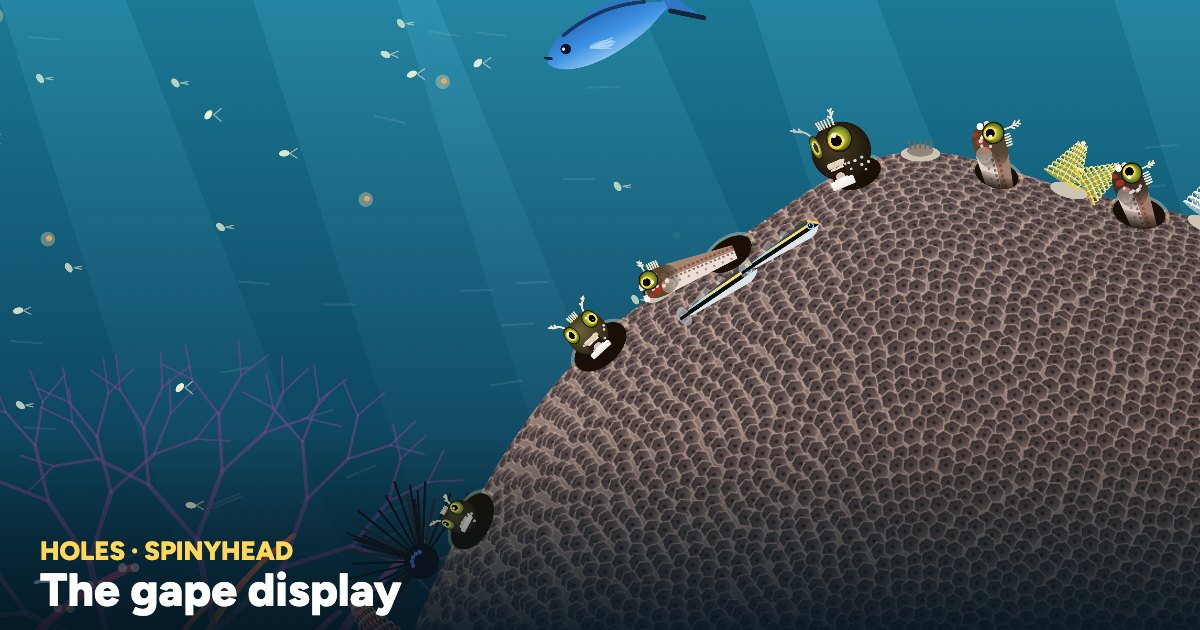
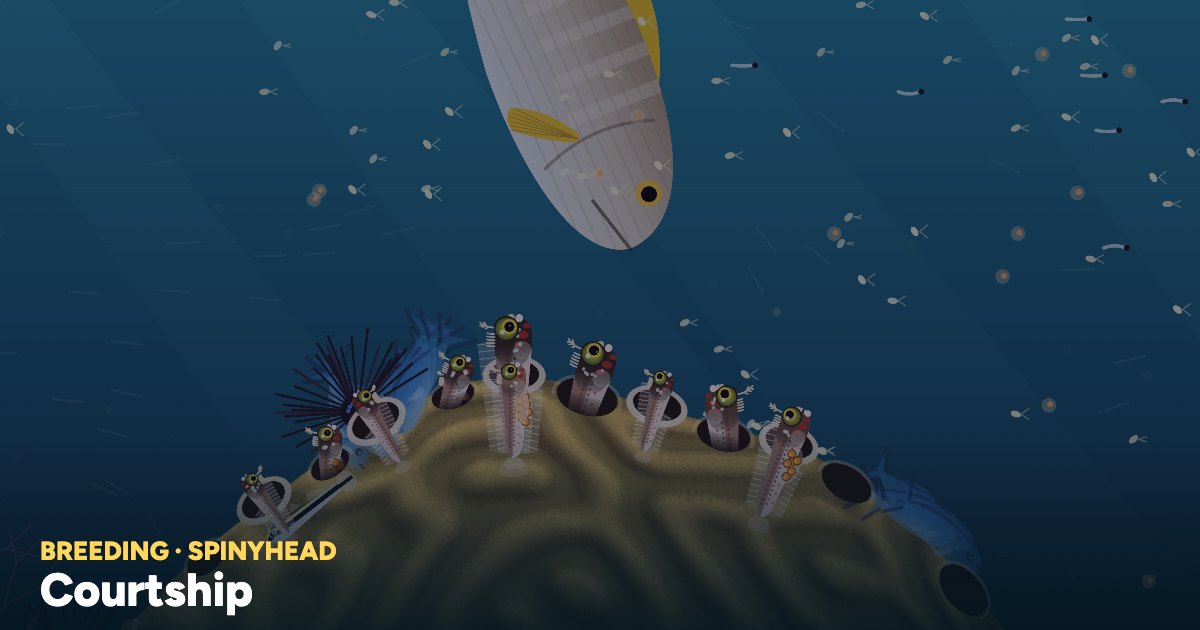
Spinyhead is a free game you play in your browser: you are a spinyhead blenny, a fish about 3 cm long living in a worm hole on a Caribbean coral head. Feed, fight for a better hole, court, raise eggs and dodge predators, while everything around you behaves the way field biologists have seen it behave. Every behavior in the game is backed by a published study or careful observation; there are 14 on these pages, and more in the game’s field notebook waiting to be found.