SpinyheadPlay free
The gape display
Behavior: Agonistic threat display (open-mouth or gape display) in territorial shelter defence
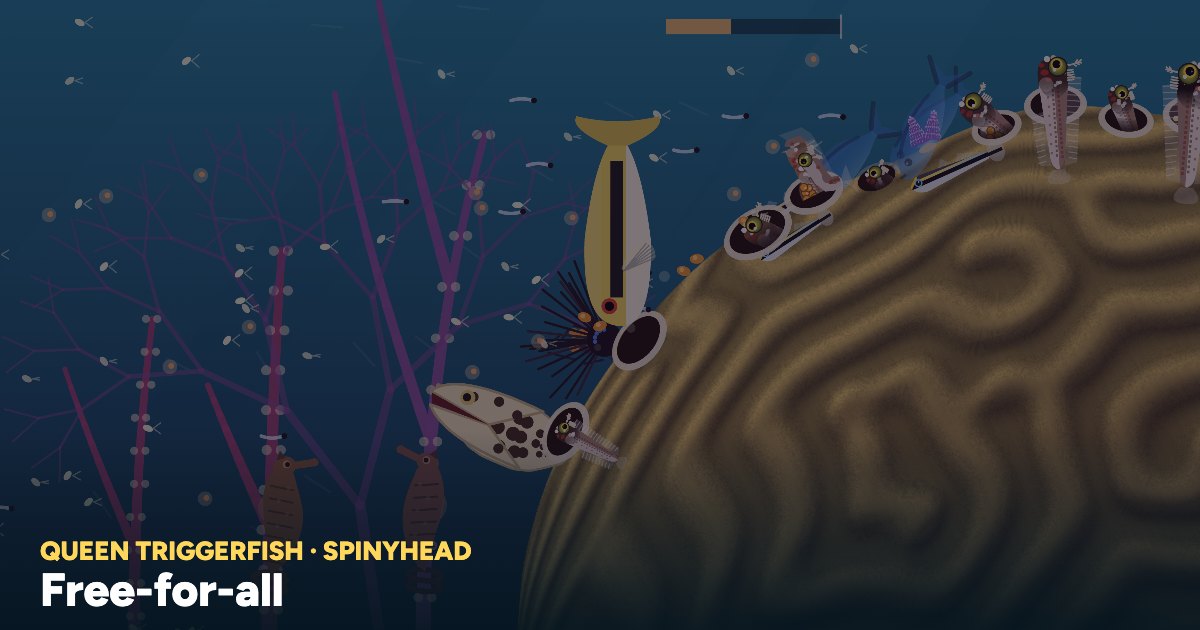
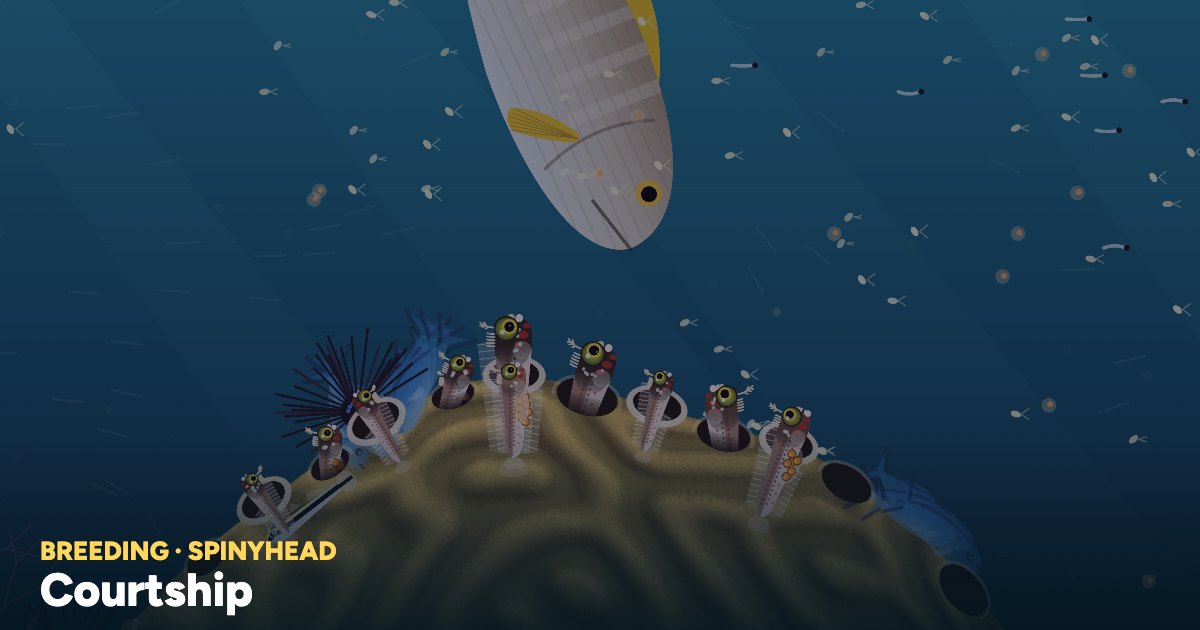
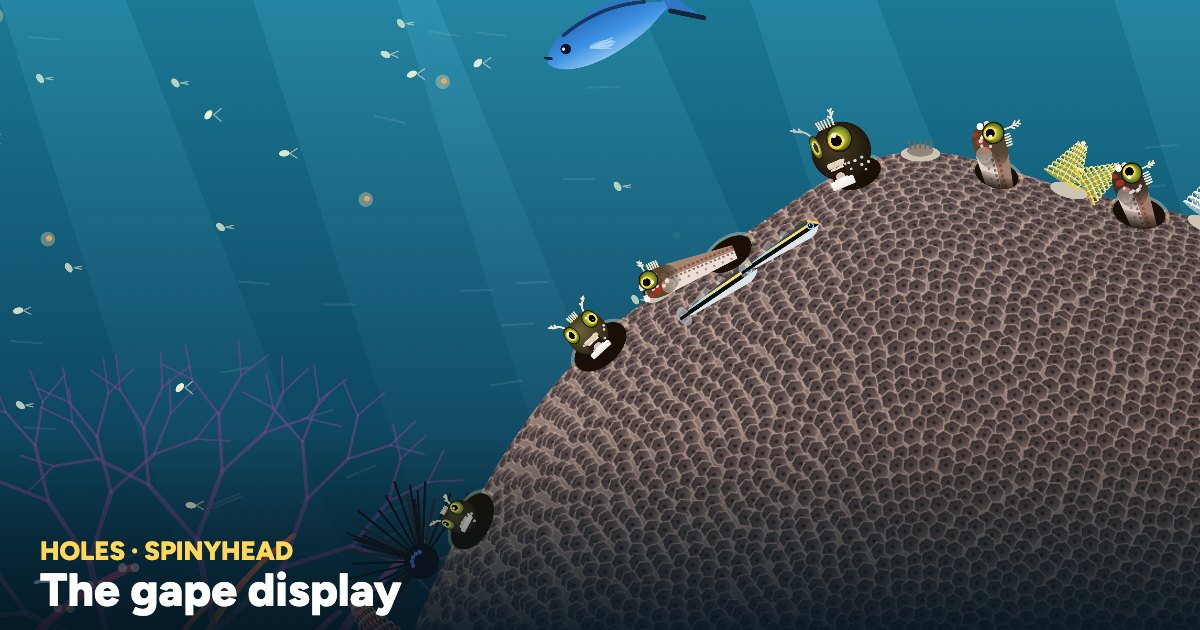
A resident spiny head turns to face an intruder, opens its jaws as wide as they will go, and shakes its head from side to side. From the front, a tiny fish becomes a gaping maw. A real predator gets no display: the blenny just pulls back into its hole.
Species involved
- spinyhead blenny Acanthemblemaria spinosa resident of the hole; gapes at intruders and retreats from predators
About agonistic threat display (open-mouth or gape display) in territorial shelter defence
A threat display, or agonistic display, is a conspicuous posture or movement that lets an animal settle a conflict without a damaging fight. In a gape display, the animal faces the rival and opens its mouth wide, which makes the head look bigger and shows off the jaws. Tube blennies such as the spinyhead live in empty holes in reef rock or coral skeleton, and these holes are a limited resource worth defending. The notebook describes a resident turning to face an intruder, gaping fully and shaking its head from side to side. It says the display is aimed at rivals, not predators, which just get a retreat into the hole.
Why it matters
A threat display lets the resident hold its shelter, and the food and mating access that come with it, at little cost. Fighting risks injury and costs time away from feeding. If the display works, the intruder leaves and the resident keeps its hole. Bluffing only works if intruders usually respond, and a bluff against a predator would risk the resident's life. Retreating into the hole is the safer response to a predator. Because holes are scarce, who wins them can affect who survives and breeds, and so how many blennies a patch of reef can hold.
On coral reefs
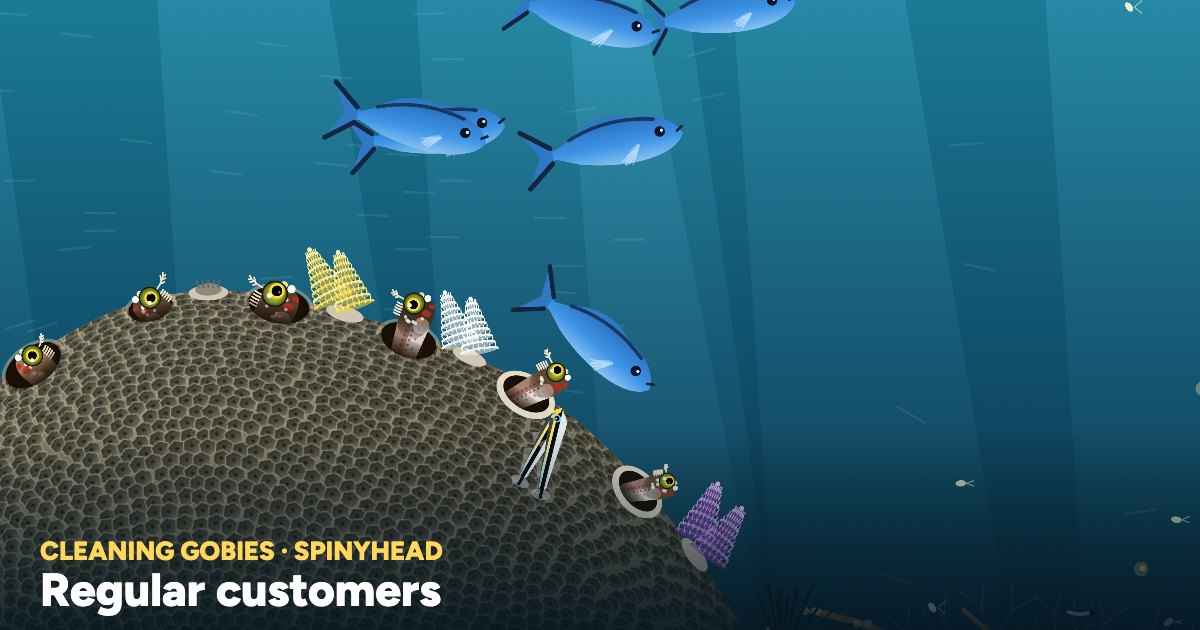
A diver watching a patch of blenny-studded rock sees small heads poking from holes. When a neighbour or wandering fish comes too close, the resident may lunge out, spread its jaws and flare toward it. Often the intruder backs off. If a larger fish approaches, the blenny simply drops out of sight into its hole.
Who studied it
Territorial and threat behaviour in fishes was a central topic in early ethology, which described ritualized displays as substitutes for fighting. Tube blennies (family Chaenopsidae) have been studied for their dependence on holes and for their social and territorial behaviour. I cannot confidently attribute specific studies of the gape display in Acanthemblemaria spinosa. The notebook entry gives no source.
Elsewhere in the animal kingdom
Open-mouth threat displays are widespread. Many cichlids spread their jaws and flare their gill covers at rivals, and some lock jaws in ritualized mouth-wrestling. Hippos, cats and cottonmouth snakes gape as a warning, and many birds hiss with open beaks at intruders. Among reef fishes, other territorial species also use gaping, flaring or head-shaking against neighbours.
Doubts and open questions
It is unclear how much a gape signals real fighting ability, such as bite strength or body size, versus acting as an exaggeration that works because it is rarely tested. The specific head-shaking motion and the claim that predators get no display come from the game's account. I could not confirm them in detail from the wider literature, so treat them as the game's depiction.
Related behaviors
- refuge retreat (antipredator hiding) The animal withdraws into shelter to avoid a predator instead of confronting it, as the blenny does with a real predator.
- ritualized fighting / mouth wrestling Rivals make physical contact with their jaws to test each other, instead of only displaying.
- deimatic (startle) display A sudden display aimed at a predator to startle it, while the gape display is directed at rivals.
- territorial defence of nest sites A broader category of defending a limited resource, including chasing and biting as well as displays.
Spinyhead is a free game you play in your browser: you are a spinyhead blenny, a fish about 3 cm long living in a worm hole on a Caribbean coral head. Feed, fight for a better hole, court, raise eggs and dodge predators, while everything around you behaves the way field biologists have seen it behave. Every behavior in the game is backed by a published study or careful observation; there are 14 on these pages, and more in the game’s field notebook waiting to be found.
Other reef behaviors to discover