 SpinyheadPlay free
An honest approach
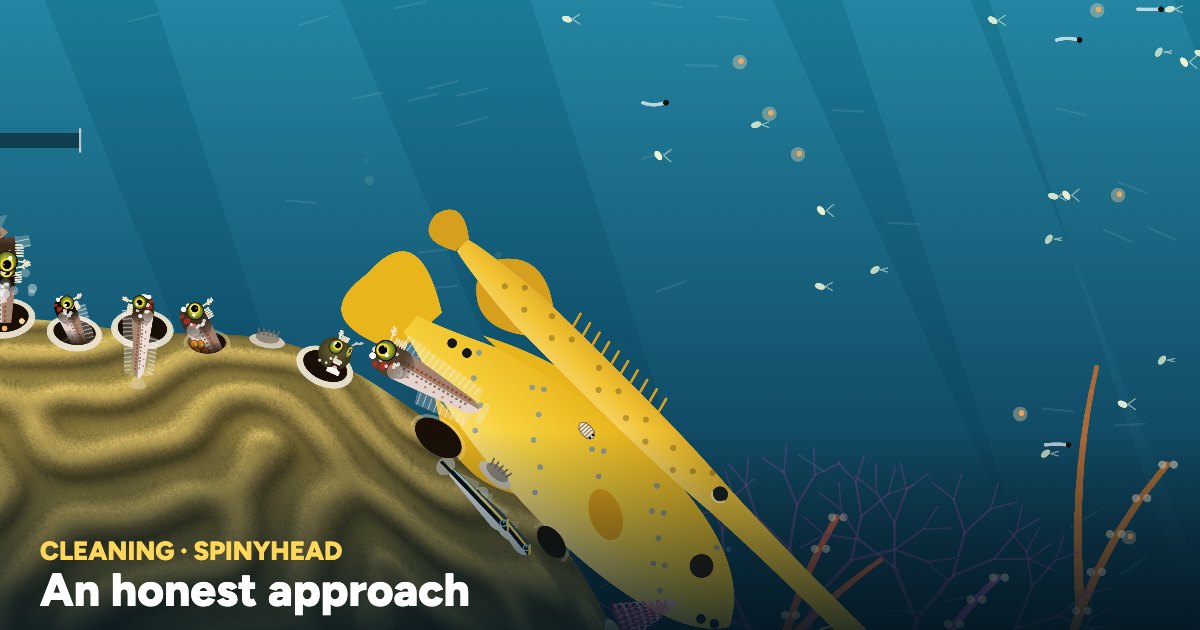
Behavior: Cleaning symbiosis (client posing at cleaning stations, including predatory clients)
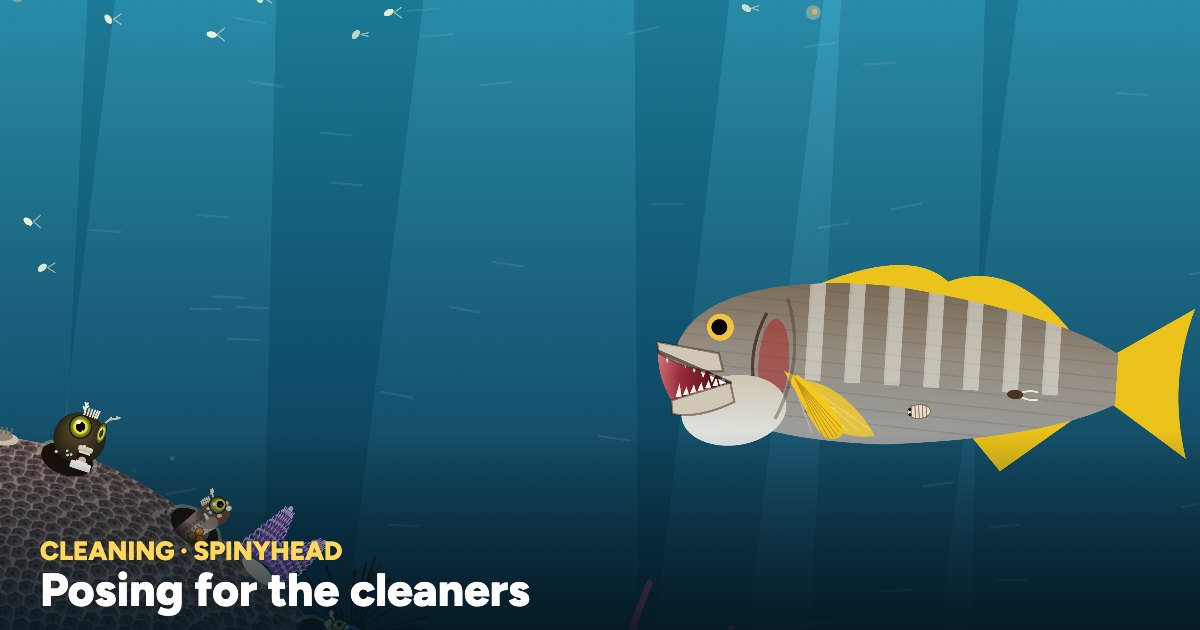
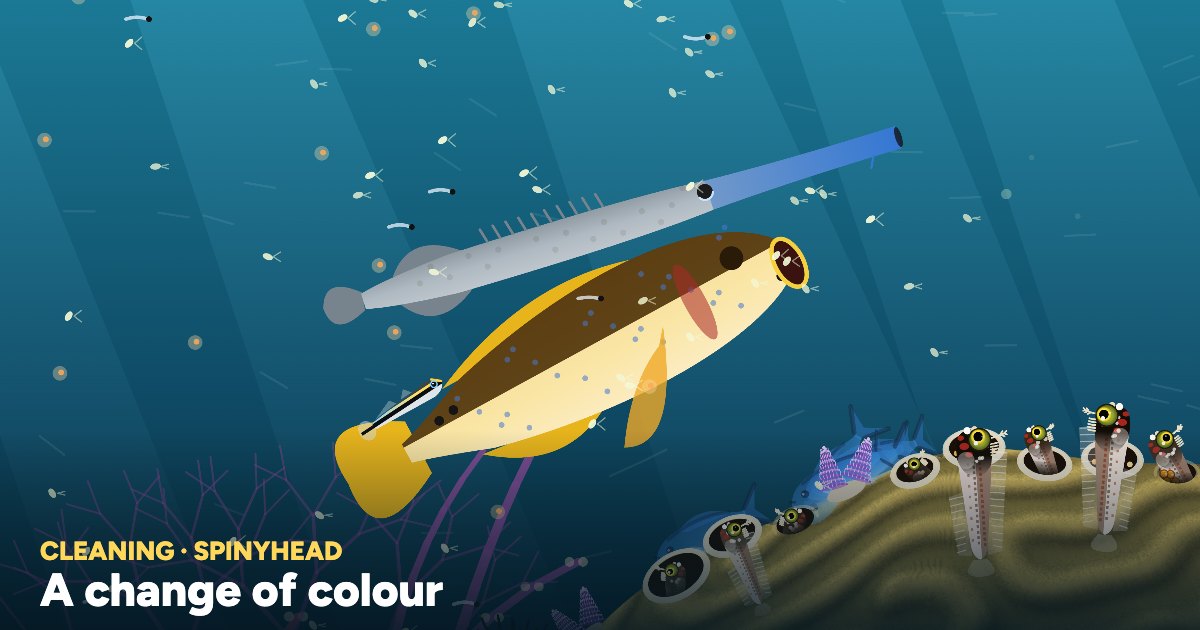
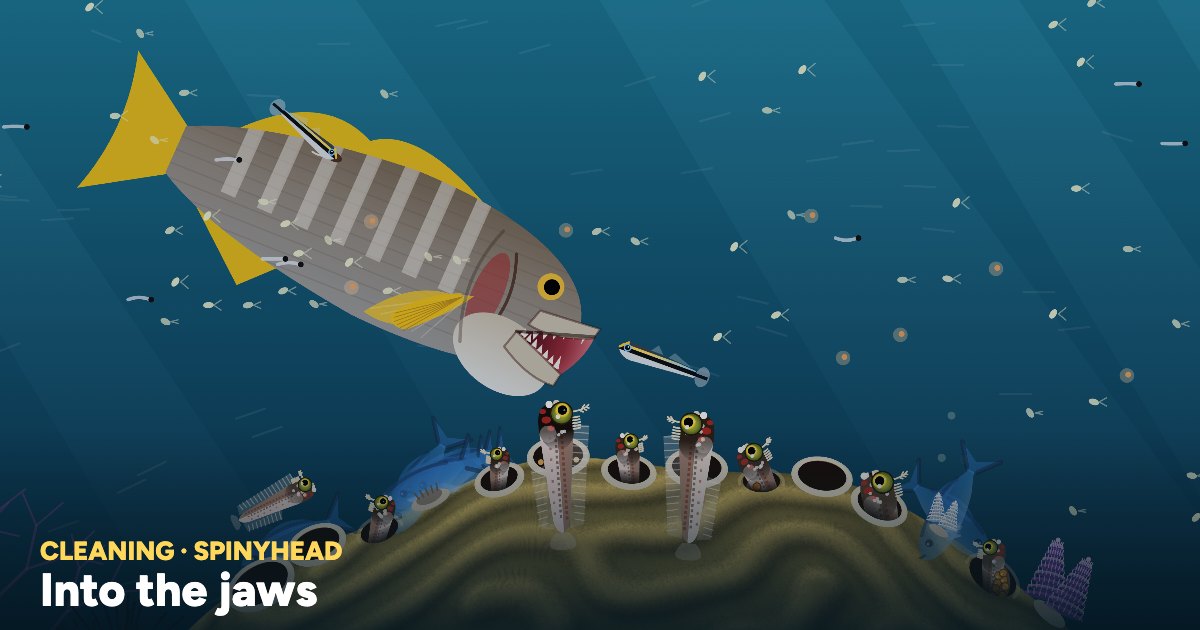
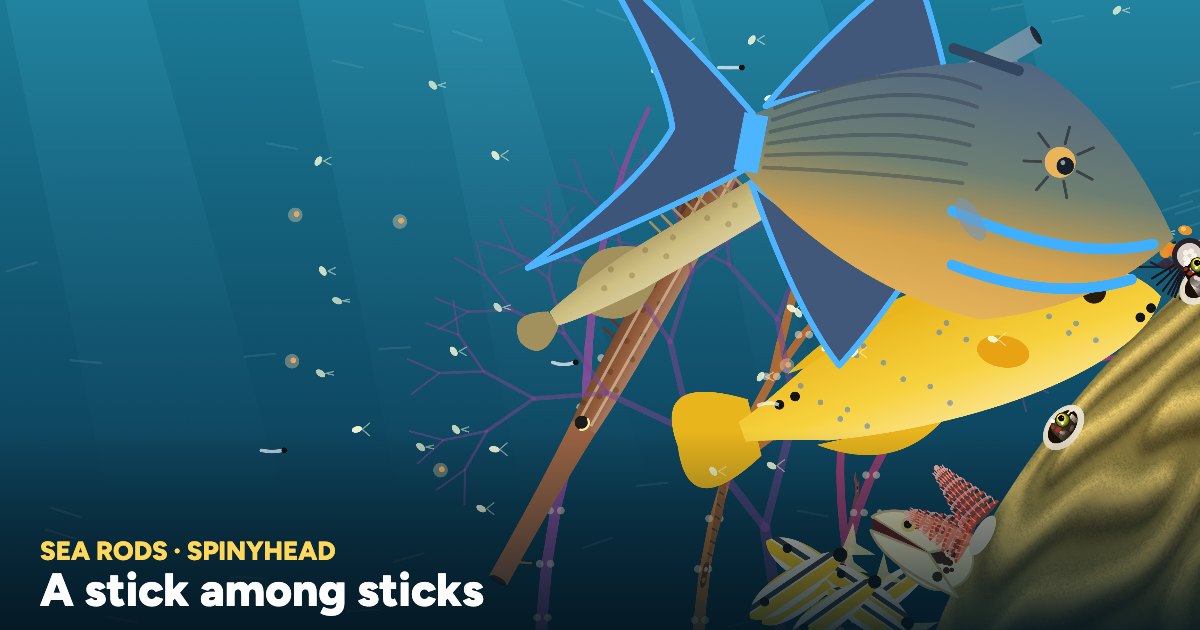
A predator coming to be cleaned does not stalk. It swims in slowly and in the open, and changes colour: the graysby blanches so its dark marks stand out, the snapper darkens. The cleaners can tell a client from a hunter.
Species involved
- graysby Cephalopholis cruentata predatory client that visits cleaners and changes colour
- schoolmaster snapper Lutjanus apodus predatory client that darkens when approaching cleaners
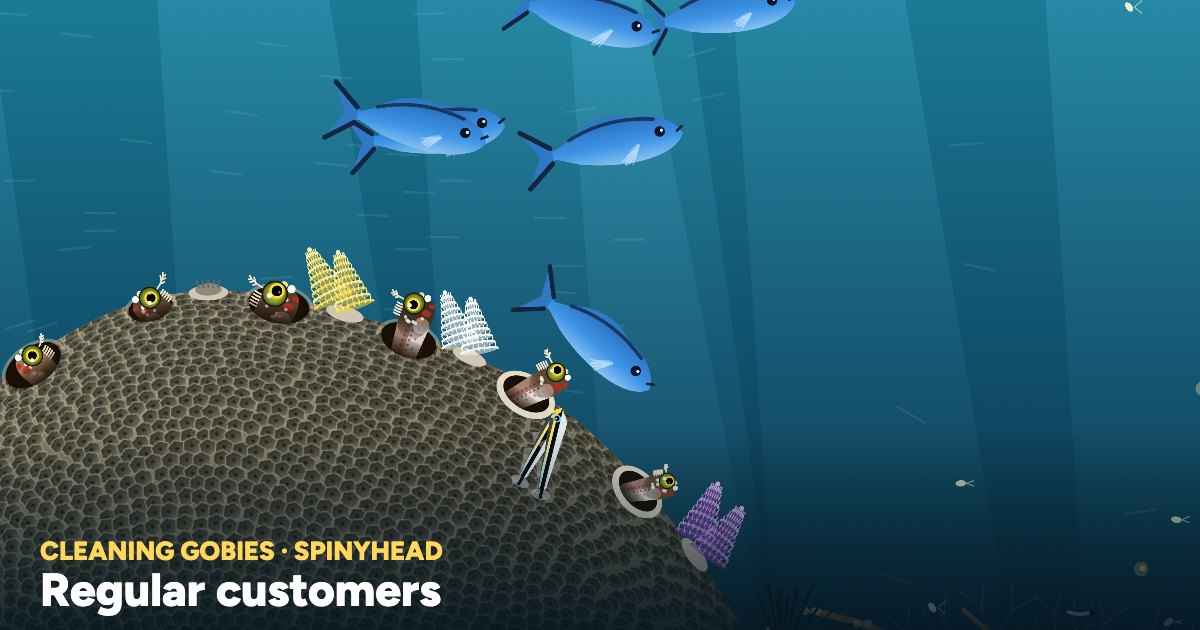
- sharknose goby Elacatinus evelynae cleaner that removes parasites from clients
- Pederson's cleaner shrimp Ancylomenes pedersoni cleaner that also serves clients, including large predators
About cleaning symbiosis (client posing at cleaning stations, including predatory clients)
In cleaning symbiosis, small cleaner animals pick parasites, mucus and damaged tissue from the bodies of larger fish, called clients. Clients visit fixed locations known as cleaning stations. There they often hold still in a distinctive posture, called posing, which can include a particular body angle, spread fins or an open mouth. Some clients are predators that would eat a small fish or shrimp elsewhere on the reef. The notebook entry describes such predators approaching openly and slowly, with a colour change, instead of stalking. It says the cleaners can tell a visiting client from a hunter.
Why it matters
For the client, cleaning removes ectoparasites such as copepods and isopods and may help clean wounds. For the cleaner, clients are a food source. The system works only if predators refrain from eating cleaners and cleaners can tell when a large fish has come to be cleaned. An open, slow approach and clear signals such as posing and colour change let both sides avoid mistakes. Colour change as a signal of intent is reported in the notebook. I am not confident it has been quantified for each species named here. Because cleaning stations concentrate parasite removal in a few places, they can influence which fish gather there and how many parasites they carry. They may also affect fish health on the surrounding reef.
On coral reefs
A diver sees fish queuing near a cleaning station, usually a conspicuous spot marked by a cleaner goby on a coral head or a shrimp waving its antennae. A client arrives, hangs almost motionless, sometimes tilted, with fins spread, and lets the cleaner crawl over its skin and gills. Large groupers and snappers are among the visitors. Fish that normally hunt on the reef may hang beside a tiny goby without reacting to it.
Who studied it
Cleaning behaviour on reefs was described in detail from the mid-twentieth century. Conrad Limbaugh's 1961 work on cleaning symbiosis in the Caribbean and Pacific helped bring it to wide attention. Later reviews, including those by Ilan Côté, examined its ecology and evolution. The notebook's source is Côté, Arnal & Reynolds 1998 in the Journal of Fish Biology, which I recall as a study of how posing differs among fish species visiting cleaning stations. I would not attribute more specific findings to it than the notebook does.
Elsewhere in the animal kingdom
The best-known cleaner is the bluestreak cleaner wrasse (Labroides dimidiatus) of the Indo-Pacific, which has been studied extensively. Cleaner shrimps and cleaner gobies are widespread in tropical seas. On land, oxpeckers pick ticks and other parasites from large African mammals, which is a loosely comparable relationship, though the details differ.
Doubts and open questions
Whether cleaning is a true mutualism is debated. Cleaners often prefer to eat client mucus, which costs the client, so the relationship may include cheating that clients must police. Experimental work has asked how clients and cleaners keep the relationship stable. Caribbean cleaner gobies are often described as less specialised than cleaner wrasses, so findings from one system should not be assumed to apply to the other.
Related behaviors
- aggressive mimicry A predator or parasite imitates a harmless cleaner to get close, as the saber-toothed blenny does by resembling a cleaner wrasse, whereas here the cleaners are genuine.
- ambush predation A predator hides or stalks to surprise prey, the opposite of the slow open approach shown by a client.
- mutualism This is the broader category of interaction in which both partners benefit, and cleaning is one example.
- cleaning by shrimps Cleaning shrimps use antennae displays and body-waving to attract clients, which is a different signalling method from client posing.
Spinyhead is a free game you play in your browser: you are a spinyhead blenny, a fish about 3 cm long living in a worm hole on a Caribbean coral head. Feed, fight for a better hole, court, raise eggs and dodge predators, while everything around you behaves the way field biologists have seen it behave. Every behavior in the game is backed by a published study or careful observation; there are 14 on these pages, and more in the game’s field notebook waiting to be found.