SpinyheadPlay free
A wall of mouths
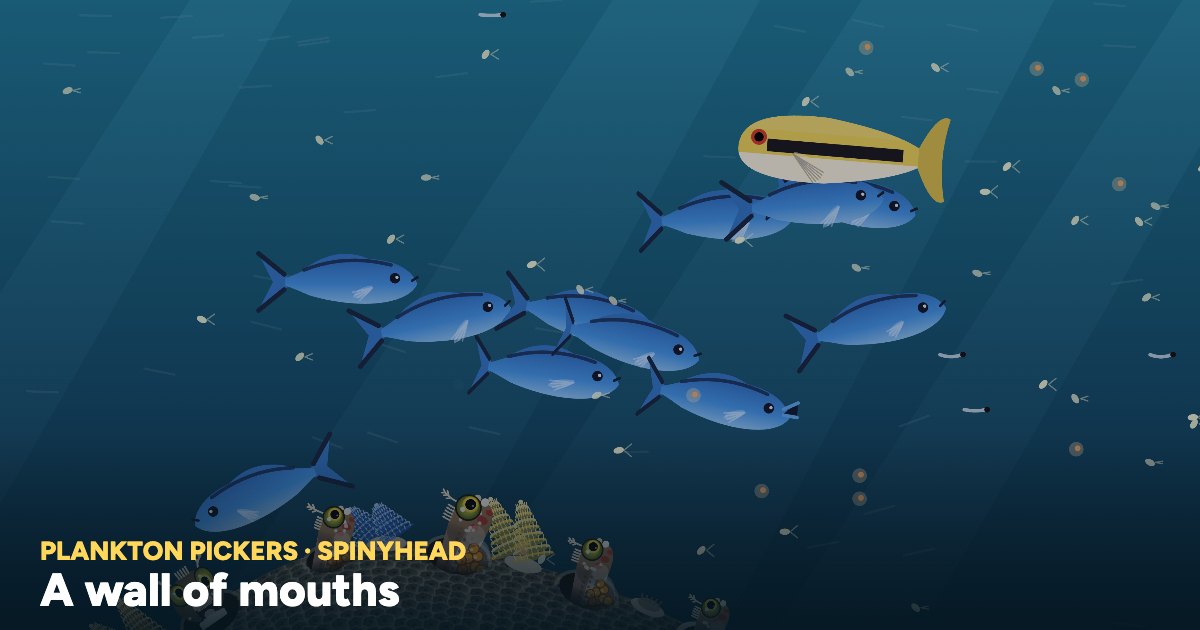
Behavior: Diurnal zooplanktivory (the 'wall of mouths' effect: planktivorous fish intercepting plankton upcurrent of a reef)
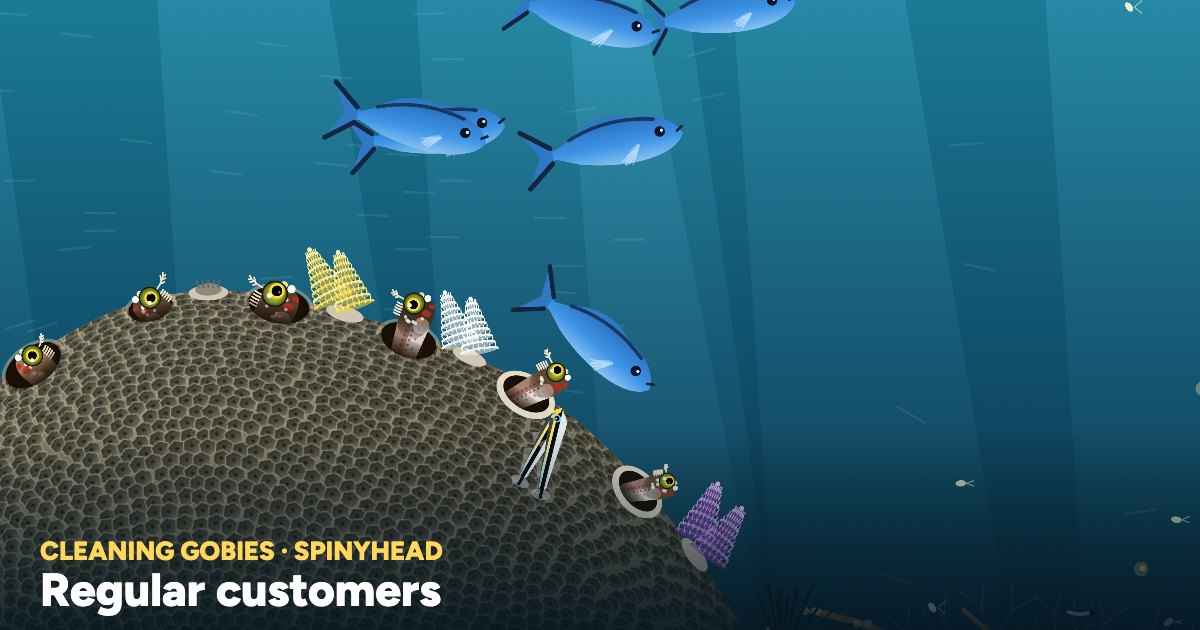
Blue chromis hang upcurrent of the reef, facing the oncoming water and picking plankton out of it. Planktivores like these remove much of the food in water crossing a reef before it reaches the animals living on it.
Species involved
- blue chromis Chromis cyanea planktivore hovering upcurrent and picking plankton
- planktonic copepods Copepoda main prey drifting in the water
- bluehead wrasse Thalassoma bifasciatum another fish that picks plankton from the water column
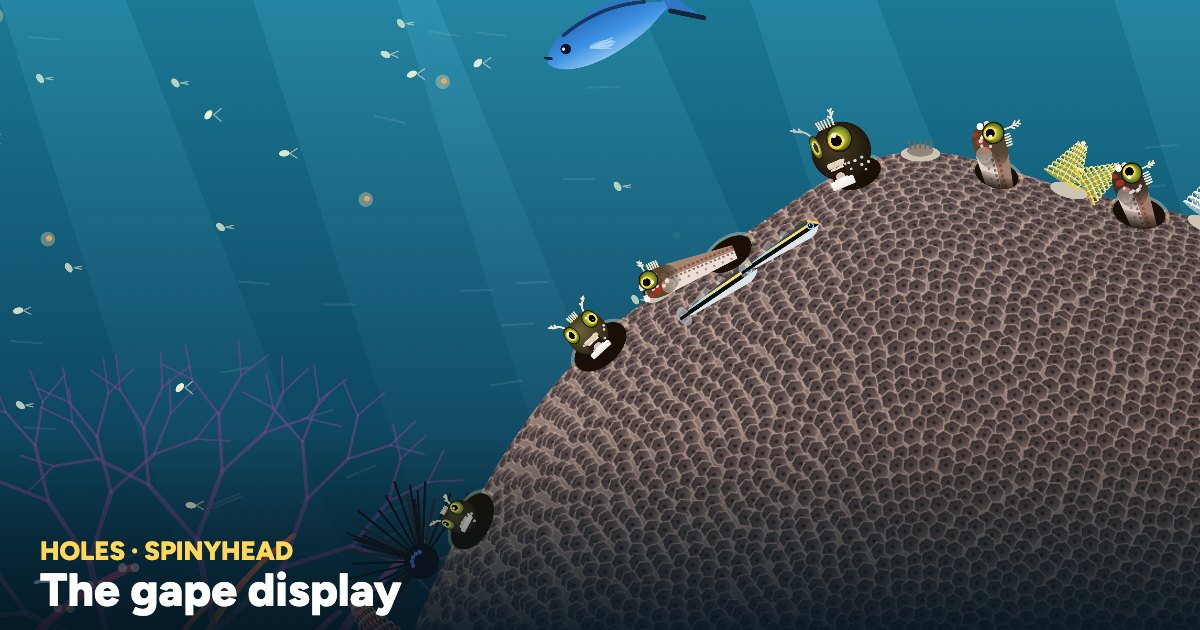
- spinyhead blenny Acanthemblemaria spinosa small planktivore feeding from its hole
About diurnal zooplanktivory (the 'wall of mouths' effect: planktivorous fish intercepting plankton upcurrent of a reef)
Zooplanktivory means feeding on animal plankton, such as copepods and other small drifting animals, that are carried past in the current. Planktivorous reef fishes typically pick individual prey out of the water one at a time, using eyesight, rather than filtering it. Many face into the current and hold position above or in front of the reef, close to shelter. The 'wall of mouths' is a term for the combined effect of many such fish along a reef edge, which together can remove a large share of the plankton in the water passing over the reef.
Why it matters
For the fish, hovering upcurrent gives first access to the plankton the current delivers, while staying close enough to the reef to dart into cover from predators. For the reef, the plankton is largely produced in open water, so planktivores act as a conduit that moves energy and nutrients from the open ocean onto the reef, where it enters the food web through the fish's growth, waste and role as prey for larger predators. Because the fish take food first, animals living farther downstream in the flow, including other planktivores and suspension feeders, may receive less. This makes the position within the current an important part of how a reef community is structured.
On coral reefs
A diver sees clouds or loose aggregations of small fish, such as blue chromis, hanging in the water above and in front of the reef and all facing the current. They make quick short darts to pick at prey, then return to their station. When a threat appears they drop back into the coral branches and crevices, and they usually shelter in the reef at night.
Who studied it
The idea that planktivorous fishes deplete the plankton crossing a reef was examined in detail by Hamner and colleagues, whose 1988 paper in Bulletin of Marine Science (42:459), the source of this notebook entry, measured zooplankton, planktivorous fishes and water currents on a windward reef face. That study was done on the Great Barrier Reef, not in the Caribbean. It helped popularise the 'wall of mouths' picture of a reef as a barrier that strips plankton from the water.
Elsewhere in the animal kingdom
Planktivory is widespread in the sea. In other coral reef regions, damselfishes and fusiliers form large feeding aggregations above the reef. Outside reefs, schooling fishes such as herrings, anchovies and sardines feed on plankton, and so do manta rays, whale sharks and baleen whales. Many bottom-living invertebrates, such as corals, sponges and tube worms, also capture plankton passively.
Doubts and open questions
How strongly fish deplete plankton varies with site, current speed, and fish density, so the wall of mouths is not equally strong on every reef. How much of the nutrient transfer to the reef comes from planktivore waste, compared with other sources, has also been debated.
Related behaviors
- suspension feeding Animals such as corals and Christmas tree worms catch plankton passively with tentacles or crowns instead of picking it out individually as fish do.
- nocturnal zooplankton feeding by corals Corals capture plankton mostly at night when the polyps extend, whereas planktivorous fish feed by day.
- trophic subsidy This is the broader idea of energy and nutrients moving from one habitat to another, of which the plankton-to-reef transfer is one example.
- cleaning symbiosis Cleaner fish and shrimp pick parasites from other animals rather than picking free-living prey from the water.
Spinyhead is a free game you play in your browser: you are a spinyhead blenny, a fish about 3 cm long living in a worm hole on a Caribbean coral head. Feed, fight for a better hole, court, raise eggs and dodge predators, while everything around you behaves the way field biologists have seen it behave. Every behavior in the game is backed by a published study or careful observation; there are 14 on these pages, and more in the game’s field notebook waiting to be found.
Other reef behaviors to discover