 SpinyheadPlay free
Blue chromis Chromis cyanea

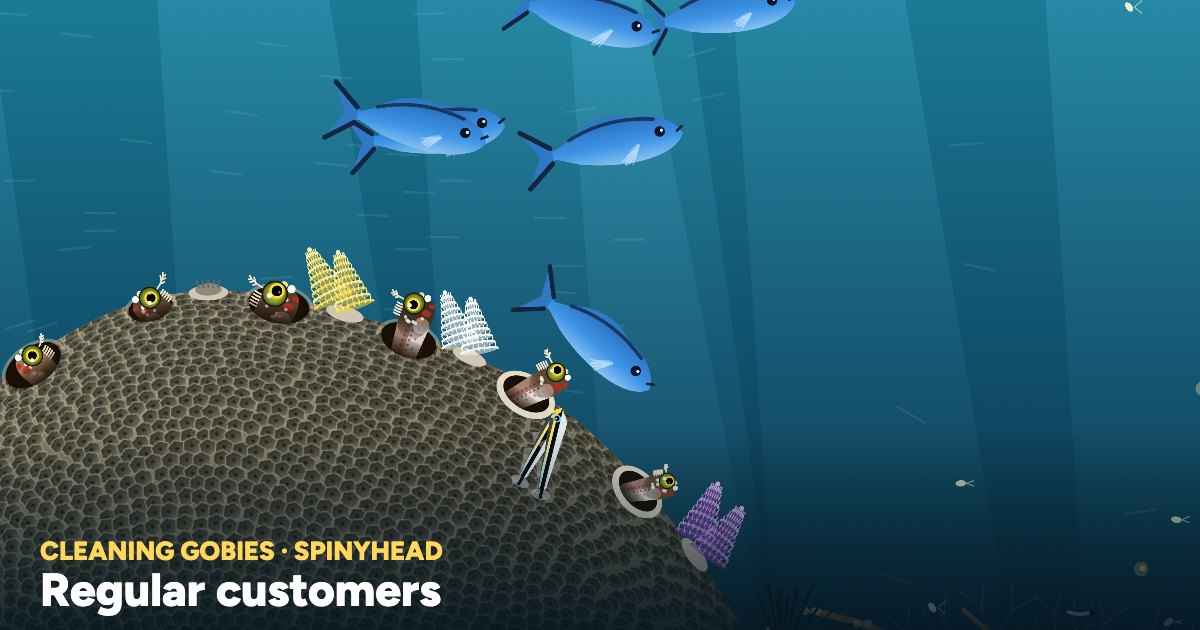
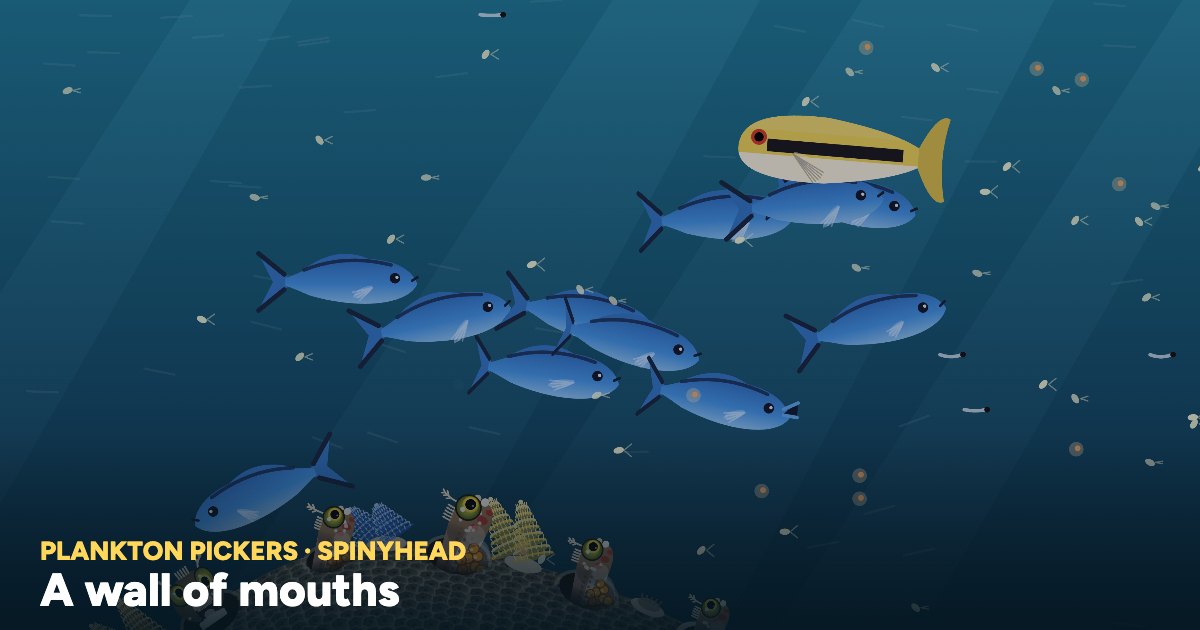
The blue chromis is a small, brilliantly colored damselfish that is among the most abundant fishes on Caribbean reefs. It forms loose, active schools that hover above coral heads and ledges, often feeding in the water column rather than on the bottom. Unlike many of its relatives, it is not strongly territorial toward divers and keeps to open water, darting into the reef when threatened. Adults are vivid electric blue with a deeply forked tail.
How to recognize it
- vivid electric blue body
- deeply forked tail
- black line along upper edge of tail lobes
- thin black edge on dorsal fin
- small, slender, oval body
- forms schools above the reef
- blue color may look darker on the back
| Size | Typically about 5 to 8 cm (2 to 3 in); maximum about 13 cm (5 in). |
|---|---|
| Range | Western Atlantic: Florida, the Bahamas, Gulf of Mexico and throughout the Caribbean south to northern South America and Brazilian offshore areas in some accounts. Rare or absent in some northern fringes. |
| Habitat | Coral reefs, especially along reef slopes, walls and the tops of coral heads, from shallow water to about 60 m (200 ft). Most common in clear water on outer reefs, where it hovers a few meters above the bottom. |
| Diet | Feeds mainly on zooplankton, such as copepods and other small drifting animals, which it picks individually from the water current. It faces into the current while feeding and retreats to shelter among the coral when danger approaches. |
| Conservation | Not considered threatened. It is very abundant and widespread, and is listed as Least Concern by the IUCN. Local risks include reef degradation and loss of coral habitat, and it is occasionally collected for the aquarium trade. |
Life and behavior
Blue chromis live in aggregations that shelter in the reef at night and rise into the water column by day to feed. Males prepare and guard a nest site on a clean patch of hard substrate, such as dead coral or rock, and court females with a vertical swimming display. Females lay small, adhesive eggs on the nest, and the male guards and fans them until they hatch, after which the larvae drift in the plankton before settling onto reefs. Juveniles settle in groups, and are often found in sheltered spots among coral branches. Lifespan is several years.
Its family: Damselfishes (Pomacentridae)
Damselfishes are small, deep-bodied reef fishes with a single nostril on each side of the head and a notched or continuous dorsal fin. Many are colorful and some are fiercely territorial. They typically lay adhesive eggs on a prepared nest that the male guards. Chromis species are more open-water, plankton-feeding members of the family.
Similar species
- Brown chromis Chromis multilineata Brown or olive-gray body with a pale rear and a dark spot at the pectoral fin base, rather than all-over bright blue.
- Sunshinefish Chromis insolata Olive to tan body with scale edges darker, and lacks the electric blue color.
- Yellowtail reeffish Chromis enchrysura Blue on the front of the body with a yellow tail and rear body, whereas the blue chromis is blue throughout.