 SpinyheadPlay free
Regular customers
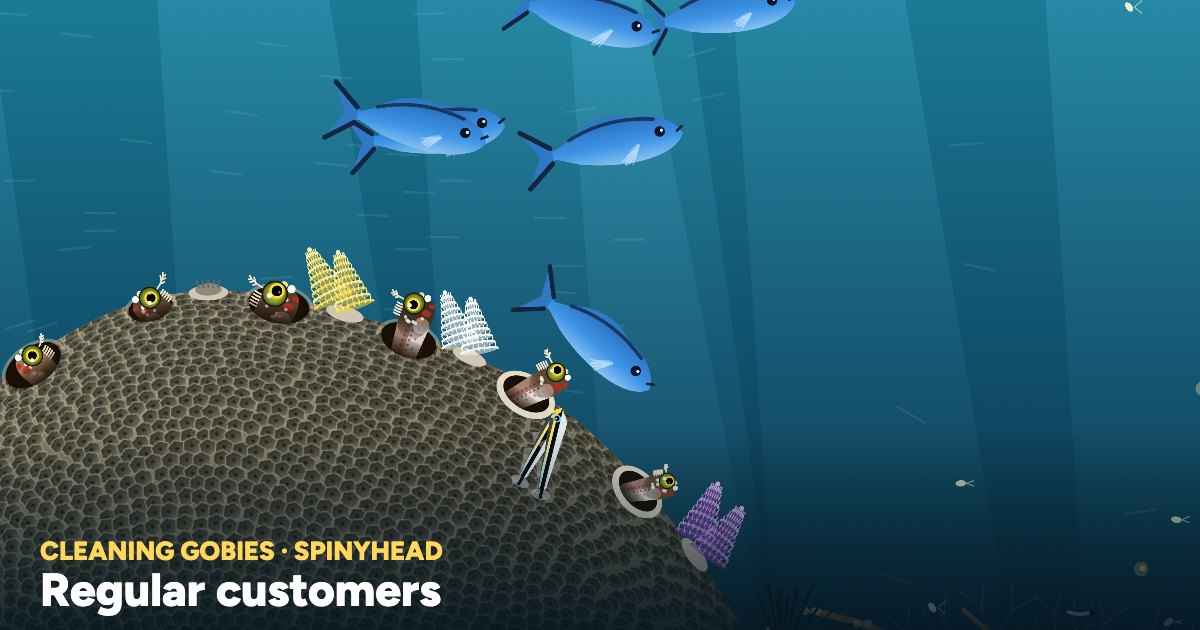
Behavior: Social monogamy (pair-bonding) linked to defence of a cleaning station, a form of resource defence
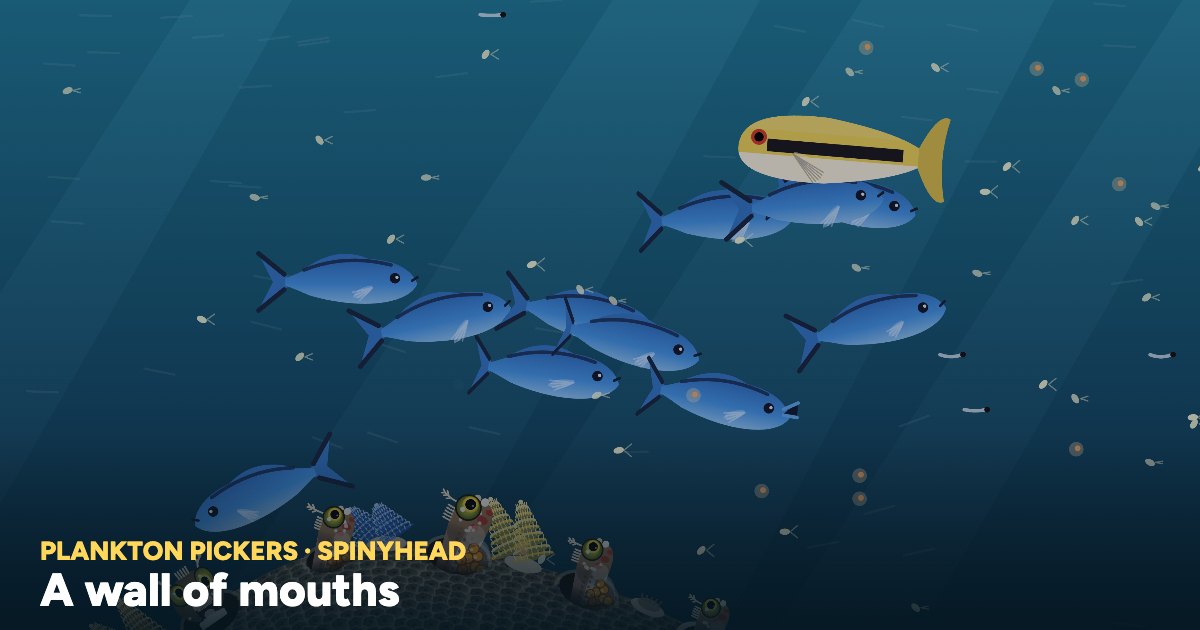
Next to a big aggregation of chromis, over 80% of a goby pair’s cleaning is of chromis. Stations near good customers are worth defending, which may be part of what holds a pair together.
Species involved
- sharknose goby Elacatinus evelynae cleaner that lives and cleans in pairs at a station
- blue chromis Chromis cyanea abundant, regular client fish near the station
About social monogamy (pair-bonding) linked to defence of a cleaning station, a form of resource defence
Social monogamy means two adults of opposite sex share a home area and stay together over time, whether or not they mate only with each other. Cleaner gobies live on a fixed spot such as a coral head or sponge, and many occupy it as a male-female pair. They pick parasites and dead tissue from visiting fish, called clients. How many clients visit, and which species they are, depends on where the station is. A station next to a dense group of clients is therefore a valuable, defensible resource.
Why it matters
The notebook's suggestion is that a good station is worth defending, and two defenders do that better than one. This could help keep a pair together, because each partner gains from the other's presence at the site. A stable pair on a good site can clean steadily and may breed there. For the clients, a reliable cleaner means regular parasite removal. At the community level, cleaning stations act as hubs where fish and parasites meet. The chromis figure shows that a goby's diet and workload can depend on one neighbouring species. This is the notebook's reading, and monogamy is probably shaped by several factors at once.
On coral reefs
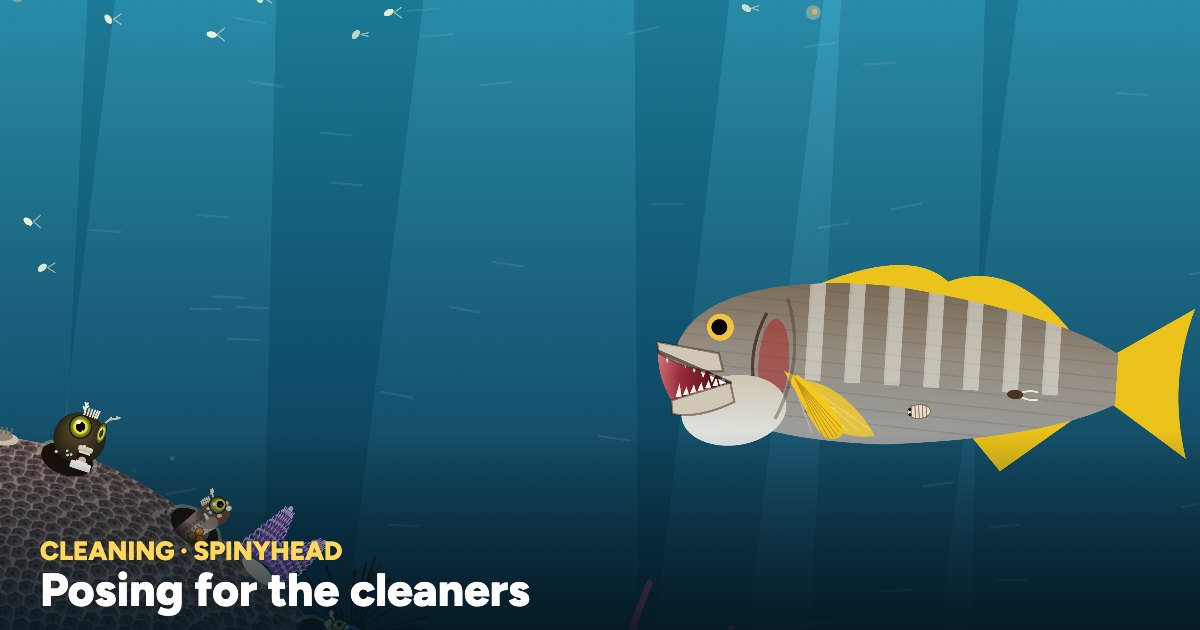
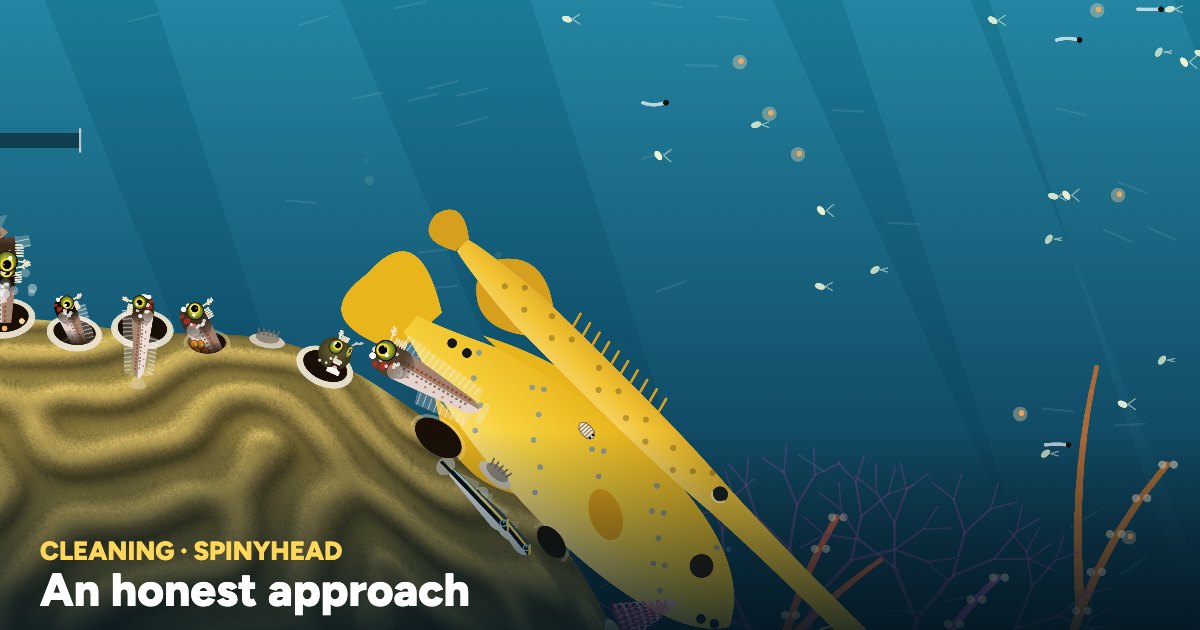
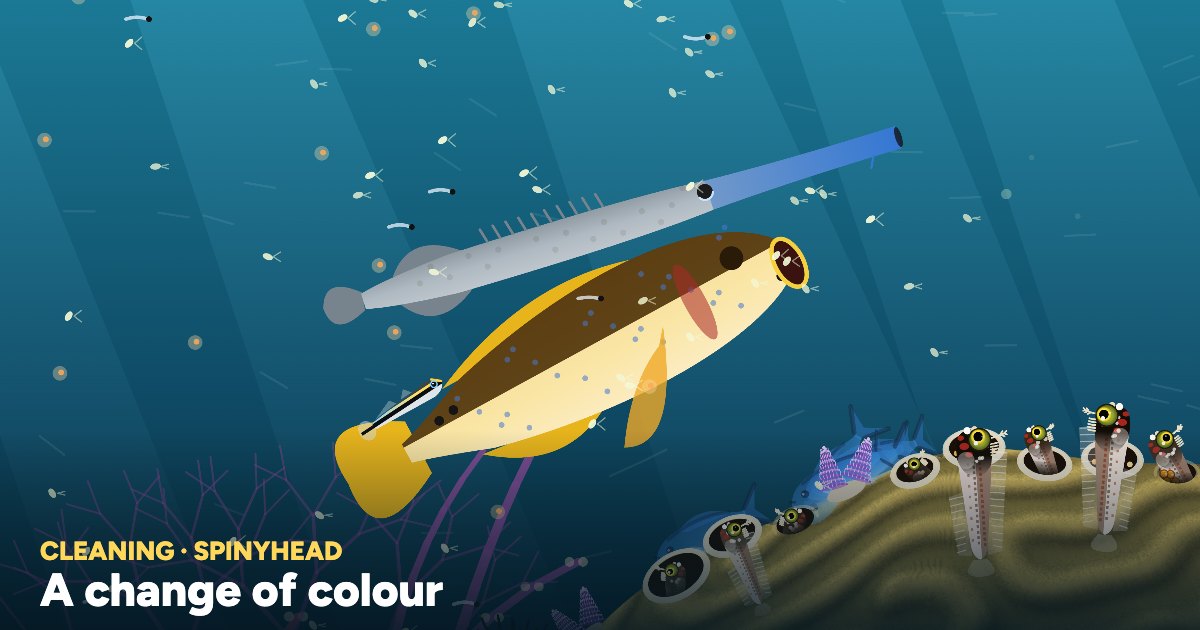
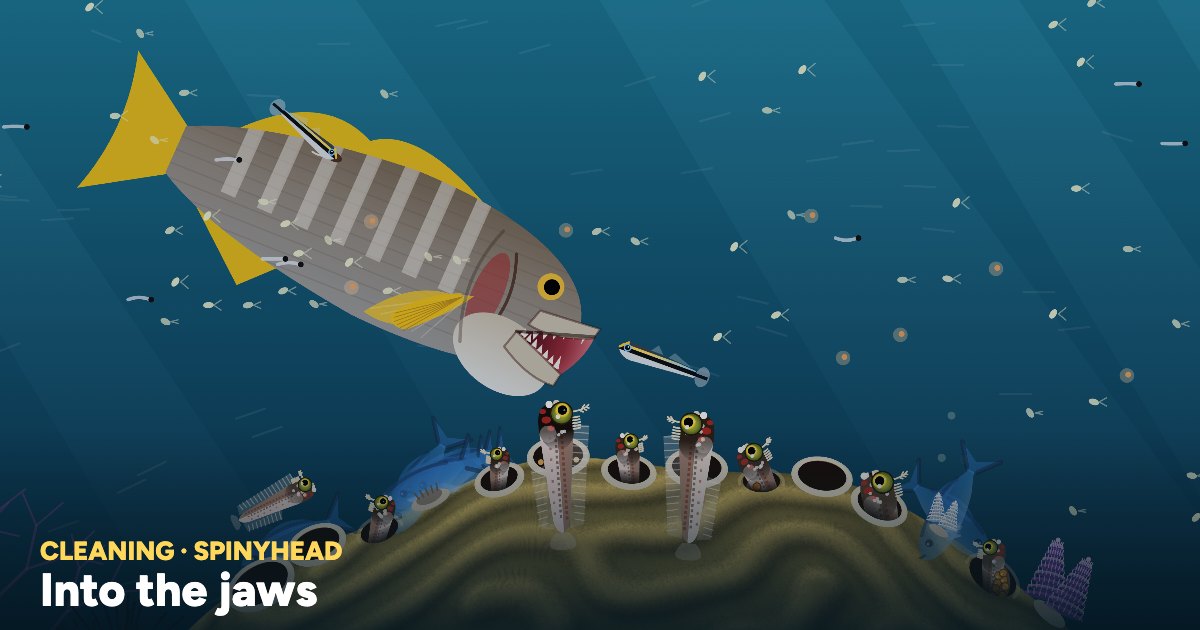
A diver sees one or two small, blue-striped gobies perched on the same coral head or sponge. Fish pose or hover nearby to be cleaned, and the gobies dart out and pick at their skin, fins and gills. Where a school of blue chromis hangs over the reef, the gobies beneath it may spend most of their cleaning time on chromis. The partners usually stay within a few centimetres of each other.
Who studied it
The notebook cites Harding, Almany, Houck and Hixon (2003, Animal Behaviour 65:865), a study of the Caribbean cleaner goby that tested experimentally why these fish live in pairs. Cleaning gobies have long been used to study cleaning symbiosis, and this work extended that research to the question of why they pair up. I am not confident enough to describe its results beyond the notebook's summary.
Elsewhere in the animal kingdom
Social monogamy is well known in birds and also occurs in some mammals. In fishes, well-known examples include anemonefishes in their host anemones, many butterflyfishes that patrol reefs in pairs, and seahorses, which keep a pair bond within a breeding season. Other reef fishes, such as some shrimp gobies that share burrows with snapping shrimp, also live in stable pairs.
Doubts and open questions
Biologists disagree about why monogamy is so common in some reef fishes. Proposed explanations include mate guarding, scarcity of mates, the need for two parents to care for young, and shared defence of a resource, and these are not mutually exclusive. A pair living together does not show that each partner mates only with the other, and in a particular species the main cause has to be tested rather than assumed.
Related behaviors
- cleaning symbiosis This is the service exchange between cleaner and client, whereas pair-bonding concerns how the cleaners organise themselves socially.
- mate guarding One partner stays close to prevent the other from mating with rivals, rather than to defend a shared resource.
- territoriality This is defence of an area against intruders, which can be done by a single animal and need not involve a pair.
- harem polygyny One male holds several females, as in many wrasses, instead of a single stable pair.
Spinyhead is a free game you play in your browser: you are a spinyhead blenny, a fish about 3 cm long living in a worm hole on a Caribbean coral head. Feed, fight for a better hole, court, raise eggs and dodge predators, while everything around you behaves the way field biologists have seen it behave. Every behavior in the game is backed by a published study or careful observation; there are 14 on these pages, and more in the game’s field notebook waiting to be found.
Other reef behaviors to discover