 SpinyheadPlay free
A shark in the blue
Behavior: Antipredator response to a predator (predator-induced behavioural shifts, or the 'landscape of fear')
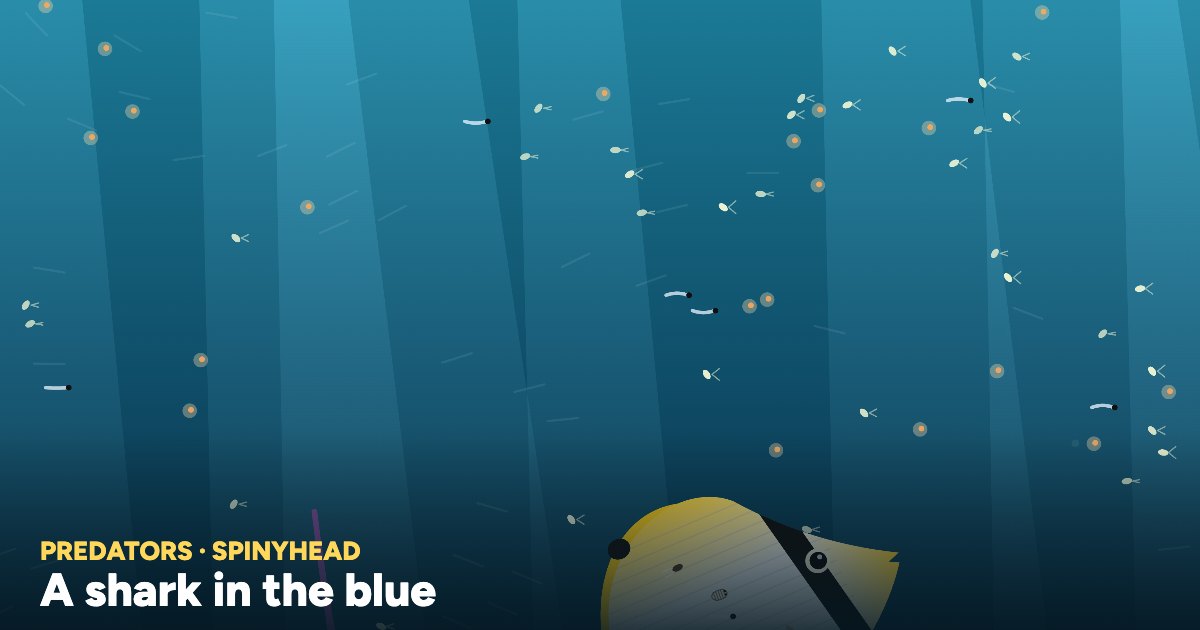
A shark passing far off changes the whole reef: groupers and snappers clear off while it is about, and the small fish carry on.
Species involved
- Caribbean reef shark Carcharhinus perezi large predator whose presence triggers the response
- graysby Cephalopholis cruentata mesopredatory grouper that withdraws when the shark is near
- coney Cephalopholis fulva mesopredatory grouper that withdraws when the shark is near
- schoolmaster snapper Lutjanus apodus mid-sized predator that leaves while the shark is about
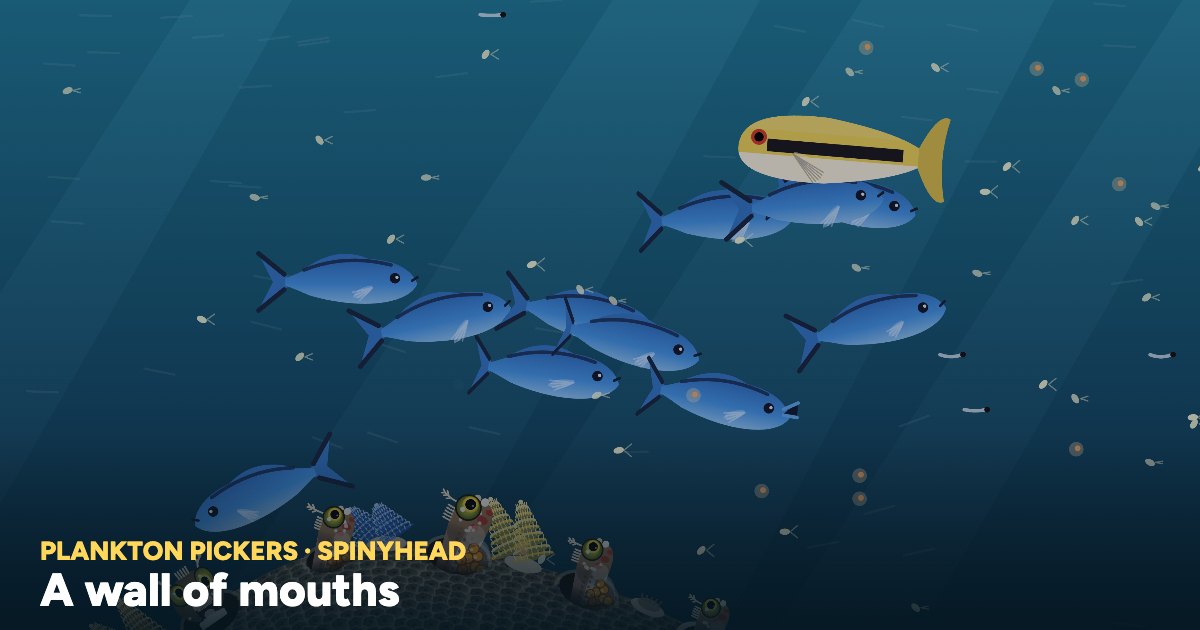
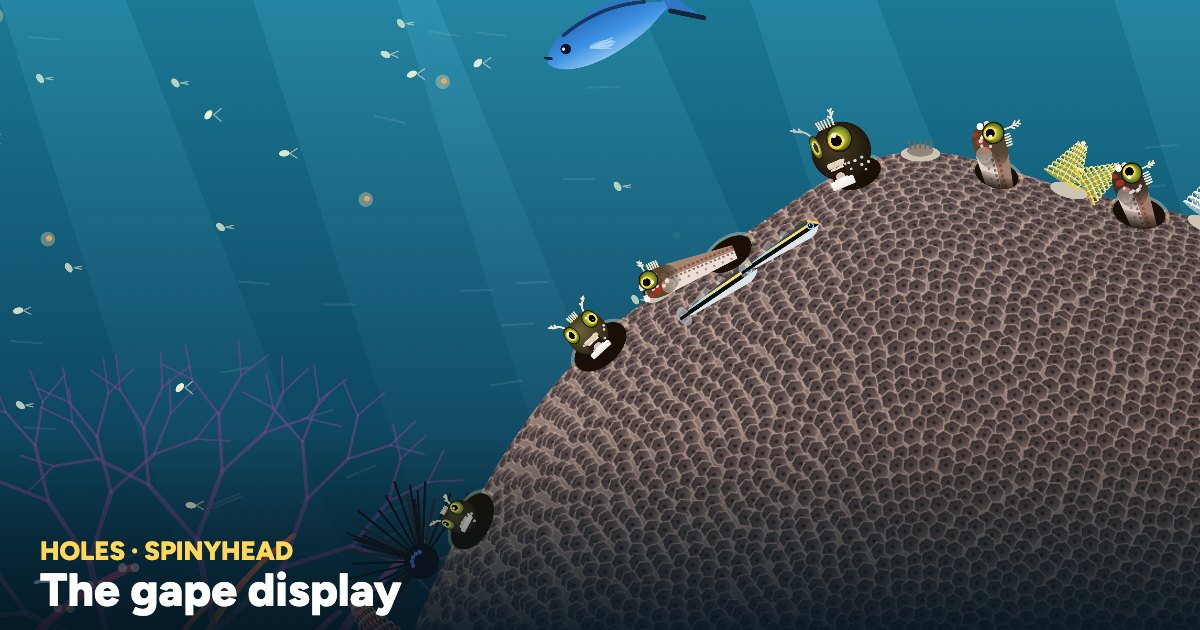
- spinyhead blenny Acanthemblemaria spinosa small fish that carries on as usual, close to its shelter
- bluehead wrasse Thalassoma bifasciatum small fish that carries on feeding and interacting
About antipredator response to a predator (predator-induced behavioural shifts, or the 'landscape of fear')
Many animals adjust where they go and what they do when a predator is nearby. They may flee, hide, stop feeding, move to a different habitat or simply leave the area until the threat has passed. These shifts are non-lethal effects of predators: the prey is not eaten, but its behaviour is changed. How strongly an animal reacts depends on how dangerous the predator is to it, and the cost of reacting (lost feeding or mating time) is weighed against the risk of being caught.
Why it matters
Mid-sized predators such as groupers and snappers are themselves potential prey for large sharks, so leaving when one is close is a sensible way to avoid being caught. Small fishes are generally not worth a large shark's effort, and many live close to holes and crevices, so continuing normal activity can be the cheaper option. Because predators change behaviour, a large predator can influence the whole community indirectly. When the mid-level hunters pull back, their own prey may get a short respite, and the reverse can happen when large predators are removed. The size of these effects on reefs is still studied and varies with the place and the species.
On coral reefs
A diver may see groupers and snappers disappear into the reef or drift away as a reef shark cruises along the edge of the reef or the drop-off. Damselfishes, wrasses, gobies and blennies often continue feeding and tending territories, though they may stay near cover. Once the shark has gone, the larger fishes usually return within a short time.
Who studied it
The idea that predators affect prey through fear and not only through killing developed in ecology over several decades and is often called the 'landscape of fear' or a trait-mediated effect. Studies on reefs and in other seas have looked at how the presence of sharks and other large predators changes the behaviour and distribution of other fishes. The notebook entry itself gives no source.
Elsewhere in the animal kingdom
Similar responses are widely known. In the sea, seals, turtles and dugongs change where they feed in the presence of tiger sharks, as seen in Shark Bay, Western Australia. On land, elk and other prey animals change their movements and grazing when wolves are present, a well-known case from Yellowstone, though how strong these effects are there has been debated. Small birds and mammals also give alarm calls or freeze when a raptor passes.
Doubts and open questions
It is debated how much predator fear shapes whole ecosystems compared with direct predation, and how general the effects are. On reefs, it is not always clear whether fishes leave because of the shark itself or because of other cues, and shark numbers are low on many reefs, which makes the effects hard to study.
Related behaviors
- Predator inspection Prey approach a predator to assess the danger instead of fleeing.
- Shoaling or schooling Prey gather in groups to dilute risk and spot predators earlier, instead of leaving the area.
- Refuge use (sheltering) Fish retreat into holes or crevices instead of leaving the area.
- Alarm signalling An animal gives a warning signal to others instead of simply reacting itself.
Spinyhead is a free game you play in your browser: you are a spinyhead blenny, a fish about 3 cm long living in a worm hole on a Caribbean coral head. Feed, fight for a better hole, court, raise eggs and dodge predators, while everything around you behaves the way field biologists have seen it behave. Every behavior in the game is backed by a published study or careful observation; there are 14 on these pages, and more in the game’s field notebook waiting to be found.
Other reef behaviors to discover