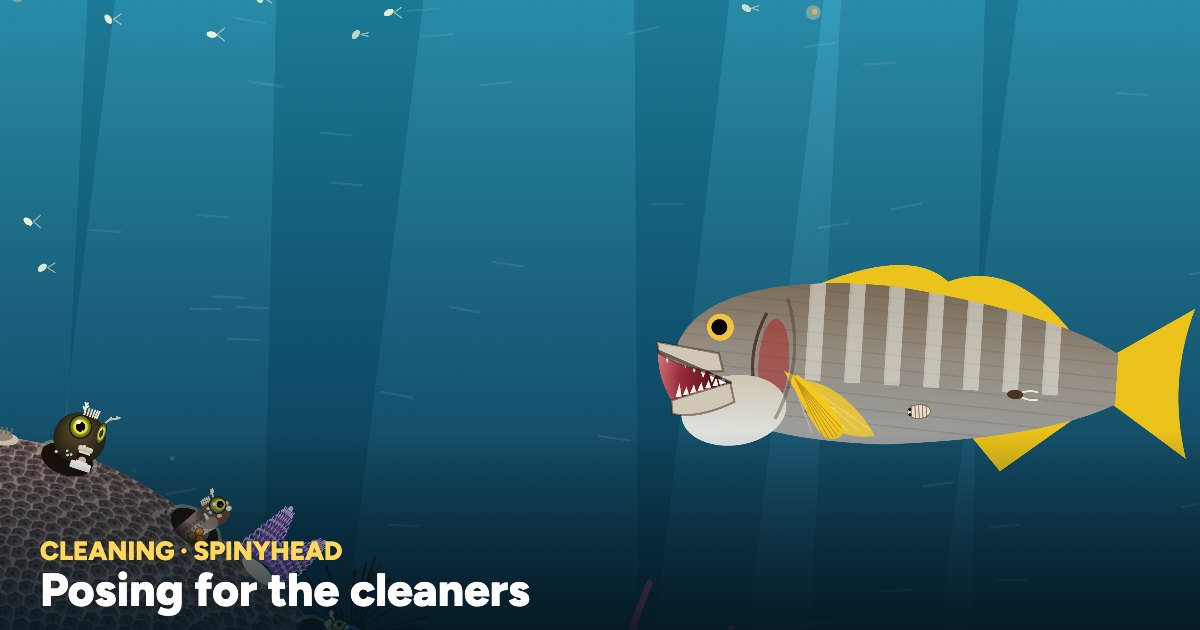
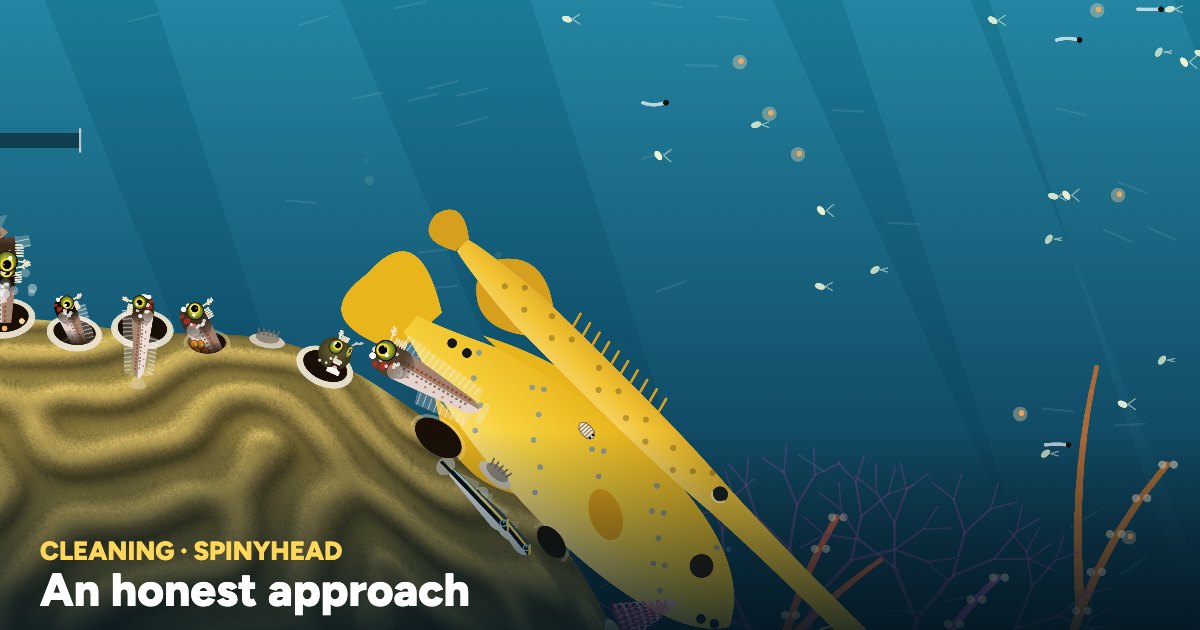
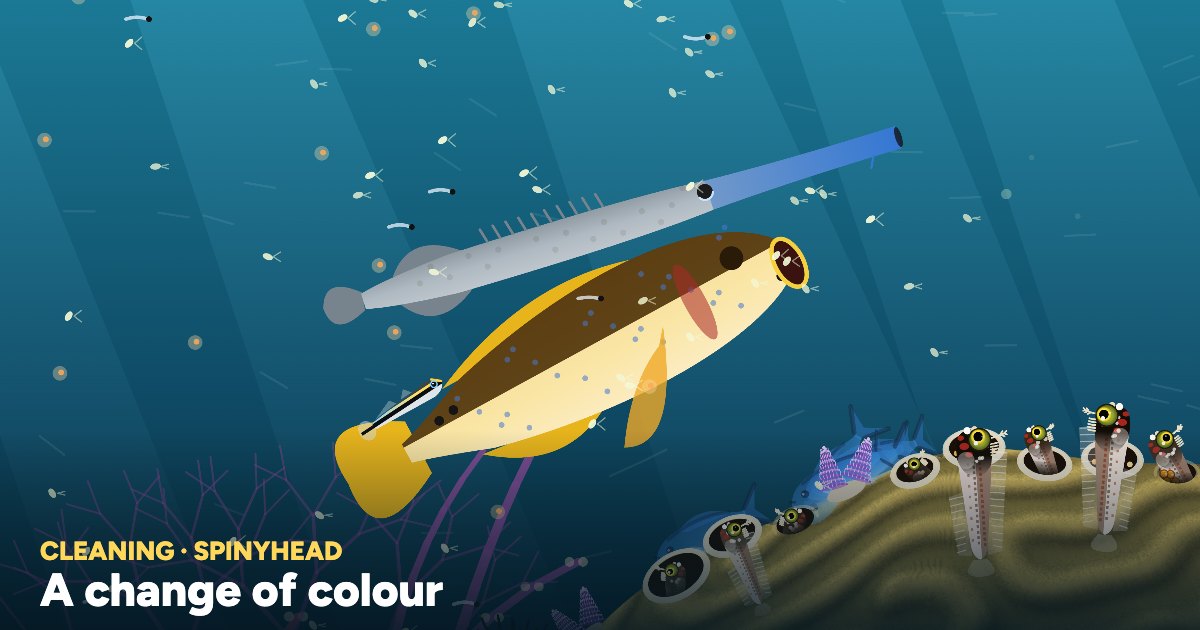
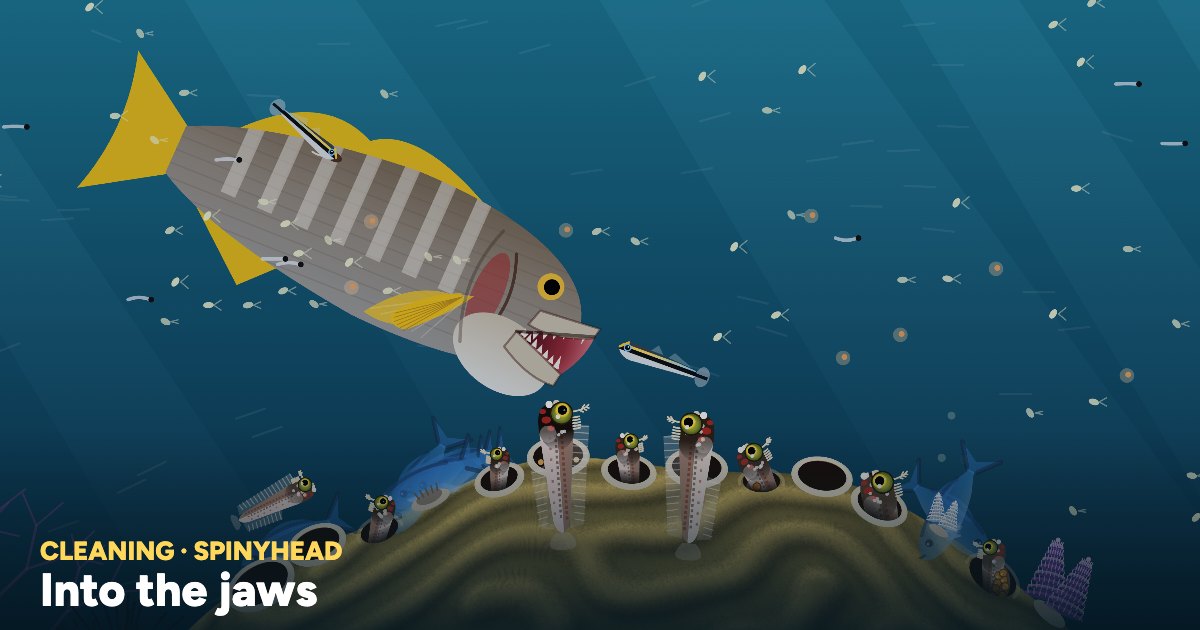
 SpinyheadPlay free
Free-for-all
Behavior: Scavenging at a predator's kill (commensal feeding association), with distraction of would-be predators
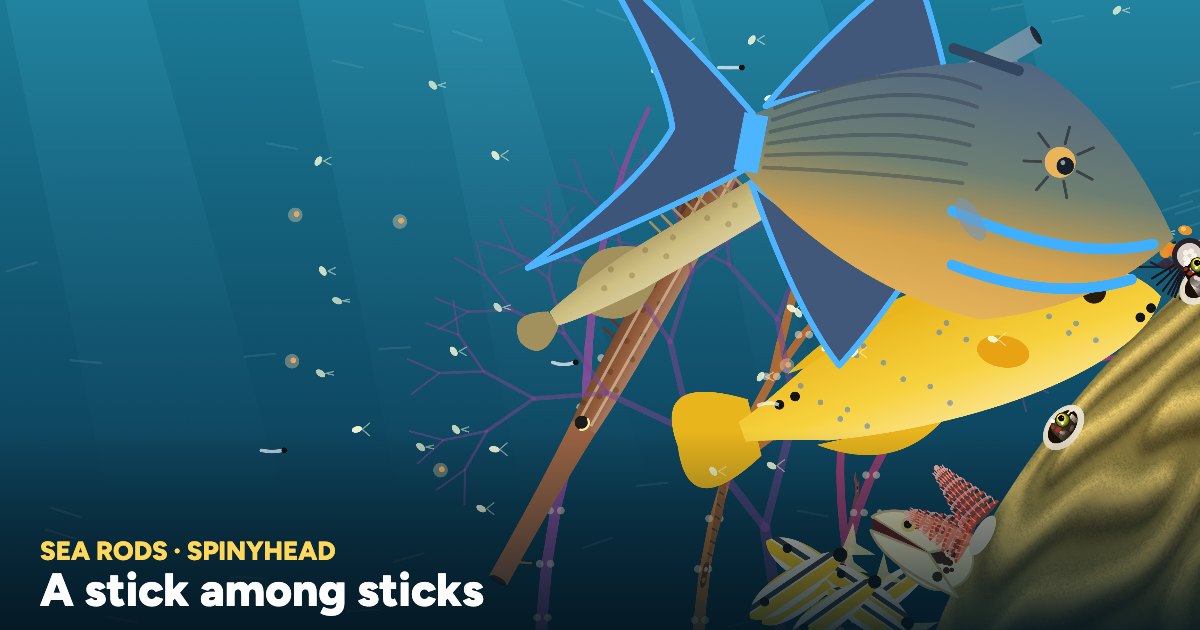
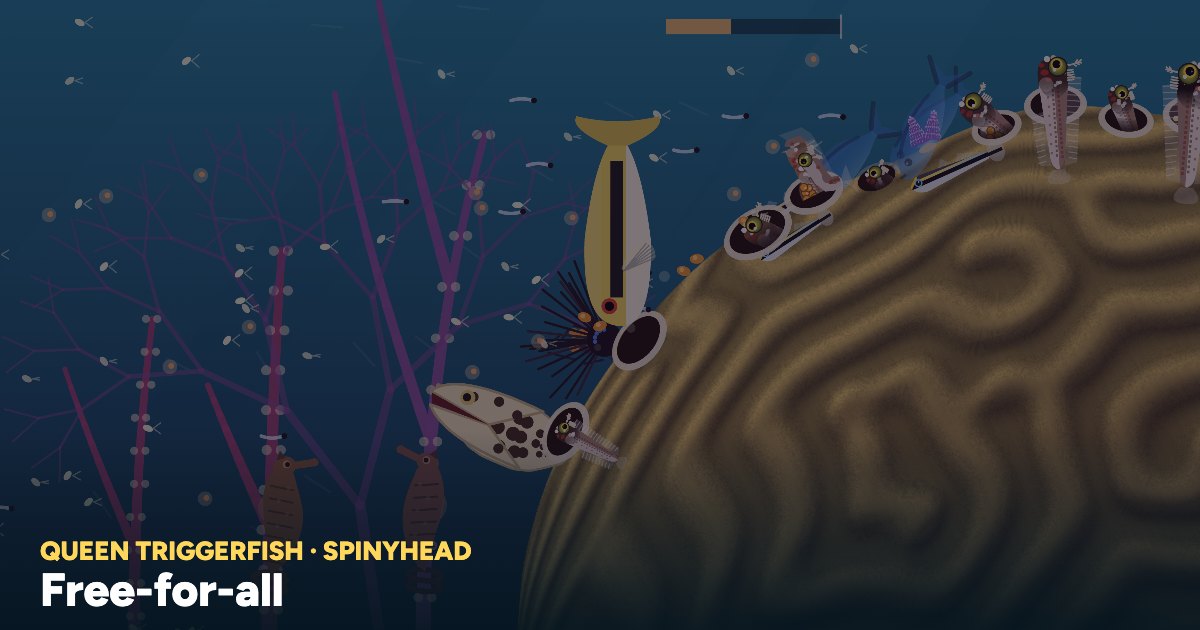
When a triggerfish tears an urchin open, its insides and eggs spill out and wrasses race in from all over the reef to fight for the scraps, right under the triggerfish’s jaws. While they squabble they forget about the blennies.
Species involved
- queen triggerfish Balistes vetula predator that breaks open the urchin and spills the scraps
- bluehead wrasse Thalassoma bifasciatum opportunistic scavenger that crowds in to feed on the scraps
- long-spined sea urchin Diadema antillarum prey whose soft insides and gonads are released
- spinyhead blenny Acanthemblemaria spinosa small prey fish that is overlooked while the wrasses are busy
About scavenging at a predator's kill (commensal feeding association), with distraction of would-be predators
Many predators are messy eaters. When one breaks open a hard-shelled or spiny prey animal, it often releases soft tissue, body fluids, gonads or eggs into the water, and other animals that are not hunting the prey themselves will gather to eat the fragments. Biologists call this scavenging at a kill, or a commensal feeding association: the followers gain food and the predator is usually little affected. The crowd of scavengers is also a competitive scramble, with chasing and grabbing, so the animals in it are focused on food rather than on their surroundings.
Why it matters
For the scavengers, a spilled urchin is a rich, short-lived meal they could not get on their own, because they cannot get through the urchin's spines and test. For the triggerfish, the cost is some lost food, and in return it can eat a well-defended prey animal. In the game's account there is an extra consequence for other reef residents: wrasses that are fighting over scraps are not hunting small fishes such as blennies, so the commotion gives them a brief respite. This effect is a plausible idea of the kind seen in other predator-prey situations, but the notebook gives no source for it. More generally, predators that feed on urchins can influence grazing and algae on a reef, because urchins are major grazers.
On coral reefs
A diver may see a queen triggerfish flip an urchin over and attack its softer underside, often after blowing water at it. Within moments small fishes, often bluehead wrasses, dart in and snatch at the pieces floating or sinking near the triggerfish's mouth. The group breaks up quickly once the scraps are gone.
Who studied it
Reef fish diets, including the triggerfish's habit of eating urchins, were established by gut-content studies and underwater observation through the 20th century. Mixed-species feeding groups and followers that trail foraging fishes have been recognised for a long time in reef ecology. The Caribbean-wide die-off of Diadema in the early 1980s brought extra attention to the animals that eat urchins and to the part urchins play in keeping algae down. The notebook gives no source for this entry.
Elsewhere in the animal kingdom
Scavenging at a predator's kill is widespread. Examples are gulls and fish following feeding whales or seabirds, jackals and vultures at lion kills, and small fishes picking at the scraps when a larger fish or ray digs in the sand. On reefs, wrasses and other fishes commonly follow foraging goatfish and rays to eat the prey they stir up.
Doubts and open questions
It is unclear how much a scavenger crowd really lowers predation on nearby small fishes, and the notebook presents this as a game explanation rather than a documented result. Wrasses might also take little notice of blennies for other reasons, such as the blennies' hiding in holes.
Related behaviors
- kleptoparasitism The follower steals food that another animal has already caught or is carrying, rather than taking only the scraps that spill.
- nuclear-follower foraging association Followers trail a foraging fish, such as a goatfish, to catch prey that it flushes, rather than waiting for a kill.
- distraction (predator confusion) effect A predator's attention is split by many targets or by a more attractive one, instead of the scavengers' crowding over a kill.
- predation on urchins This is the triggerfish's own hunting technique, whereas the scavenging behaviour concerns what happens afterward.
Spinyhead is a free game you play in your browser: you are a spinyhead blenny, a fish about 3 cm long living in a worm hole on a Caribbean coral head. Feed, fight for a better hole, court, raise eggs and dodge predators, while everything around you behaves the way field biologists have seen it behave. Every behavior in the game is backed by a published study or careful observation; there are 14 on these pages, and more in the game’s field notebook waiting to be found.
Other reef behaviors to discover