 SpinyheadPlay free
Queen triggerfish Balistes vetula

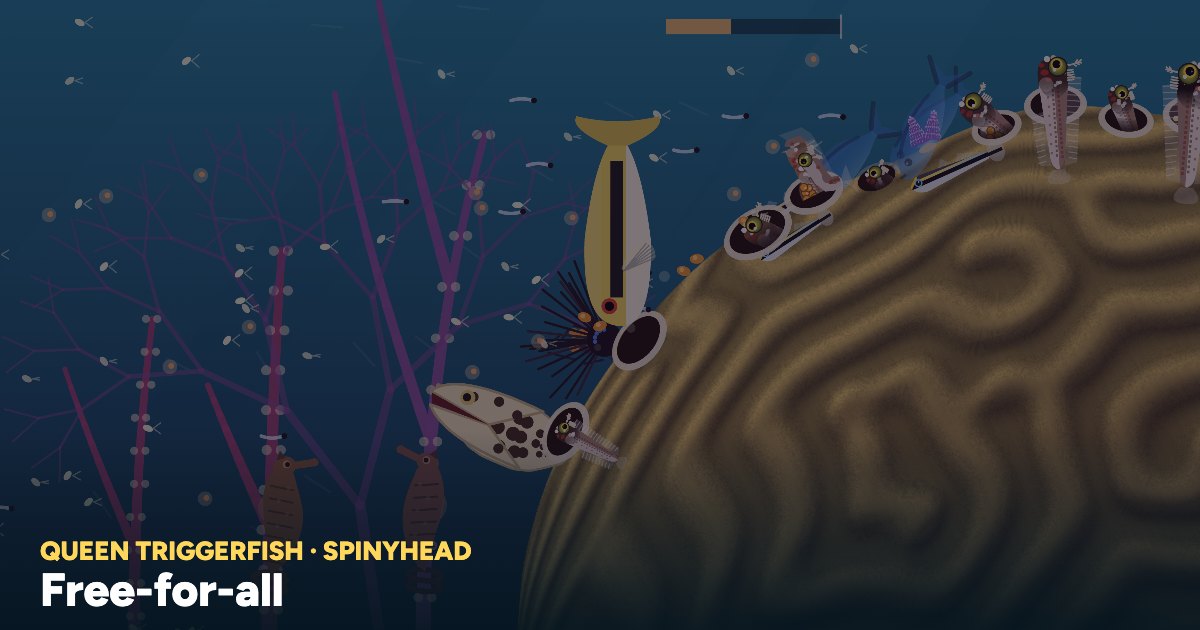
The queen triggerfish is one of the most colorful and recognizable reef fishes of the western Atlantic. It has a deep, laterally compressed, oval body with a small mouth full of strong teeth, and eyes set high on the head. Its color shifts from blue-green to yellowish or purplish, and it can change rapidly, becoming pale or mottled when stressed or at night. It is usually seen swimming by rippling its second dorsal and anal fins rather than its tail, and it can be curious about divers while still wary when approached closely.
How to recognize it
- two curved blue bands from chin to eye
- second blue band across the snout and above the mouth
- long filaments on tips of tail fin
- deep, oval, compressed body
- three dorsal spines, first one stout and locking
- blue-green to yellowish body
- small mouth with strong front teeth
- eyes set high on head
| Size | Typically about 25 to 40 cm; maximum about 60 cm in length. |
|---|---|
| Range | Western Atlantic from Nova Scotia and Bermuda south through Florida, the Gulf of Mexico and the Caribbean to Brazil; also recorded in the eastern Atlantic, including around Ascension Island and St. Helena, with occasional records elsewhere. |
| Habitat | Found on coral reefs, rocky areas, seagrass beds and adjacent sandy flats, often near the bottom. Commonly seen from shallow water to about 30 m, though it has been recorded deeper, to around 275 m. Adults often favor reef edges and hardbottom with crevices for shelter. |
| Diet | Feeds on a wide variety of bottom invertebrates, especially sea urchins, as well as crabs, mollusks, worms, brittle stars and some algae. It can overturn rocks and uses jets of water and strong teeth to flip urchins or break through their spines and shells. |
| Conservation | Listed as Vulnerable on the IUCN Red List in the past, with concern about overfishing in parts of the Caribbean and Brazil; the current assessment should be checked. It is taken by trap, spear and line fisheries and is also exposed to habitat loss from reef degradation. Local populations have declined in heavily fished areas, and ciguatera poisoning has been reported from eating large individuals. |
Life and behavior
Queen triggerfish are mostly solitary and active by day. At night they wedge themselves into reef crevices and lock the first dorsal spine upright using the shorter second spine, the 'trigger' that gives the family its name. Spawning is thought to occur in the warmer months, with eggs laid in a shallow nest depression on sand that is guarded by the adults, and the larvae and juveniles are pelagic, often found drifting among floating sargassum. Males and females can look similar, though males tend to be larger. Individuals can be territorial around nests and may bite intruders.
Its family: Triggerfishes (Balistidae)
Triggerfishes have deep, compressed bodies, tough plate-like scales and small mouths with strong teeth. The first dorsal fin has a locking spine released by a smaller 'trigger' spine, which lets them wedge into crevices. They swim mainly using their dorsal and anal fins and many are known for aggressive nest defense.
Similar species
- Ocean triggerfish Canthidermis sufflamen Mostly plain gray to dark body without blue facial bands or tail filaments, and often found in open water above the reef.
- Gray triggerfish Balistes capriscus Grayish with mottled spots or blotches and lacks the bright blue lines on the face and long tail filaments.
- Black durgon Melichthys niger Dark, nearly black body with a pale line at the base of the dorsal and anal fins, and no blue bands on the face.