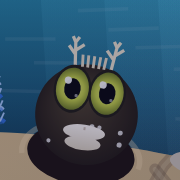
 SpinyheadPlay free
All done
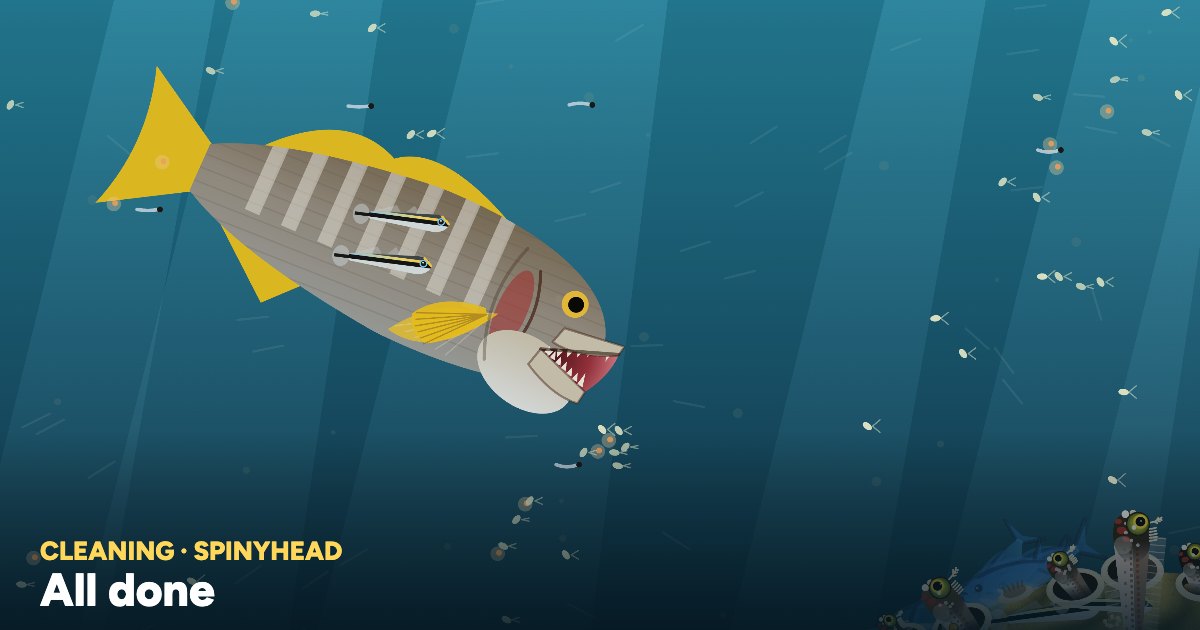
Behavior: Cleaning symbiosis (client termination signalling at a cleaning station)
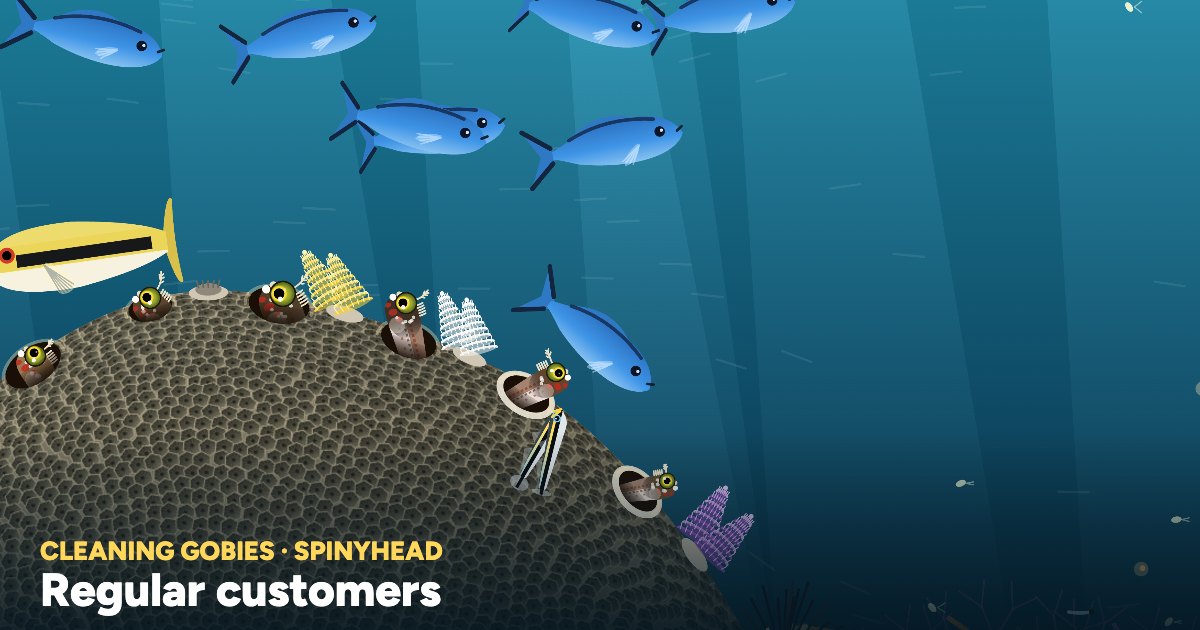
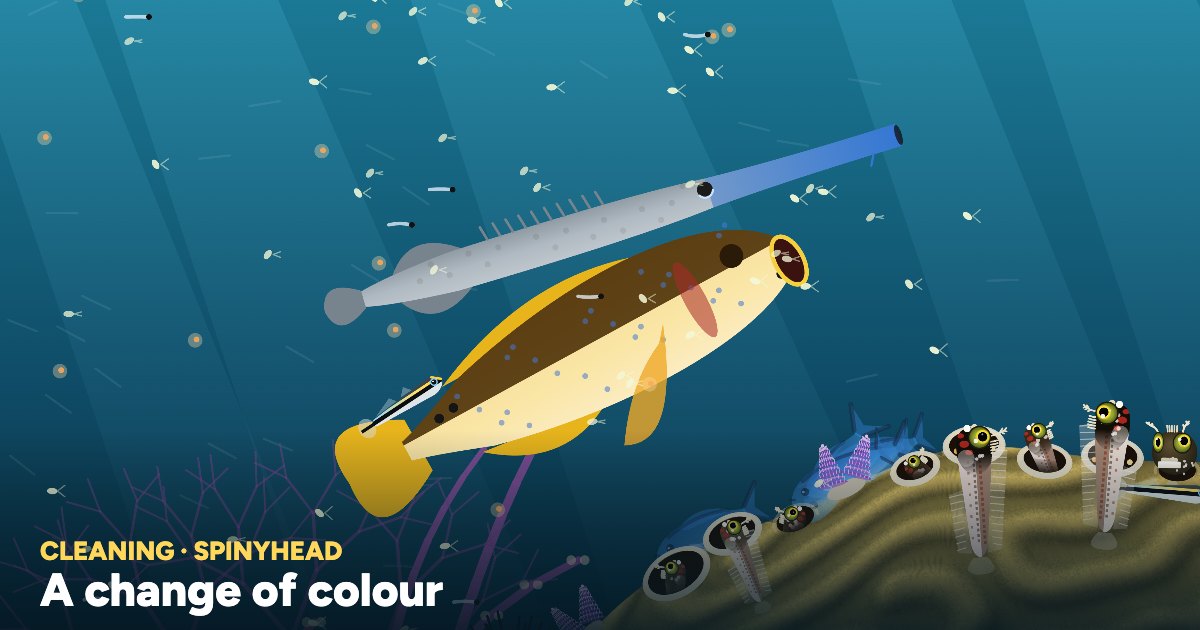
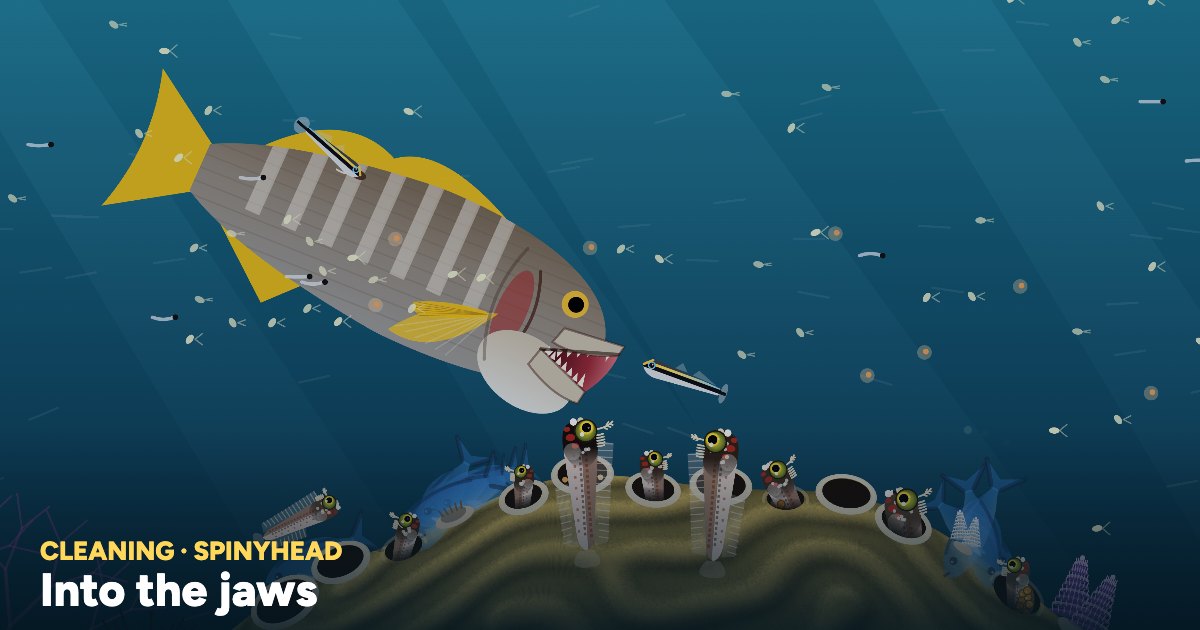
When it has had enough, the client gives a shudder and a few quick claps of its jaws. The gobies take the hint and leave its mouth and gills before it closes up and glides away.
Species involved
- sharknose goby Elacatinus evelynae cleaner; leaves the client's mouth and gills when signalled
- graysby Cephalopholis cruentata possible client, a predatory fish that is inspected
- coney Cephalopholis fulva possible client, a predatory fish that is inspected
- schoolmaster snapper Lutjanus apodus possible client, a predatory fish that is inspected
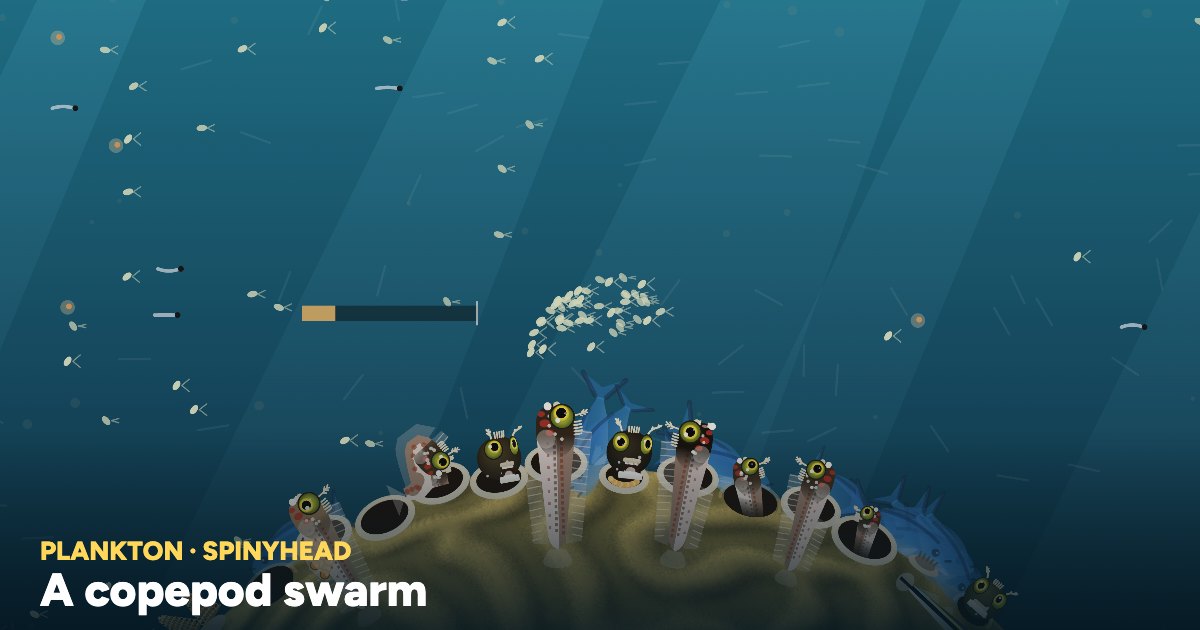
- parasitic copepods Copepoda parasites removed from the client as the cleaner's food
About cleaning symbiosis (client termination signalling at a cleaning station)
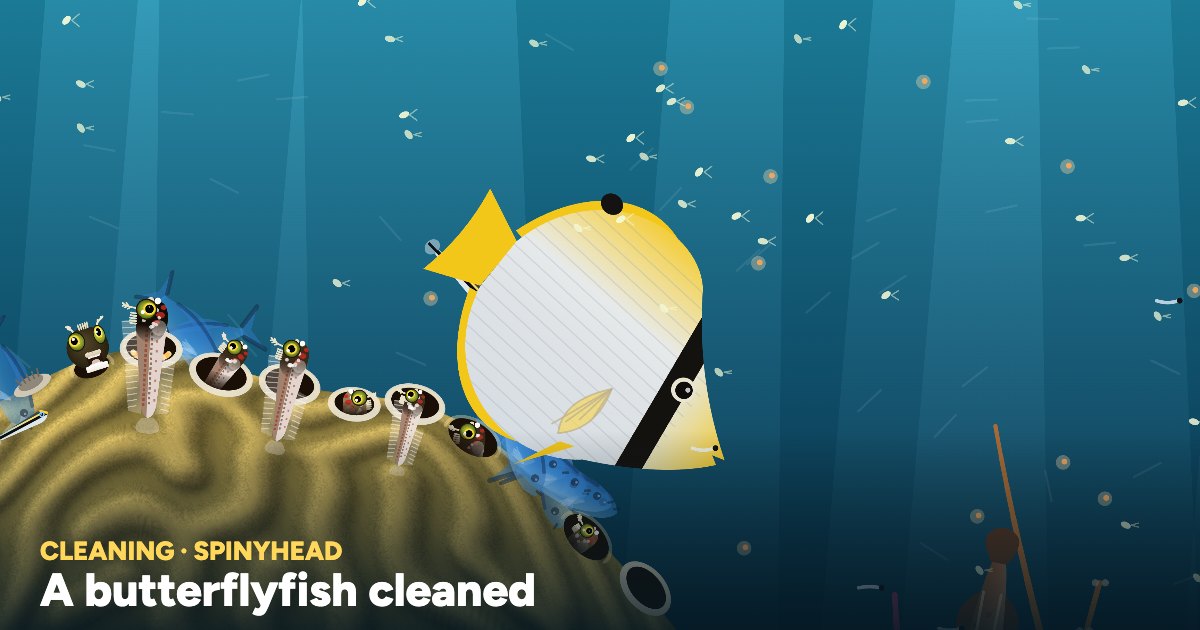
In cleaning symbiosis, a small fish or shrimp (the cleaner) picks parasites, mucus and damaged tissue from the body surface, gills and sometimes the mouth of a larger fish (the client). Cleaning happens at regular spots called cleaning stations. The client has to cooperate, holding still and often opening its mouth and gill covers. The interaction is also negotiated with signals. Clients can invite inspection, and they can show that they want it to stop. In this entry the client ends the session with a shudder and a few quick jaw claps. The cleaners then leave its mouth and gills before it closes up and swims off.
Why it matters
The cleaner gets a dependable meal. The client gets fewer ectoparasites, and probably less irritation and tissue damage. The exit signal protects the cleaner from being swallowed or squeezed when the client closes its mouth. It also lets the client end the session without harming a partner it may want to visit again. Because cleaners are valuable to many species, they can affect which fishes use an area and how many parasites they carry, so cleaning stations may matter to the wider reef community. The notebook does not give the exact meaning of each signal, and the details of such signals are likely to differ among clients and cleaner species.
On coral reefs
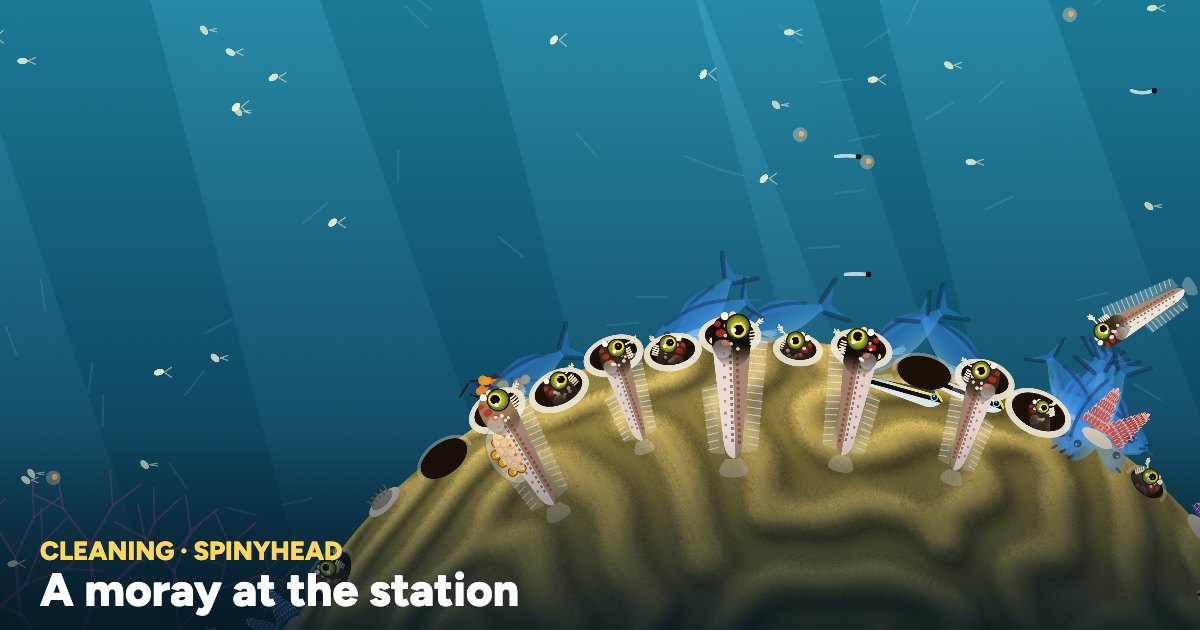
A diver may see a fish hang almost motionless at a coral head or sponge while one or more small gobies work over its skin, fins, gill openings and open mouth. Large predators such as groupers and snappers may wait their turn nearby. When the session ends the client may twitch, flare or snap its jaws, the cleaners withdraw, and the client closes its mouth and swims away.
Who studied it
Cleaning symbiosis has been studied for several decades. Conrad Limbaugh's work in the early 1960s brought it wide attention. Robert Trivers later used cleaning as an example when discussing reciprocal altruism between species. Work on Indo-Pacific cleaner wrasse, including experiments by Alexandra Grutter, showed that cleaners remove measurable numbers of parasites and that client behaviour affects cleaner behaviour. The notebook's source, Isabelle Côté's 2000 review in Oceanography and Marine Biology: An Annual Review, summarises the evolution and ecology of cleaning symbioses in the sea.
Elsewhere in the animal kingdom
Cleaner wrasses (Labroides) on Indo-Pacific reefs are the best-known cleaner fishes, and cleaner shrimps such as Ancylomenes and Lysmata species also clean fish. Cleaning also occurs outside coral reefs. Examples are cleaner fishes in temperate waters, and oxpeckers and other birds that pick ticks off African mammals, although the benefit to the mammal is debated.
Doubts and open questions
Researchers have long asked how cleaning stays cooperative, since cleaners sometimes bite client mucus or tissue, which is a form of cheating that clients may punish or avoid. How much clients actually benefit from parasite removal, and how much cleaning shapes reef fish communities, has also been debated.
Related behaviors
- aggressive mimicry A predator or parasite imitates a cleaner to get close to fish and bite them, instead of providing a real service.
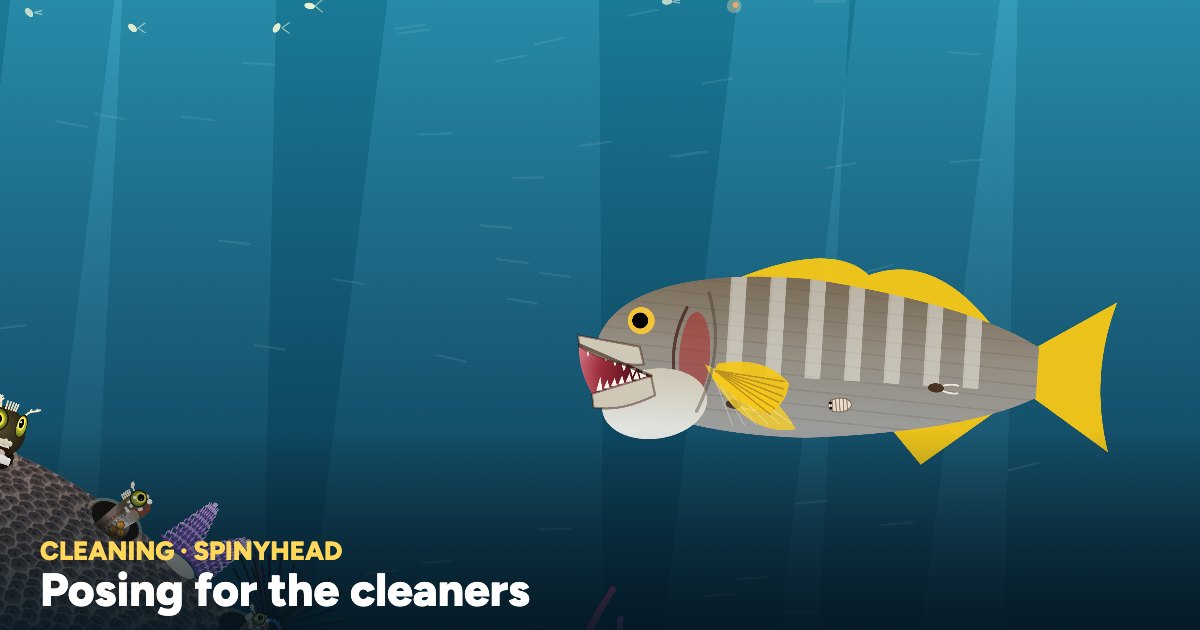
- cleaning station posing The client invites cleaning by adopting a still posture, whereas the behaviour here is the client ending the session.
- mutualism The general term for interactions where both species benefit, of which cleaning symbiosis is one example.
- punishment and partner choice Clients may chase or avoid cleaners that cheat, instead of simply signalling that a session is over.
Spinyhead is a free game you play in your browser: you are a spinyhead blenny, a fish about 3 cm long living in a worm hole on a Caribbean coral head. Feed, fight for a better hole, court, raise eggs and dodge predators, while everything around you behaves the way field biologists have seen it behave. Every behavior in the game is backed by a published study or careful observation; there are 38 on these pages, and more in the game’s field notebook waiting to be found.
More cleaning
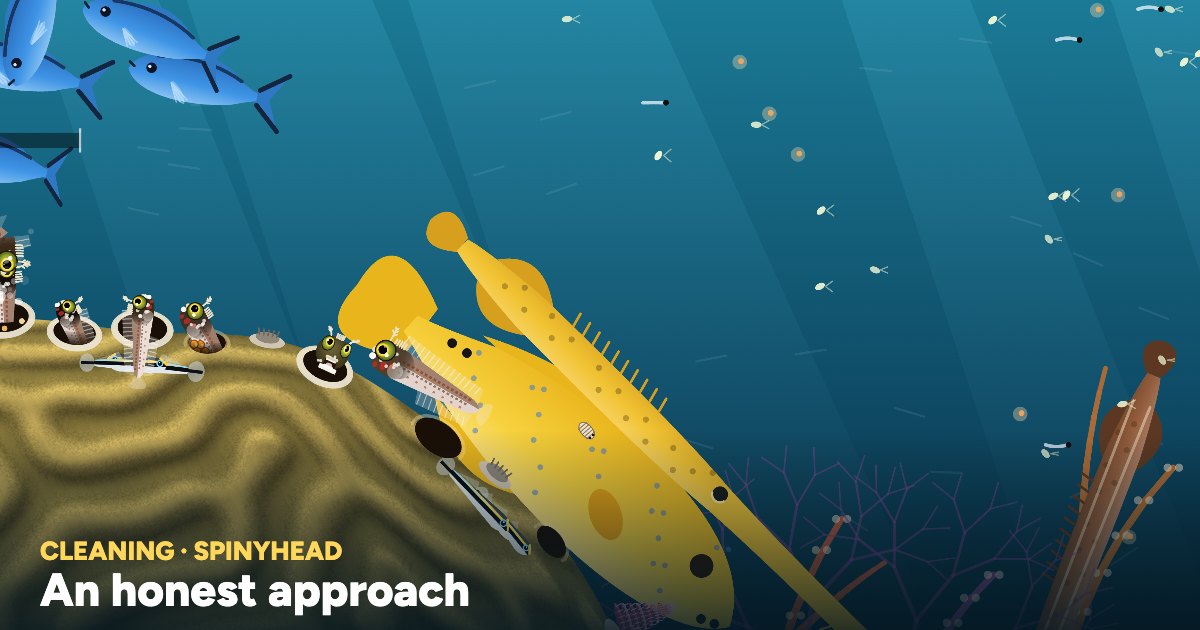
Other reef behaviors to discover