 SpinyheadPlay free
The changeover
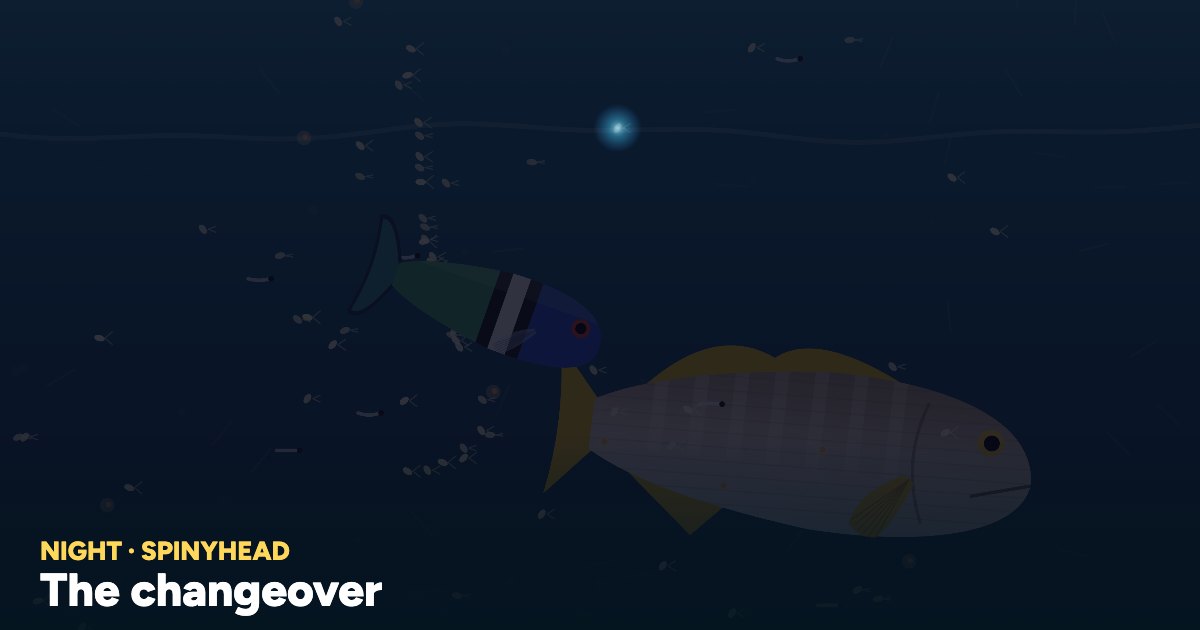
Behavior: Diel activity shift (the twilight 'changeover' or 'shift change' between day-active and night-active reef animals)
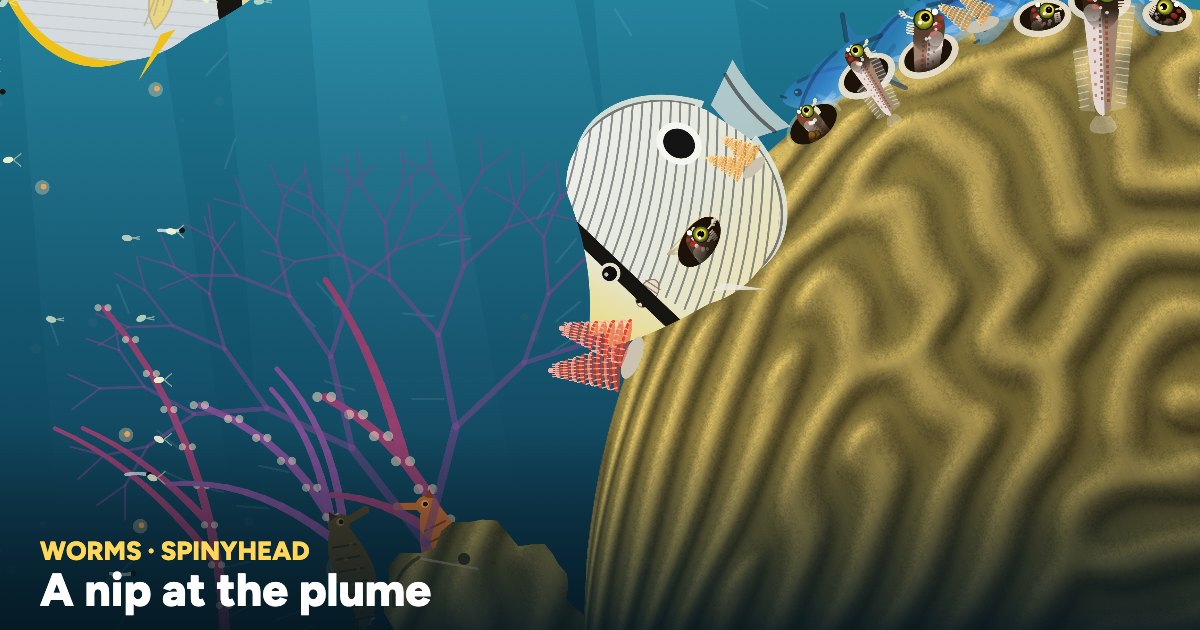
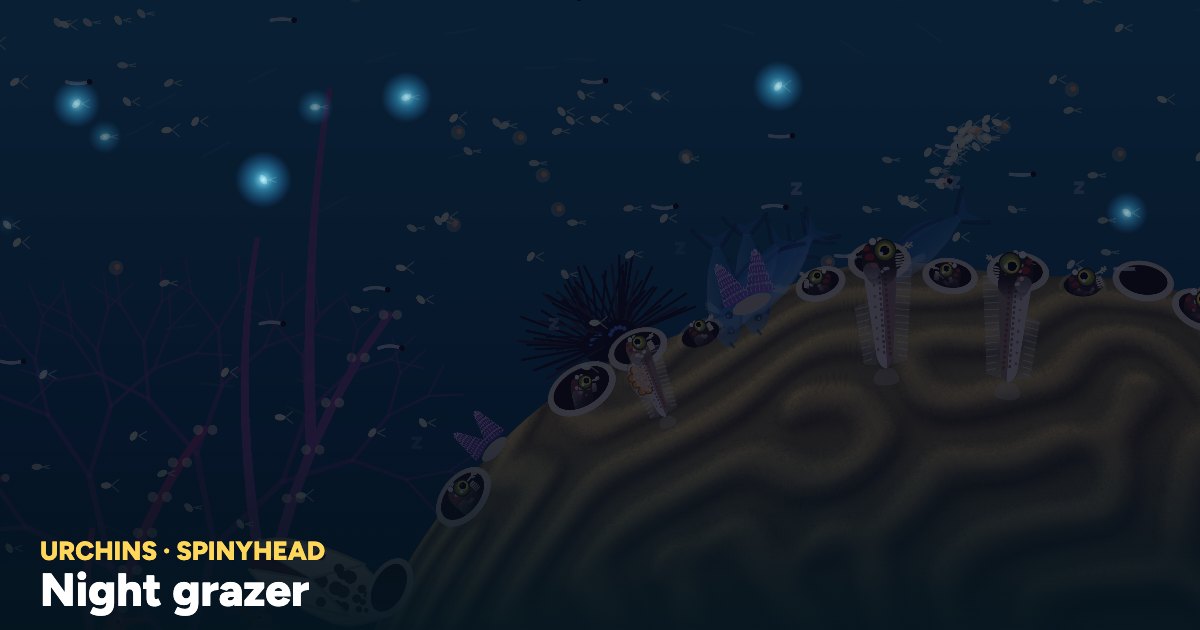
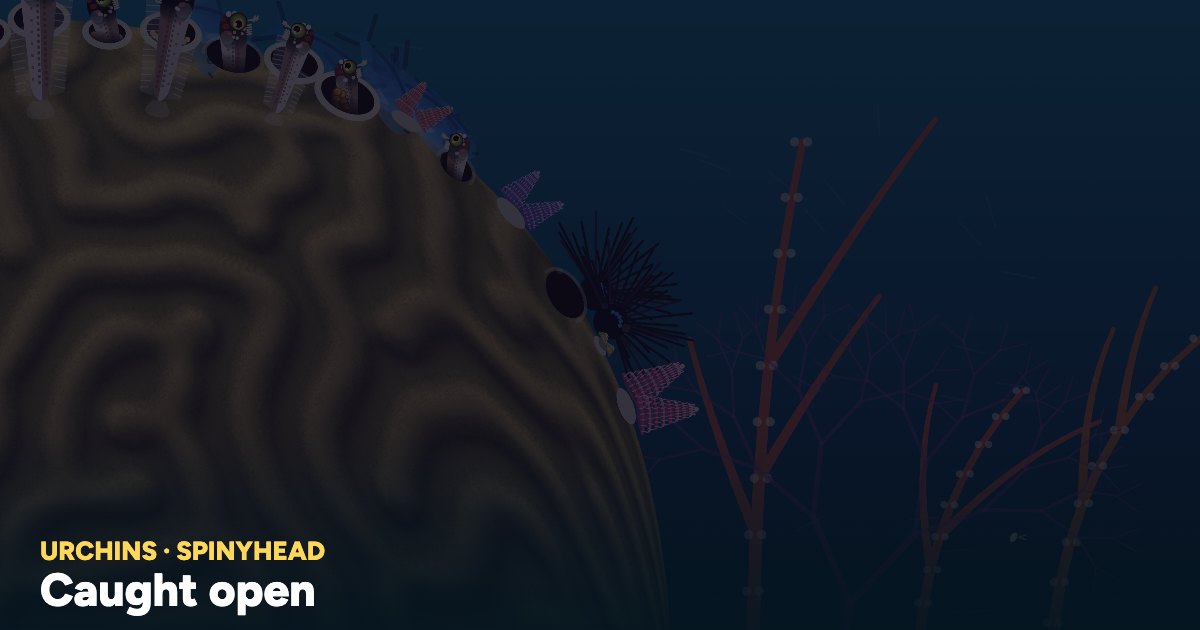
At nightfall the wrasses leave the open water to rest buried in the sand or tucked into the reef, and the night animals emerge.
Species involved
- bluehead wrasse Thalassoma bifasciatum day-active fish that rests sheltered or buried in sand at night
- queen triggerfish Balistes vetula day-active fish that rests wedged in the reef at night
- foureye butterflyfish Chaetodon capistratus day-active fish that shelters in the reef at night
- French grunt Haemulon flavolineatum shelters on the reef by day, leaves to forage at dusk
- spotted moray Gymnothorax moringa night-active predator leaving its crevice
- goldentail moray Gymnothorax miliaris night-active predator leaving its crevice
- long-spined sea urchin Diadema antillarum shelters by day, grazes more widely at night
- brain coral Scleractinia (Faviidae/Mussidae) polyps extend to catch plankton at night
About diel activity shift (the twilight 'changeover' or 'shift change' between day-active and night-active reef animals)
Coral reefs are occupied around the clock, but by different animals at different times. Most reef fishes are either diurnal, active in daylight, or nocturnal, active in darkness. At dusk and dawn the two groups swap places in a brief, busy transition. Day-active fishes stop feeding and retreat to a sleeping place, such as a crevice, a spot under a ledge or, for some wrasses, a bed of sand. Night-active animals then emerge from their hiding places to feed. The notebook entry gives no source, so this account rests on general reef ecology.
Why it matters
Sharing the same space on a day-night timetable lets many more species live on one reef, because they use the same habitat and, to some degree, the same food at different times. Sheltering at night lowers the risk of being caught by predators that hunt by smell and touch in the dark, and it lets day-feeders rest. Night-active animals such as morays, many grunts and snappers, and urchins gain access to food and hunting grounds that are quieter or less contested by day. The dusk and dawn transitions are risky for everyone, because predators are active while prey are moving to or from shelter. Through the night feeding of grunts and urchins, nutrients and grazing pressure are also moved around the reef.
On coral reefs
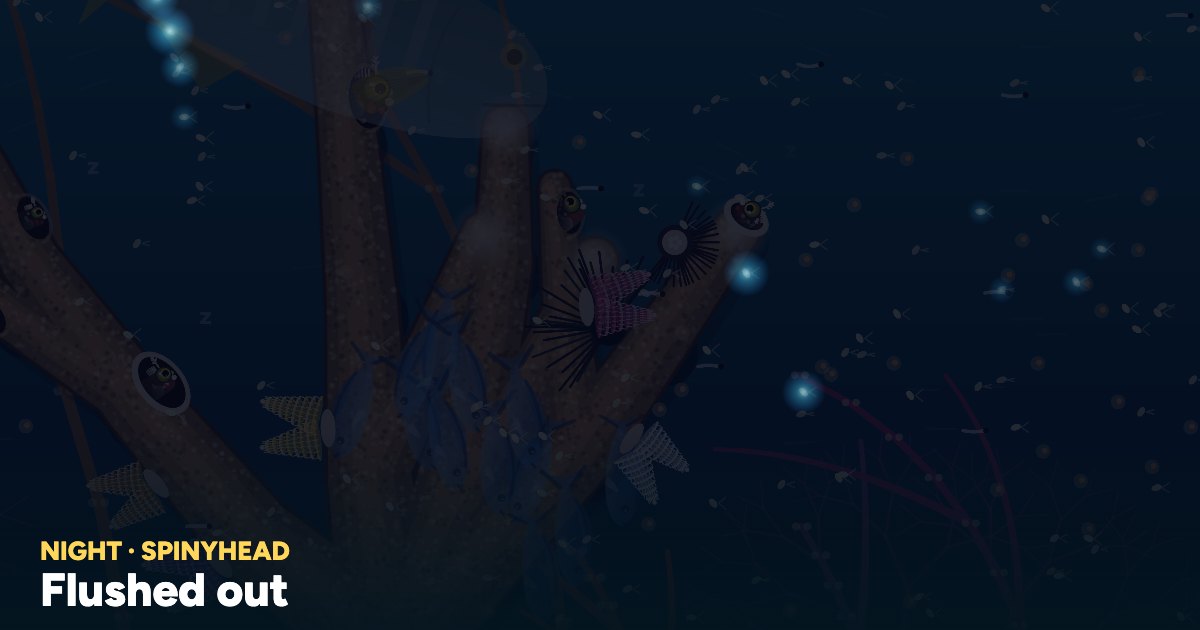
At dusk a diver sees day-active fishes such as wrasses and butterflyfishes stop swimming in open water and slip into holes or settle low on the bottom, and some wrasses dive into the sand. Schools of grunts that rested in groups by day move off the reef to feed. After dark, morays leave their crevices, urchins come out of their shelters, and many coral polyps extend their tentacles, so the reef looks quite different under a torch.
Who studied it
Early field work on the idea that reef fishes divide into day and night shifts, and on the busy transitions at twilight, is associated with the fish ecologist Edmund Hobson, who studied inshore fishes in the Gulf of California and later in Hawaii in the 1960s and 1970s. His studies described which fishes retire, which emerge and how predators exploit the twilight periods. Later work on many reefs has refined and extended this picture.
Elsewhere in the animal kingdom
Day and night shifts occur in almost every habitat. On land, owls and bats take over from day-flying birds and insect-eaters, and many desert mammals are nocturnal. In the ocean, many zooplankton and fishes make daily vertical migrations, rising to feed at night and descending by day, which is one of the largest animal movements on Earth. Many fishes in other habitats also sleep sheltered, and some wrasses and parrotfishes bury themselves in sand or secrete a mucus cocoon.
Doubts and open questions
The exact timing and strictness of the changeover varies between species, places, moon phase and the presence of predators, and many species are active in both periods, so the two-shift picture is a simplification. How much of the temporal separation is due to avoiding predators and how much to competition or sensory abilities is still discussed.
Related behaviors
- diel vertical migration Animals, mainly plankton and some fishes, move up and down the water column each day rather than between shelter and open reef.
- crepuscular activity Animals are active mainly at dawn and dusk themselves, rather than handing over between day and night shifts.
- sleeping in mucus cocoons or burial A specific resting tactic used by some fishes at night, whereas the changeover is the community-wide swap of active groups.
- nocturnal foraging migration Fishes such as grunts move from daytime resting sites to distant feeding areas at night.
Spinyhead is a free game you play in your browser: you are a spinyhead blenny, a fish about 3 cm long living in a worm hole on a Caribbean coral head. Feed, fight for a better hole, court, raise eggs and dodge predators, while everything around you behaves the way field biologists have seen it behave. Every behavior in the game is backed by a published study or careful observation; there are 38 on these pages, and more in the game’s field notebook waiting to be found.
More night

Other reef behaviors to discover