SpinyheadPlay free
A butterflyfish cleaned
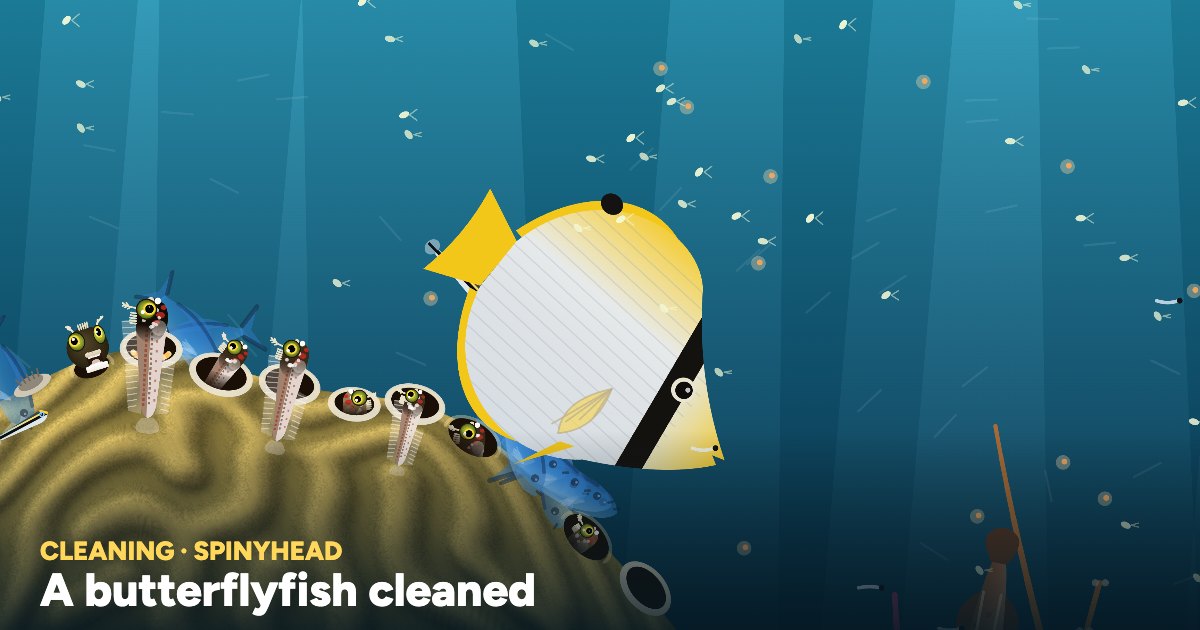
Behavior: Cleaning symbiosis (cleaner-client interaction at a cleaning station)
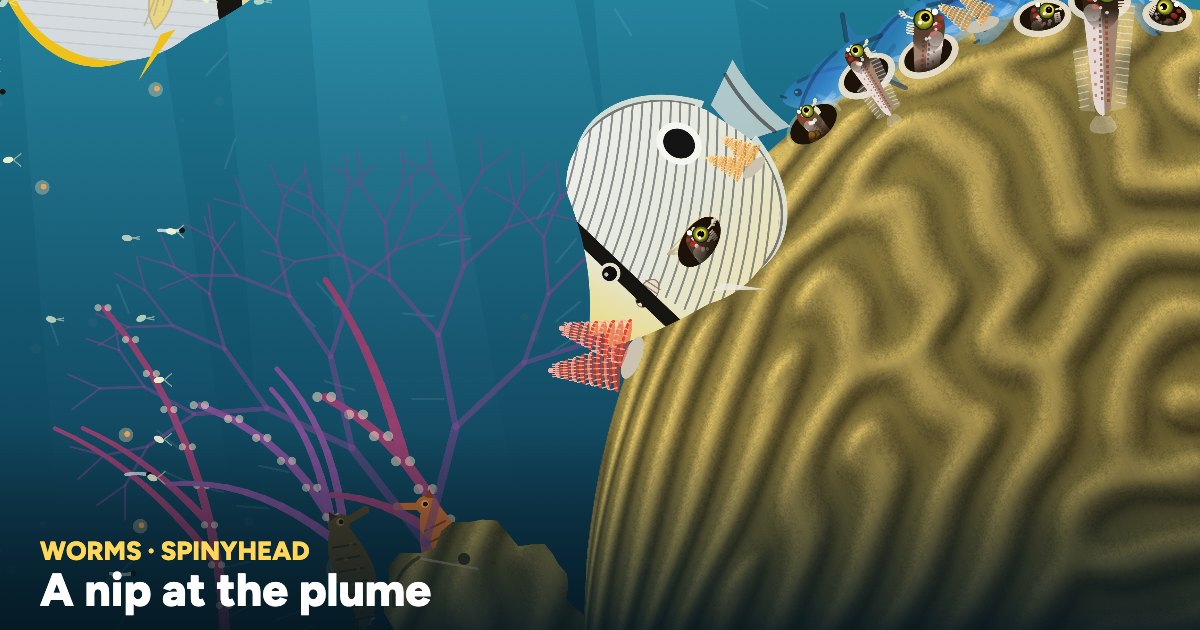
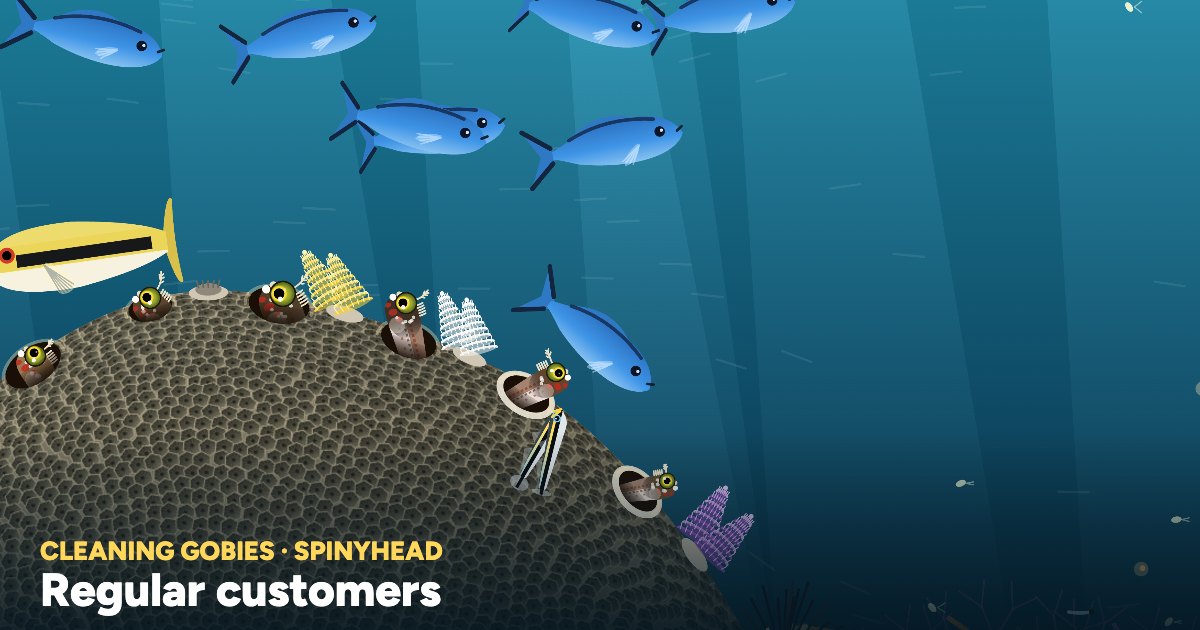
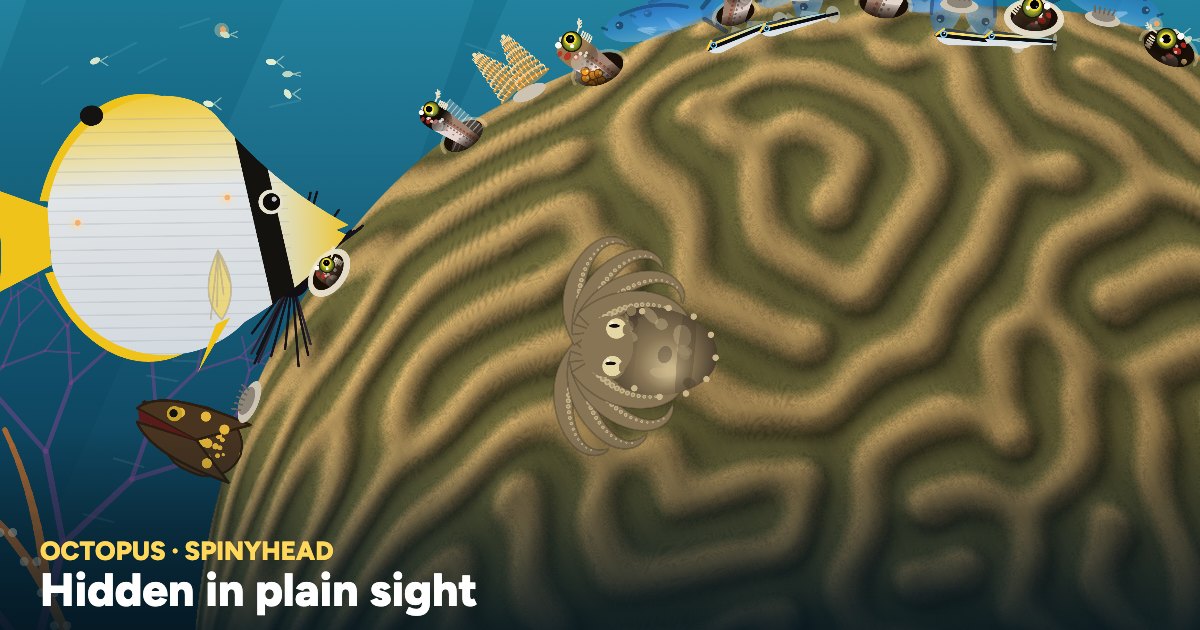
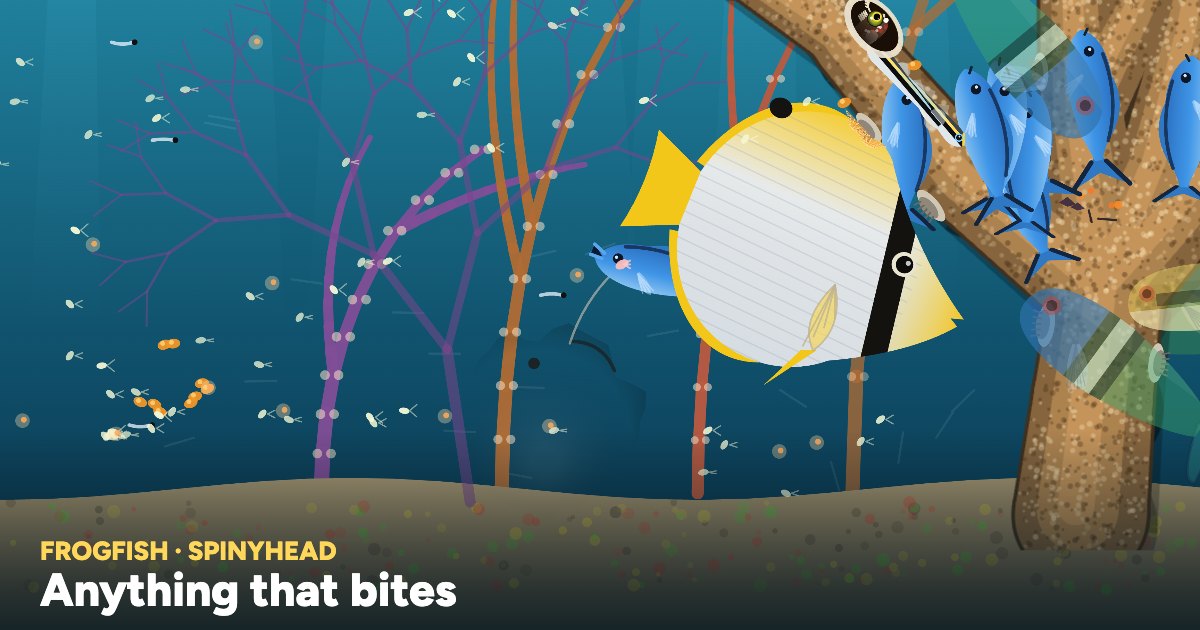
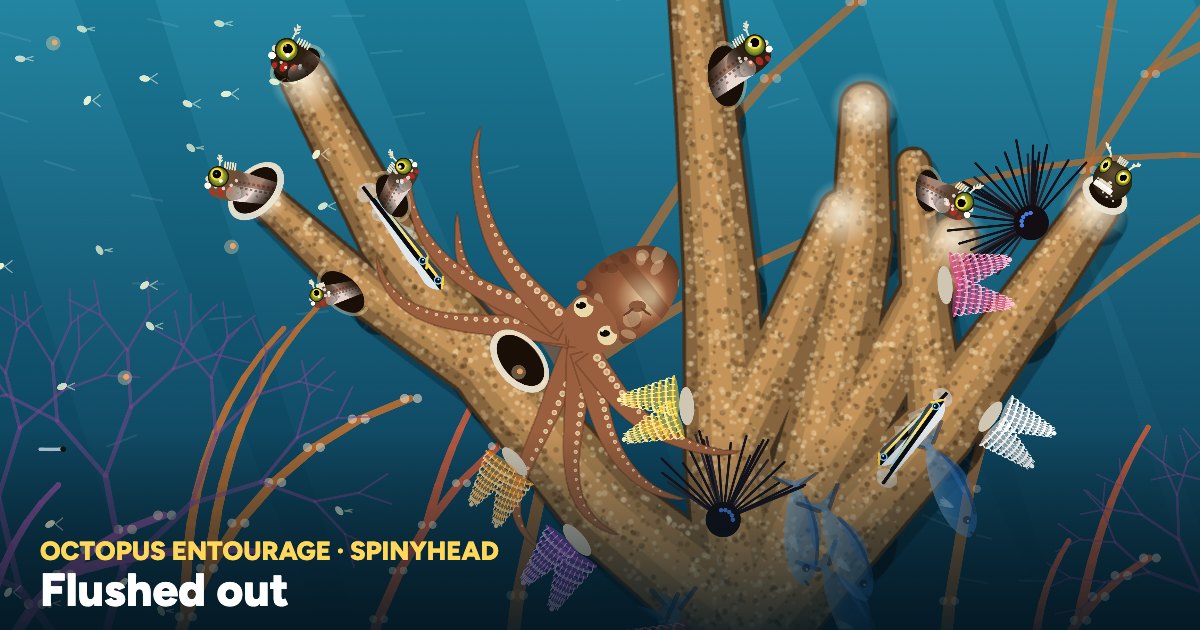
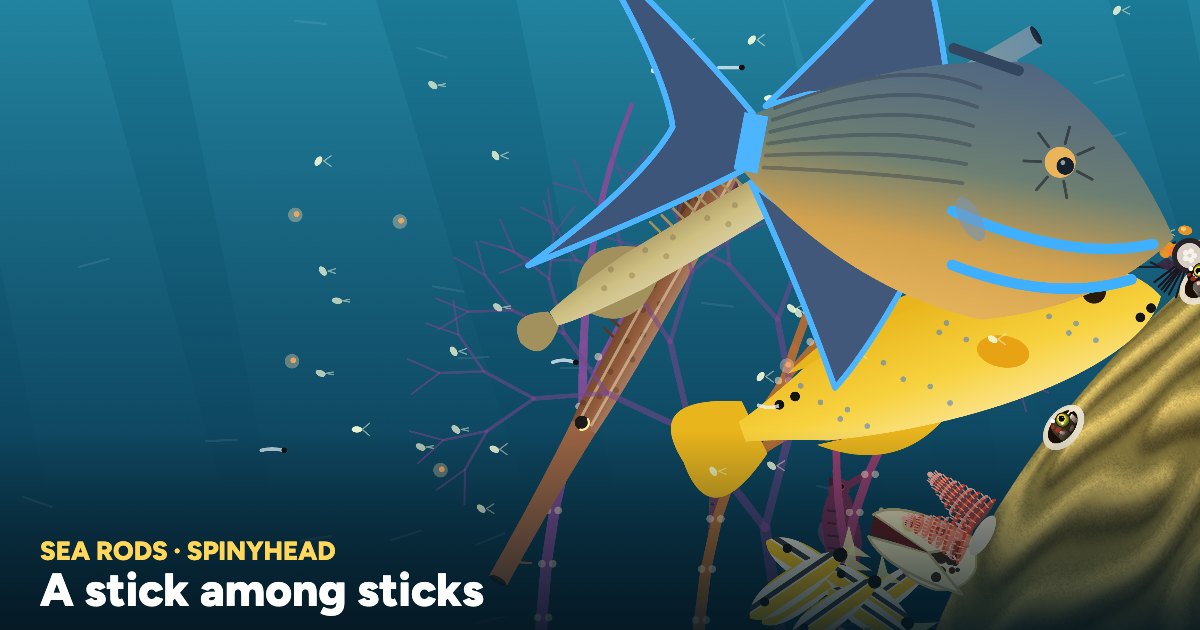
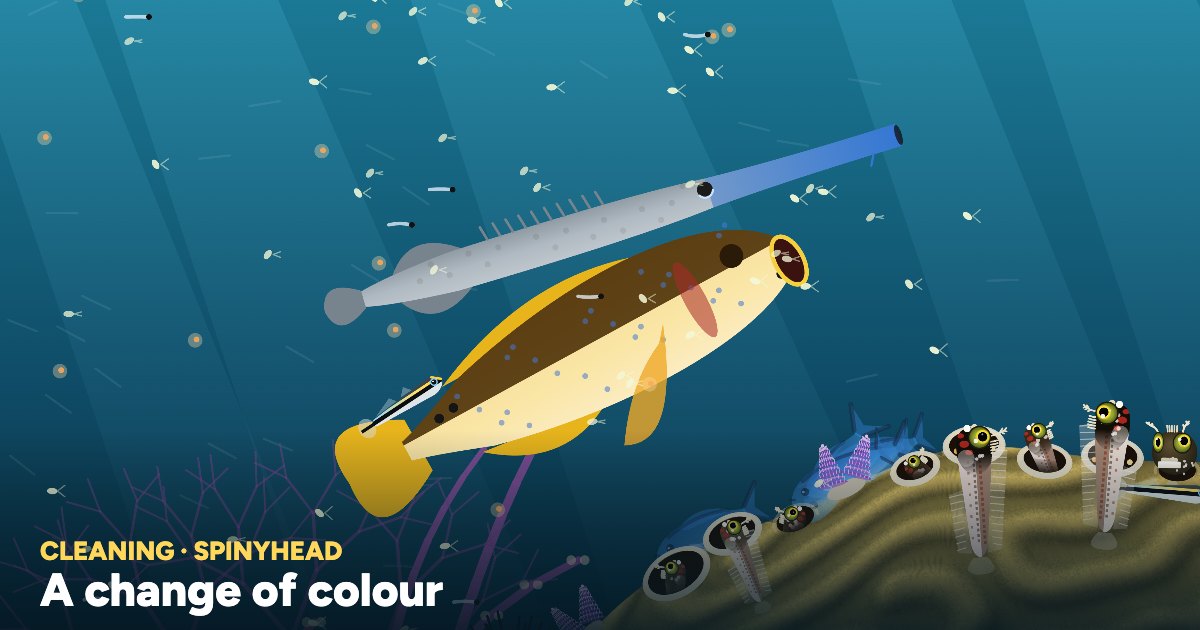
Butterflyfish carrying parasites tilt against the coral at the cleaning station and hold still while the gobies pick them clean.
Species involved
- sharknose goby Elacatinus evelynae cleaner that picks parasites off clients
- foureye butterflyfish Chaetodon capistratus client that holds still to be cleaned
- spotfin butterflyfish Chaetodon ocellatus client that holds still to be cleaned
- banded butterflyfish Chaetodon striatus client that holds still to be cleaned
- parasitic isopod Anilocra chaetodontis Anilocra chaetodontis parasite removed from the client
- parasitic copepods Copepoda parasites removed from the client
About cleaning symbiosis (cleaner-client interaction at a cleaning station)
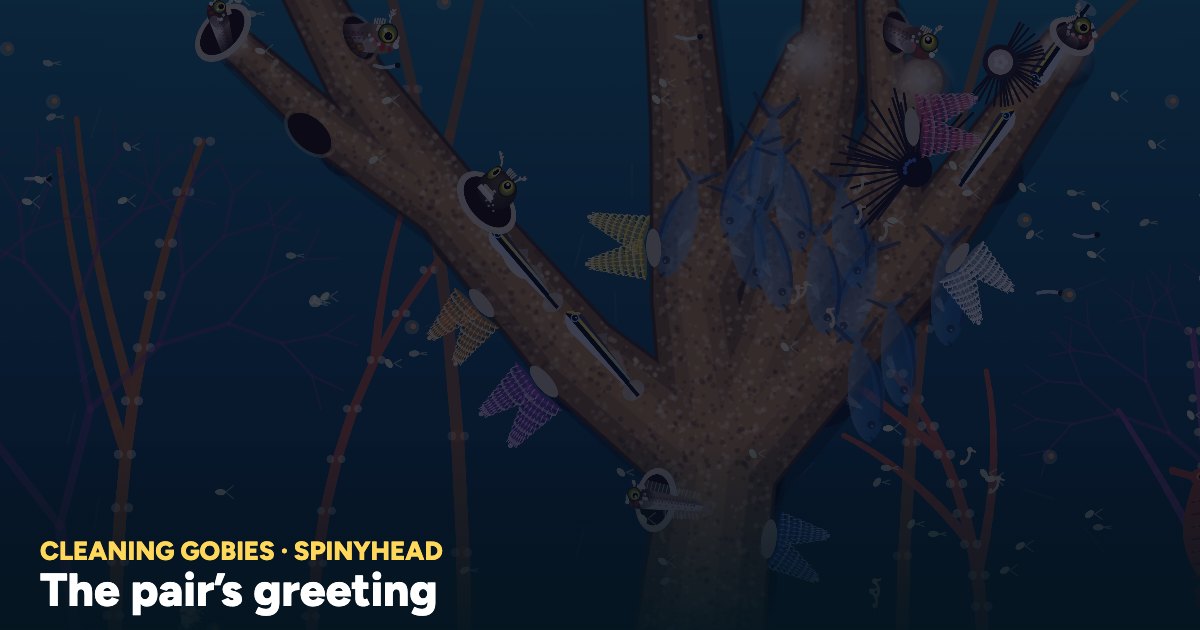
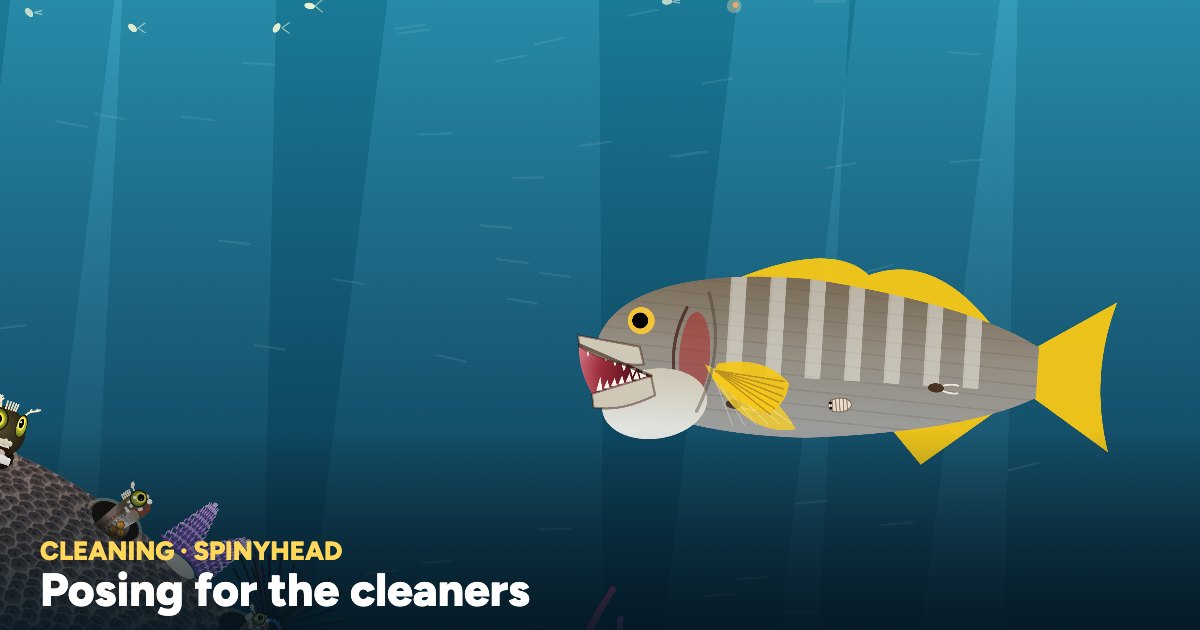
Cleaning symbiosis is a relationship in which a small animal, the cleaner, removes parasites, mucus and damaged tissue from the bodies of larger fish, the clients. Cleaning takes place at fairly fixed spots called cleaning stations, which clients visit and often advertise their willingness to be cleaned by adopting a recognisable posture. Typical posing involves holding still, sometimes tilting the body or spreading the fins, which gives the cleaner access to the skin, fins and gill areas. In this notebook entry, butterflyfish carrying parasites tilt against the coral at a station and are picked clean by sharknose gobies. The notebook gives no source for the entry.
Why it matters
For the client, cleaning reduces its load of ectoparasites such as copepods and isopods, which can damage skin and gills and weaken a fish. For the cleaner, the interaction supplies food, and cleaner gobies in particular may get much of their diet from client parasites and mucus. Because cleaners often live at particular stations and clients return to them, cleaning can concentrate fish activity and may influence the local distribution of fish and the parasite burden of the reef community. Both partners gain, but the arrangement depends on restraint: clients refrain from eating cleaners and cleaners need to refrain from biting healthy tissue.
On coral reefs
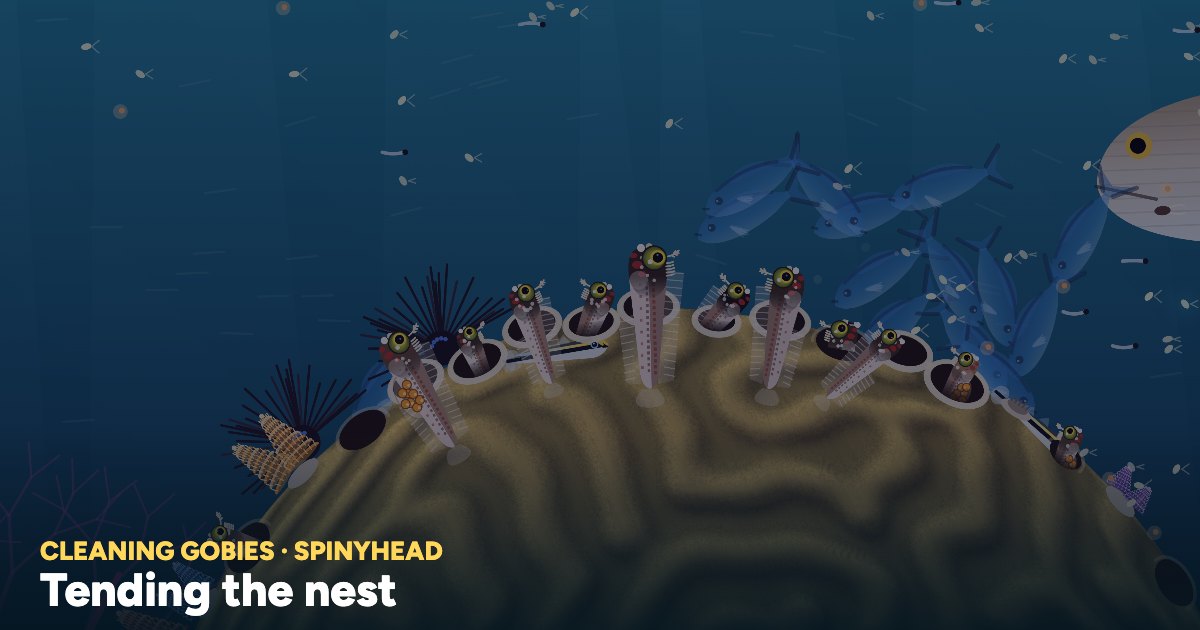
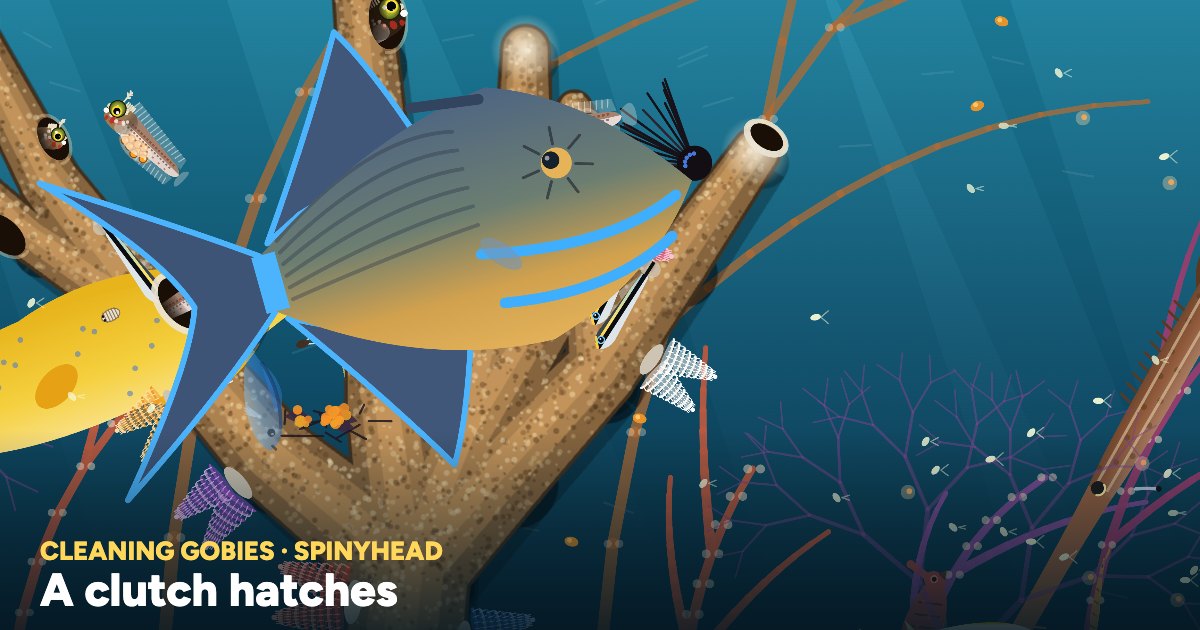
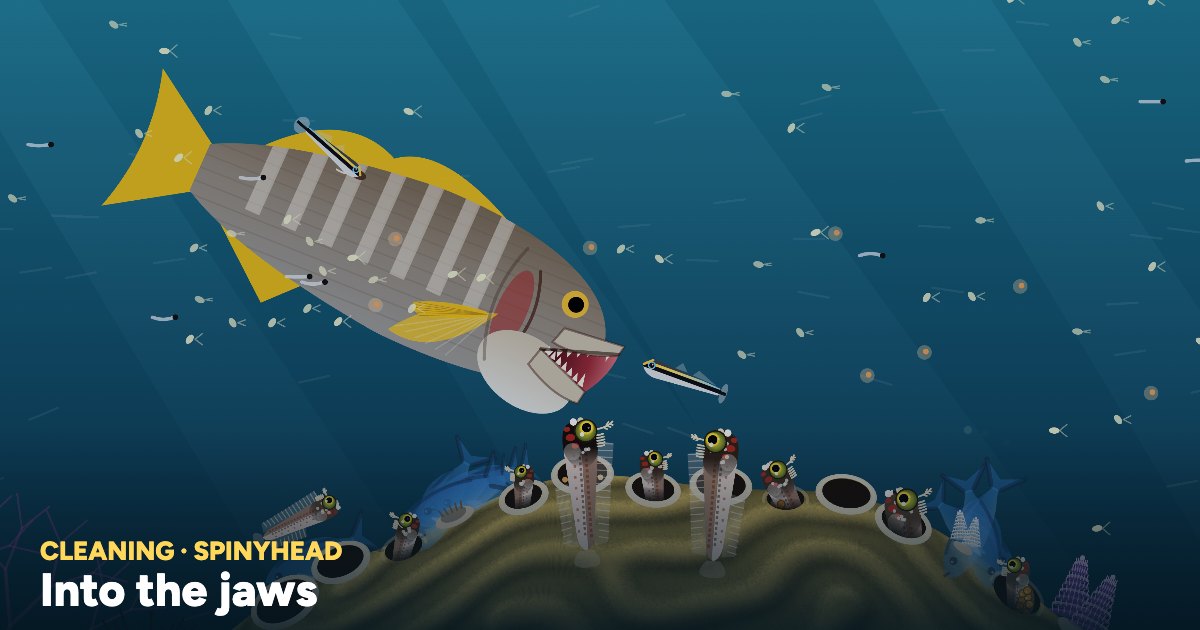
A diver may see a small, often brightly striped goby on a coral head with fish queuing or hovering close by. A client such as a butterflyfish stops, often tilts or hangs motionless near the coral, and the goby moves over its body, picking at the skin and fins. The cleaner may also enter the mouth or gill chamber of larger clients, which usually stay calm. Stations are typically on a prominent coral or sponge and are revisited again and again.
Who studied it
Cleaning behaviour on reefs has been recognised for many decades and has been studied as a classic example of mutualism, or at least of cooperation between species. Early work documented that cleaners eat ectoparasites and that clients visit stations and pose for cleaning. Later studies looked at how much cleaners reduce parasite loads, how clients choose cleaners and how cooperation is kept stable. Cleaner gobies of the genus Elacatinus have been an important part of this research in the Caribbean.
Elsewhere in the animal kingdom
Cleaning symbioses occur in many marine systems and also on land. In the Indo-Pacific the bluestreak cleaner wrasse, Labroides dimidiatus, is the best-known cleaner fish and has been studied extensively. Cleaner shrimps also clean fish on reefs worldwide. On land, oxpeckers are known for picking ticks and other insects from large African mammals, though their role is debated.
Doubts and open questions
Researchers debate how big the net benefit to clients is, since results differ among species and settings. Cleaners sometimes cheat by eating mucus or scales, which are costly to clients, and how the relationship stays stable despite this has been studied under ideas of partner choice, punishment and reputation. Whether cleaners are truly mutualists, or in some cases mild parasites, also remains discussed.
Related behaviors
- cleaning by cleaner shrimp Here the cleaner is a shrimp rather than a fish, but it also removes parasites from client fish at stations.
- aggressive mimicry by false cleaners The mimic looks like a cleaner but bites the client instead of helping it.
- mutualism This is the broader category of interaction in which both species benefit, of which cleaning is one example.
- ectoparasitism The parasite benefits at the host's expense, whereas cleaners remove such parasites.
Spinyhead is a free game you play in your browser: you are a spinyhead blenny, a fish about 3 cm long living in a worm hole on a Caribbean coral head. Feed, fight for a better hole, court, raise eggs and dodge predators, while everything around you behaves the way field biologists have seen it behave. Every behavior in the game is backed by a published study or careful observation; there are 39 on these pages, and more in the game’s field notebook waiting to be found.
More cleaning
Other reef behaviors to discover