 SpinyheadPlay free
Urchin hunter
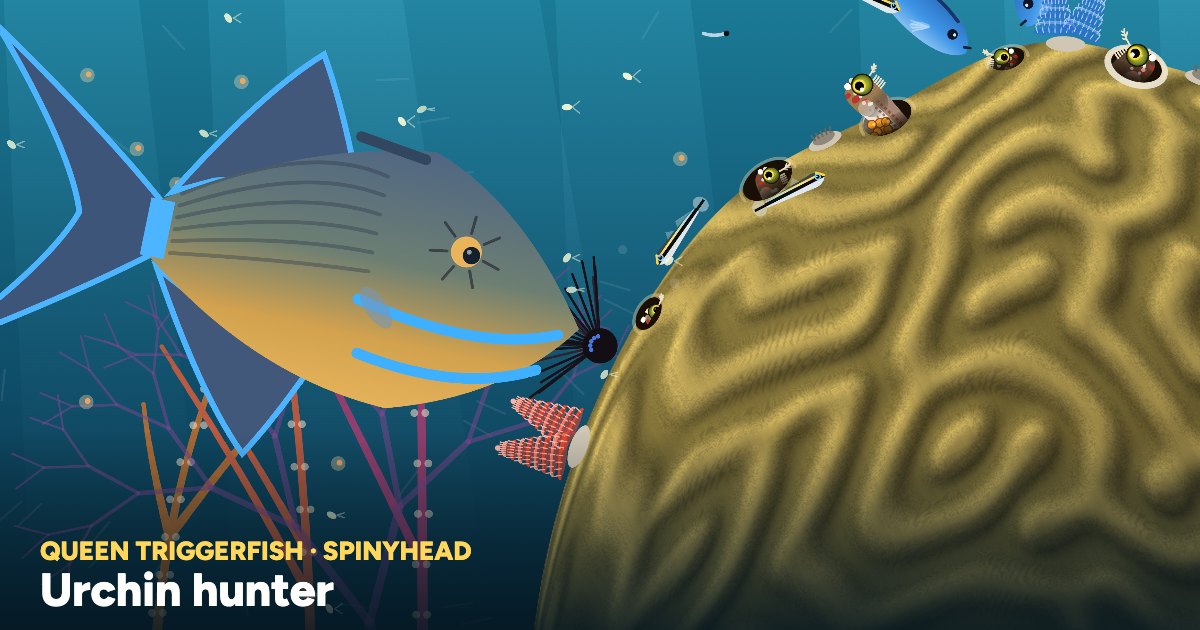
Behavior: Predation on sea urchins (echinoid predation), using water-jet flipping as a prey-handling tactic
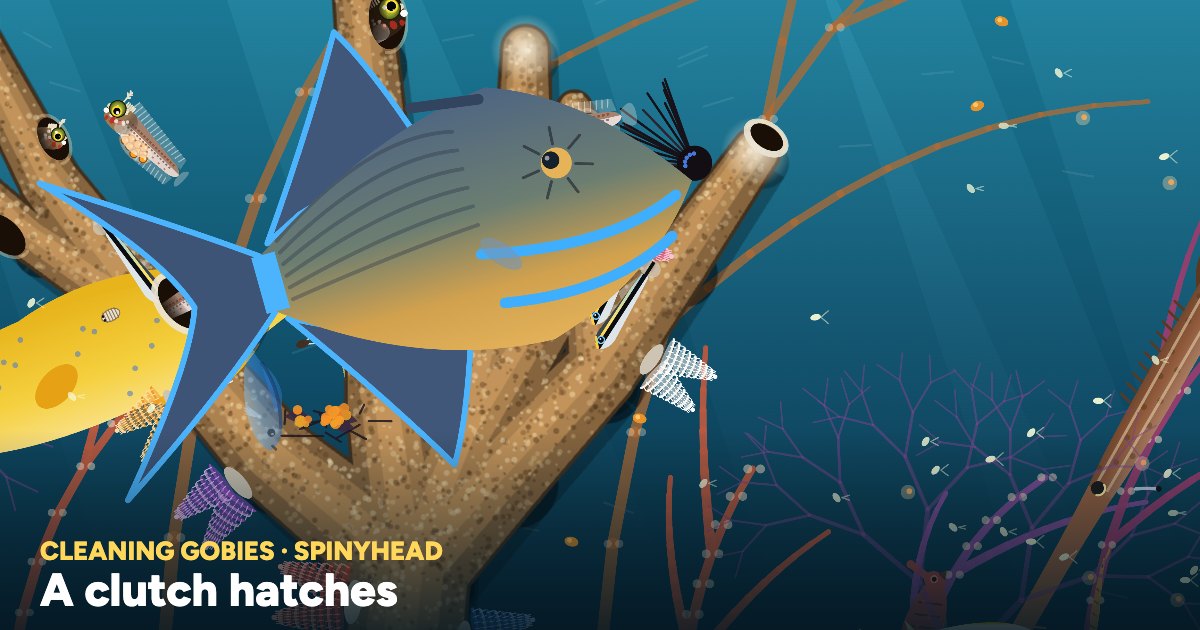
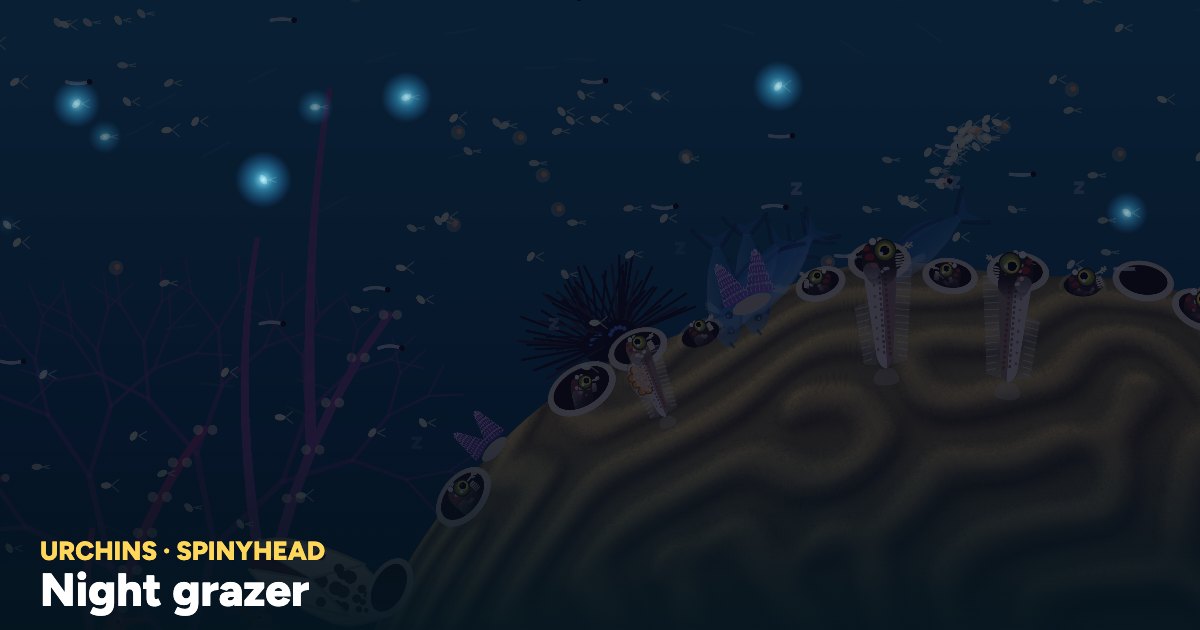
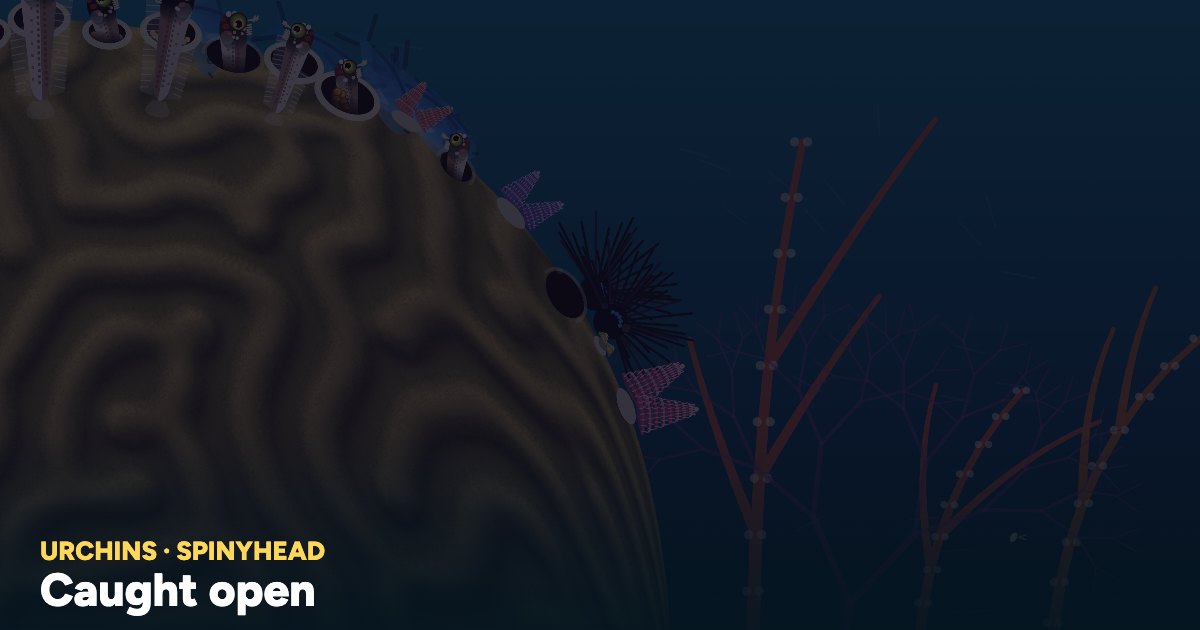
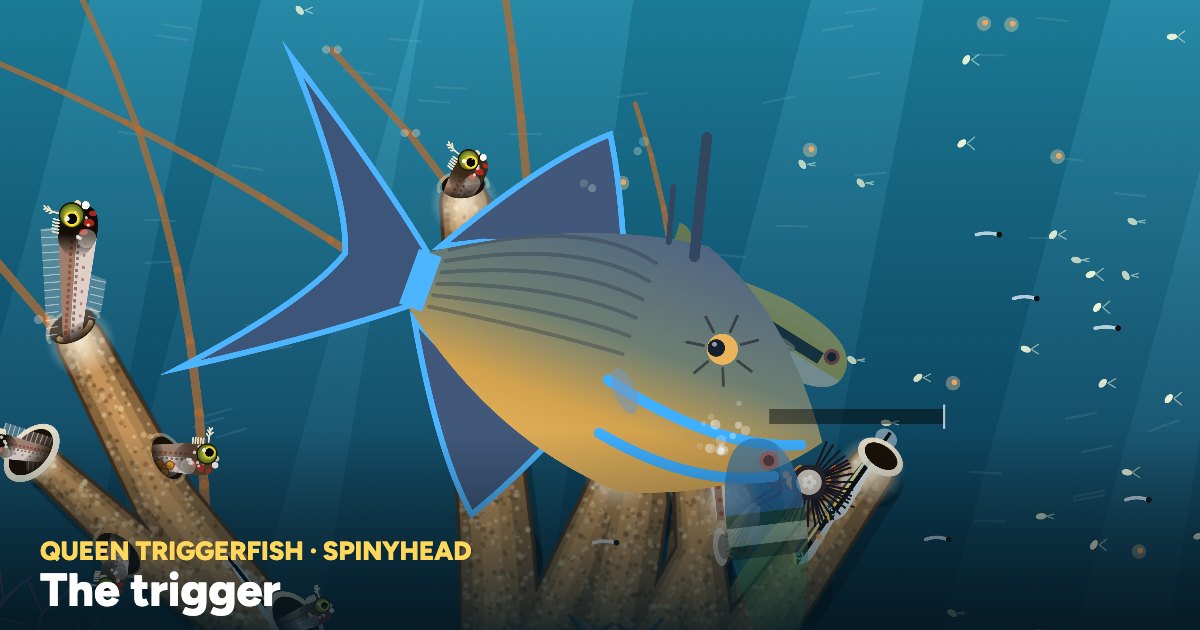
Sea urchins are a large part of a queen triggerfish’s diet. It tips one over with a jet of water and bites into the underside, where the spines are short.
Species involved
- queen triggerfish Balistes vetula predator that flips and bites urchins
- long-spined sea urchin Diadema antillarum spiny prey with a vulnerable underside
About predation on sea urchins (echinoid predation), using water-jet flipping as a prey-handling tactic
Many reef animals eat sea urchins, but most urchins are well defended by spines and a hard shell (test). Predators that eat them usually have a specialised way of getting past the spines. The queen triggerfish is a strong-jawed, durophagous fish whose diet includes a large share of urchins and other hard-bodied invertebrates. As the notebook describes it, the fish squirts a jet of water to tip the urchin over. Once the urchin is upside down, it bites into the underside, where the spines are short and the protective armour is thinner around the mouth region.
Why it matters
For the fish, this technique turns a heavily defended animal into a reliable, energy-rich food source that many other fishes cannot use. For the urchin, it means that spines protect well against attack from above but poorly against a predator able to turn it over. At the community level, urchins graze algae, so predators that eat them can influence how much algae grows on a reef and how much space is open for corals. How strongly predators actually control urchin numbers is still debated.
On coral reefs
A diver may see a queen triggerfish hovering close over the bottom near an urchin, blowing short jets of water at it. Once the urchin has rolled over, the fish bites at it and tears it open. The fish often leaves broken tests with the spines scattered on the sand or rubble. Queen triggerfish are usually seen alone or in pairs, patrolling reef edges and rubble areas where urchins live.
Who studied it
The notebook cites Randall 1967, 'Food habits of reef fishes of the West Indies' (Studies in Tropical Oceanography 5), a large survey of stomach contents from West Indian reef fishes. It documented that urchins are a major food of triggerfishes and of several other fishes. Later work on Caribbean reefs, especially after the 1983-84 mass die-off of Diadema, revived interest in which fishes eat urchins and how much they matter.
Elsewhere in the animal kingdom
Triggerfishes in other oceans also eat urchins, and some Indo-Pacific species are well known for it. Other urchin specialists include sea otters in kelp forests, the California sheephead wrasse, and some large sea stars and helmet snails. Blowing jets of water to uncover or flip prey is also known in other triggerfishes and in some other fishes that feed on sand-dwelling prey.
Doubts and open questions
A long-standing question is whether fishing out urchin predators, including triggerfishes, helped Caribbean urchin populations rise before the 1983-84 disease die-off. Evidence for this is mixed, and the die-off itself was caused by a pathogen, not by predators. It is also unclear how large a share of the diet urchins make up in different places and seasons.
Related behaviors
- Durophagy This is the general habit of eating hard-shelled prey, of which urchin flipping is one specific technique.
- Jet-blowing foraging (sand or water jetting) Some fishes blow water to uncover buried or hidden prey, rather than to flip an exposed, spiny one.
- Herbivory by urchins (grazing) Here the urchin is the consumer, eating algae, not the prey of a fish.
- Cleaning symbiosis This is a cooperative feeding relationship, whereas urchin predation kills the prey.
Spinyhead is a free game you play in your browser: you are a spinyhead blenny, a fish about 3 cm long living in a worm hole on a Caribbean coral head. Feed, fight for a better hole, court, raise eggs and dodge predators, while everything around you behaves the way field biologists have seen it behave. Every behavior in the game is backed by a published study or careful observation; there are 38 on these pages, and more in the game’s field notebook waiting to be found.
More queen triggerfish
Other reef behaviors to discover