SpinyheadPlay free
Leftovers on the current
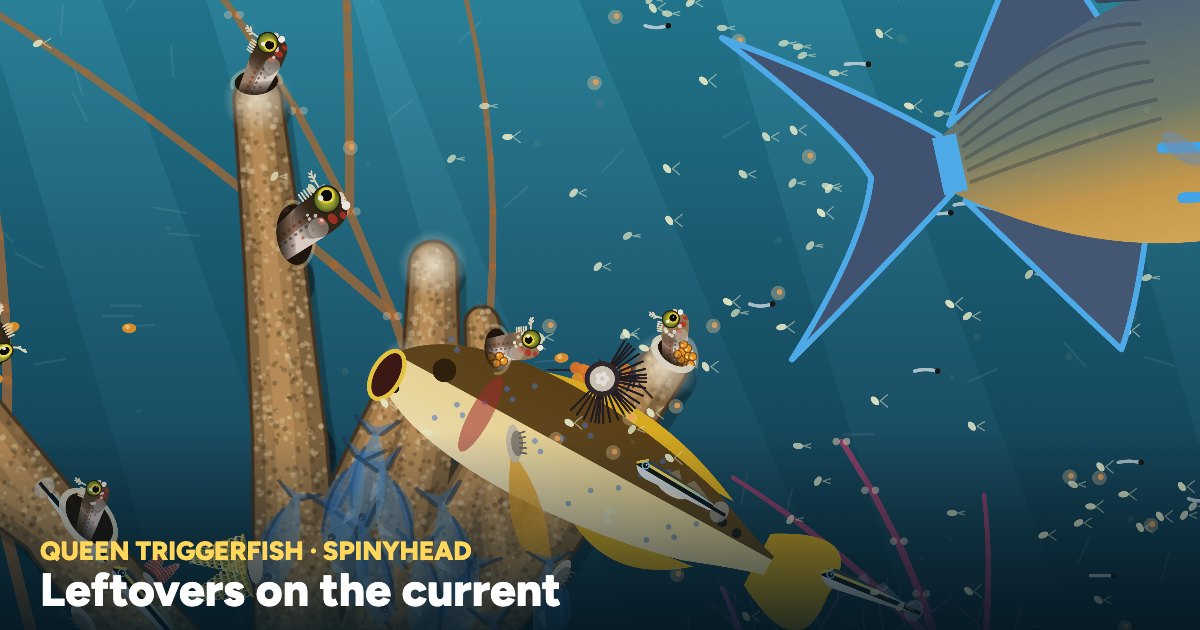
Behavior: Scavenging on a predator's leftovers (commensal feeding association; scrap-feeding)
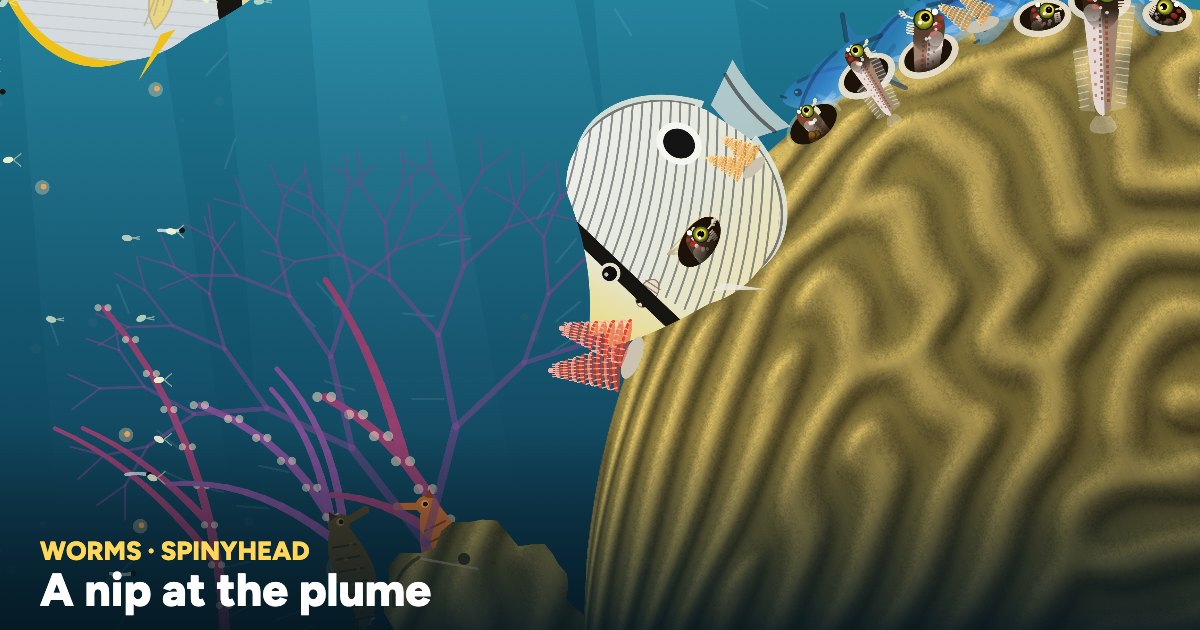
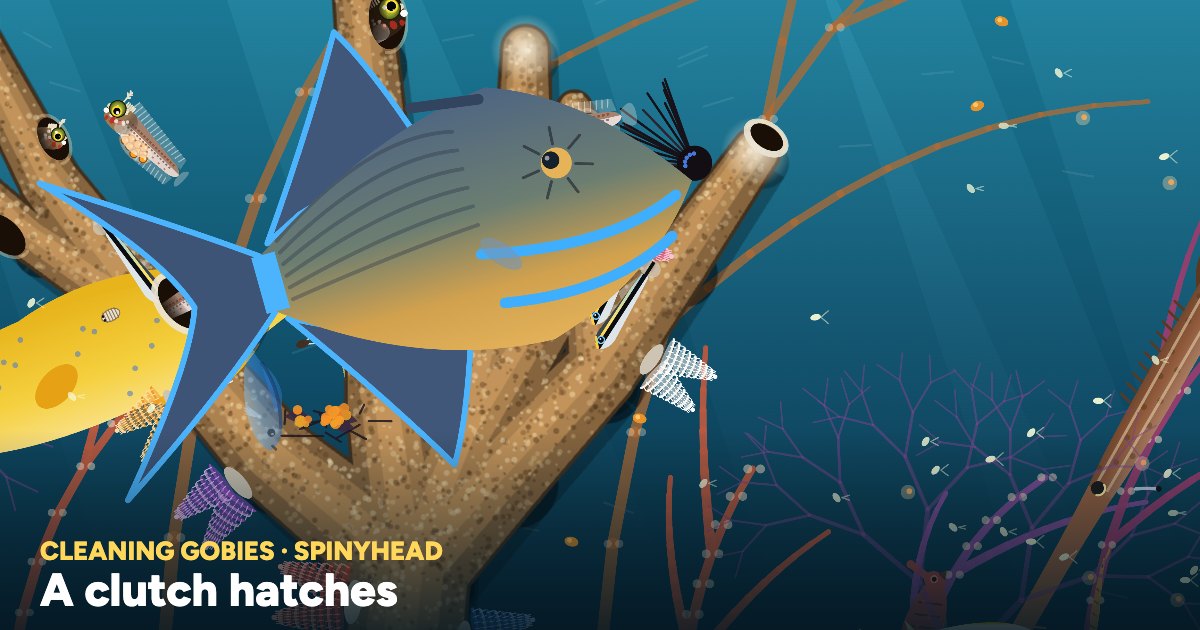
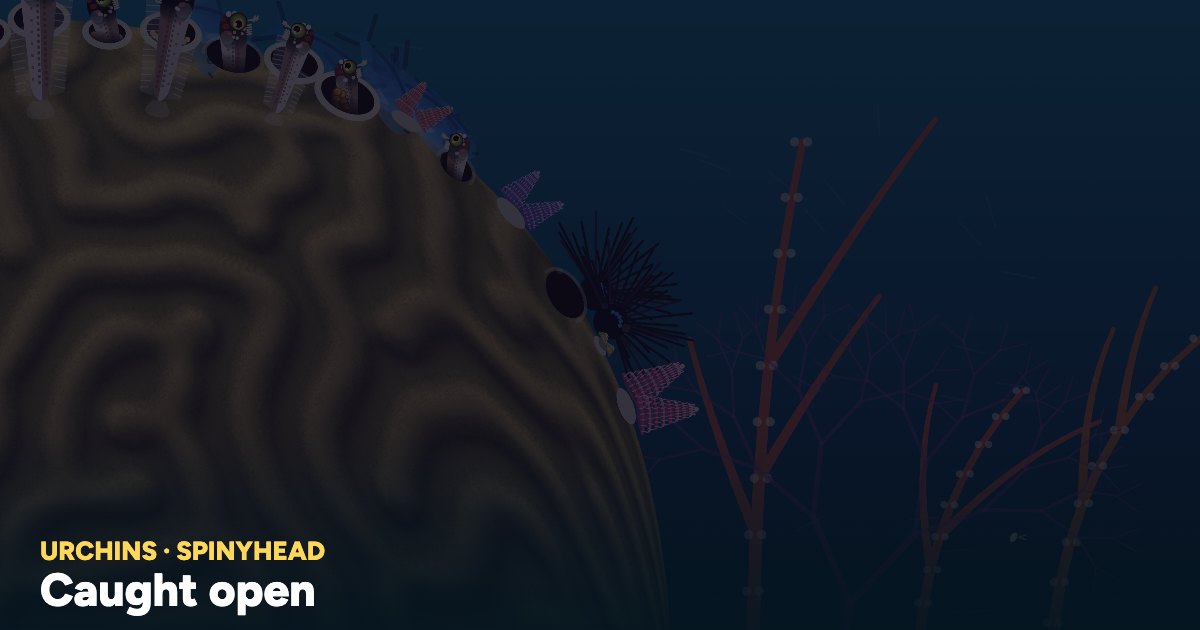
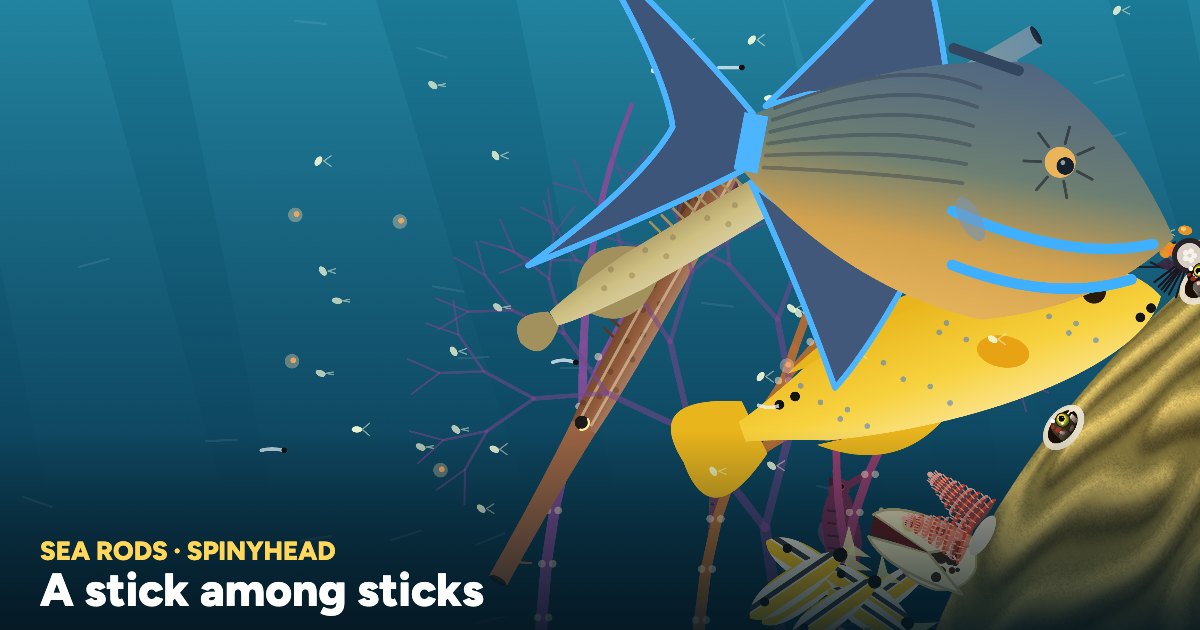
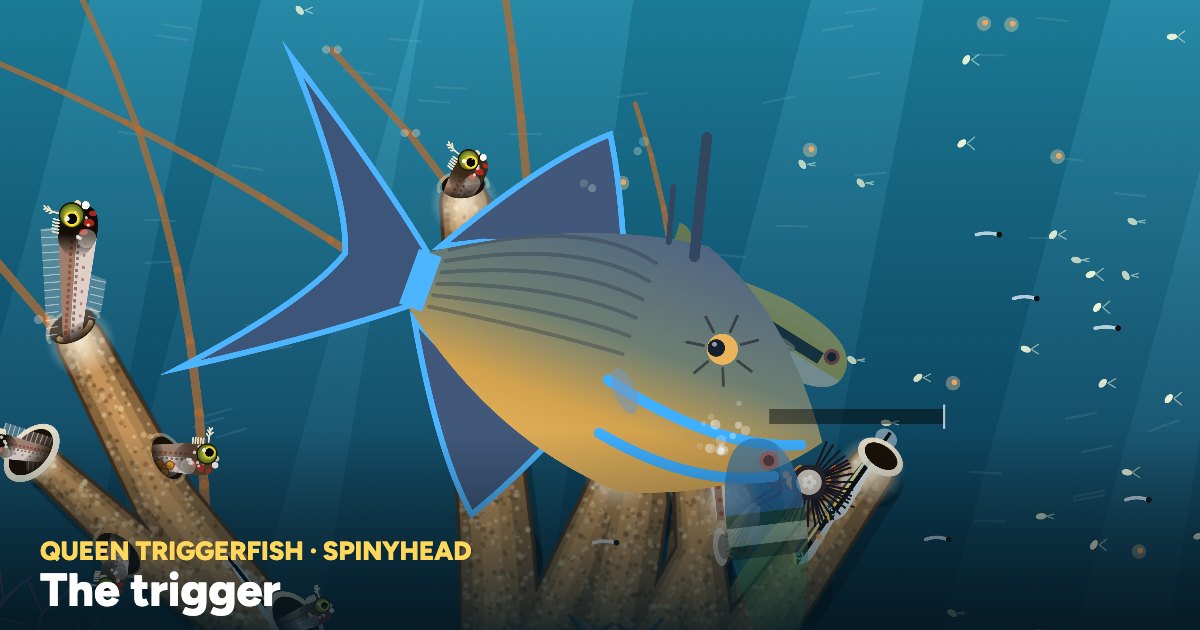
When a triggerfish tears an urchin open, bits of roe and flesh drift away on the current. A blenny will not leave its hole to join the scrum around the triggerfish, but it snaps up any scraps that float past. (This has not been recorded for spinyheads in particular, but it fits how they feed.)
Species involved
- queen triggerfish Balistes vetula predator that breaks open urchins and releases scraps
- long-spined sea urchin Diadema antillarum prey whose roe and flesh drift away
- spinyhead blenny Acanthemblemaria spinosa stays in its hole and snaps up drifting scraps (a 'what if' for this species)
About scavenging on a predator's leftovers (commensal feeding association; scrap-feeding)
Scavenging on a predator's leftovers means eating bits of food that another animal's feeding has released or left behind, without taking part in the hunt. A predator that tears prey apart in open water leaves fragments, body fluids and eggs drifting in the current. Other animals can then eat these without the cost or risk of catching the prey themselves. The scavenger is not stealing the meal from the predator's mouth, so this differs from direct food theft. It is usually classed as a commensal feeding association, in which one species gains and the other is little affected.
Why it matters
For the scavenger the benefit is extra food at almost no energy cost. Small fish that cannot tackle a defended prey like an urchin can still use it, and a fish that stays in its shelter avoids the exposure of joining a crowd. For the predator the cost is usually small, since the scraps were going to be lost anyway, though a crowd of hangers-on can sometimes be a nuisance. For the reef community, such leftovers move energy from large predators to small residents that could not otherwise reach that food. They also tie the diets of different species together.
On coral reefs
A diver may see a triggerfish working over an urchin, flipping it or blowing water at it, while smaller fish gather and dart in for fragments. Small fish living in holes and shelters nearby can be seen picking at items that drift into reach. The scraps themselves are tiny and quick to disappear.
Who studied it
Reef fish diets have been studied for many decades. Early surveys of Caribbean fish stomach contents, such as John Randall's work in the 1960s, showed that queen triggerfish eat sea urchins, including Diadema. Fish that trail feeding predators and eat what they disturb or drop have been described in many reef settings under the headings of following and feeding associations.
Elsewhere in the animal kingdom
Following feeders are common in the sea and on land. Remoras and pilot fish pick up scraps around sharks and other large fish, and wrasses and jacks follow foraging goatfish to catch prey they flush. On land, vultures, hyenas and jackals feed on the remains of lion kills, and gulls take scraps from feeding sea otters and whales.
Doubts and open questions
Whether such associations are truly neutral for the host or sometimes a cost is often unclear and varies with the case. For spinyhead blennies the idea is a 'what if': the notebook says it fits their sit-and-wait feeding on drifting food but that it has not been recorded.
Related behaviors
- kleptoparasitism The animal actively steals food that another has caught or is eating, rather than taking drifting scraps.
- nuclear-follower foraging Followers actively trail a foraging 'nuclear' species to catch prey it flushes, rather than waiting in one place.
- sit-and-wait planktivory The animal feeds from its shelter on small drifting prey in general, not specifically on a predator's leftovers.
- cleaning symbiosis A cleaner eats parasites from a client in a mutually beneficial exchange, rather than scraps from a kill.
Spinyhead is a free game you play in your browser: you are a spinyhead blenny, a fish about 3 cm long living in a worm hole on a Caribbean coral head. Feed, fight for a better hole, court, raise eggs and dodge predators, while everything around you behaves the way field biologists have seen it behave. Every behavior in the game is backed by a published study or careful observation; there are 38 on these pages, and more in the game’s field notebook waiting to be found.
More queen triggerfish
Other reef behaviors to discover