 SpinyheadPlay free
A nip at the plume
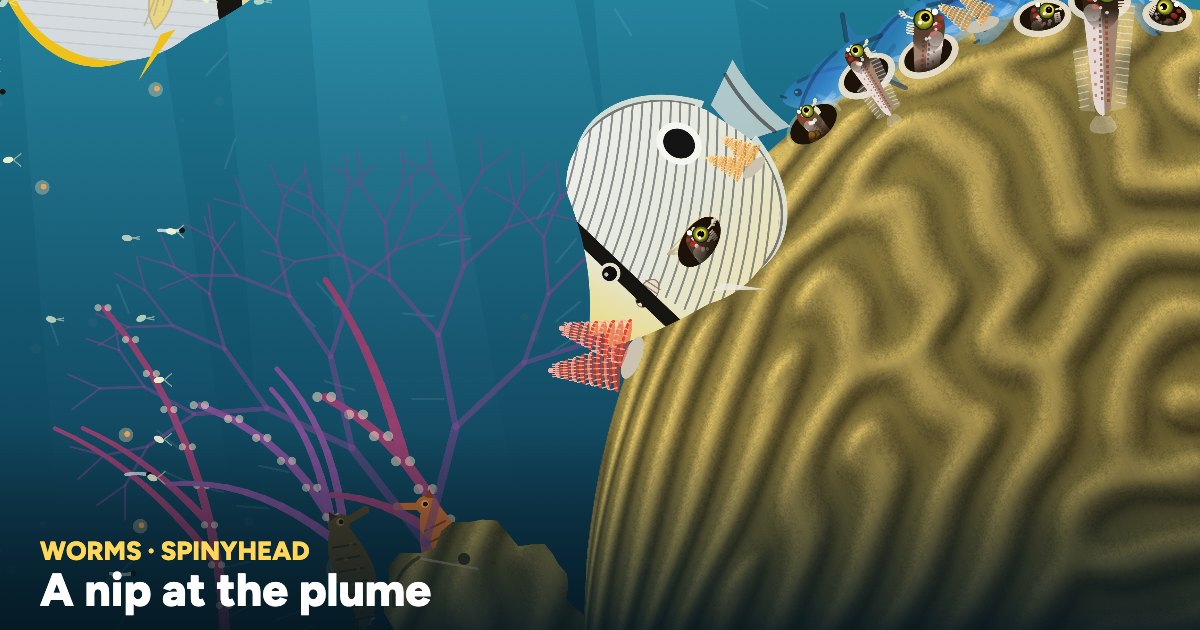
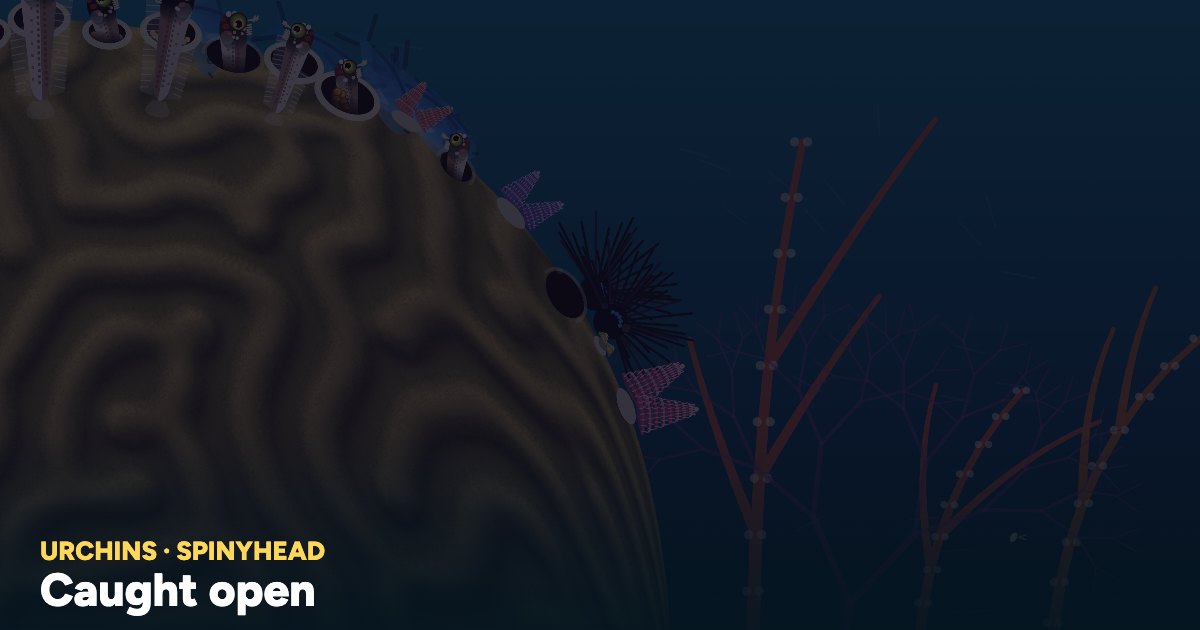
Behavior: Corallivory and sessile invertebrate browsing (nipping at feeding tentacles of tube worms and coral polyps)
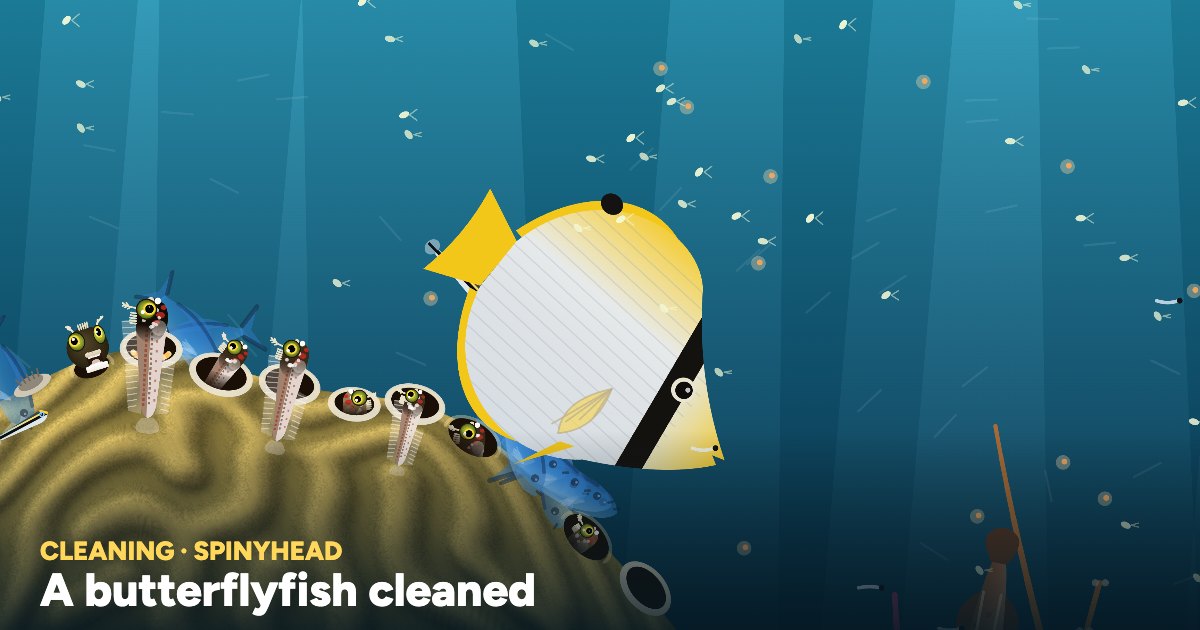
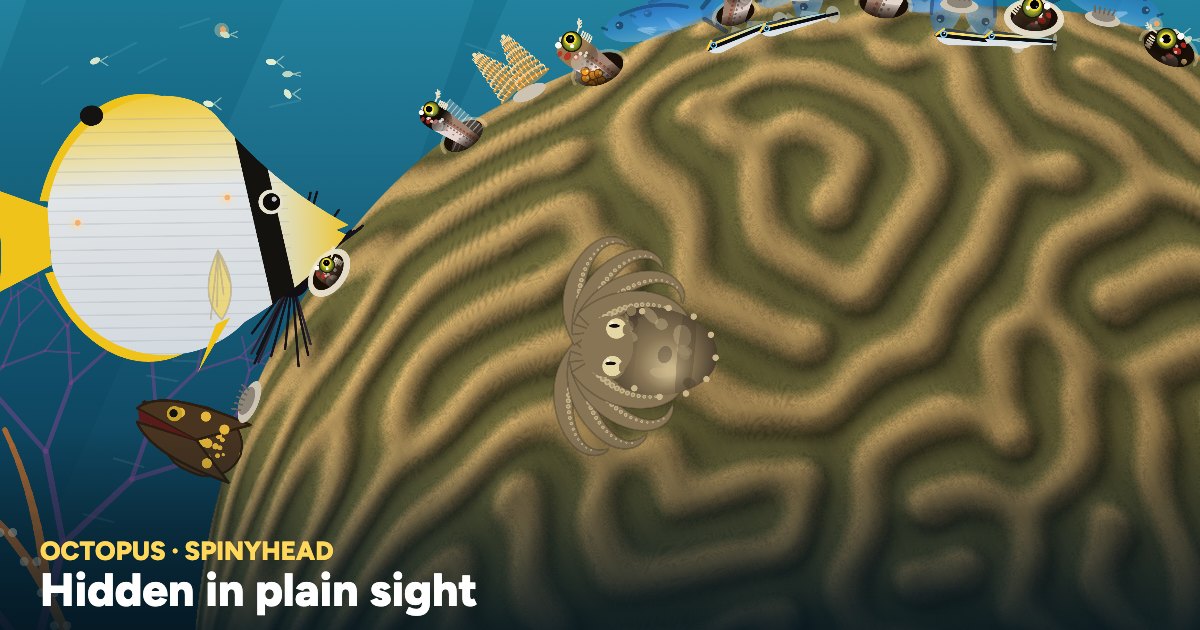
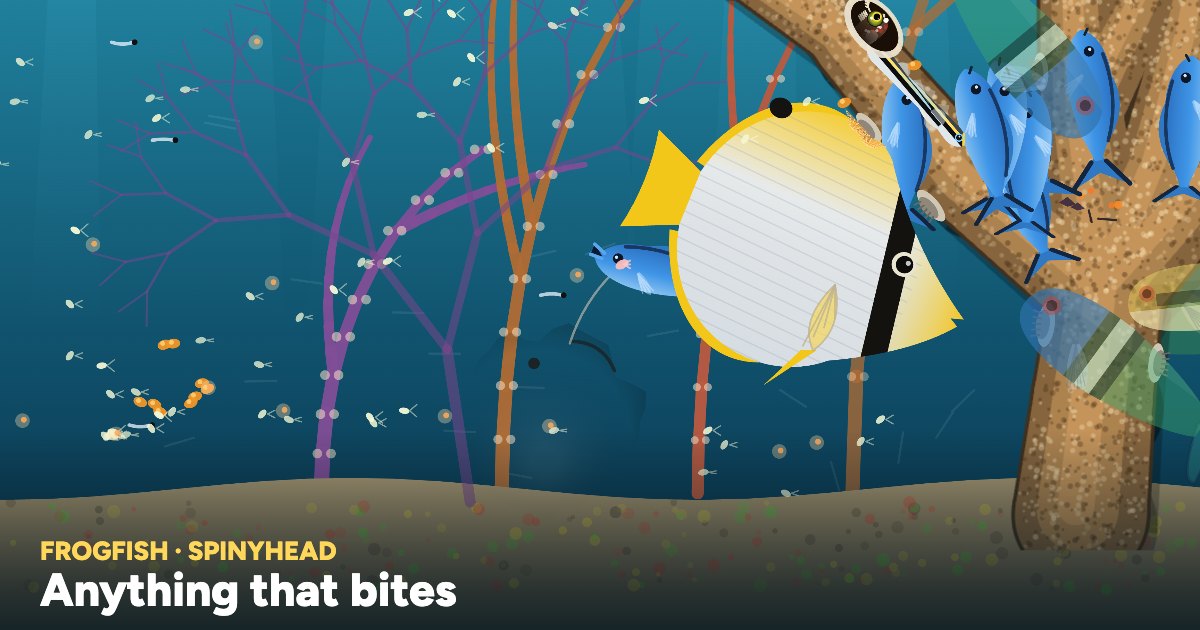
Butterflyfishes pick at worm plumes and coral polyps with small, precise mouths. A bitten worm regrows its plume, but repeated nips can kill it.
Species involved
- foureye butterflyfish Chaetodon capistratus nips worm plumes and coral polyps
- spotfin butterflyfish Chaetodon ocellatus nips worm plumes and coral polyps
- banded butterflyfish Chaetodon striatus nips worm plumes and coral polyps
- Christmas tree worm Spirobranchus giganteus prey whose plumes are bitten; retracts and regrows them
- brain coral polyps may be browsed
- great star coral Montastraea cavernosa polyps may be browsed
- massive starlet coral Siderastrea siderea polyps may be browsed
About corallivory and sessile invertebrate browsing (nipping at feeding tentacles of tube worms and coral polyps)
Browsing on sessile invertebrates means a mobile predator takes only part of an attached animal, such as the feeding tentacles of a tube worm or the soft tissue of coral polyps, rather than killing and eating the whole animal. Butterflyfishes (family Chaetodontidae) have small, protrusible mouths, often with fine teeth, which let them pick at small targets in crevices and on exposed surfaces. Their diets vary by species. Some eat mostly coral, while others take a mix of worms, small crustaceans, anemones and other invertebrates. Prey that can regrow lost parts are especially suited to this kind of feeding.
Why it matters
For the fish, nipping soft parts is a way to get food from animals that are fixed in place and often chemically or physically defended. For the prey, losing a plume or some polyp tissue costs energy to rebuild, and the animal cannot feed properly while it regrows. A single bite is usually survivable because the worm retracts into its tube and later regrows its crown, but repeated bites may weaken it and could kill it, as the notebook notes. Across a reef, this kind of grazing can affect coral and worm condition locally, though the effects depend on how many fish are feeding and on what else stresses the prey.
On coral reefs
A diver may see a butterflyfish, often alone or in a pair, hovering close to the reef and making quick, precise pecks at the surface. Christmas tree worms and other feather-duster worms snap their plumes into their tubes in response to shadows, movement or water pressure, and then slowly unfurl again. Fresh, partly bitten plumes or small pale scars on coral tissue can sometimes be seen where fish have been feeding.
Who studied it
Butterflyfish feeding has been studied for a long time as a classic case of dietary specialization among reef fishes, and researchers have compared coral-feeding and non-coral-feeding species. Their feeding is often used to understand how closely fishes depend on coral. The ability of tube worms to retract and regrow lost plumes has been known from general marine biology for much longer. The notebook gives no source for this entry.
Elsewhere in the animal kingdom
Browsing on parts of sessile animals occurs widely. Parrotfishes and some pufferfishes and filefishes bite coral, and some sea slugs and sea stars feed on coral tissue. Nudibranchs graze on sponges and hydroids, and some fishes crop the siphons of clams or the arms of brittle stars. Butterflyfishes are among the best-known fish examples of this.
Doubts and open questions
How much damage butterflyfish nipping does to coral and worm populations is debated and varies by species and place. Coral-feeding species may be affected when coral cover declines, and it is not always clear whether they are a significant cause of coral loss or mainly a consequence of it. Which butterflyfish species in the Caribbean take worm plumes versus coral polyps also varies in the literature and between sites.
Related behaviors
- Grazing by parrotfishes Parrotfishes scrape algae and some coral surface with fused beak-like teeth, whereas butterflyfishes pick with fine, precise bites.
- Predation by corallivorous snails or sea stars These animals consume coral tissue slowly over large areas rather than taking quick bites and moving on.
- Cleaning symbiosis Cleaners remove parasites from clients that benefit, whereas a nipped worm or coral gains nothing.
Spinyhead is a free game you play in your browser: you are a spinyhead blenny, a fish about 3 cm long living in a worm hole on a Caribbean coral head. Feed, fight for a better hole, court, raise eggs and dodge predators, while everything around you behaves the way field biologists have seen it behave. Every behavior in the game is backed by a published study or careful observation; there are 38 on these pages, and more in the game’s field notebook waiting to be found.
Other reef behaviors to discover