 SpinyheadPlay free
Brain coral
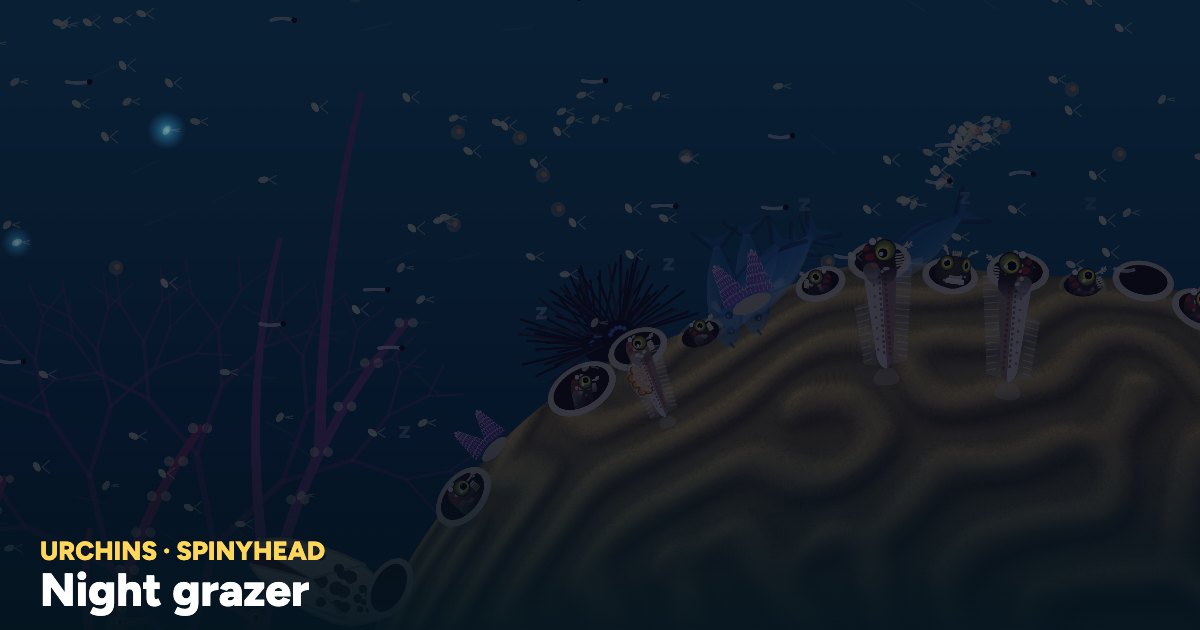
The symmetrical brain coral (Pseudodiploria strigosa) is one of the most familiar reef-building corals of the Caribbean. It forms rounded, dome-shaped heads whose surface is covered in winding ridges and valleys that look like the folds of a brain. Each colony is made up of many connected polyps that share a skeleton of limestone. The coral grows slowly and can live for a very long time, so large heads are often many decades or centuries old. The brownish colour comes from symbiotic algae living in its tissue.
How to recognize it
- rounded, dome or boulder shape
- winding ridges and valleys like a brain
- narrow valleys, under about 1 cm wide
- smooth ridge tops without a central groove
- tan, yellow-brown or grey-green colour
- tentacles extended mostly at night
| Size | Colonies are typically about 30 to 100 cm across; large old heads can reach roughly 1.5 to 2 m. |
|---|---|
| Range | Florida, the Bahamas, Bermuda, the Gulf of Mexico and throughout the Caribbean; some sources also report it from Brazil. |
| Habitat | Common on reef flats, back reefs, reef crests and fore reefs. It lives from very shallow water to about 40 m, and is most common in the upper 20 to 30 m or so. |
| Diet | Gets much of its energy from sugars made by its symbiotic algae (zooxanthellae). It also catches small plankton with its tentacles, mainly at night, and takes in dissolved nutrients. |
| Conservation | Assessed by the IUCN as Least Concern in 2008, but it is still affected by coral bleaching from warm water, coral diseases, and pollution and physical damage. It is highly susceptible to stony coral tissue loss disease, which has caused heavy losses of brain corals in parts of the Caribbean since about 2014. |
Life and behavior
Brain corals grow slowly, adding only a few millimetres to about a centimetre of skeleton per year. Colonies are hermaphroditic, with each producing both eggs and sperm. They reproduce by broadcast spawning, releasing egg and sperm bundles into the water on a few nights after the full moon in late summer. Fertilised eggs develop into free-swimming larvae that settle and found new colonies. Colonies can also grow larger by budding new polyps, and a broken fragment may sometimes survive and regrow. Some colonies live for centuries.
Its family: Faviid brain and star corals (Faviidae)
Faviids are hard (stony) corals that build massive, rounded colonies with a heavy limestone skeleton. Most have polyps arranged in separate cups or in connected valleys. They depend on symbiotic algae for energy and are important reef builders in the Atlantic.
Similar species
- Grooved brain coral Diploria labyrinthiformis Has a distinct groove running along the top of each ridge and wider valleys, while the symmetrical brain coral has smooth ridge tops and narrower valleys.
- Knobby brain coral Pseudodiploria clivosa Has wider, more irregular valleys and ridges, and often forms flatter or crust-like colonies in shallow, wave-swept water.
- Boulder brain coral Colpophyllia natans Has much larger and wider valleys, often with contrasting green, brown or grey colours, and can form larger heads.