SpinyheadPlay free
Caught open
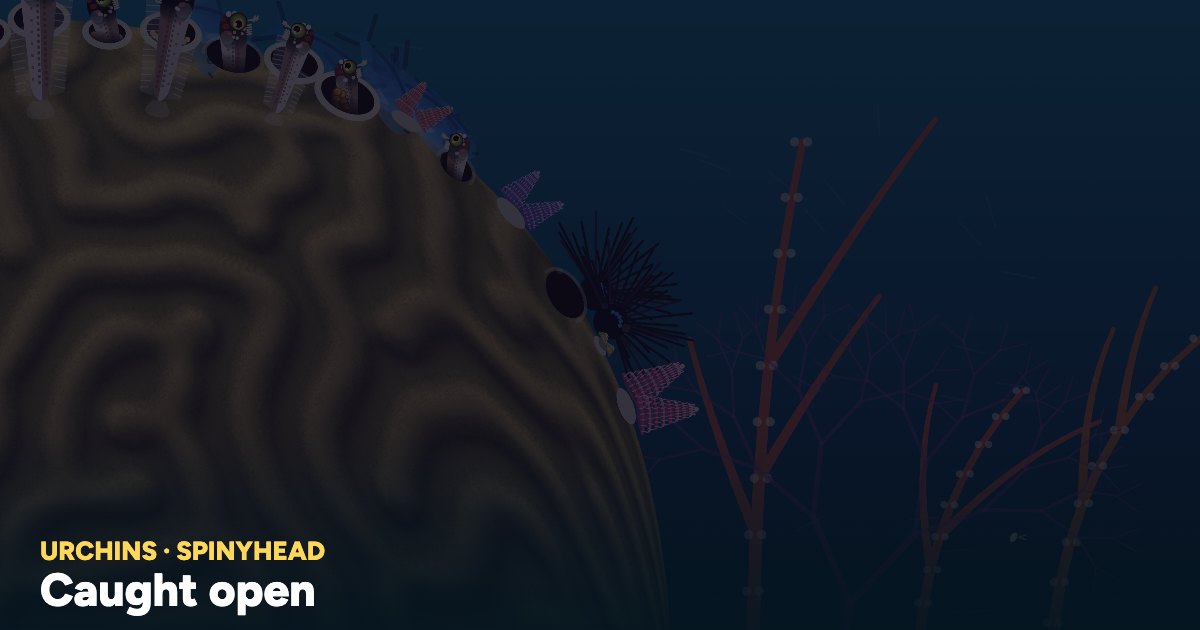
Behavior: Incidental predation (accidental grazing) by an urchin on a sessile worm that depends on a shadow-triggered withdrawal r
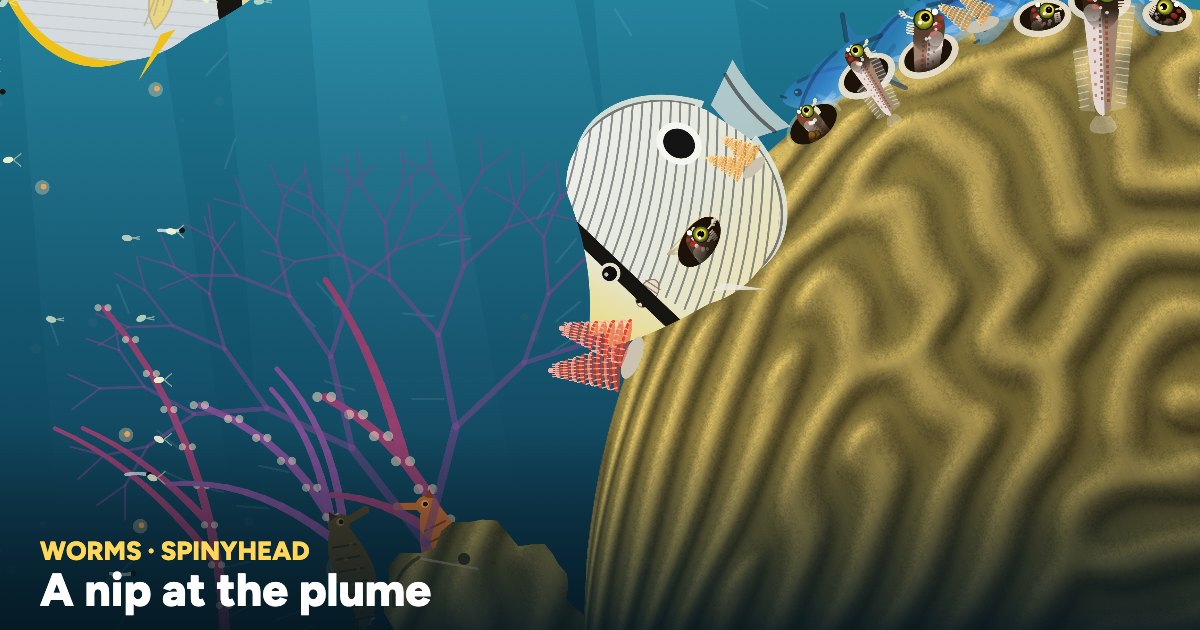
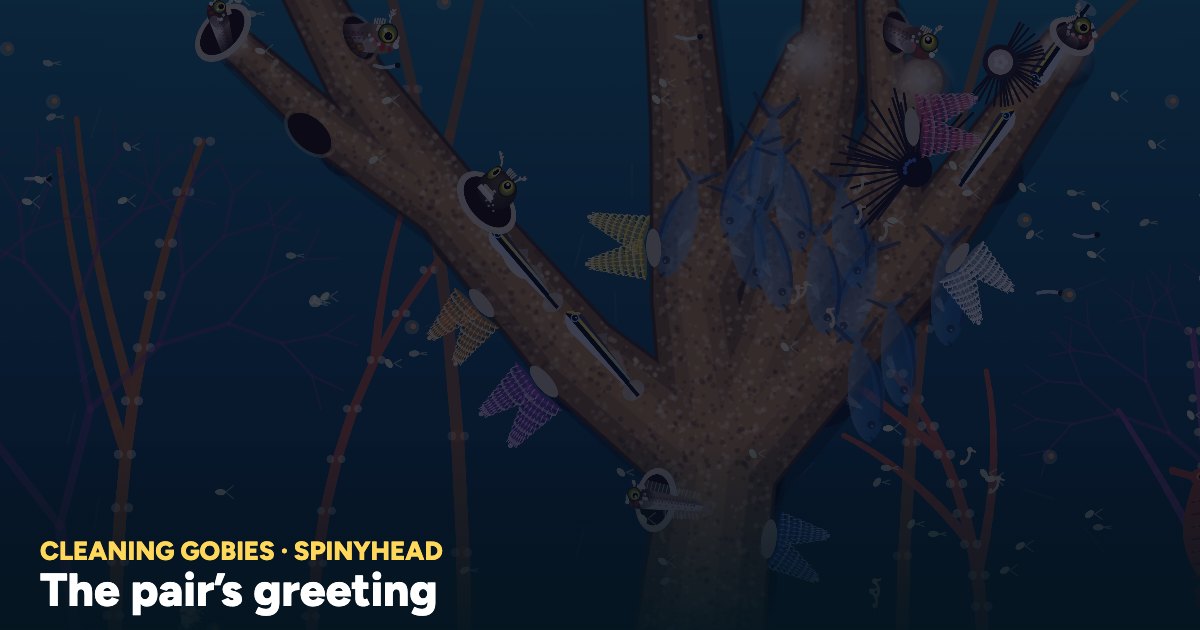
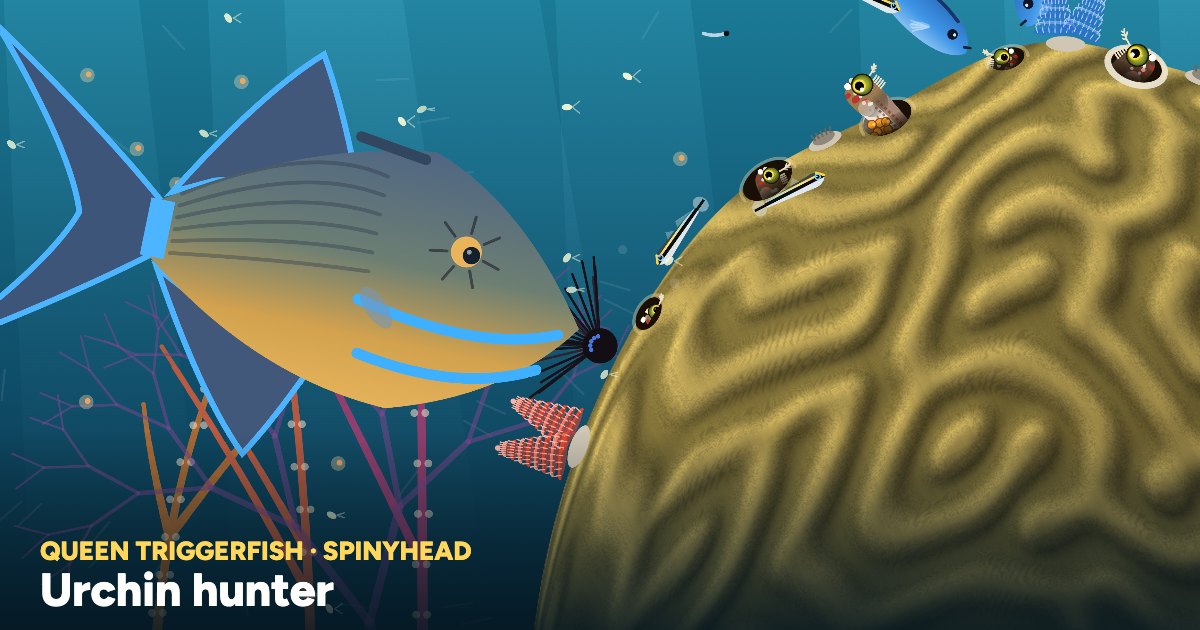
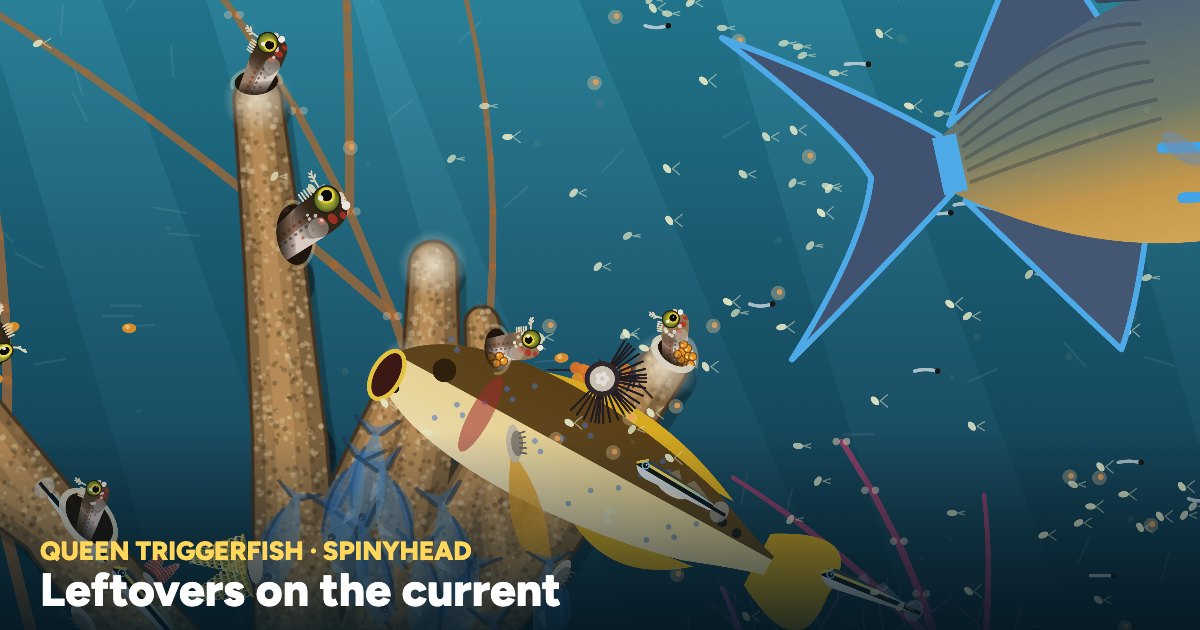
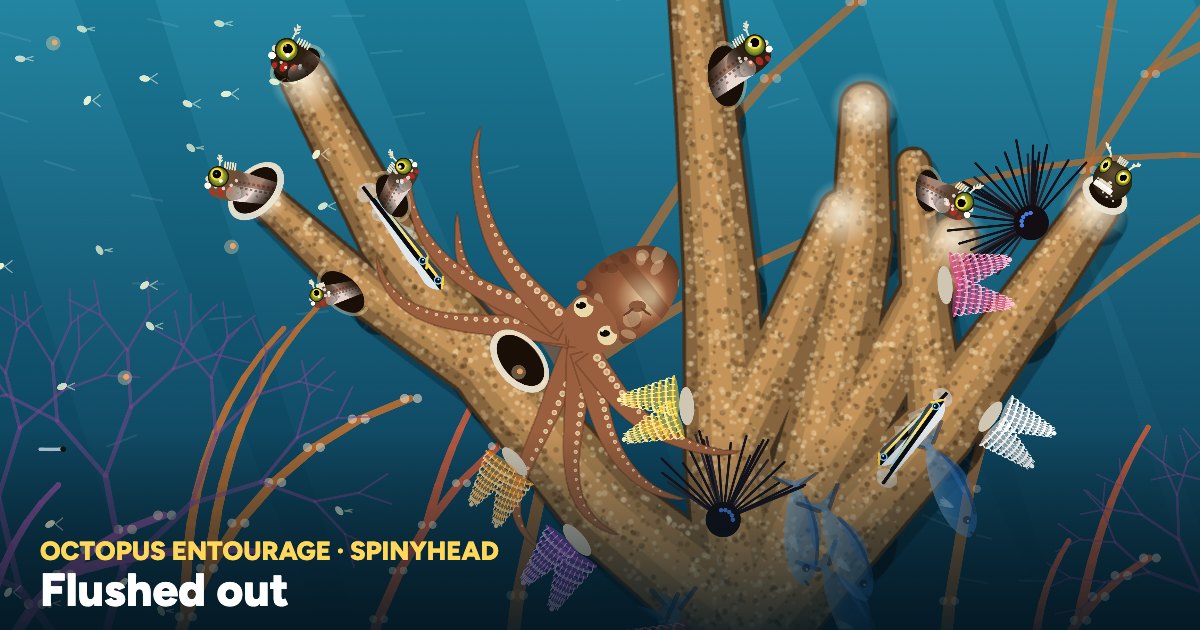
A Christmas tree worm snaps shut at a shadow, but a slow-moving urchin gives little warning: now and then one grazes over a plume before the worm can withdraw.
Species involved
- long-spined sea urchin Diadema antillarum slow-moving grazer that can pass over exposed worms
- Christmas tree worm Spirobranchus giganteus tube-dwelling worm whose plumes retract when shadowed
- brain coral live coral that can host worm tubes
- great star coral Montastraea cavernosa live coral that can host worm tubes
- massive starlet coral Siderastrea siderea live coral that can host worm tubes
About incidental predation (accidental grazing) by an urchin on a sessile worm that depends on a shadow-triggered withdrawal r
Many sessile animals cannot flee, so they rely on fast withdrawal when a predator or disturbance approaches. Christmas tree worms live in tubes embedded in live coral. Their two spiral crowns (radioles) are used for breathing and for catching suspended food particles. A sudden shadow or touch makes the worm pull the crowns into the tube within a fraction of a second, and a plug-like operculum seals the entrance. This reflex works well against fast, fish-like threats. A slow grazer that moves steadily across the substrate is a different problem. Its approach may cause little change in light, or the worm may be caught before it finishes withdrawing. Grazing damage that happens as a side effect of feeding on something else is called incidental predation.
Why it matters
For the worm, a defence that depends on speed can fail against a slow, steadily advancing threat. Losing or damaging the crown costs it feeding and gas exchange until it regrows. Many tube worms are able to regrow lost crowns, but I would not claim this for every individual. For the urchin, the worm is probably not a targeted food. Its main diet is algae and whatever else its scraping mouthparts remove from the surface. For the reef, urchin grazing shapes which organisms settle and survive on coral surfaces. Worms are one of many small residents affected by this grazing.
On coral reefs
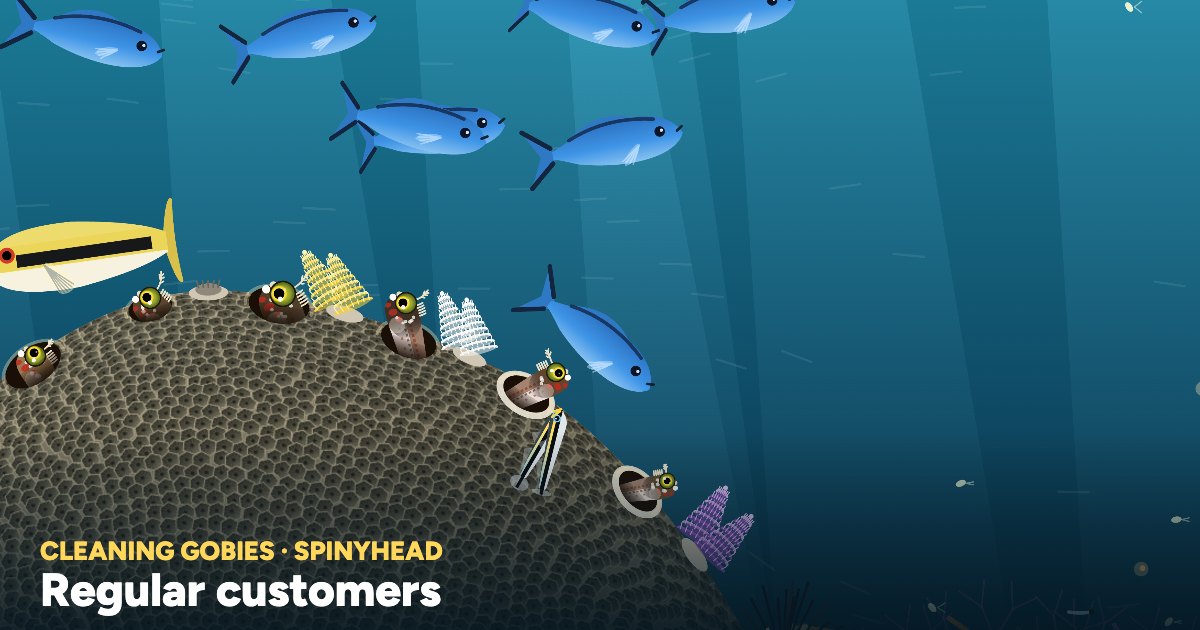
A diver sees Christmas tree worms as bright spirals on coral heads, snapping shut when a hand or a shadow passes over them. Long-spined urchins are usually seen wedged in crevices by day, and they move out over the reef at night to graze. Where an urchin's path crosses a worm, the worm may be touched by spines or tube feet and retract, or may occasionally be caught open. Seeing an urchin actually eat a worm is not something I can describe as a common sight.
Who studied it
The shadow reflex of tube-dwelling worms has long been studied as a classic example of rapid escape in sessile invertebrates. It is often linked to giant nerve fibres. Diadema antillarum became the subject of intense study after its Caribbean-wide mass die-off in 1983 to 1984, documented by H. Lessios and colleagues. That event showed how strongly the urchin shaped reef algae and surfaces.
Elsewhere in the animal kingdom
Incidental predation by grazers is widespread. Parrotfish scraping algae off coral may also take coral tissue and small animals. Limpets and chitons bulldoze small settlers from rocky shores. Sea urchins in temperate kelp systems and tropical reefs alike remove small, attached animals as they graze. Shadow-triggered withdrawal is also known in barnacles, some bivalves and other feather-duster and fan worms.
Doubts and open questions
It is unclear how often urchins actually damage tree worms in nature. Gaps in the evidence include whether the worms' defence is better against fish than against grazers, and how much urchin grazing affects worm survival compared with fish predation or other causes. The note is best read as a plausible hazard, not a measured rate.
Related behaviors
- corallivory Animals such as some butterflyfish and parrotfish deliberately feed on live coral tissue, rather than hitting small residents by accident.
- bioerosion Urchins, parrotfish and boring organisms remove or break down reef rock and coral skeleton, which affects worms indirectly.
- predator-avoidance withdrawal reflex This is the worm's escape response to a threat, whereas the entry is about when that response fails.
- grazing facilitation or competition Urchins clear algae, which can help coral recruits and worms to settle, so grazing is not only harmful to them.
Spinyhead is a free game you play in your browser: you are a spinyhead blenny, a fish about 3 cm long living in a worm hole on a Caribbean coral head. Feed, fight for a better hole, court, raise eggs and dodge predators, while everything around you behaves the way field biologists have seen it behave. Every behavior in the game is backed by a published study or careful observation; there are 38 on these pages, and more in the game’s field notebook waiting to be found.
More urchins
Other reef behaviors to discover