SpinyheadPlay free
Christmas tree worm Spirobranchus giganteus

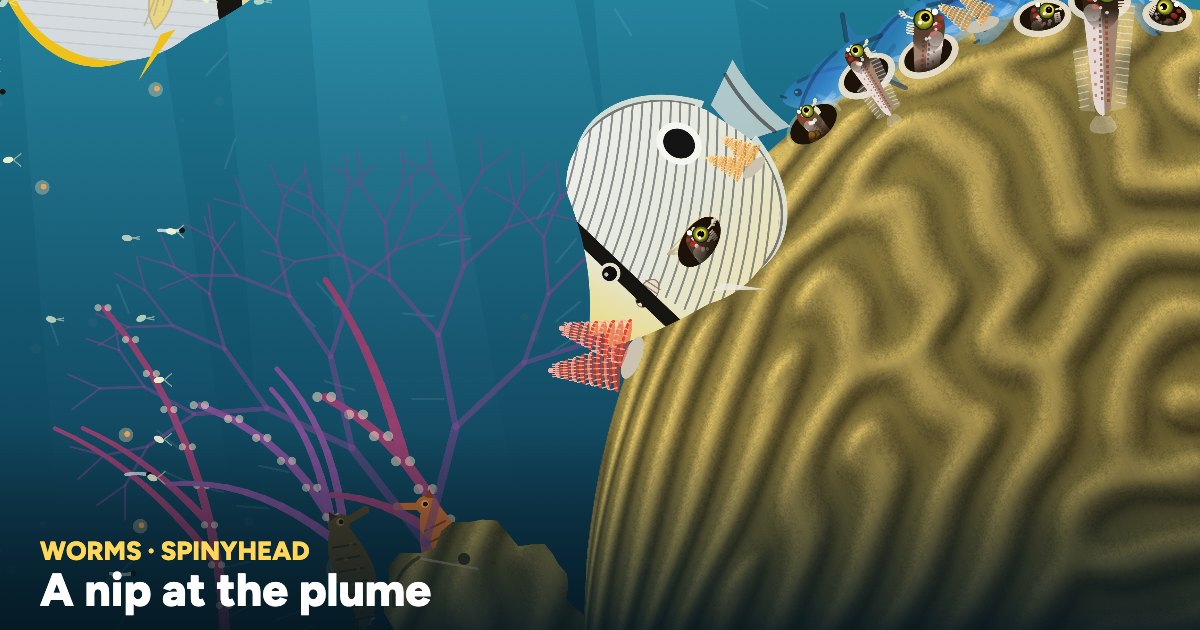
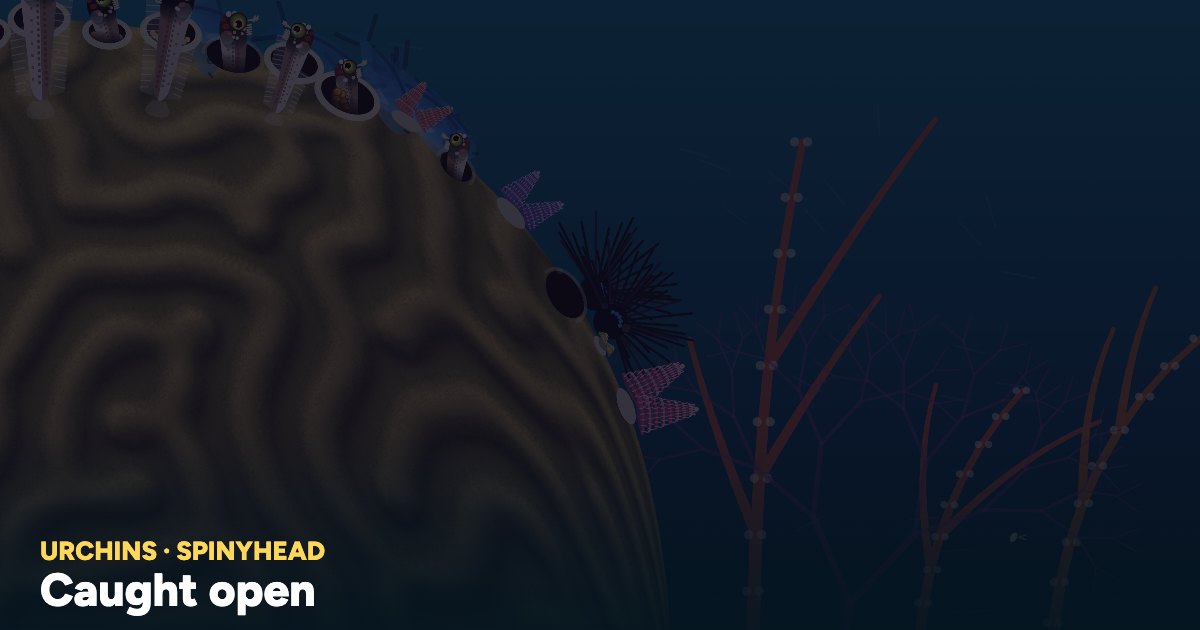
The Christmas tree worm is a small marine tube worm best known for the two spiralled, tree-shaped crowns that project from its burrow in living coral. Each crown is a feeding and breathing organ, and the rest of the animal stays hidden inside a hard, calcareous tube that it builds within the coral skeleton. Colours vary widely between individuals, including orange, yellow, blue, white and brown, and the two crowns on one worm are usually the same colour. The worm retracts into its tube almost instantly if touched or if a shadow passes over it.
How to recognize it
- two spiralled, tree-like crowns
- crowns in many colours
- tiny size, sits flush on coral
- crowns vanish instantly when disturbed
- two small hard spikes at tube opening when retracted
- found embedded in living coral heads
| Size | The exposed crowns are typically about 2 to 4 cm across; the tube extends into the coral and the whole worm is a few centimetres long, with a reported maximum of roughly 3 to 4 cm for the crown span a |
|---|---|
| Range | Tropical and subtropical waters worldwide, including the Caribbean, Florida and the Bahamas, as well as the Indo-Pacific. It is often treated as a species complex, so some populations may represent separate species. |
| Habitat | Lives on coral reefs, settling on and burrowing into live stony corals such as brain, star and mound corals. It is common from very shallow water to depths of a few tens of metres. |
| Diet | A filter feeder. The feathery radioles of the crowns trap plankton and fine particles from the water, and cilia move the captured food toward the mouth. The crowns also work in gas exchange. |
| Conservation | Not known to be assessed as threatened, and the animal is widespread and common. Its dependence on live coral means it is indirectly affected by coral loss from bleaching, disease, ocean warming and acidification, and by collection for the aquarium trade. |
Life and behavior
Larvae drift in the plankton, then settle on a live coral colony and metamorphose into a tube-building worm. The coral grows around the tube, so the worm is a permanent resident of its spot for life. Sexes are generally separate, and adults release eggs and sperm into the water for external fertilisation. The worm can withdraw into its tube within a fraction of a second and seal the opening with a hard plug called an operculum. Lifespans are reported to be on the order of a decade or more, though sources differ.
Its family: Serpulid tube worms (Serpulidae)
Serpulids are marine polychaete worms that build hard calcareous tubes. They have a crown of feathery radioles used for feeding and breathing. Most can close the tube opening with a modified radiole called an operculum. Many live attached to hard surfaces such as rock, shell or coral.
Similar species
- Social feather duster Bispira brunnea Has many radioles in a loose, fan-like or round crown on a soft, leathery tube rising from the reef, rather than two tight spiral crowns embedded in coral.
- Magnificent feather duster Sabellastarte magnifica Much larger single fan or funnel-shaped crown on a soft tube, not two small spirals set into living coral.