SpinyheadPlay free
Flushed out
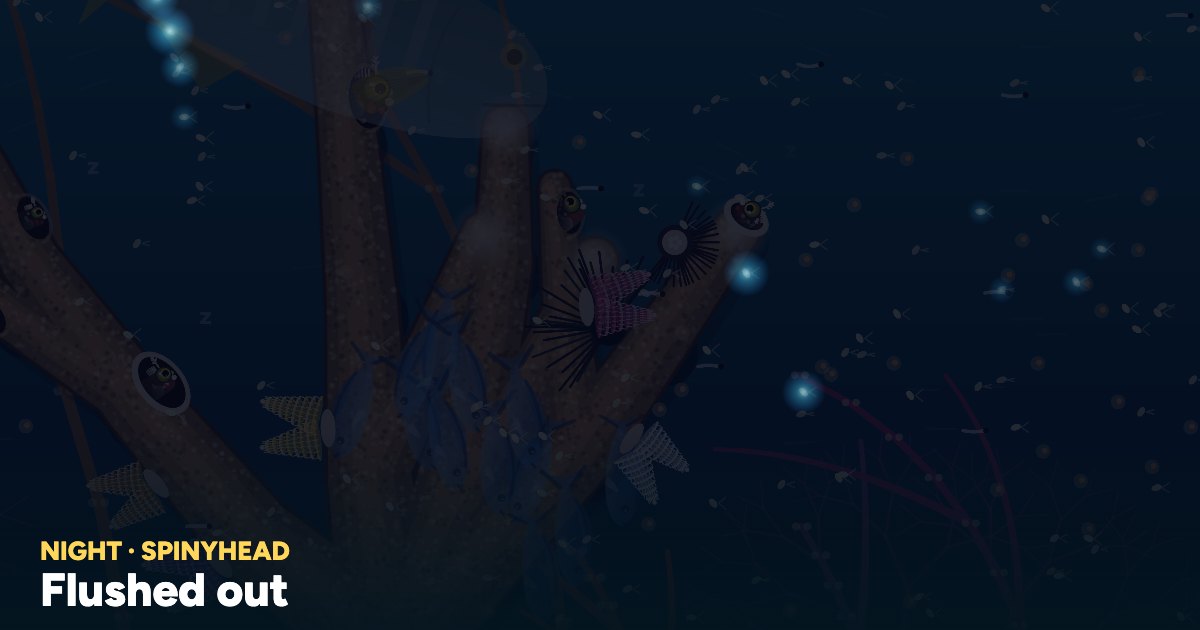
Behavior: Hunting association (nuclear-follower foraging, with the moray flushing prey for other predators)
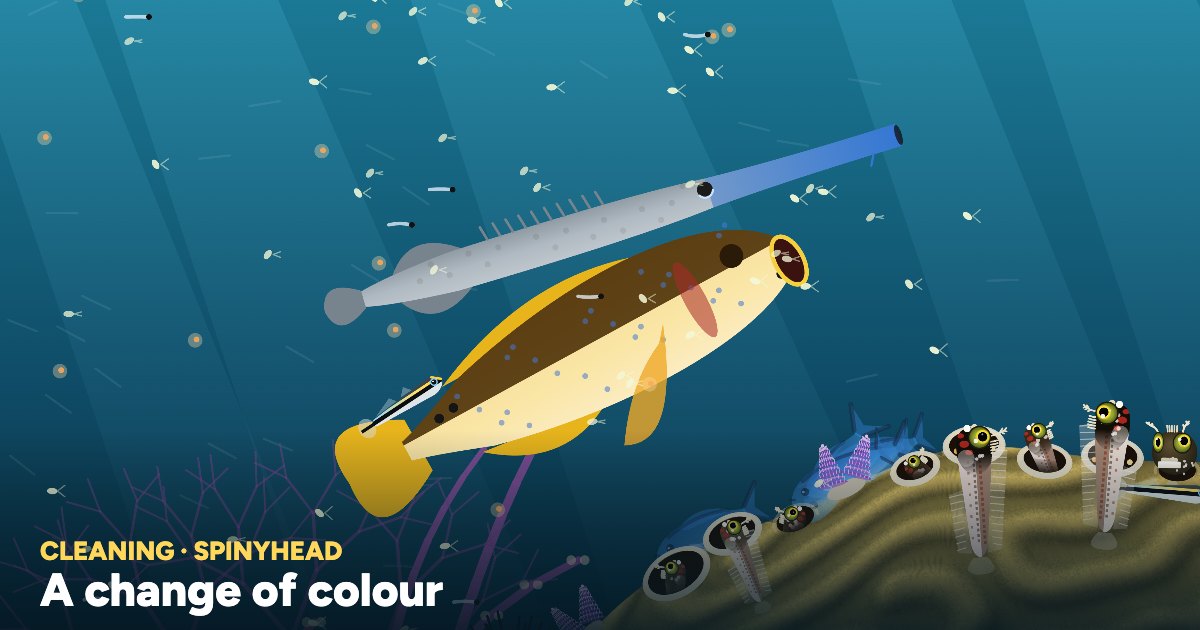
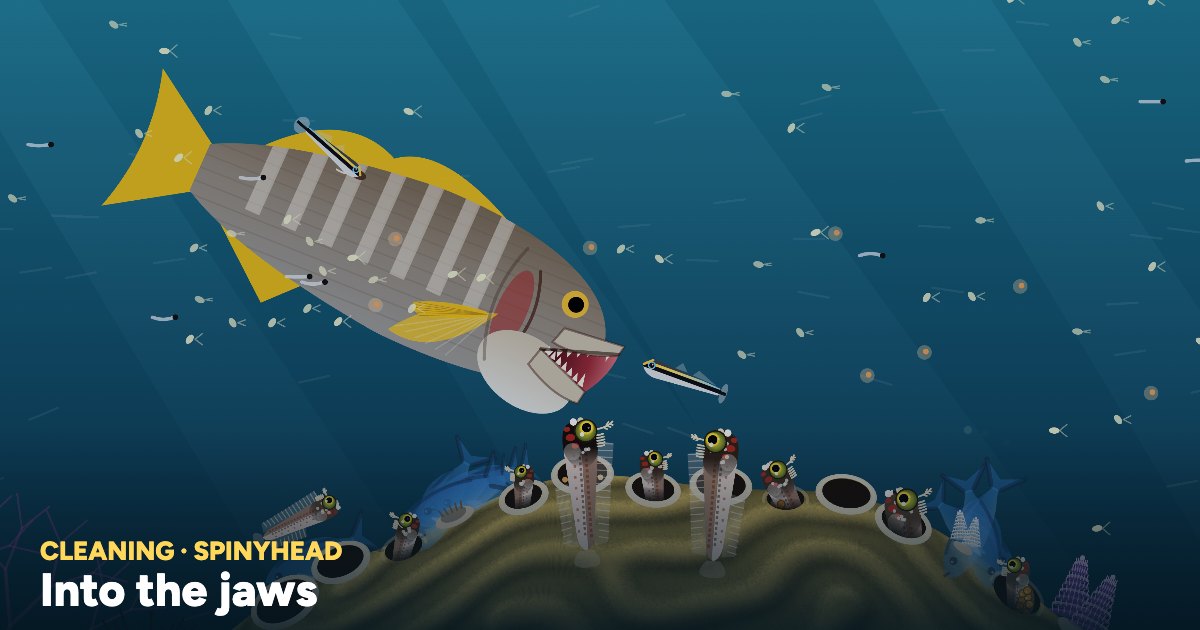
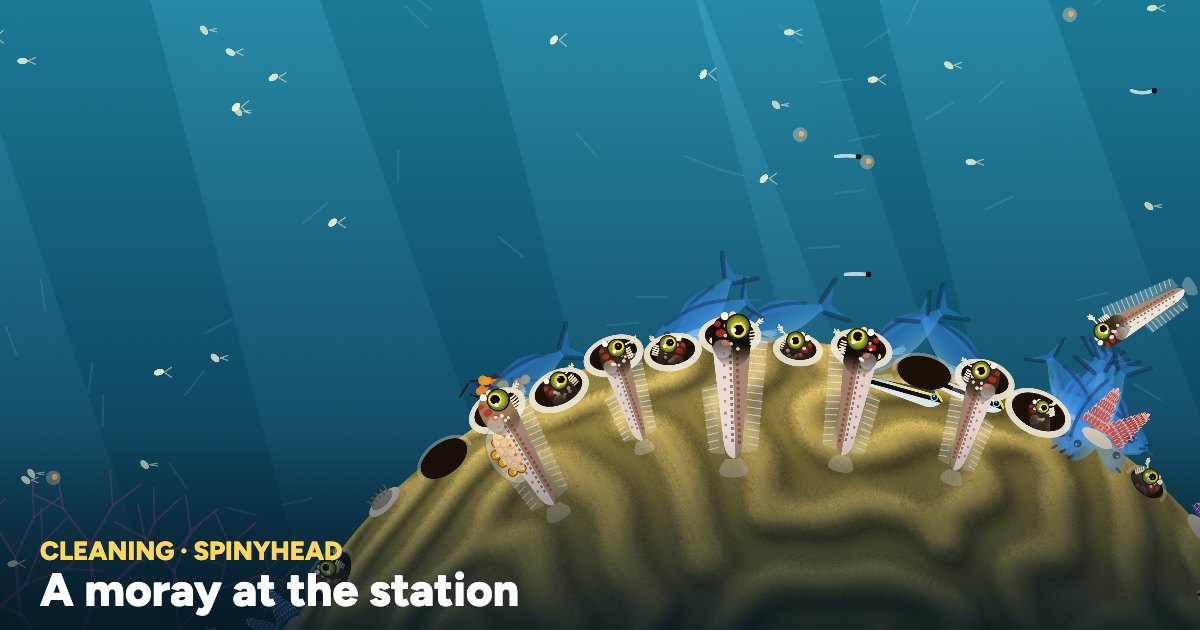
A hunting moray flushes small animals from their hiding places, and other predators follow it to snap up whatever bolts.
Species involved
- spotted moray Gymnothorax moringa nuclear hunter that flushes prey from crevices
- goldentail moray Gymnothorax miliaris nuclear hunter that flushes prey from crevices
- graysby Cephalopholis cruentata possible follower that takes prey that bolts
- coney Cephalopholis fulva possible follower that takes prey that bolts
- schoolmaster snapper Lutjanus apodus possible opportunistic follower
- trumpetfish Aulostomus maculatus possible follower; it is known for shadowing other animals
- French grunt Haemulon flavolineatum small prey driven from shelter
About hunting association (nuclear-follower foraging, with the moray flushing prey for other predators)
In a hunting association, one predator (the nuclear species) disturbs or flushes prey, and other predators (followers) stay close to catch the animals that escape. Morays are slender and can push their heads and bodies into crevices and holes that bigger, deeper-bodied fishes cannot enter. Small fishes and invertebrates hiding in these refuges are therefore exposed to the moray inside, while any that flee into open water are exposed to predators outside. A follower gains access to prey that would otherwise stay hidden from it.
Why it matters
Followers gain food at little cost, since the moray does the searching and flushing. Prey are then caught either way: if they stay in the crevice the moray takes them, and if they run they meet the followers. The moray may lose some prey to the followers, or it may gain if the followers' presence pushes more prey toward it, and which of these applies is hard to demonstrate. Where associations are common, hiding in a hole is a weaker defence for small reef animals. They also add to the predation pressure that shapes how prey use shelter and when they are active.
On coral reefs
Morays are mostly nocturnal. A diver at night may see one searching along the reef, poking its head into holes and under ledges. Other fishes sometimes hover close by, and a flushed fish may dart out and be snapped up. In daylight the moray is usually hidden with just its head showing, so this behaviour is more often seen after dusk.
Who studied it
The notebook cites Bshary and colleagues (2006, PLoS Biology), who studied giant morays and roving coral groupers in the Red Sea. They showed that these two predators hunt together, and that the grouper can signal to a moray, for example by a headstand display, to recruit it to a hiding prey. This was an important demonstration of communication and coordination between different species of fish. Followers using a flushing predator is an older idea in the study of mixed-species foraging.
Elsewhere in the animal kingdom
Mixed-species hunting associations occur in many groups. Well-known cases include birds such as egrets that follow cattle or other large animals and catch the insects they flush, and some birds that follow army ants for the prey the ants disturb. Fishes also show them, as in the grouper and moray partnership and in goatfishes followed by other fishes on reefs. Cooperative hunting between groupers and morays in the Red Sea is the best-documented fish example.
Doubts and open questions
The Red Sea study involved giant morays and a different grouper, and daytime hunting. How far this applies to Caribbean morays, to nocturnal hunting, and to species such as graysby, coney, snappers or trumpetfish is not well established, so the game's scene should be read as plausible rather than documented for these exact species. It is also debated whether the moray gains, loses or is unaffected, which decides whether this is a cooperative interaction or simply one species exploiting another.
Related behaviors
- cooperative hunting Both partners gain and actively coordinate or signal, whereas in simple following only the follower benefits.
- shadowing or aggressive mimicry A predator uses another animal as a screen or disguise to approach prey, rather than to exploit prey the other has flushed.
- kleptoparasitism The follower steals food the other predator has already caught, rather than taking prey that escaped.
- mixed-species foraging groups Several species forage together mainly for safety or shared vigilance, not because one flushes prey for the others.
Spinyhead is a free game you play in your browser: you are a spinyhead blenny, a fish about 3 cm long living in a worm hole on a Caribbean coral head. Feed, fight for a better hole, court, raise eggs and dodge predators, while everything around you behaves the way field biologists have seen it behave. Every behavior in the game is backed by a published study or careful observation; there are 38 on these pages, and more in the game’s field notebook waiting to be found.
More night
Other reef behaviors to discover