SpinyheadPlay free
Goldentail moray Gymnothorax miliaris
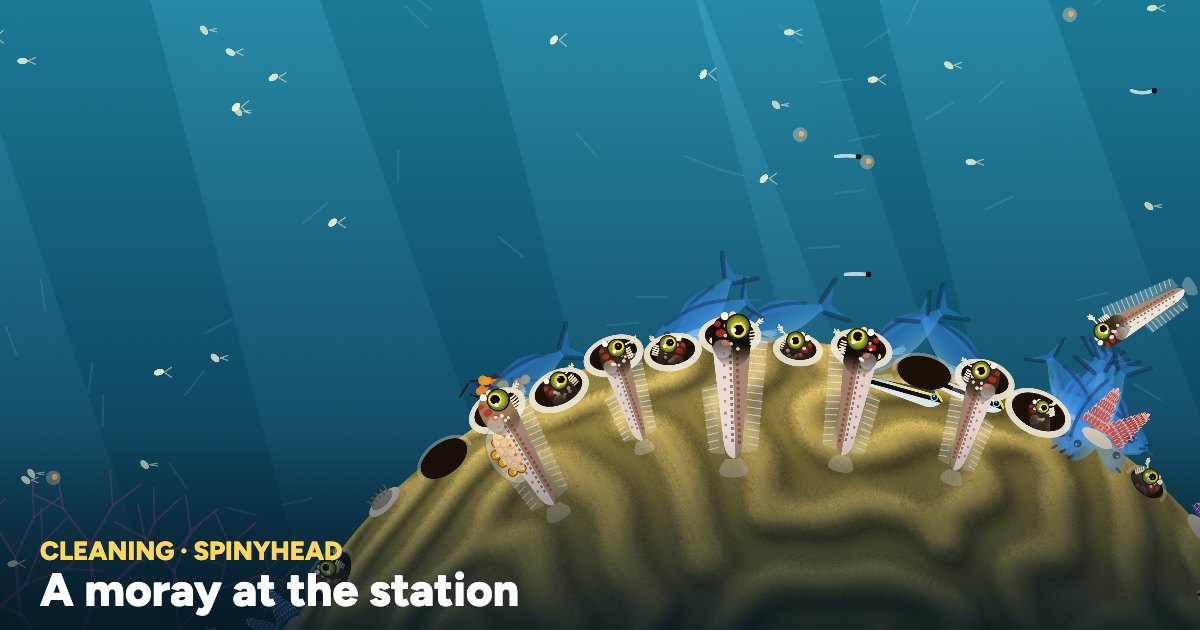
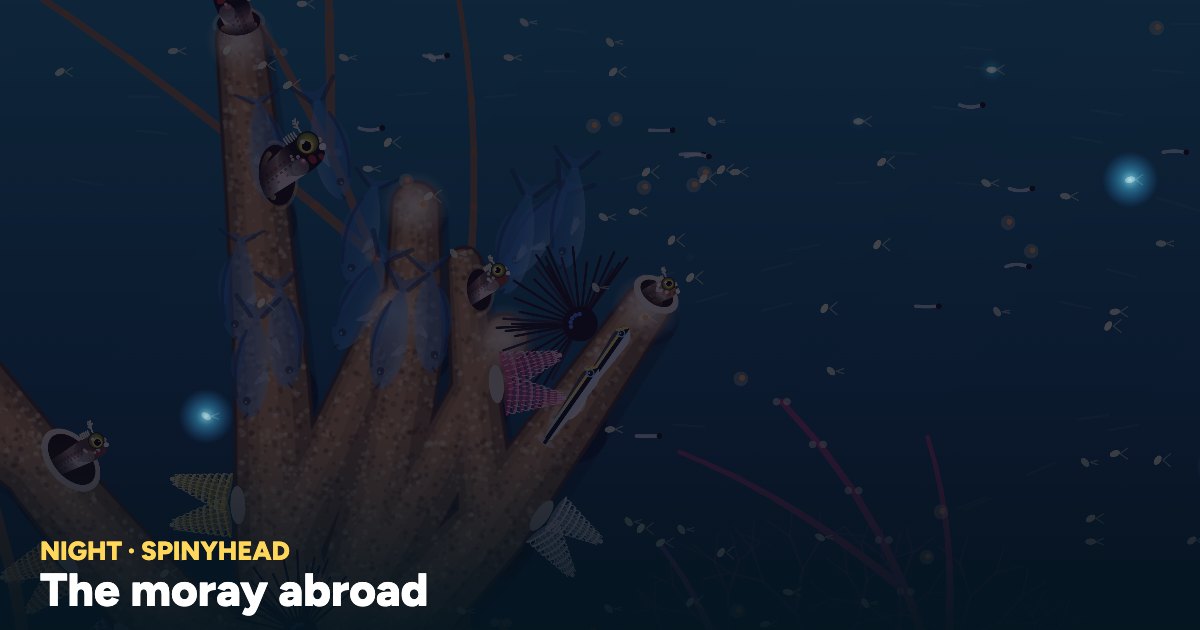
The goldentail moray is a small, slender Caribbean moray eel. It looks dark from a distance, but up close its body is covered with tiny golden-yellow specks. Like other morays, it spends most of the day tucked into crevices in the reef, often with only the head showing, and comes out to hunt after dark. It is generally shy and not aggressive, but like any moray it can bite if cornered or handled.
How to recognize it
- dark brown body with tiny yellow-gold specks
- speckling dense enough to give a golden cast, especially toward the tail
- long, snake-like body with no pectoral fins
- single continuous fin running along the back, tail and belly
- small round gill opening behind the head
- head usually poking from a crevice, mouth opening and closing
| Size | Typically about 30 to 60 cm long; maximum about 70 cm. |
|---|---|
| Range | Western Atlantic: the Bahamas, southern Florida and the Caribbean Sea. Exact limits of the range differ somewhat between sources. |
| Habitat | Coral reefs and rocky areas, hiding in holes and crevices in the reef framework. Found from very shallow water to roughly 40 m, and most often seen on shallow to mid-depth reefs. |
| Diet | Carnivore that feeds mainly at night on small fishes and crustaceans such as shrimps and crabs. It hunts by smell, probing into crevices and snatching prey with a quick strike. |
| Conservation | Not known to be of major concern; it is generally listed as Least Concern. Possible local threats include reef degradation and collection for the aquarium trade. |
Life and behavior
Mostly nocturnal and solitary, spending the day sheltered in a hole. It breathes by opening and closing its mouth to pump water over the gills, which is normal behaviour and not a threat display. Like other morays, it is thought to reproduce by releasing eggs and sperm into open water. The eggs hatch into transparent, ribbon-like leptocephalus larvae that drift in the plankton before settling onto reefs and transforming into young eels. Details of its breeding and lifespan are not well studied. Cleaner shrimps and cleaner fishes may remove parasites from it.
Its family: Moray eels (Muraenidae)
Morays are elongated, scaleless eels that lack pectoral and pelvic fins; the dorsal, tail and anal fins merge into one continuous fin. They have small round gill openings and strong jaws with sharp teeth, plus a second set of jaws in the throat that helps pull prey in. Most live in reef crevices and are nocturnal predators.
Similar species
- Spotted moray Gymnothorax moringa Pale, whitish or tan body marked with distinct dark spots, rather than a dark body with fine yellow specks.
- Green moray Gymnothorax funebris Much larger and heavier-bodied, with a uniform olive-green to brownish color and no golden speckling.
- Purplemouth moray Gymnothorax vicinus Plain brownish to gray body without fine yellow specks, with a purplish tint inside the mouth and around the jaws.