 SpinyheadPlay free
No two alike
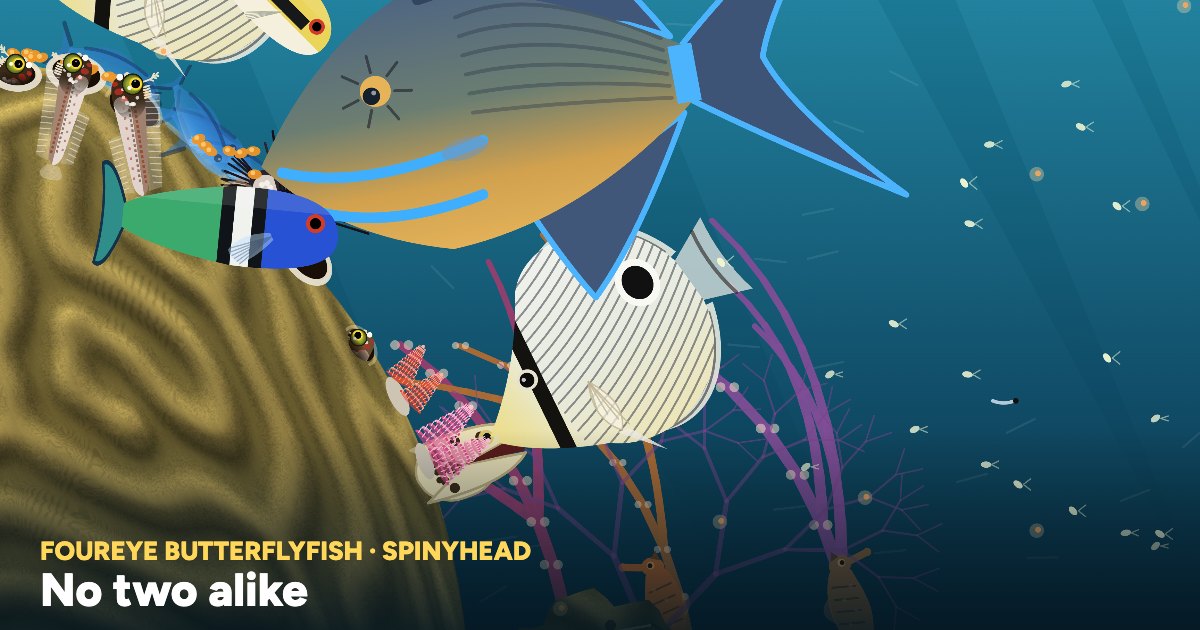
Behavior: Individual recognition (based on natural variation in eyespot markings), in a possible social role for the eyespot
Eyespot size varies about twice as much between fish as the black eye bar, and differs between a fish’s own left and right sides. Meadows could tell individual fish apart by their eyespots, and suggested pairs may too: a social role for the fourth eye.
Species involved
- foureye butterflyfish Chaetodon capistratus bearer of variable eyespots; possible recognizer of individuals and partners
About individual recognition (based on natural variation in eyespot markings), in a possible social role for the eyespot
Individual recognition means an animal can tell one particular individual from another, rather than only telling species, sex or group apart. It needs a cue that differs reliably between individuals and can be learned. Natural variation in colour patterns, such as spots, stripes or patches, can serve as that cue. The foureye butterflyfish has a dark spot ringed with a pale halo near the base of the tail fin, which looks like an eye and gives the species its name. The notebook reports that this spot varies about twice as much in size between fish as the black bar through the real eye does. It also differs between a single fish's left and right sides.
Why it matters
If fish can recognize one another by such markings, they could keep track of familiar neighbours, rivals and partners instead of treating every individual as a stranger. This would be useful in a species that often lives in pairs, because a fish could recognize its own partner. It could also lower the cost of territorial disputes with known neighbours. The notebook presents this as a suggestion only. The eyespot's usual explanation is protection from predators, since a false eye may draw attacks toward the tail end and away from the head. A social role would be an additional function, not a replacement. Whether foureye butterflyfish actually use eyespots to recognize one another is not established by this entry.
On coral reefs
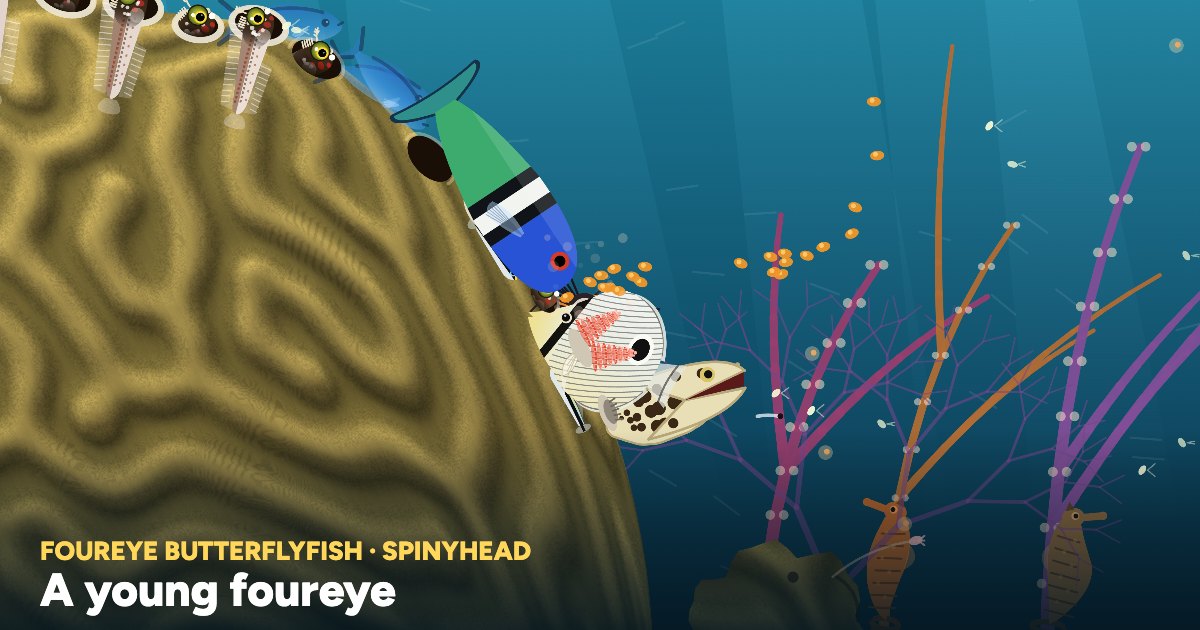
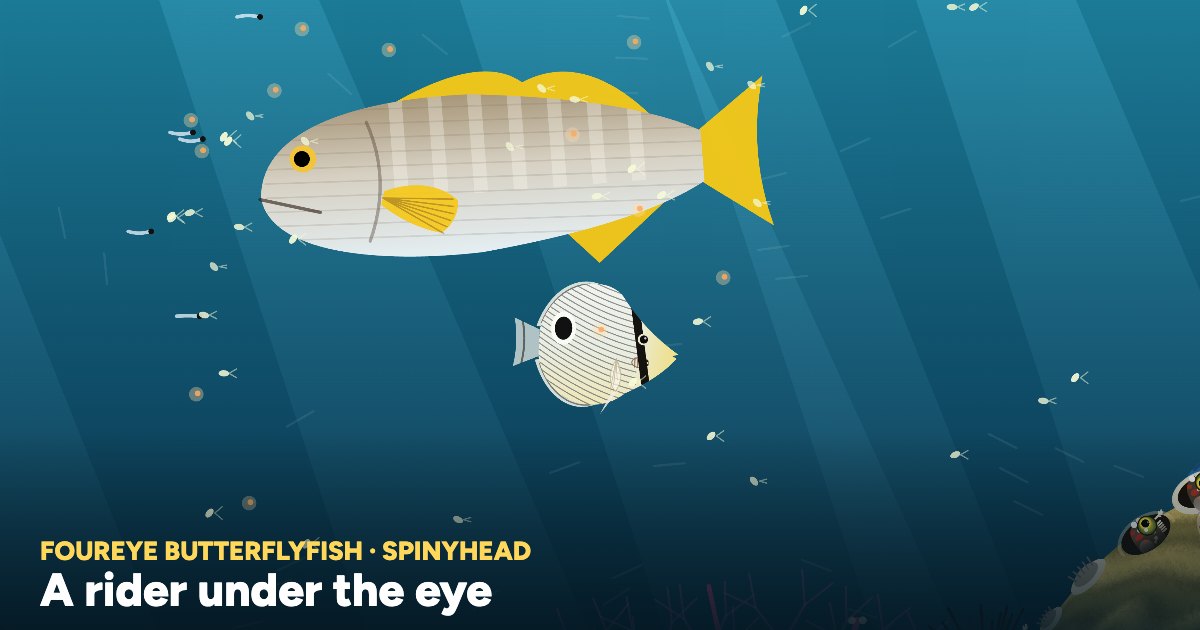
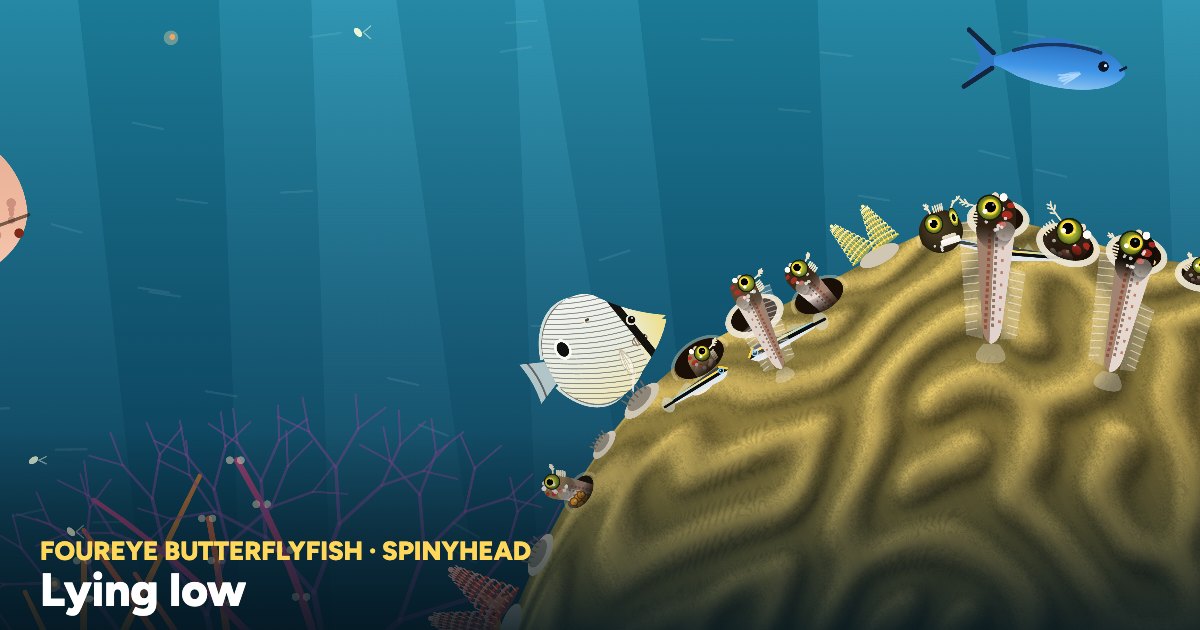
A diver sees a flattened, disc-shaped fish, usually alone or in a close pair, nibbling at the bottom among corals and sea rods. The large dark spot near the tail is easy to see, and the real eye is hidden by a dark bar through the head. When the fish is seen side-on, the spot size and the thickness of its pale ring can look slightly different from fish to fish.
Who studied it
The notebook's source is Meadows 1993, published in Copeia. It measured how much eyespot size varied between foureye butterflyfish and between the two sides of the same fish, and compared this with variation in the eye bar. It argued that the variation is large enough for an observer to tell individuals apart. It also suggested that the fish themselves might use it, particularly paired fish. The idea that butterflyfish eyespots mislead predators is older and has been studied separately.
Elsewhere in the animal kingdom
Individual recognition by visual markings is well known in some birds, in paper wasps with variable facial patterns, and in some mammals and primates. Among fishes, recognition of familiar individuals has been shown in several species, such as sticklebacks and some cichlids and damselfishes, though the cues differ and are not always visual patterns. Eyespots are widespread across animals, but they are mainly known as antipredator devices, as in butterflies and moths.
Doubts and open questions
The main open question is whether the fish use eyespot variation at all, or whether it is simply a by-product of an antipredator eyespot that also happens to vary. Left-right differences suggest the spot may not be tightly controlled in development. That would make it a poor fixed signature, although a fish could still learn the pattern it sees. Showing recognition would need behavioural tests, not measurements alone.
Related behaviors
- deflective eyespots (false-eye antipredator mimicry) Here the spot works as a decoy for predators, whereas individual recognition concerns signals between members of the same species.
- pair bonding This is the social relationship itself (a lasting partnership), whereas recognition is one possible mechanism for keeping track of a partner.
- dear enemy effect This is reduced aggression toward familiar territorial neighbours, and it depends on recognizing them.
- fluctuating asymmetry This is a measure of small left-right differences in a trait, which is sometimes proposed as a quality signal and is not the same as an identity cue.
Spinyhead is a free game you play in your browser: you are a spinyhead blenny, a fish about 3 cm long living in a worm hole on a Caribbean coral head. Feed, fight for a better hole, court, raise eggs and dodge predators, while everything around you behaves the way field biologists have seen it behave. Every behavior in the game is backed by a published study or careful observation; there are 71 on these pages, and more in the game’s field notebook waiting to be found.
More foureye butterflyfish
Other reef behaviors to discover