 SpinyheadPlay free
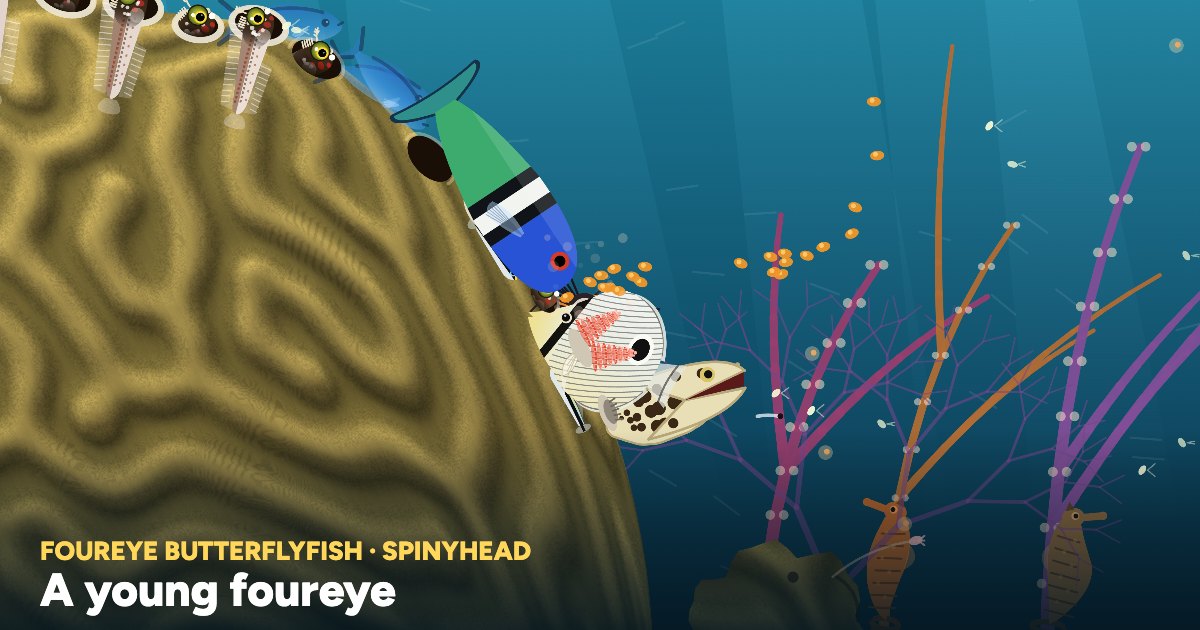
A young foureye
Behavior: Eyespot antipredator defence (false eyespot, predator misdirection or deflection)
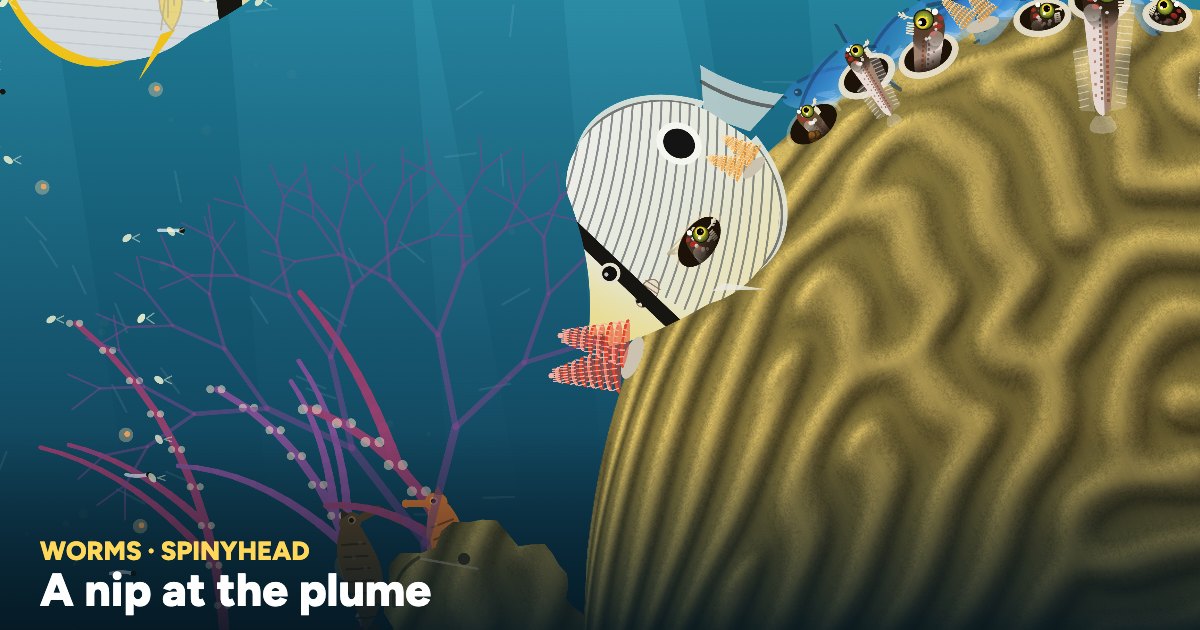
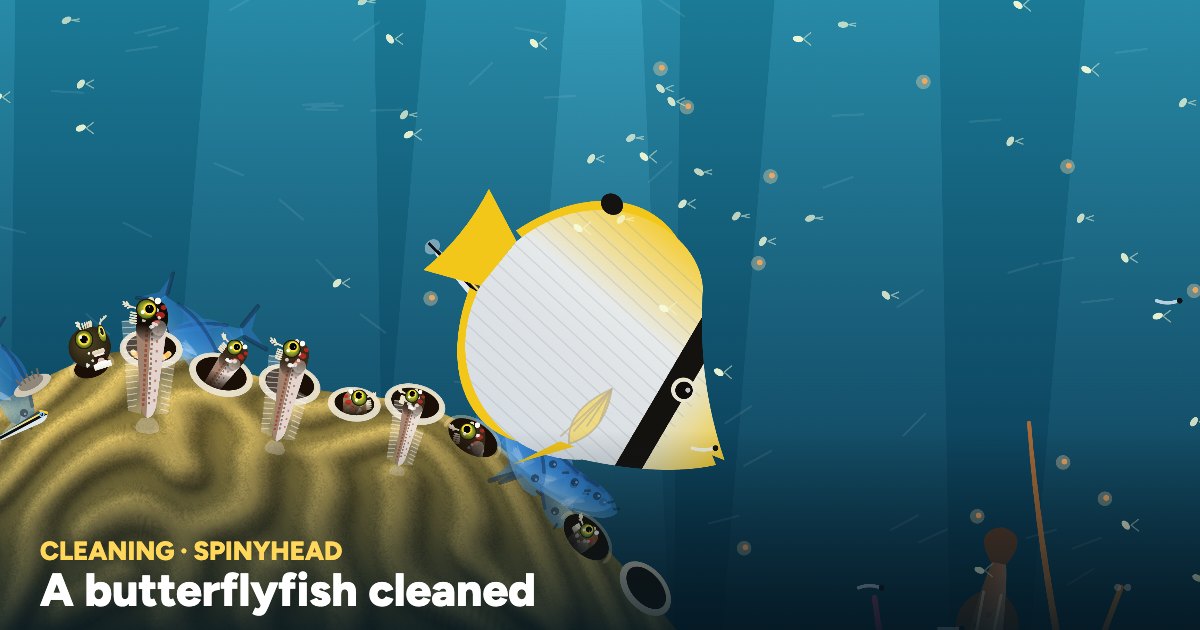
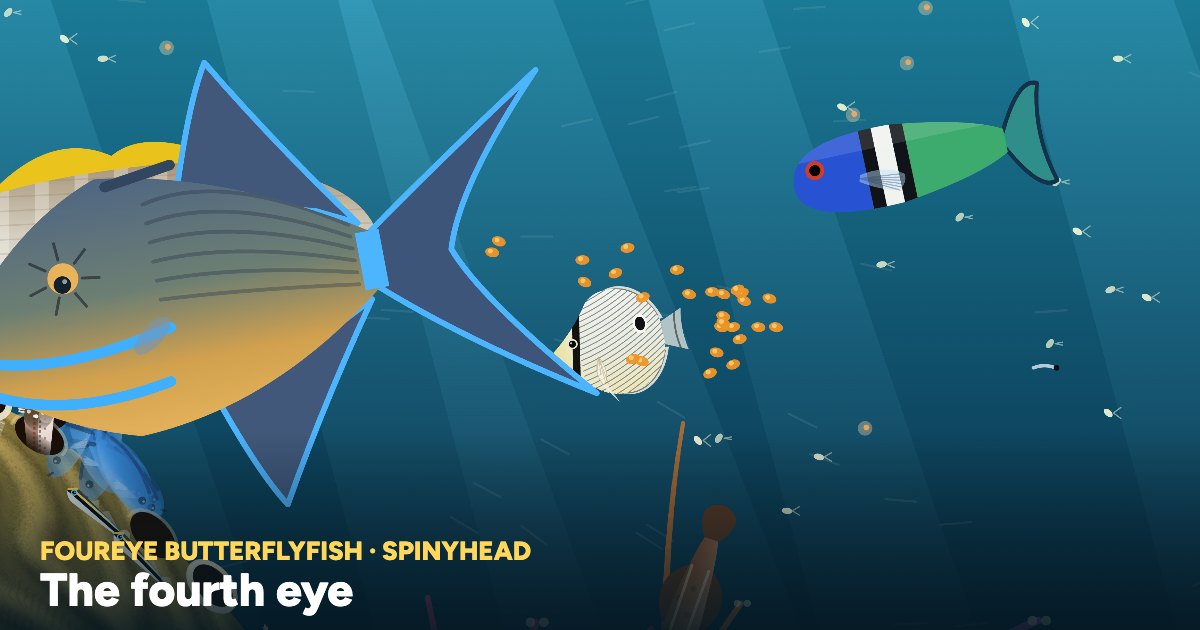
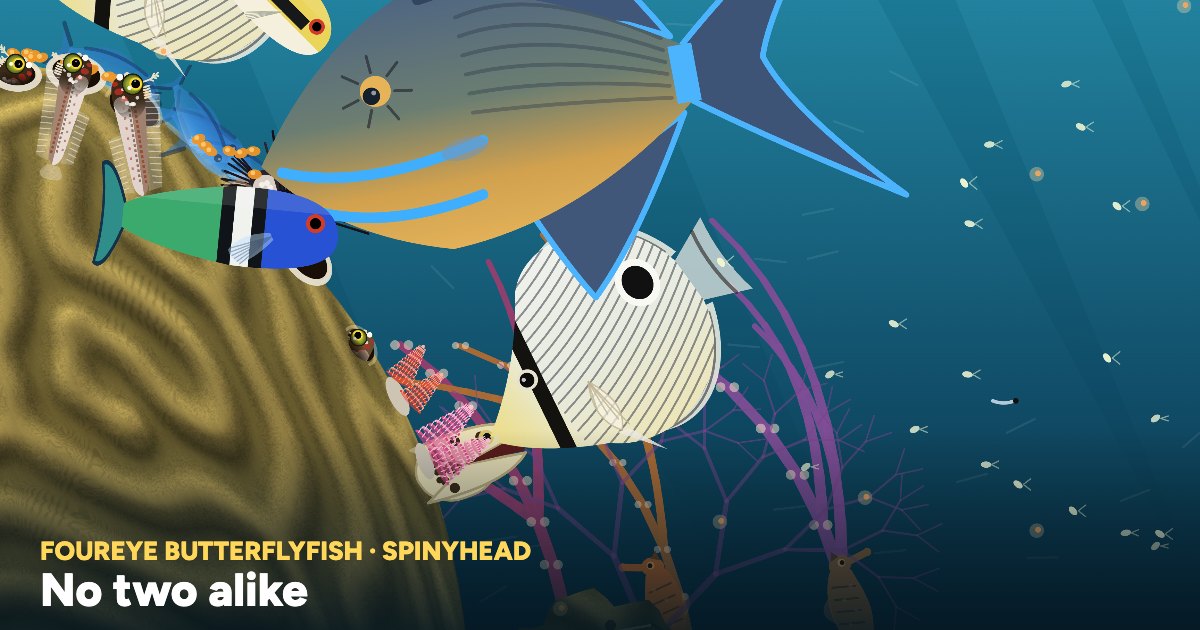
In small foureyes the eyespot is a tall oval, while the real eye is wide: from the side, the fish seems turned the wrong way. Meadows proposed that this “disorientation” makes a predator strike badly or stop to reposition, giving the fish time to escape, when it matters most: predation falls hardest on juveniles. As the fish grows, the spot becomes round.
Species involved
- foureye butterflyfish Chaetodon capistratus bearer of the false eyespot, with an oval spot in juveniles that becomes round w
About eyespot antipredator defence (false eyespot, predator misdirection or deflection)
Many animals carry a conspicuous dark, eye-like spot that is not an eye. In fishes such a false eyespot is often placed toward the rear of the body, while the real eye is hidden by a dark stripe or other markings. The foureye butterflyfish is named for this pattern, a black spot ringed with a pale halo on each side of the rear body. The notebook reports that in small foureyes the spot is a tall oval, while the real eye is wide. Seen from the side, the fish can therefore appear to be facing the wrong way. As the fish grows, the spot becomes round.
Why it matters
The idea in the notebook is that the spot misleads a predator about which end is the head and which way the fish will flee. A predator might then strike at the wrong place, or pause to reposition, and that delay could give the fish time to escape. This matters most for juveniles, because predation falls hardest on the young. Any such advantage would raise survival through the most vulnerable life stage. A predator that strikes at the false eye might also take a bite of fin or tail instead of a fatal bite to the head or body. The change in spot shape with growth fits the idea that the benefit differs with body size and age. This remains a hypothesis rather than a settled result.
On coral reefs
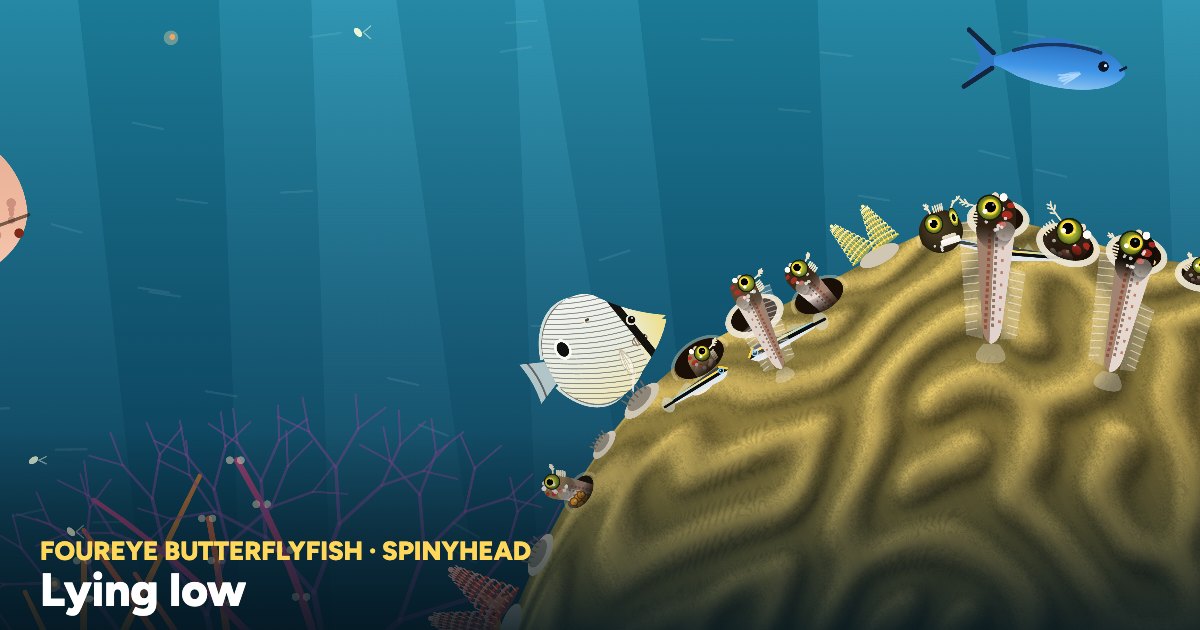
A diver sees small, disc-shaped butterflyfish picking at the reef, often in pairs or alone, near corals and sea rods. Each has a dark spot near the back of the body and a dark bar through the real eye, so the eye is hard to pick out at a glance. When the fish turns or darts into cover, the spot can make the direction of travel hard to judge.
Who studied it
The notebook cites Meadows 1993 (Copeia 1993:235), which examined variation in the shape of the foureye's eyespot and proposed that the spot disorients predators. The general idea that false eyespots misdirect attacks is much older and has been tested in other animals, including experiments with fishes and with insects.
Elsewhere in the animal kingdom
Eyespots are widespread. Many butterflies and moths have eyespots on their wings, and the owl butterflies and peacock butterfly are well-known examples. Some hawkmoth caterpillars have eye-like markings that make them look like small snakes. Other reef fishes, including several other butterflyfishes, also have false eyespots, usually near the tail or on the dorsal fin.
Doubts and open questions
Eyespots may work in several ways: by deflecting attacks to a less vulnerable part of the body, by startling or intimidating predators, or by simply disguising the real eye. These explanations are hard to separate in the field, and the evidence for any one of them in the foureye is limited. Whether predators really misjudge the fish's orientation, and how much that helps survival, is an open question.
Related behaviors
- Eye camouflage (disruptive masking of the eye) A dark stripe hides the real eye so the head is harder to locate, with no false eye needed.
- Deimatic (startle) display A sudden display of eyespots or colours scares the predator off, rather than misleading it about where to strike.
- Batesian mimicry A harmless species resembles a dangerous or distasteful one, rather than using a false body part to confuse attackers.
- Tail autotomy An animal sheds a body part to escape, whereas the eyespot aims to draw the strike away without any loss.
Spinyhead is a free game you play in your browser: you are a spinyhead blenny, a fish about 3 cm long living in a worm hole on a Caribbean coral head. Feed, fight for a better hole, court, raise eggs and dodge predators, while everything around you behaves the way field biologists have seen it behave. Every behavior in the game is backed by a published study or careful observation; there are 71 on these pages, and more in the game’s field notebook waiting to be found.
More foureye butterflyfish
Other reef behaviors to discover