SpinyheadPlay free
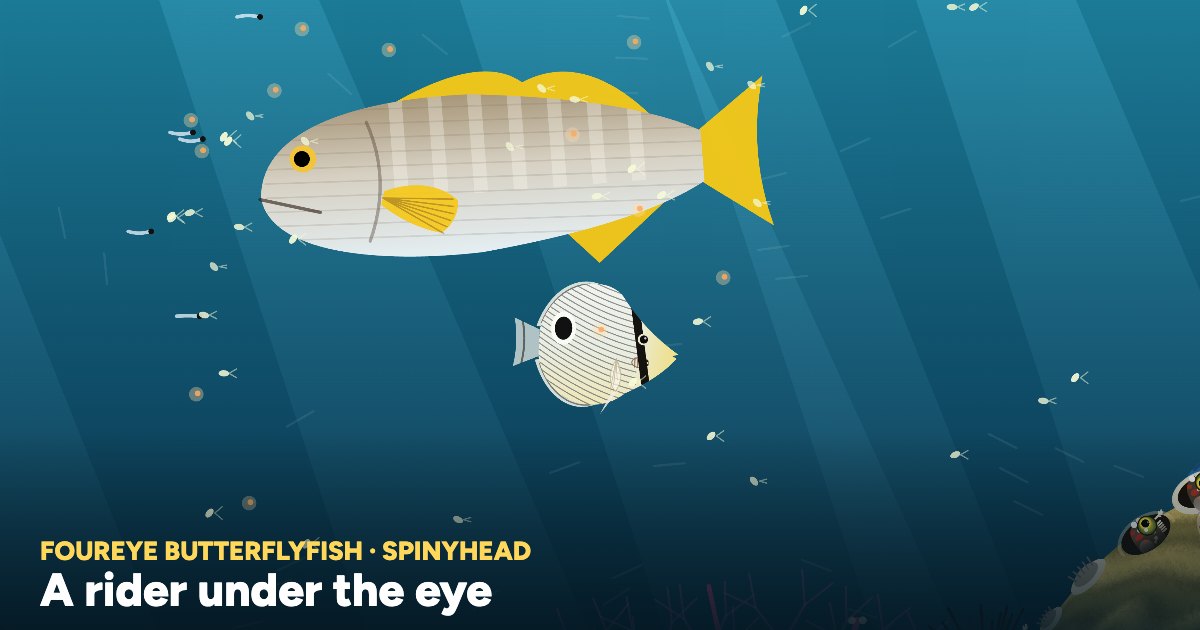
A rider under the eye
Behavior: Ectoparasitism (attachment-site specificity in a cymothoid isopod parasite of fish)
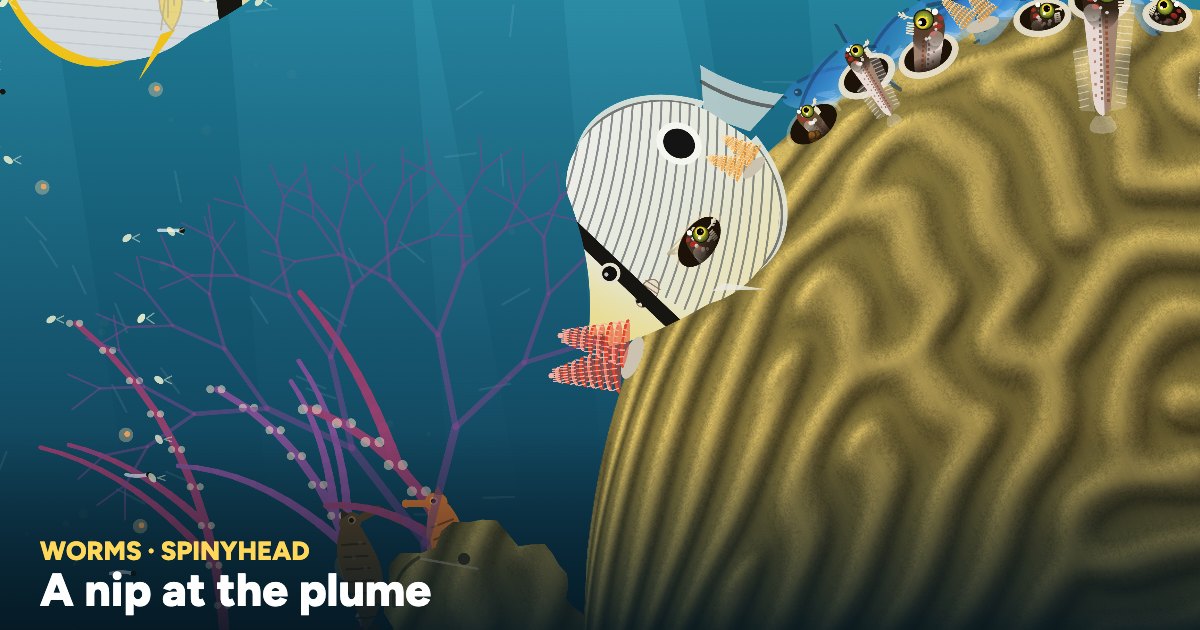
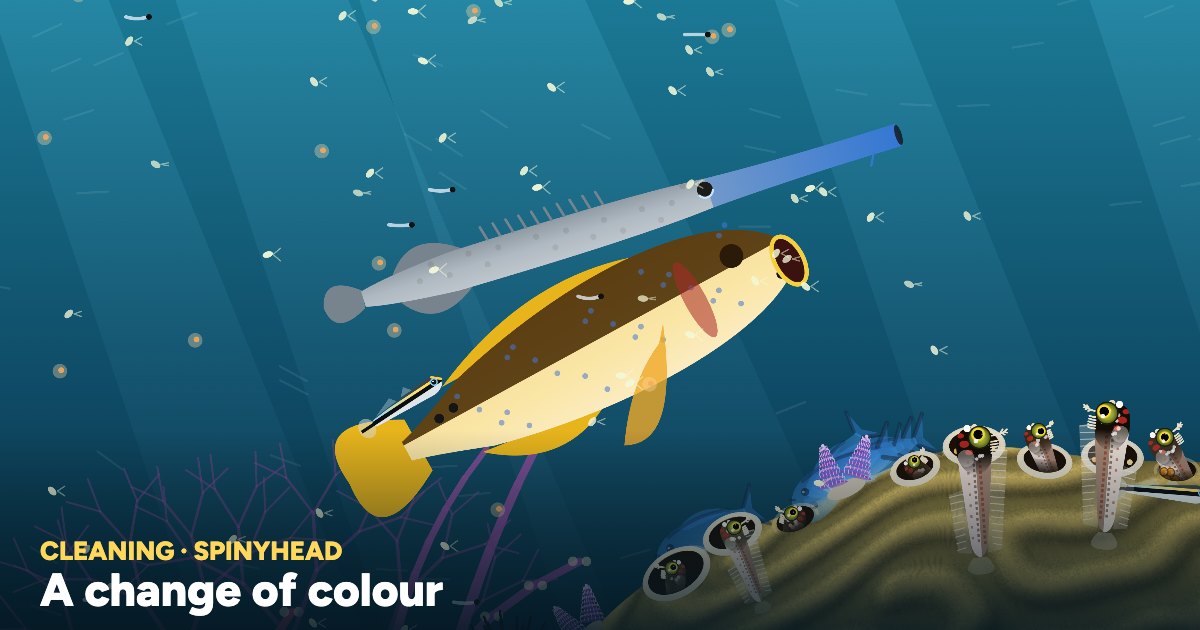
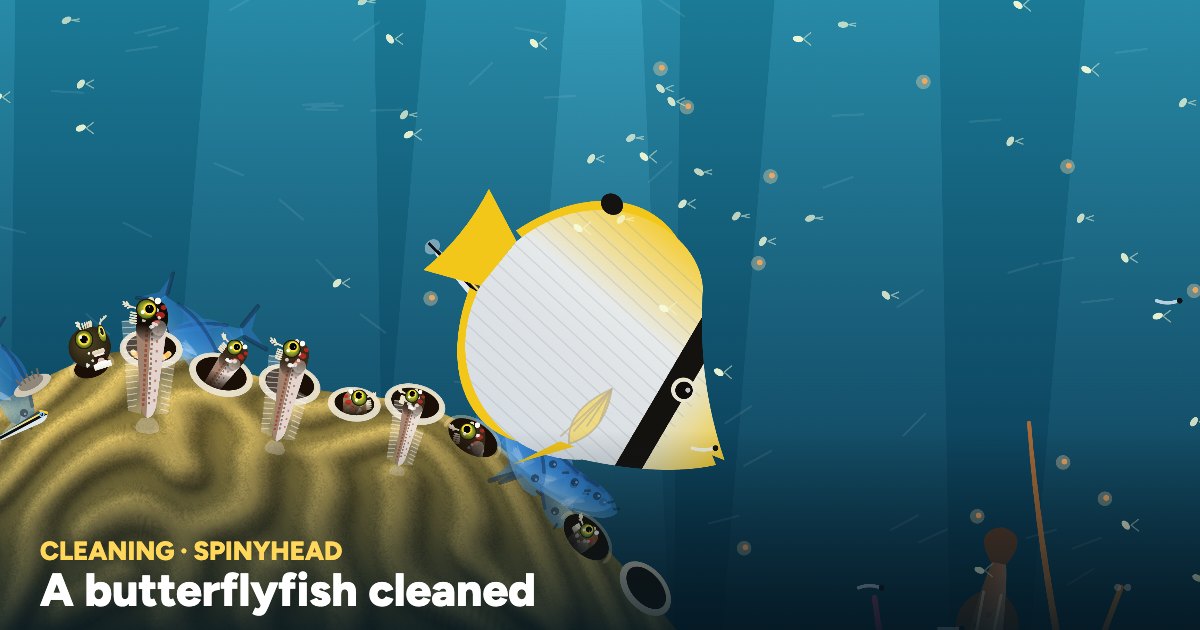
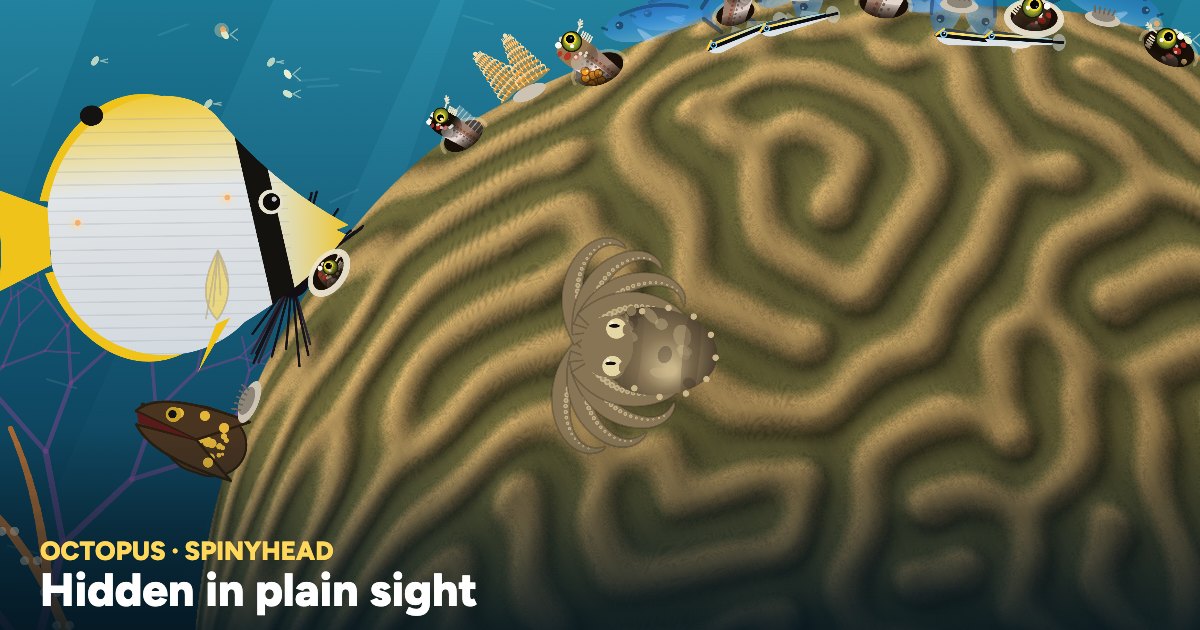
About a third of foureyes carry the large parasitic isopod Anilocra chaetodontis just below the eye, always facing forward. One isopod is on average about 5% of its host’s weight.
Species involved
- foureye butterflyfish Chaetodon capistratus host carrying the isopod
- parasitic isopod Anilocra chaetodontis Anilocra chaetodontis blood-feeding parasite attached below the eye
About ectoparasitism (attachment-site specificity in a cymothoid isopod parasite of fish)
Ectoparasitism is a way of life in which one animal lives on the outside of another, the host, and feeds on its blood, mucus or tissue. Isopods of the family Cymothoidae are crustacean relatives of woodlice, and many are fish parasites. An adult grips the host with strong hooked legs and stays in one spot for long periods. Species often favour a particular place on a particular host. For Anilocra chaetodontis the notebook records a position just below the eye, with the isopod facing forward.
Why it matters
For the isopod, a fixed site gives a steady meal and a firm hold. Facing forward most likely lines its body up with the water flowing past a swimming fish, which reduces drag and the risk of being dislodged. For the host the cost is real but usually not lethal. The notebook gives one isopod as about 5% of its host's weight, so the fish carries an extra load and loses blood and tissue. Heavy parasite loads in fishes can reduce growth, condition and perhaps survival, though effects differ between host and parasite species. Parasites like this also influence how hosts behave, and they can make hosts more vulnerable to predators. The notebook's figure that about a third of foureyes carry one shows that the parasite is common in the population.
On coral reefs
A diver may see a pale, oval, segmented crustacean, often a good fraction of the fish's head size, clamped just below the eye of a foureye butterflyfish. Its head points forward in the same direction as the fish. The fish keeps swimming and feeding normally. Most individuals in a local population show no isopod, and those that do usually carry just one.
Who studied it
Cymothoid isopods have long been known to fish biologists and taxonomists as conspicuous external parasites. The notebook's source, Meadows & Meadows 2003 in Revista de Biología Tropical, is a study of this parasite on foureye butterflyfish. It is the basis for the infection rate and the isopod-to-host weight figure used here.
Elsewhere in the animal kingdom
Cymothoid isopods parasitise fishes in tropical and temperate seas and in fresh water around the world. The best-known example is Cymothoa exigua, the so-called tongue-eating louse, which attaches in the mouth of its host and replaces the tongue. Other Anilocra species attach near the eyes or on the flanks of reef fishes in the Indo-Pacific and elsewhere. Other crustaceans such as parasitic copepods and gnathiid isopods also feed on reef fish, but they are generally much smaller.
Doubts and open questions
The long-term costs to the host are hard to measure, and a 5% weight burden does not by itself show how much harm results. It is also unclear how well cleaners and other fish control large attached isopods, as opposed to small mobile parasites.
Related behaviors
- cleaning symbiosis Cleaner fish and shrimp remove parasites from clients, whereas here the parasite stays attached and the host cannot simply be cleaned of it.
- parasitic castration or tongue replacement Some cymothoids (like Cymothoa exigua) alter or replace host tissue, whereas Anilocra on the face mainly feeds from the outside.
- gnathiid parasitism Gnathiid isopod larvae feed briefly on fish blood and then drop off, whereas the adult Anilocra remains attached.
Spinyhead is a free game you play in your browser: you are a spinyhead blenny, a fish about 3 cm long living in a worm hole on a Caribbean coral head. Feed, fight for a better hole, court, raise eggs and dodge predators, while everything around you behaves the way field biologists have seen it behave. Every behavior in the game is backed by a published study or careful observation; there are 71 on these pages, and more in the game’s field notebook waiting to be found.
More foureye butterflyfish
Other reef behaviors to discover