SpinyheadPlay free
A single female’s station
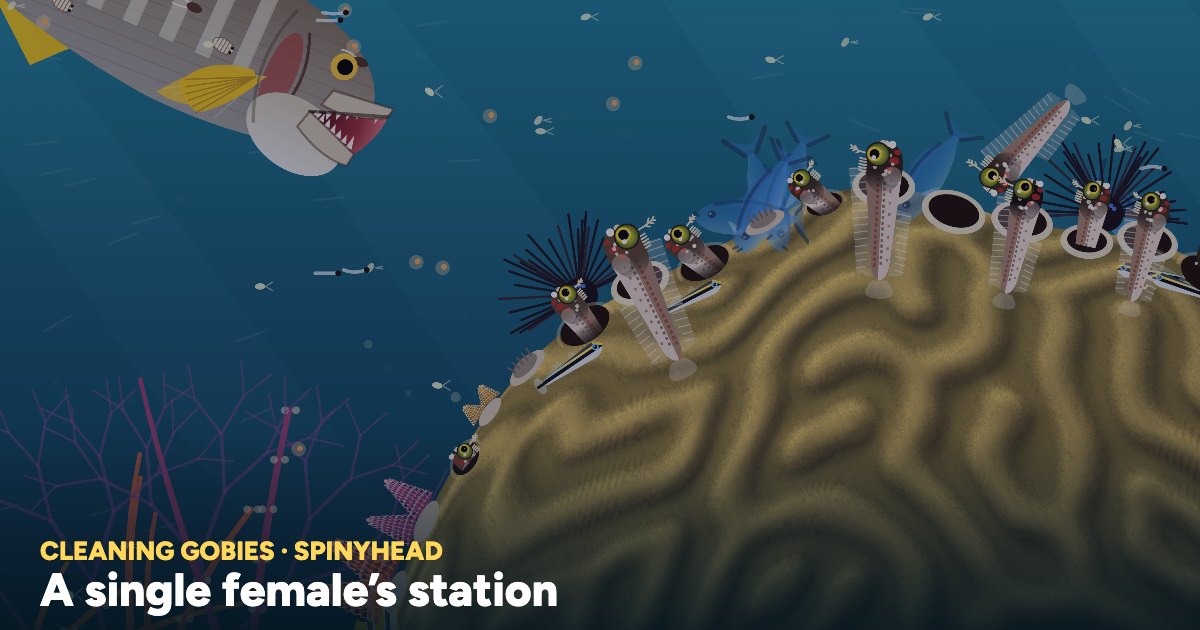
Behavior: Sex-specific (intrasexual) territoriality, i.e. defence of a resource site against same-sex rivals, as part of social mo
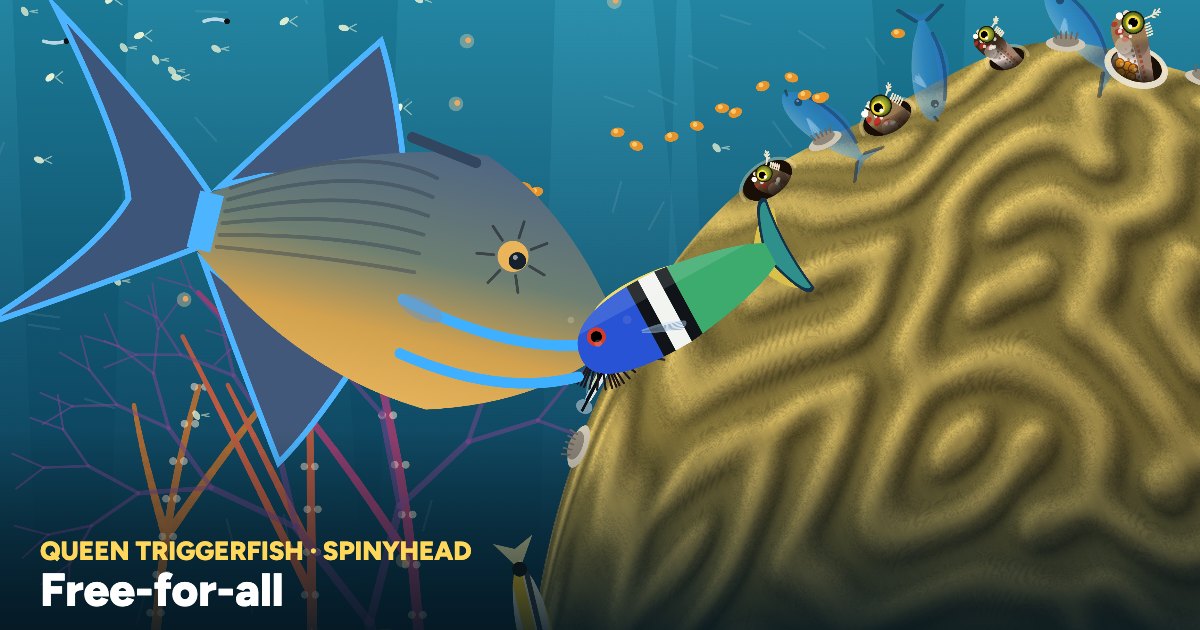
A female without a mate still attacks other females that come to her station, and ignores males: she is defending the station itself, not just a partner.
Species involved
- sharknose goby Elacatinus evelynae unpaired female defending her cleaning station against other females
About sex-specific (intrasexual) territoriality, i.e. defence of a resource site against same-sex rivals, as part of social mo
Territoriality means defending a fixed area or resource against rivals. In some species the defence is sex-specific: residents chase intruders of their own sex and tolerate the opposite sex. In the sharknose goby, a small cleaner fish, individuals live at particular stations on coral heads where they pick parasites off visiting fish. The notebook entry describes a female with no mate who still attacks other females that arrive and ignores males. This suggests she is defending the station itself and not only guarding a partner.
Why it matters
A good cleaning station is a limited resource that gives a steady supply of food and a place to breed. Excluding same-sex competitors keeps that resource for the resident and, when a partner is present, for the pair. Because each sex excludes its own sex, the usual result is a stable male-female pair, which is one route to social monogamy without any need for guarding a partner. For the individual, a station means reliable feeding and access to mates. For the reef, stable cleaner stations are known sites where larger fish come to be cleaned.
On coral reefs
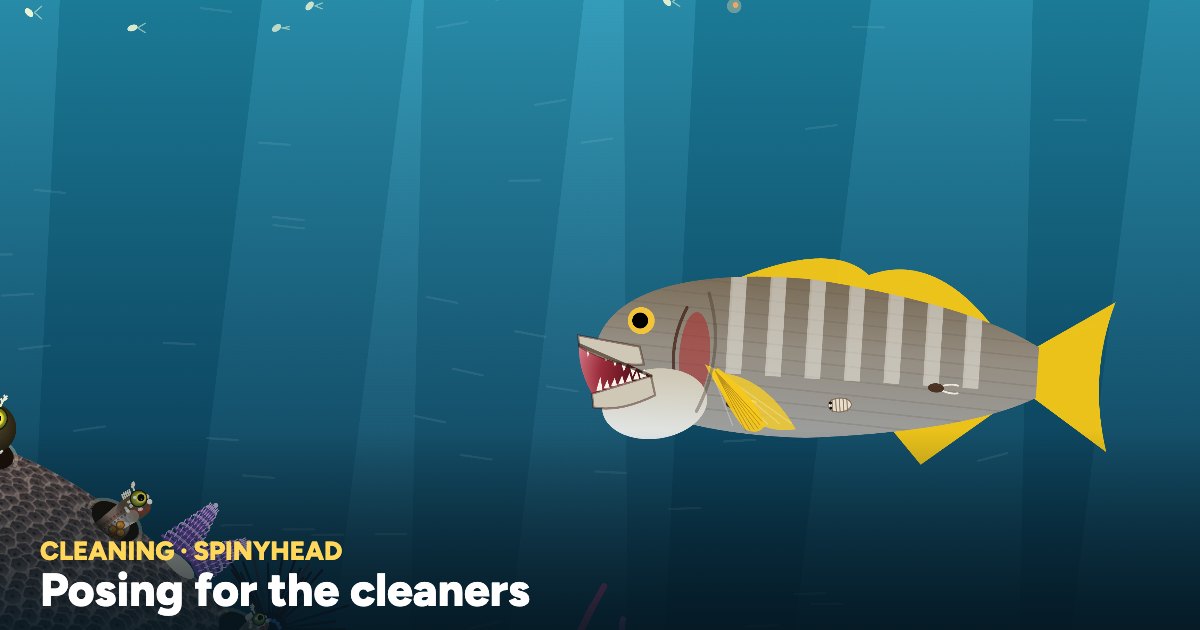
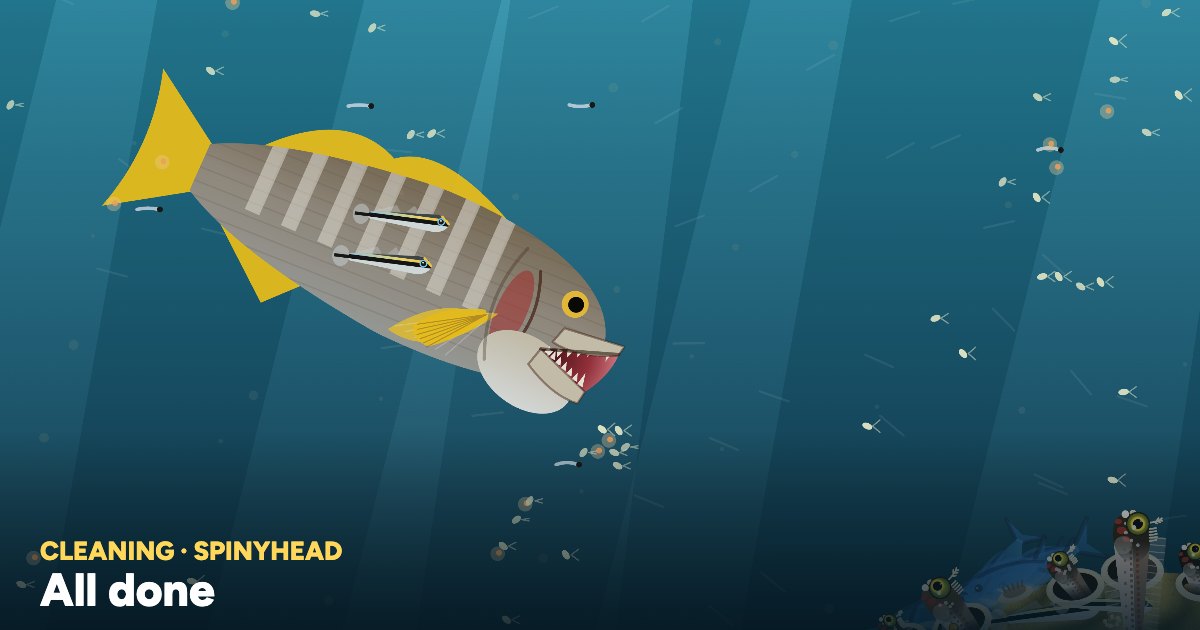
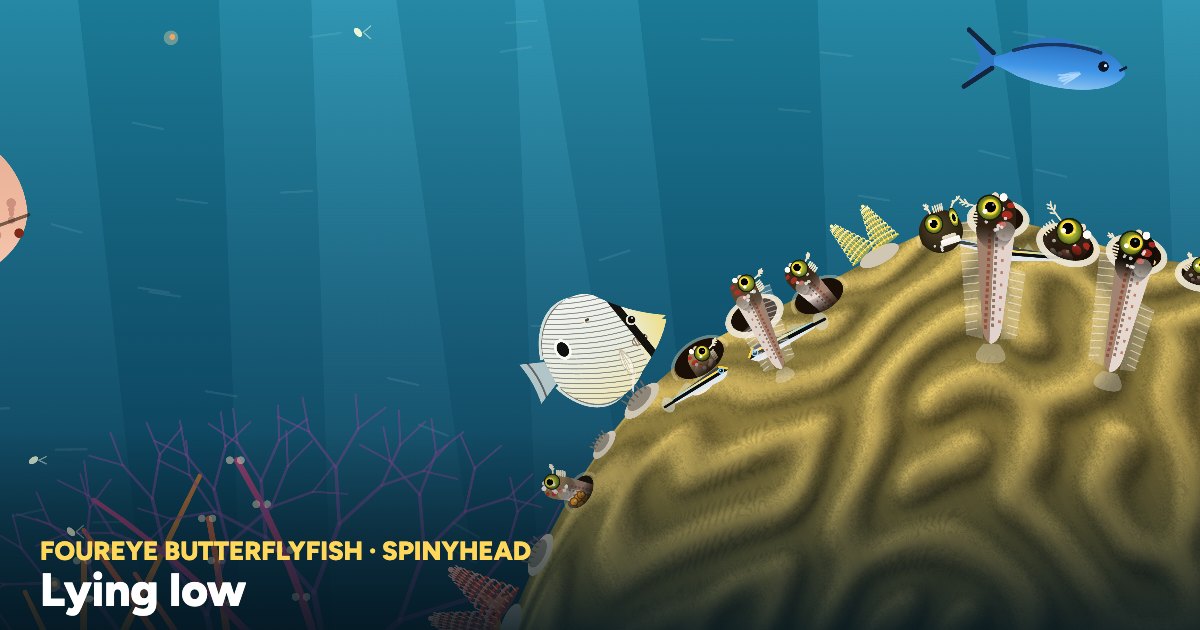
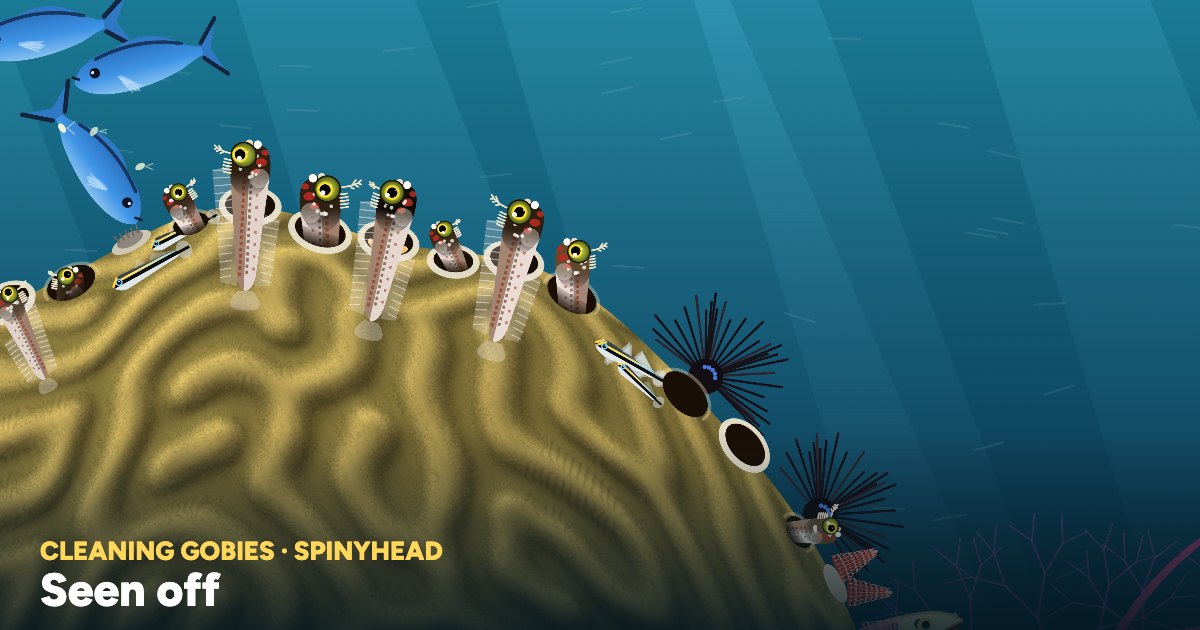
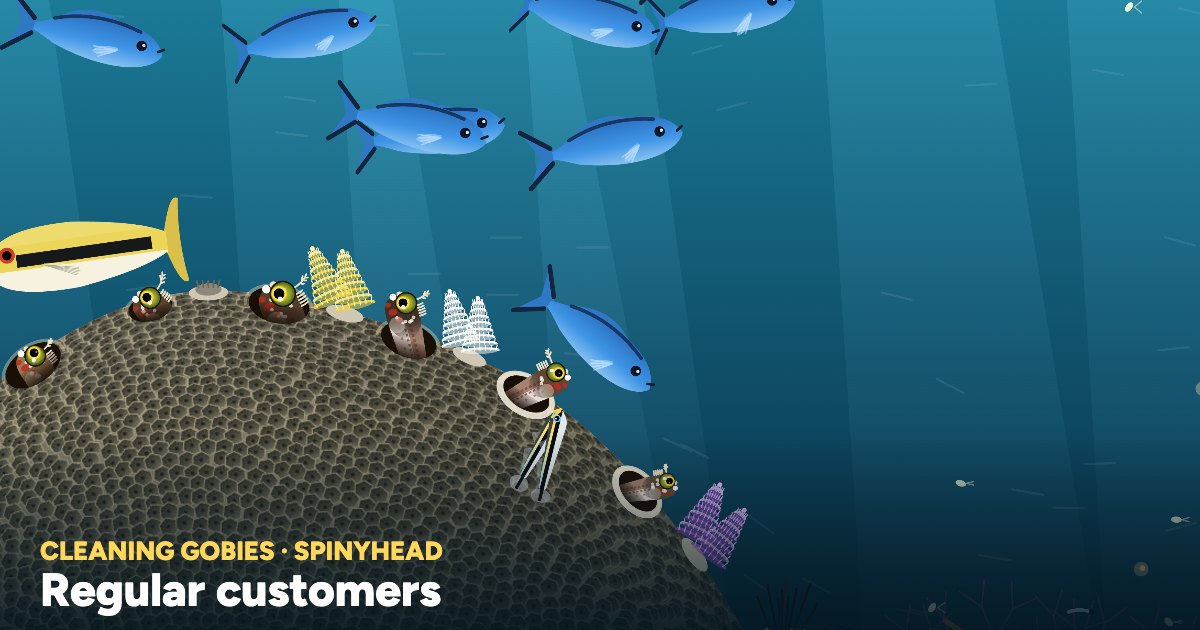
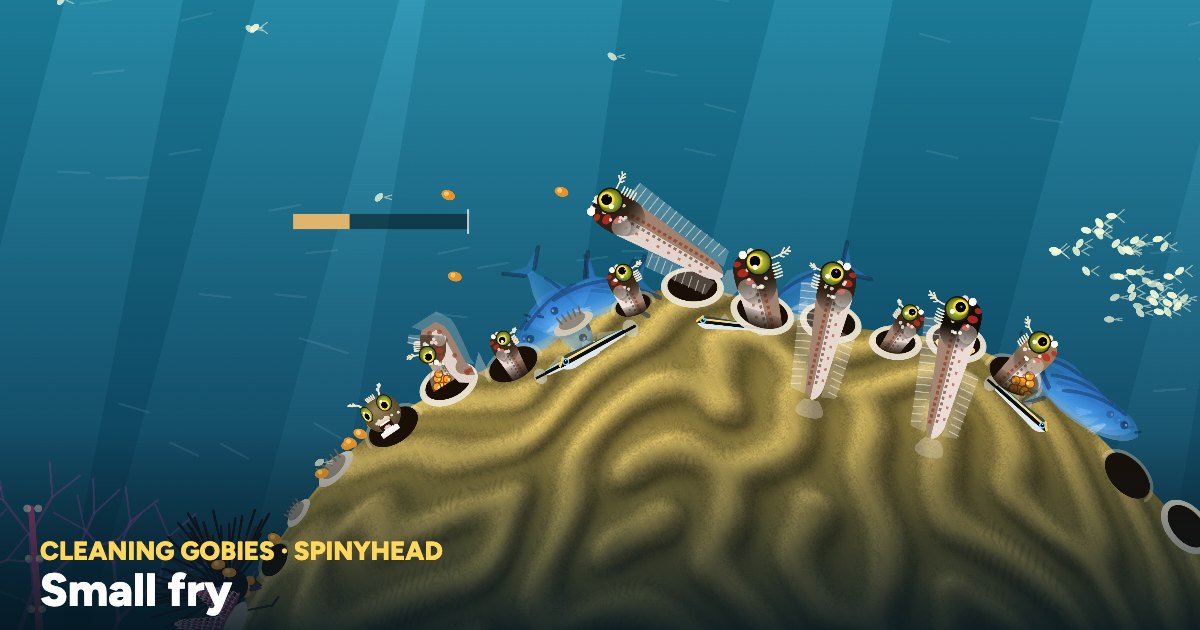
A diver sees small, brightly striped gobies perched on a coral head, often a brain coral or other large coral, usually singly or in pairs. A resident darts at a smaller or equal-sized goby that approaches and drives it off, while a goby of the other sex may be allowed to stay. Visiting fish pose near the station to be cleaned.
Who studied it
Harding, Almany, Houck and Hixon (2003, Animal Behaviour 65:865), an experimental study of monogamy in the Caribbean cleaner goby, then placed in the genus Gobiosoma. The study asked what keeps these fish in pairs, testing whether it is the pair bond itself or the way the sexes defend space and respond to each other. The idea that same-sex aggression can produce monogamy is older and applies to many animals.
Elsewhere in the animal kingdom
Same-sex aggression within pair-living, territorial species is widespread. Many songbirds show female-female as well as male-male territorial aggression, and pair-living gibbons defend shared territories. Among reef fishes, pair-forming butterflyfishes (Chaetodon) are well known for jointly defending feeding territories.
Doubts and open questions
Monogamy in fishes can be explained in several ways: guarding a mate, defending a shared resource, or a shortage of other mates and nearby stations. These explanations are not mutually exclusive, and their relative importance may vary between populations and sites.
Related behaviors
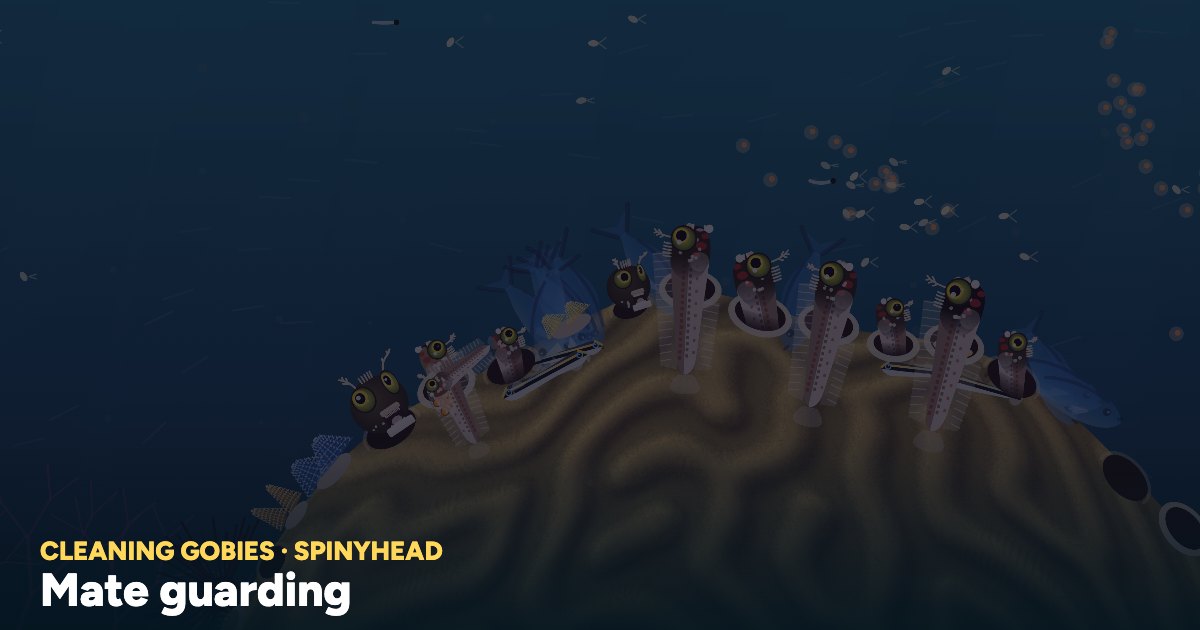
- mate guarding The animal defends a particular partner from rivals, whereas here the female defends the site and ignores males.
- social monogamy / pair bonding This describes the pair living arrangement itself, while sex-specific territoriality is one mechanism that can produce it.
- cleaning symbiosis This is the service of removing parasites from clients, which depends on the station but is not the defence of it.
- resource-defence territoriality Territory holders defend a site against all competitors, not only those of one sex.
Spinyhead is a free game you play in your browser: you are a spinyhead blenny, a fish about 3 cm long living in a worm hole on a Caribbean coral head. Feed, fight for a better hole, court, raise eggs and dodge predators, while everything around you behaves the way field biologists have seen it behave. Every behavior in the game is backed by a published study or careful observation; there are 71 on these pages, and more in the game’s field notebook waiting to be found.
More cleaning gobies
Other reef behaviors to discover