SpinyheadPlay free
The fourth eye
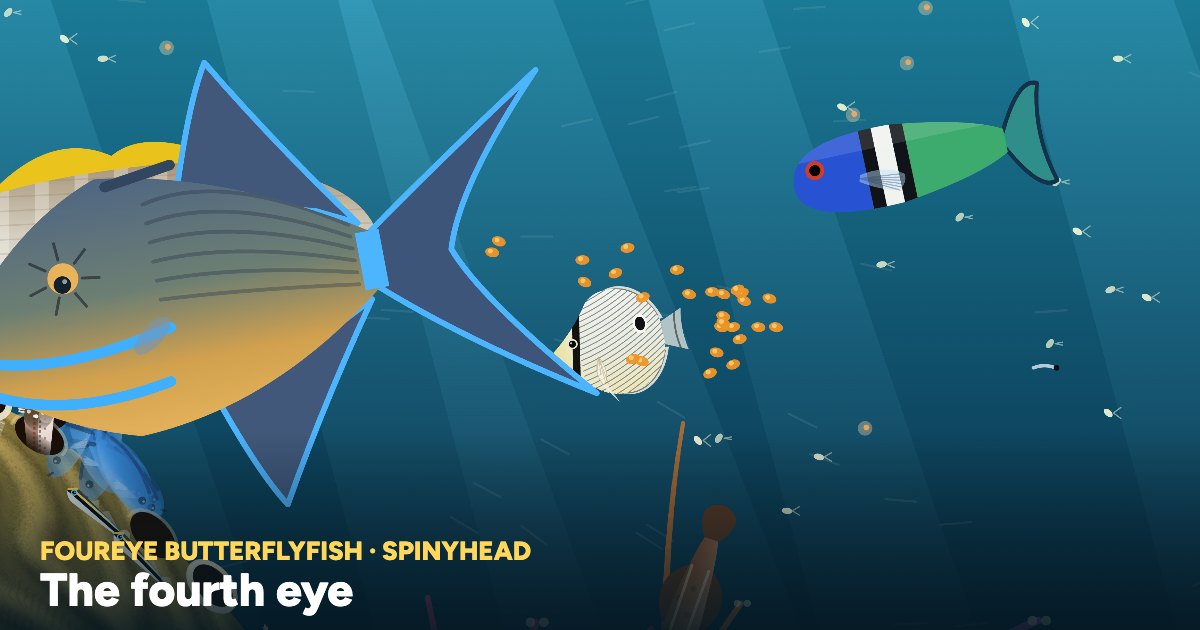
Behavior: Anti-predator eyespot (false eye or ocellus), with deflection, intimidation and misjudged-distance hypotheses
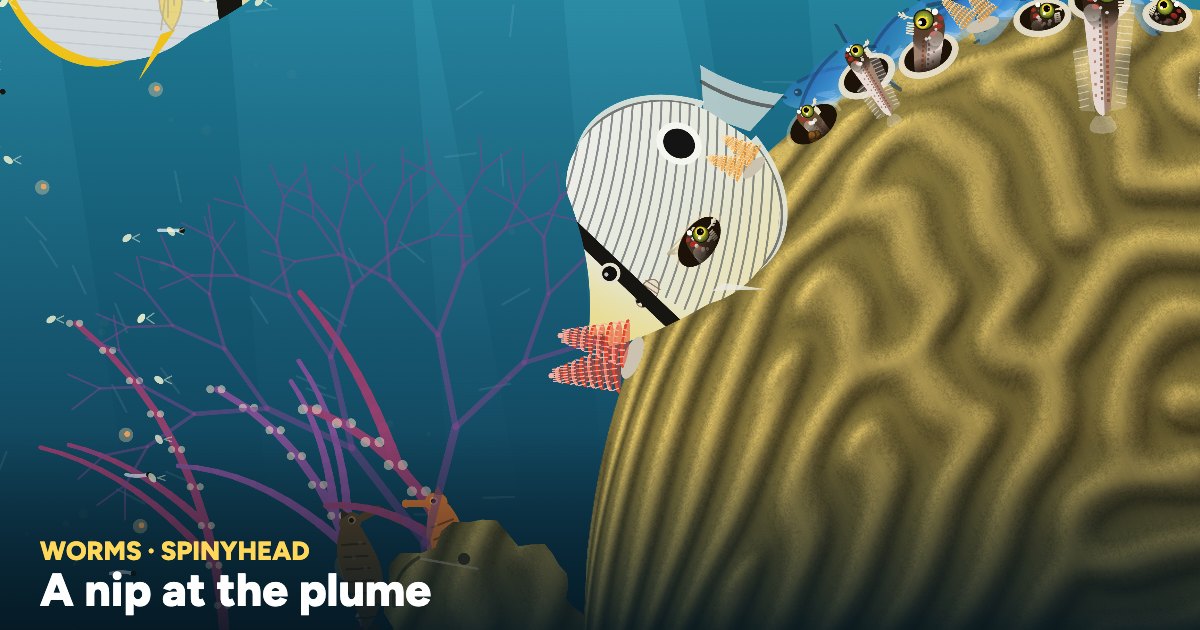
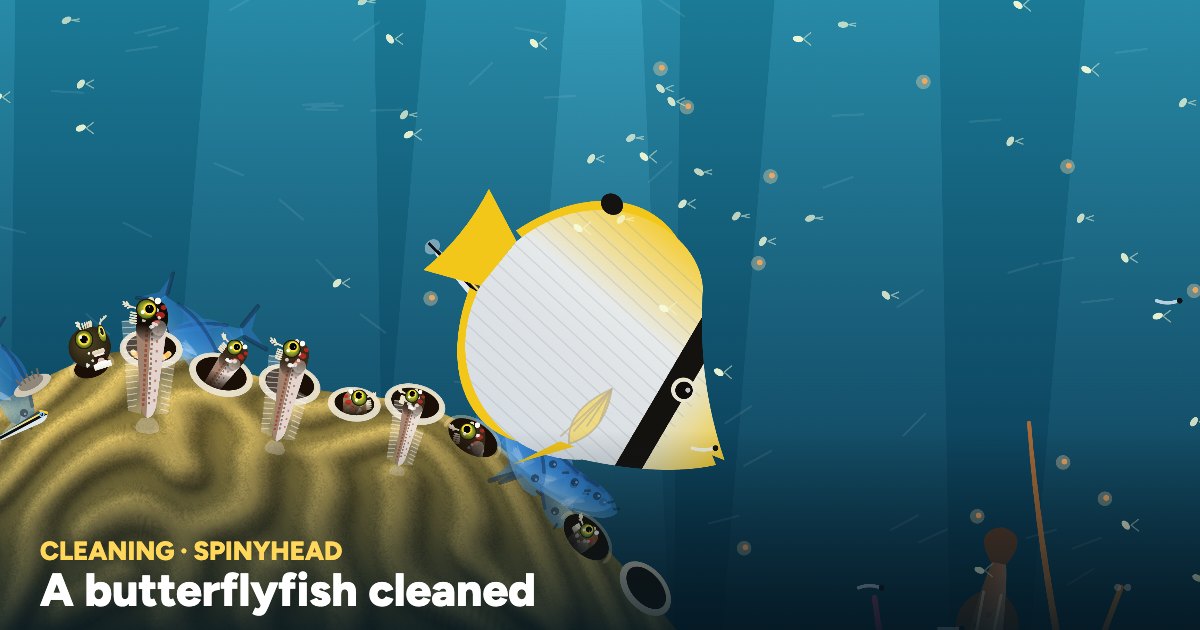
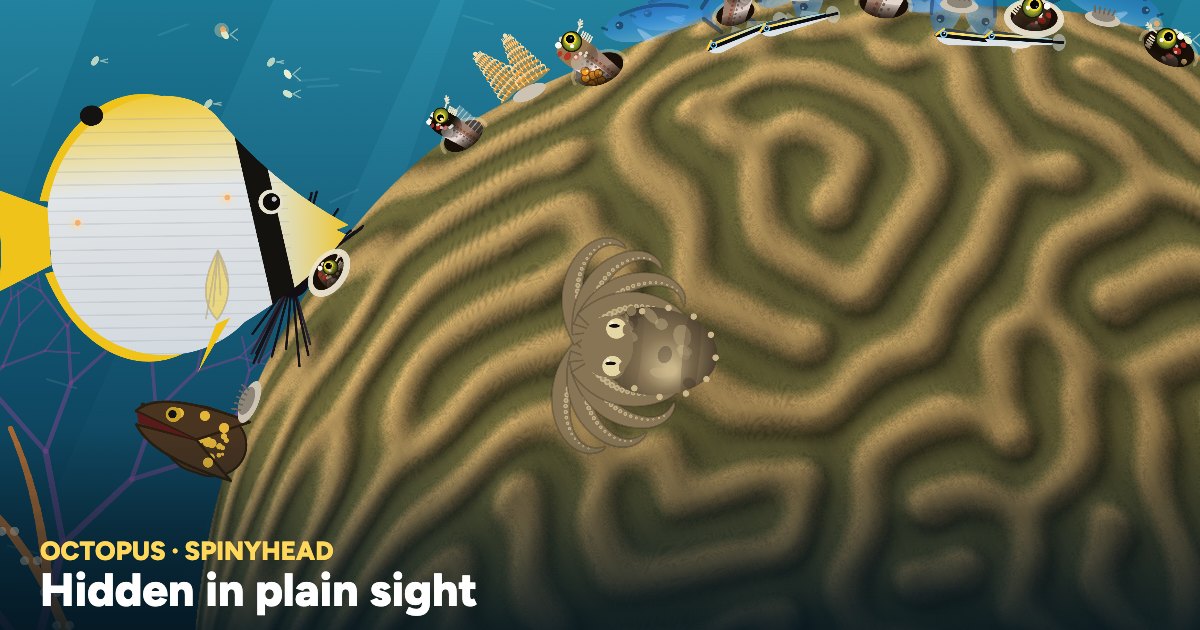
The foureye’s eyespot is no copy of its real eye: Dwayne Meadows measured 59 fish off St. Thomas, Jeff Harding helping in the field, and found it averages 6.65 times bigger. That fits intimidation, the fish looks bigger or more dangerous, and reaction distance, a predator misjudges the range and strikes from too far,, more than the classic idea that it draws strikes to the tail. Watch a strike fall short, and the fish slip away.
Species involved
- foureye butterflyfish Chaetodon capistratus bearer of the false eye near the tail
About anti-predator eyespot (false eye or ocellus), with deflection, intimidation and misjudged-distance hypotheses
An eyespot is a rounded, eye-like marking, often a dark spot ringed with a paler halo. Many animals carry them, and they are usually interpreted as defence against predators. The foureye butterflyfish has a black, white-ringed spot on the rear of its body, below the soft dorsal fin, and a dark bar through its real eye. Three main ideas explain such spots. Deflection: strikes are drawn to a less vital rear end. Intimidation: the spot looks like a large eye and makes the fish seem bigger or more dangerous. Reaction distance (misjudged range): the spot confuses a predator's judgment of the fish's size, direction or distance, so it strikes too early or from too far away. The notebook says the measurements fit the last two better than the classic deflection idea.
Why it matters
A predator that hesitates, aims at the wrong end or strikes from too far gives the prey time to escape. For the individual, that can mean a torn fin instead of death, or no contact at all. If the spot works as the notebook suggests, a bigger spot could make the fish look larger or more threatening, or make the predator misjudge its range. Because predators shape the evolution of the spot, its size and position reflect how it works. On the reef, such defences may help a small, conspicuous, day-active fish feed in the open among many ambush and pursuit predators.
On coral reefs
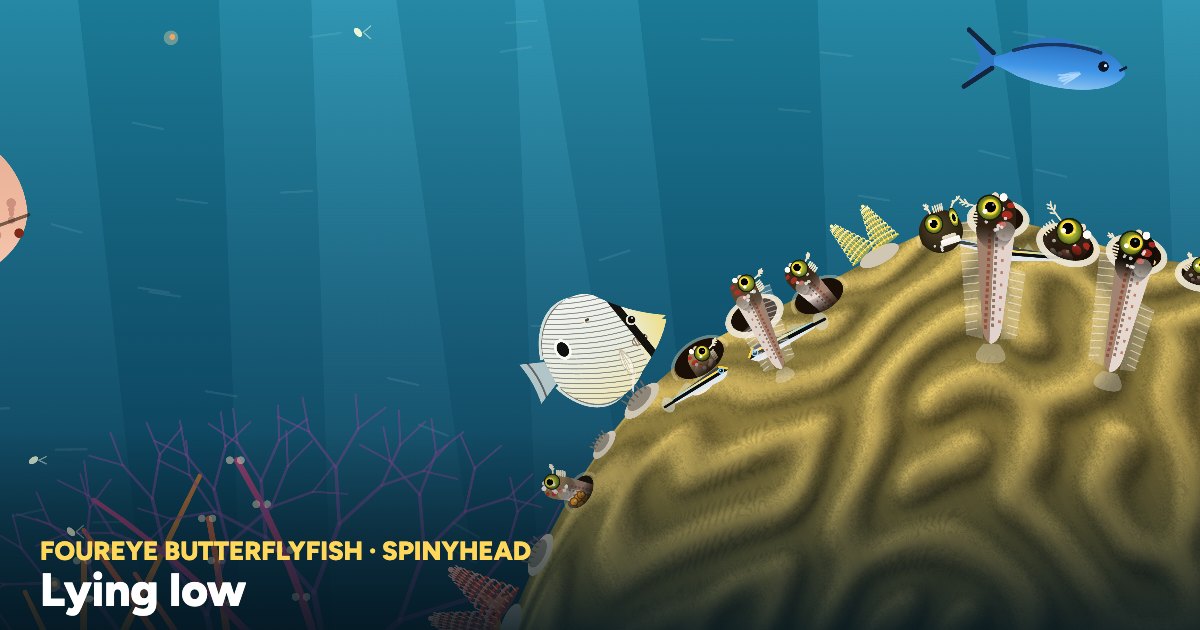
A diver sees a pale, disc-shaped fish with a dark spot ringed in white near the back of the body. It often swims in pairs and picks at the bottom among corals and sea rods. When a predator lunges and misses, the butterflyfish darts into the reef framework. The spot may be easiest to notice when the fish turns away.
Who studied it
The idea that eyespots frighten or misdirect predators goes back decades and was developed largely on butterflies and moths. Blest's 1957 work on peacock butterflies is a classic example. For the foureye, the notebook's source is Meadows 1993 (Copeia 1993:235). He measured 59 fish off St. Thomas, with Jeff Harding helping in the field, and found the eyespot averaged 6.65 times larger than the real eye. That result argued against a simple copy of the eye, which fits intimidation or reaction distance better than the traditional deflection explanation.
Elsewhere in the animal kingdom
Eyespots are widespread. Peacock and owl butterflies, hawkmoth caterpillars and many moths show them, as do juveniles of many reef fishes, some cichlids and a few frogs with rump spots. In fishes, butterflyfishes (Chaetodontidae) are among the best-known bearers of a false eye near the tail.
Doubts and open questions
The three hypotheses are not mutually exclusive, and eyespots may serve different functions against different predators or at different distances. Size measurements are indirect evidence, so experiments with real predators are needed to show how the spot actually works.
Related behaviors
- deflection of attacks (false-head or tail-end mimicry) Markings draw the predator's strike to a non-vital body part, rather than scaring it or making it misjudge range.
- disruptive coloration (eye-stripe camouflage) Dark bands hide the real eye by breaking up the outline of the body, rather than adding a false target.
- deimatic (startle) display A sudden flash of conspicuous markings frightens a predator at close range; an eyespot is always visible rather than flashed.
- aposematism Conspicuous colours advertise real unpalatability or danger; eyespots work even if the bearer is harmless.
Spinyhead is a free game you play in your browser: you are a spinyhead blenny, a fish about 3 cm long living in a worm hole on a Caribbean coral head. Feed, fight for a better hole, court, raise eggs and dodge predators, while everything around you behaves the way field biologists have seen it behave. Every behavior in the game is backed by a published study or careful observation; there are 71 on these pages, and more in the game’s field notebook waiting to be found.
More foureye butterflyfish
Other reef behaviors to discover