 SpinyheadPlay free
Seen off
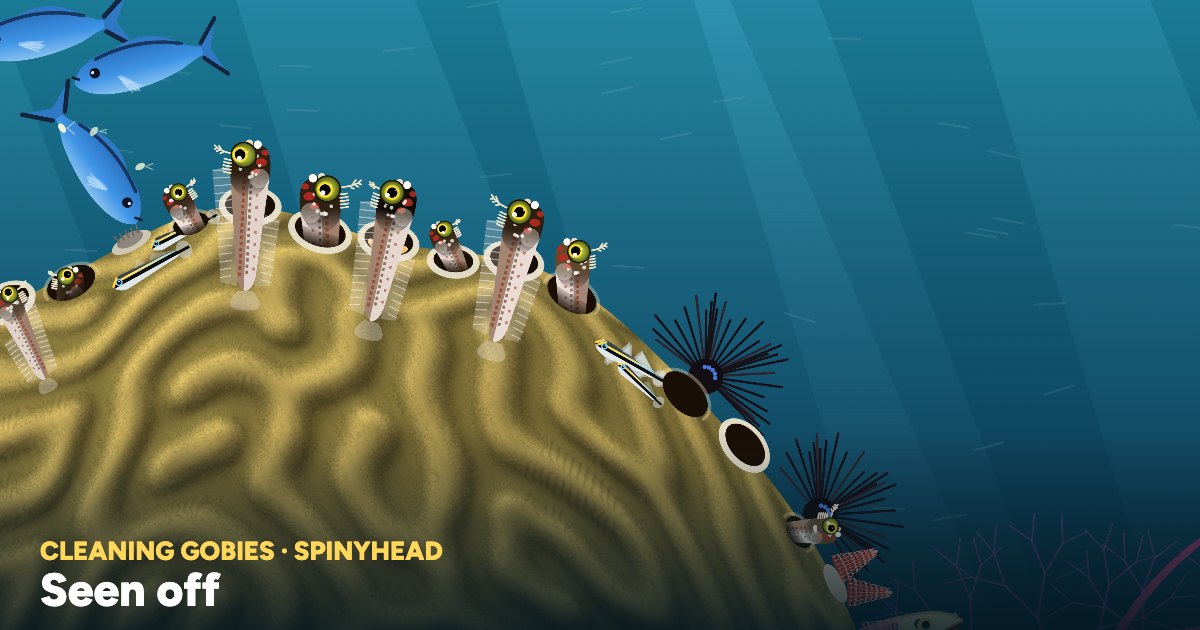
Behavior: Territorial defence (resident aggression against intruders at a cleaning station)
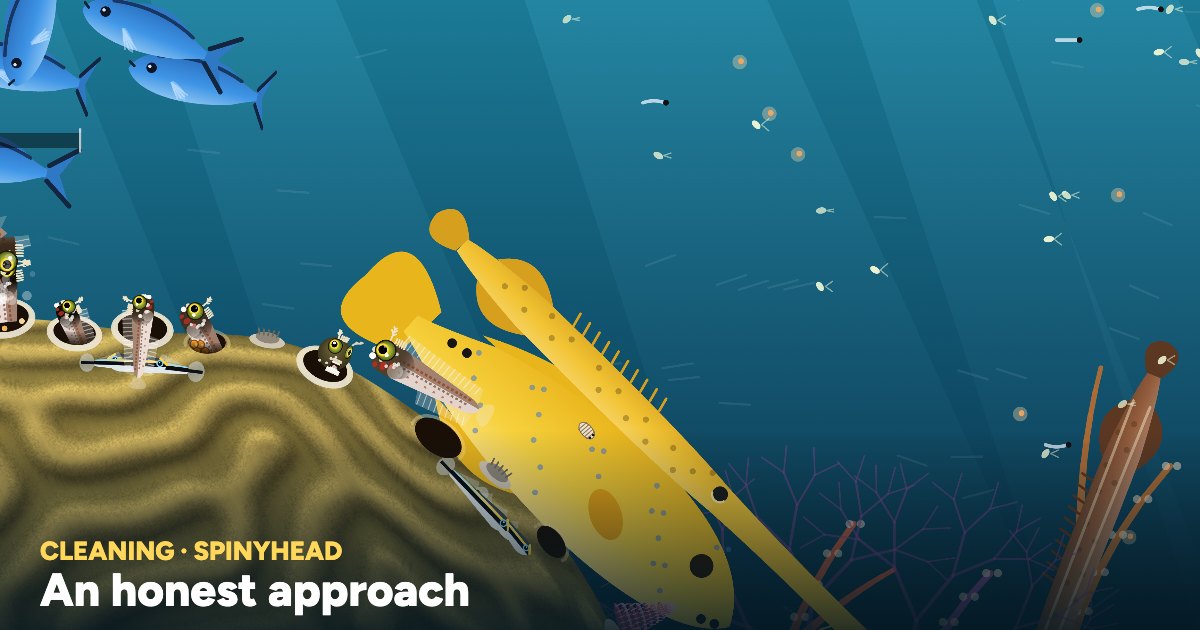
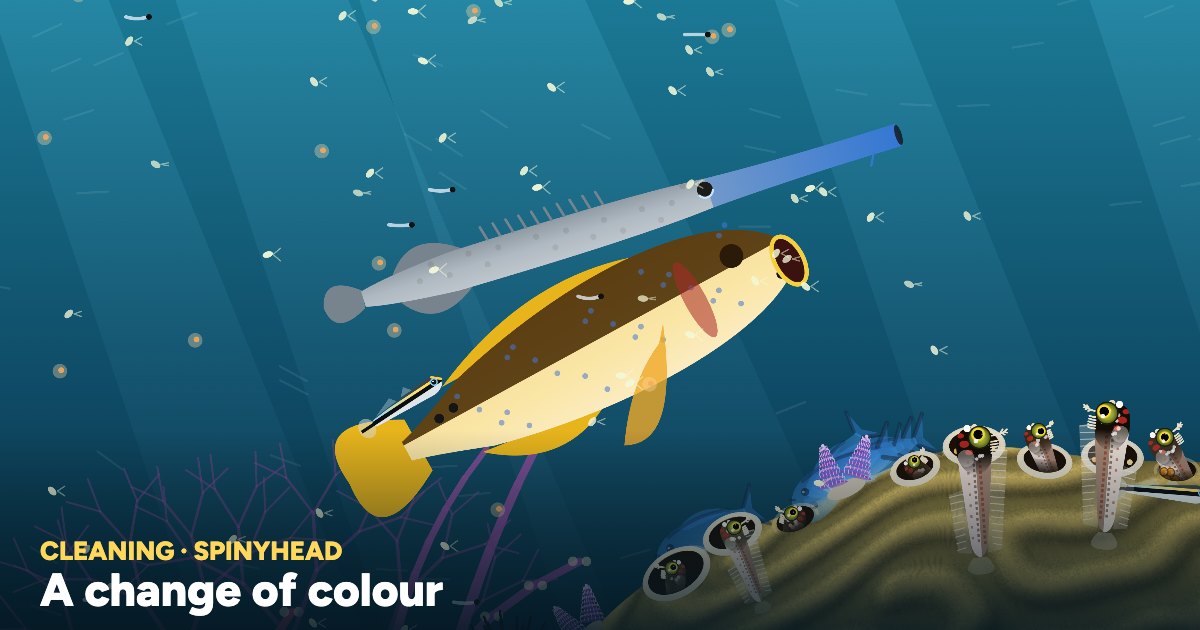
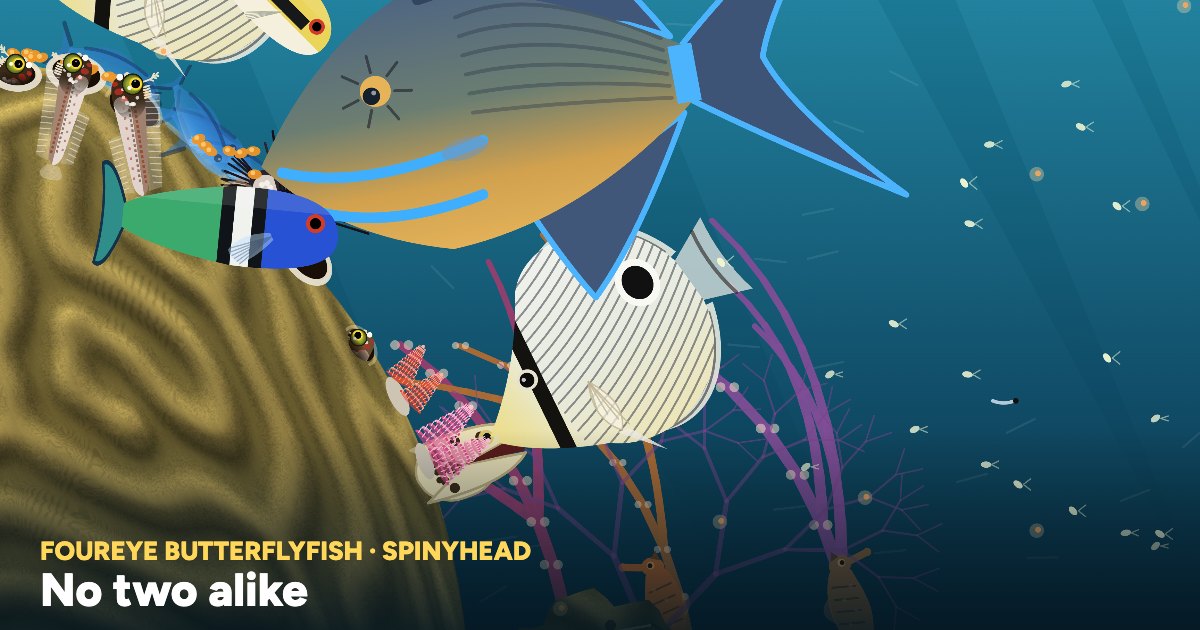
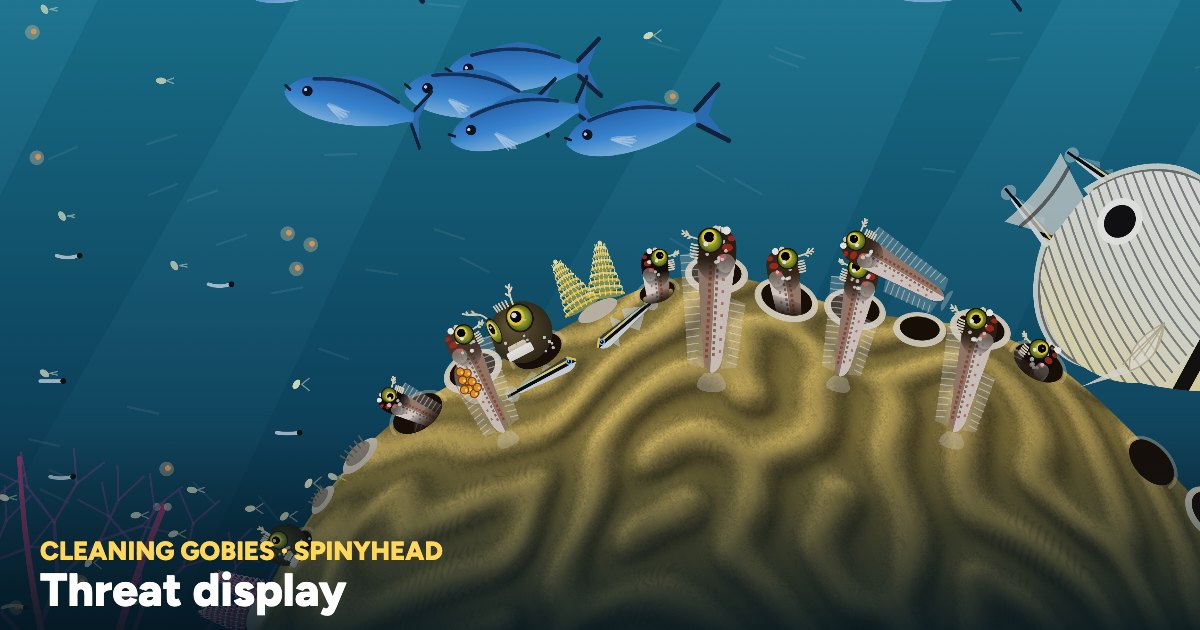
Resident Gobies chase intruders vigorously, but not far: never more than about half a metre to a metre, which marks the edge of the pair’s territory.
Species involved
- sharknose goby Elacatinus evelynae resident pair that chases intruders off its territory
About territorial defence (resident aggression against intruders at a cleaning station)
Territorial defence is when an animal or pair keeps a patch of habitat for its own use and drives off intruders. The defence is usually limited to a small core area. Residents chase, display or nip at intruders, but they normally return after a short pursuit rather than following far. Sharknose gobies are small fish that live at fixed sites, often on a coral head or sponge, and the notebook describes a resident pair chasing intruders away. The chases are vigorous but stop at roughly half a metre to a metre, which marks the edge of the pair's defended area.
Why it matters
Defending a small area keeps competitors away from resources such as shelter, mates and, for a cleaner goby, the cleaning station that gives access to client fish. It costs energy and exposes the defender to risk, so it pays only when the resource is worth it. Stopping the chase at the territory boundary limits those costs and keeps the residents close to home, where their shelter is. The boundary also lets neighbours and intruders learn where the defended area ends, which tends to reduce fights. On a reef, many such small territories space individuals out and shape who can live where.
On coral reefs
A diver sees a small goby, often one of a pair, perched on a coral head or sponge. When another small fish or a rival goby comes close, the resident darts out and drives it off. The resident then returns to its perch within a short distance. The defended area is only a body-length or two across, so the behaviour is easy to miss unless you watch one spot for a while.
Who studied it
Territoriality in animals was a central topic in behavioural ecology through the twentieth century, and cleaner fishes were studied in detail from the 1950s and 1960s, with Limbaugh's 1961 work and Feder's 1966 review as early landmarks. The notebook's own source for this entry is Harding's 1993 M.S. thesis at Oregon State University, which recorded the chase distances of resident gobies. I cannot confirm the thesis's other details.
Elsewhere in the animal kingdom
Territorial defence is found throughout the animal kingdom. Damselfishes (Stegastes) defend algal gardens on reefs, and clownfishes defend their host anemones. Many birds defend breeding territories with song and chases, and cichlid fishes, lizards and many mammals also guard territories. In most of these species the chase is brief and stays near the territory's edge.
Doubts and open questions
It is not always clear what a territory is defending: the cleaning station and client access, shelter, mates or a combination of these. The distances noted in the entry describe what was observed in the field. They do not by themselves show which resource is worth defending, and they may vary between sites and populations.
Related behaviors
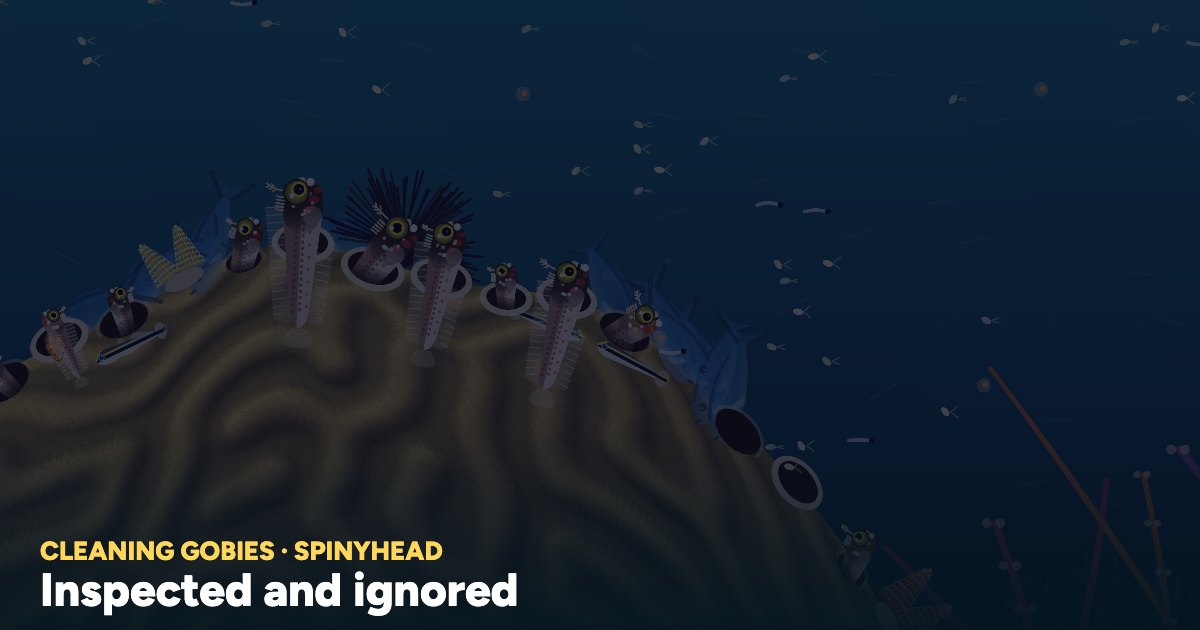
- cleaning symbiosis Here the goby serves client fish by removing parasites, rather than chasing other fish away.
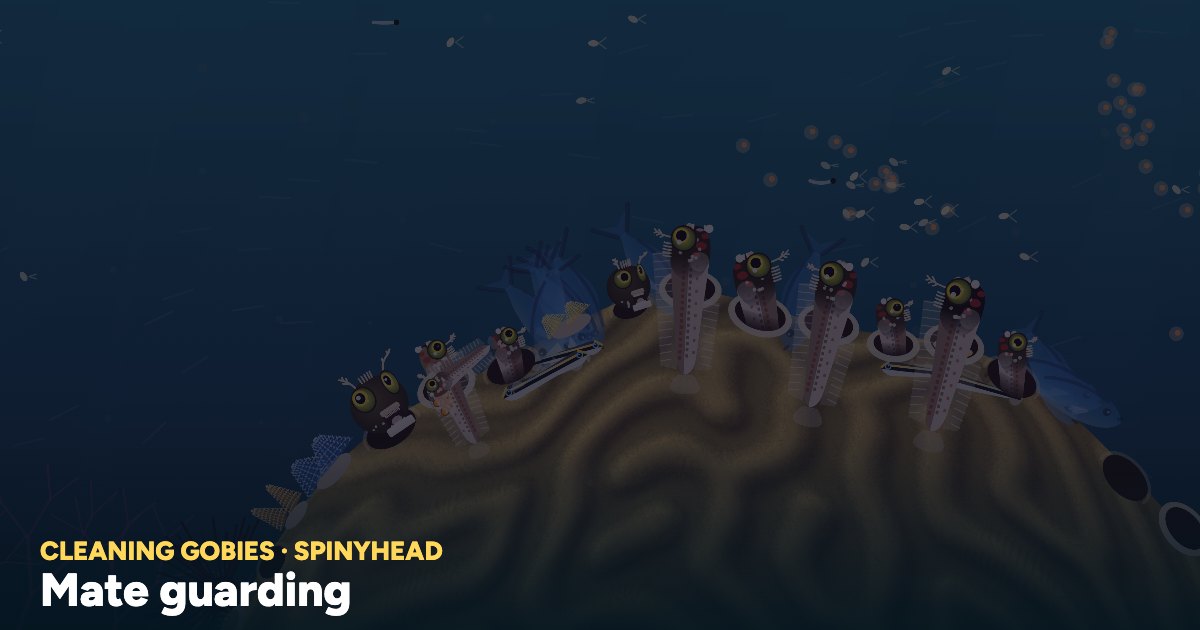
- mate guarding The animal defends a partner from rivals, rather than defending a place.
- home range use An animal that roams over an area without defending it against others.
- interspecific aggression Aggression directed at other species as a general competitive behaviour, not tied to a fixed territory boundary.
Spinyhead is a free game you play in your browser: you are a spinyhead blenny, a fish about 3 cm long living in a worm hole on a Caribbean coral head. Feed, fight for a better hole, court, raise eggs and dodge predators, while everything around you behaves the way field biologists have seen it behave. Every behavior in the game is backed by a published study or careful observation; there are 71 on these pages, and more in the game’s field notebook waiting to be found.
More cleaning gobies
Other reef behaviors to discover