SpinyheadPlay free
A jet of water
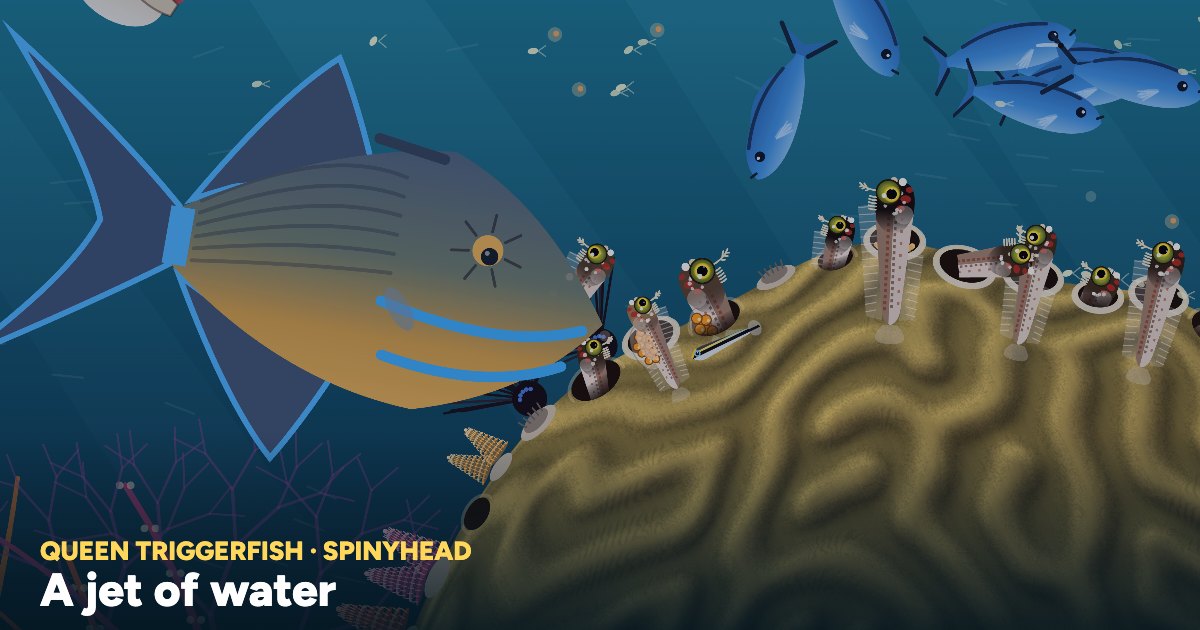
Behavior: Hydraulic jetting (water-jet foraging) in durophagous predators, here used to flip sea urchins and excavate buried prey
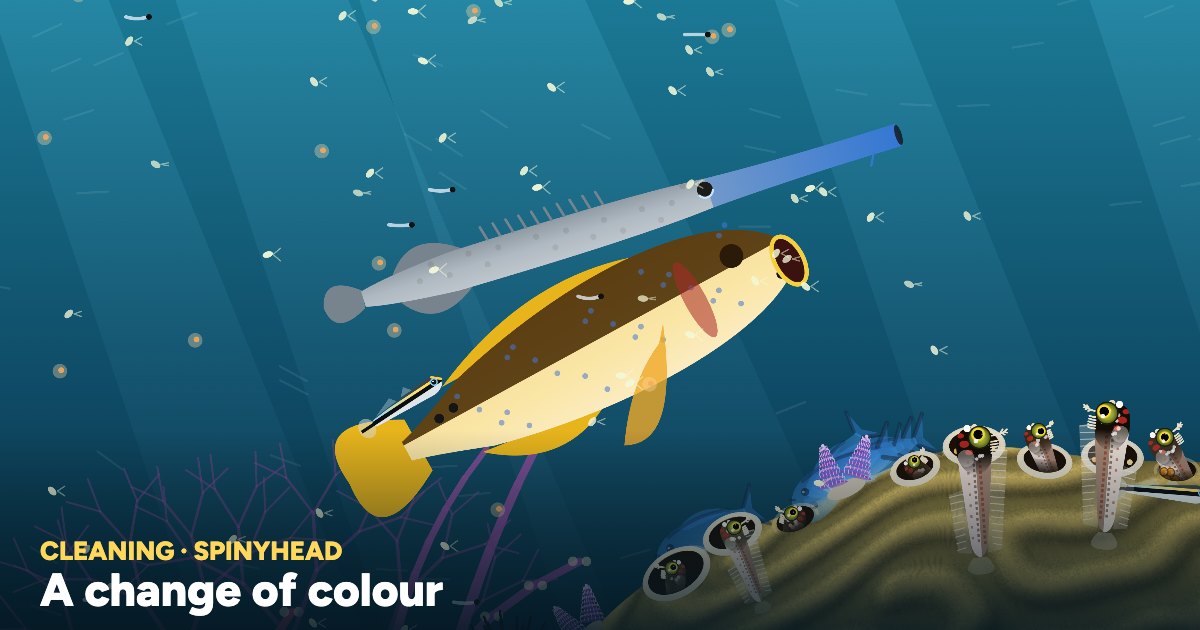
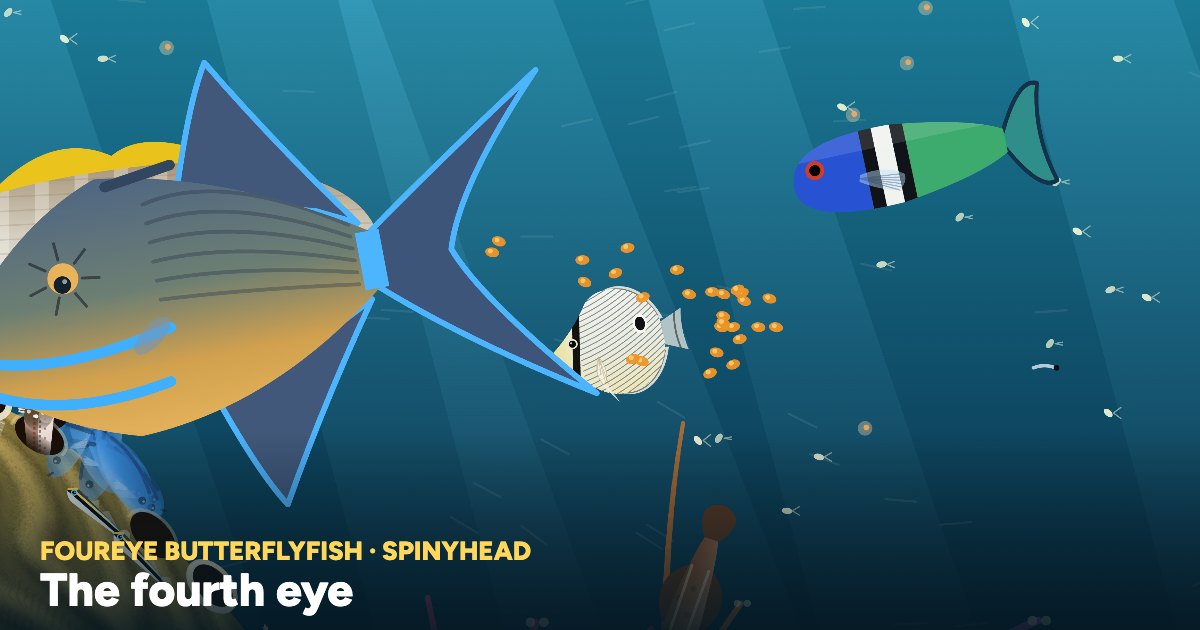
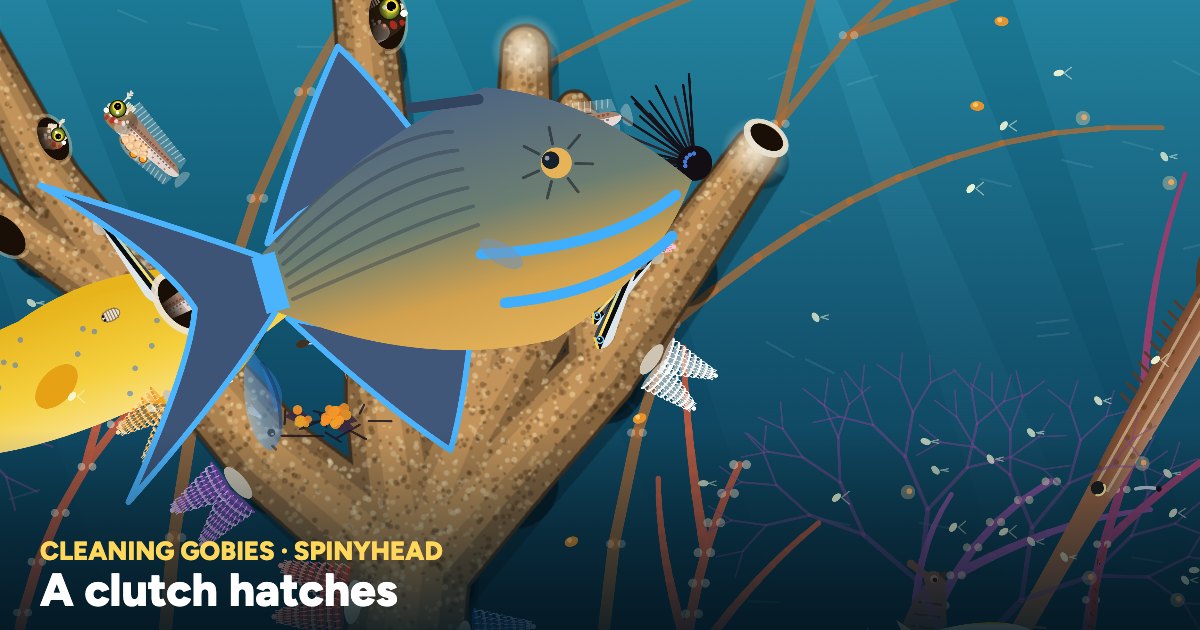
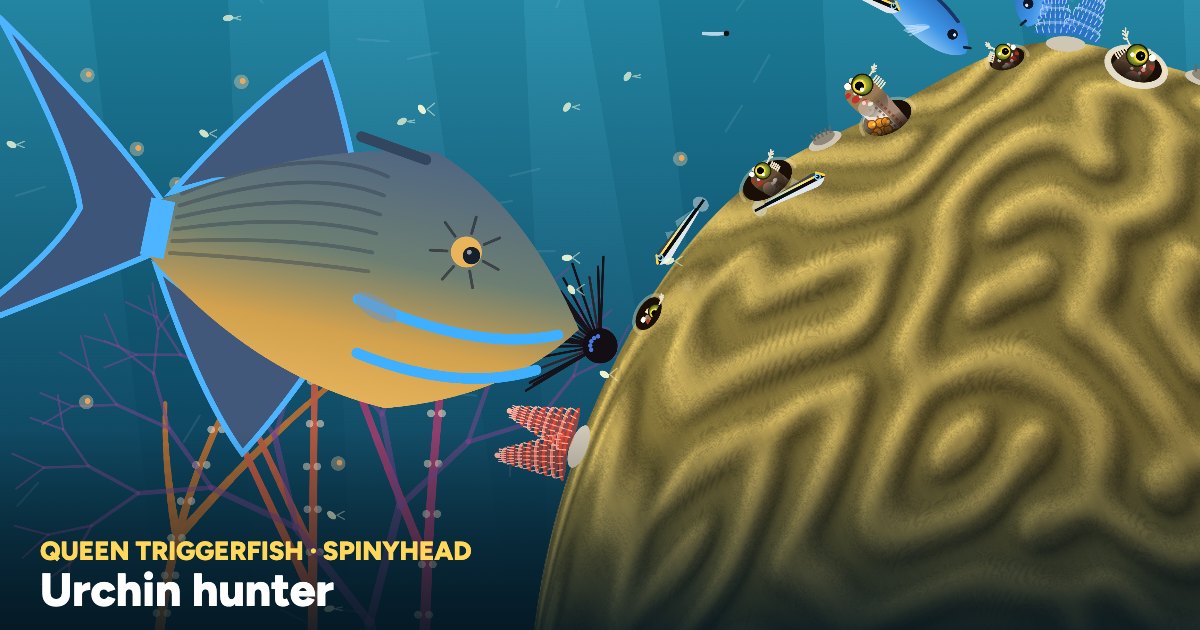
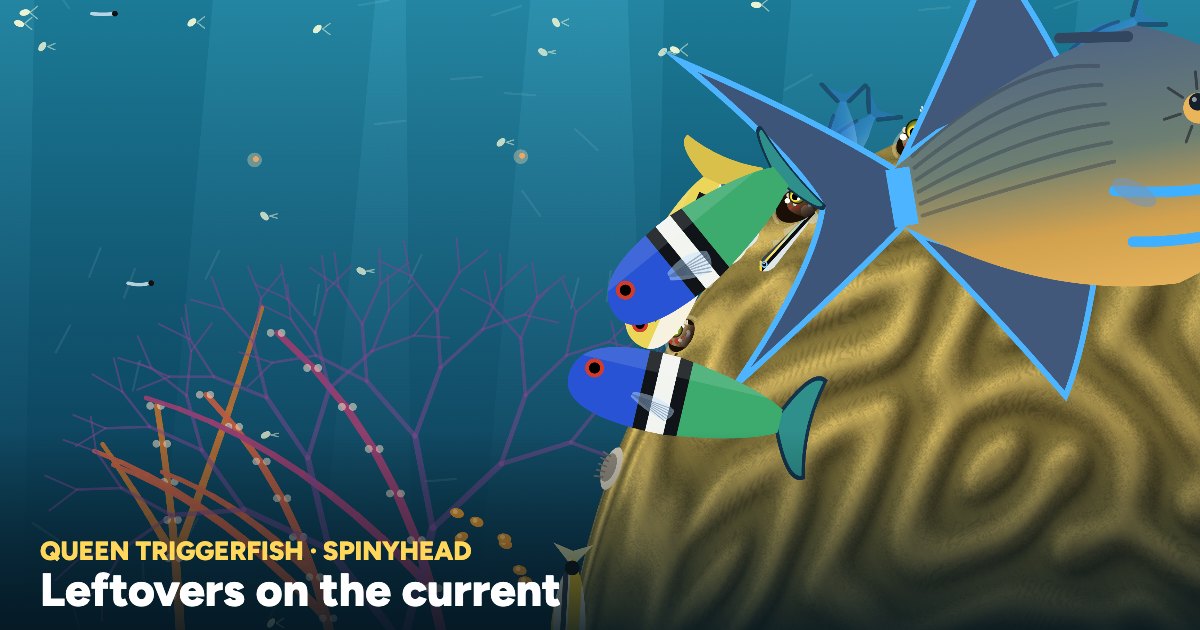
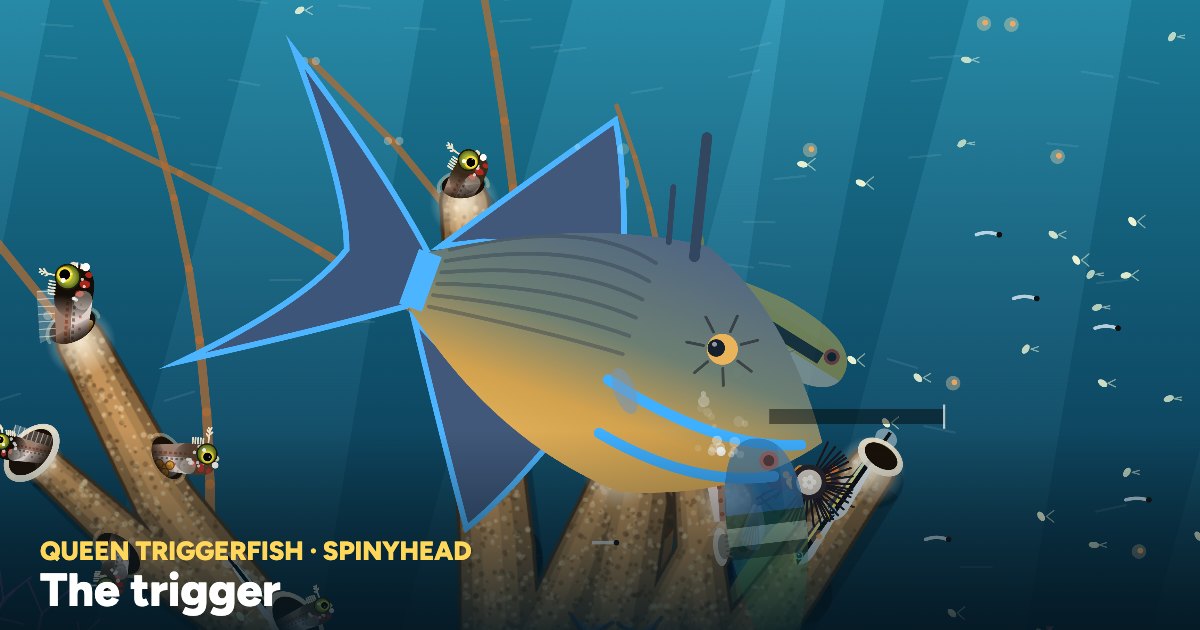
A queen triggerfish blows a strong jet of water from its mouth: into the sand to uncover buried prey, or at a sea urchin to tip it over.
Species involved
- queen triggerfish Balistes vetula blows the water jet to expose and overturn prey
- long-spined sea urchin Diadema antillarum prey that is tipped over to expose its vulnerable underside
About hydraulic jetting (water-jet foraging) in durophagous predators, here used to flip sea urchins and excavate buried prey
Hydraulic jetting is a foraging technique in which a fish squirts a strong stream of water from its mouth at a target. Triggerfishes can do this by taking in water and expelling it forcefully through a small mouth opening. The jet can wash away sand to expose buried invertebrates, or push against a heavily defended animal such as a sea urchin so that it is dislodged or flipped. The fish can then attack the less protected parts of the prey. The notebook records this behaviour for the queen triggerfish, citing Randall 1967.
Why it matters
For the individual, the jet turns otherwise inaccessible or well-defended food into usable prey, widening the range of items it can eat. Sea urchins have long spines on top and are more vulnerable on the underside near the mouth, so turning one over gets around that defence. Because triggerfishes eat hard-bodied invertebrates, they can act as predators of urchins and other benthic animals, which may influence the abundance of those prey. How large that effect is on a given reef depends on how many triggerfish there are and what else is available to eat.
On coral reefs
A diver may see a queen triggerfish hovering head-down over sand or rubble, puffing water at the bottom so that small clouds of sediment rise. Near an urchin, the fish may blow at it from close range, repeatedly, until the urchin shifts or rolls, and then bite at the exposed underside. The fish often looks tilted or nearly vertical while doing so.
Who studied it
Water-jetting by triggerfishes was noted in early natural history observations of reef fish feeding. The notebook's source, Randall 1967 (Studies in Tropical Oceanography 5:665), is his well-known study of the food habits of West Indian reef fishes, which documented what many species eat, including triggerfish eating urchins and other hard-bodied prey.
Elsewhere in the animal kingdom
Water-jetting for foraging is also known from other triggerfishes and from some other fishes, such as certain archerfish, which shoot water upward to knock insects off perches, a related but different use of a water jet. Fishes that blow sand to find buried prey include some wrasses and rays.
Doubts and open questions
It is not always clear how much of the urchin-flipping is due to the jet itself and how much to the fish also nudging or biting the urchin. How important triggerfish predation is for controlling urchin populations compared with other predators and disease is also debated.
Related behaviors
- aggressive mimicry The predator lures prey with a deceptive signal instead of using physical force to expose or overturn them.
- sand sifting (benthic foraging) Fish mouth or sift sand to extract prey instead of blowing it away with a jet of water.
- spitting (archerfish water jets) Archerfish shoot water at prey above the surface, whereas triggerfish jet water at prey on or in the bottom.
- durophagy This is the general habit of eating hard-shelled prey; jetting is one way of getting at such prey, not the crushing itself.
Spinyhead is a free game you play in your browser: you are a spinyhead blenny, a fish about 3 cm long living in a worm hole on a Caribbean coral head. Feed, fight for a better hole, court, raise eggs and dodge predators, while everything around you behaves the way field biologists have seen it behave. Every behavior in the game is backed by a published study or careful observation; there are 71 on these pages, and more in the game’s field notebook waiting to be found.
More queen triggerfish
Other reef behaviors to discover