 SpinyheadPlay free
Inspected and ignored
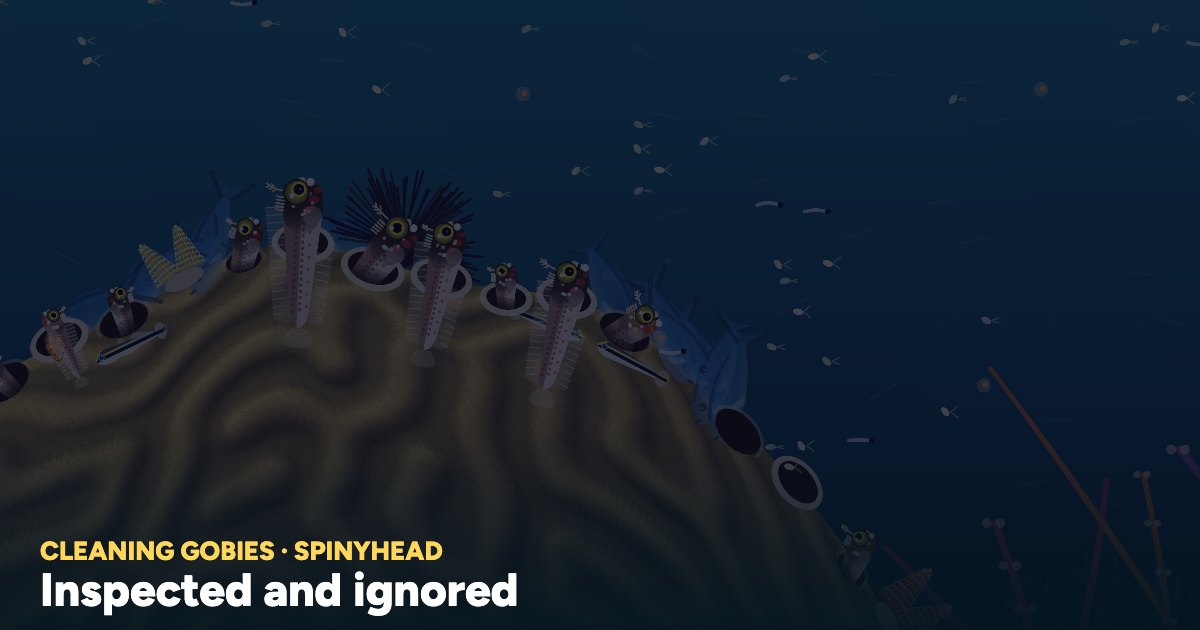
Behavior: Intrasexual territorial aggression (same-sex aggression in pair-bonded, territorial fish), with intruder discrimination
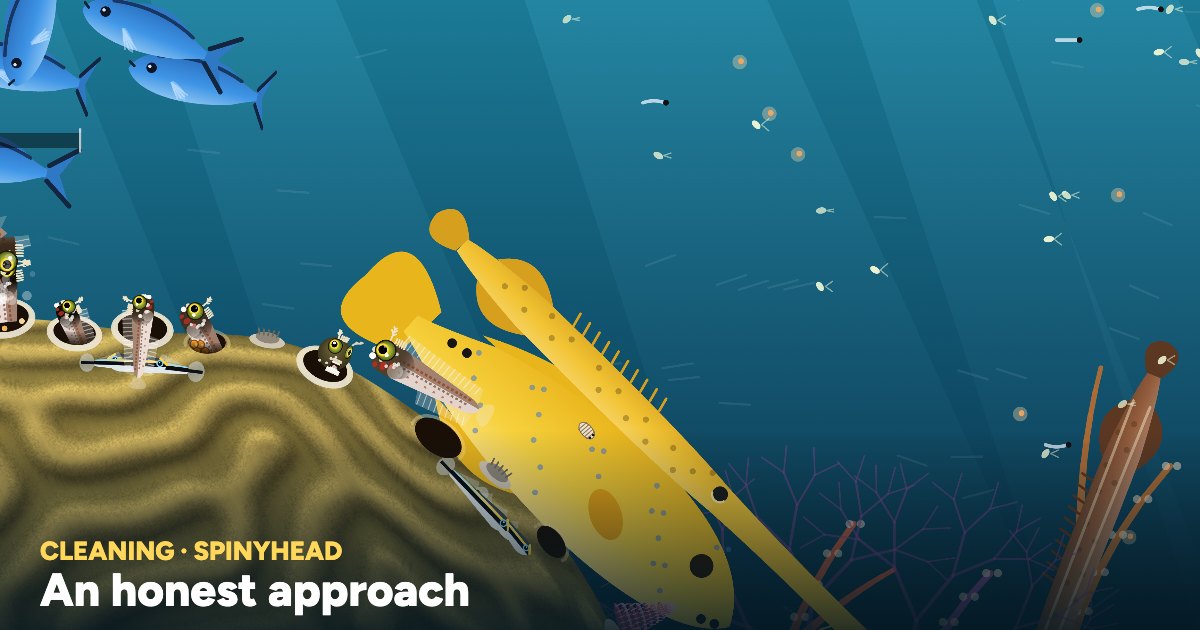
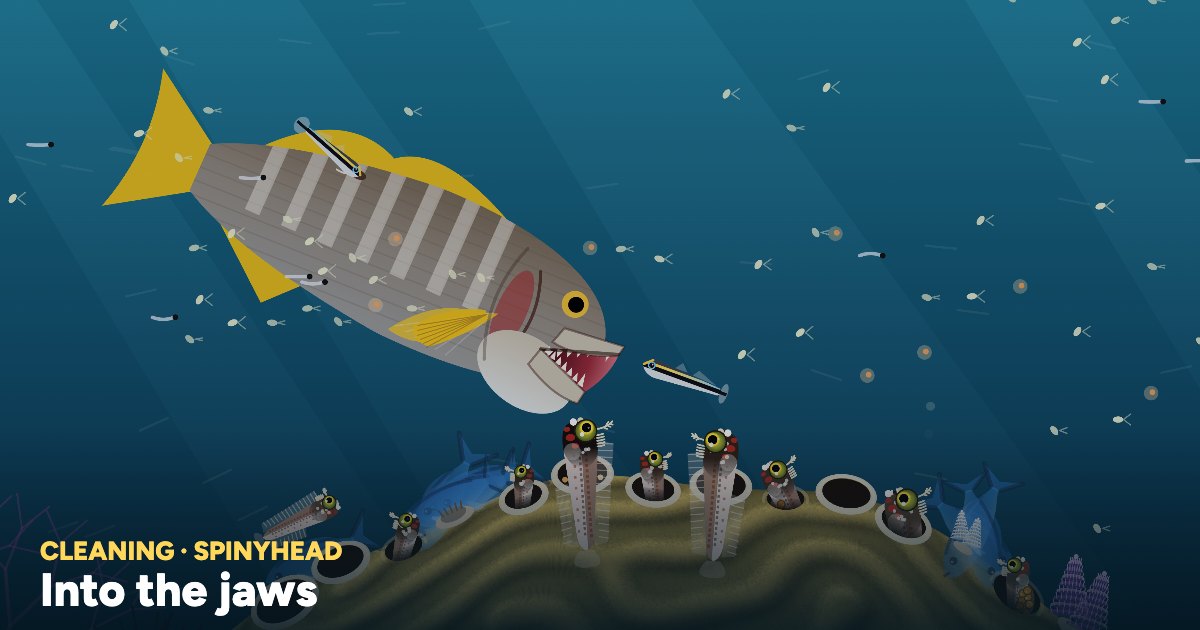
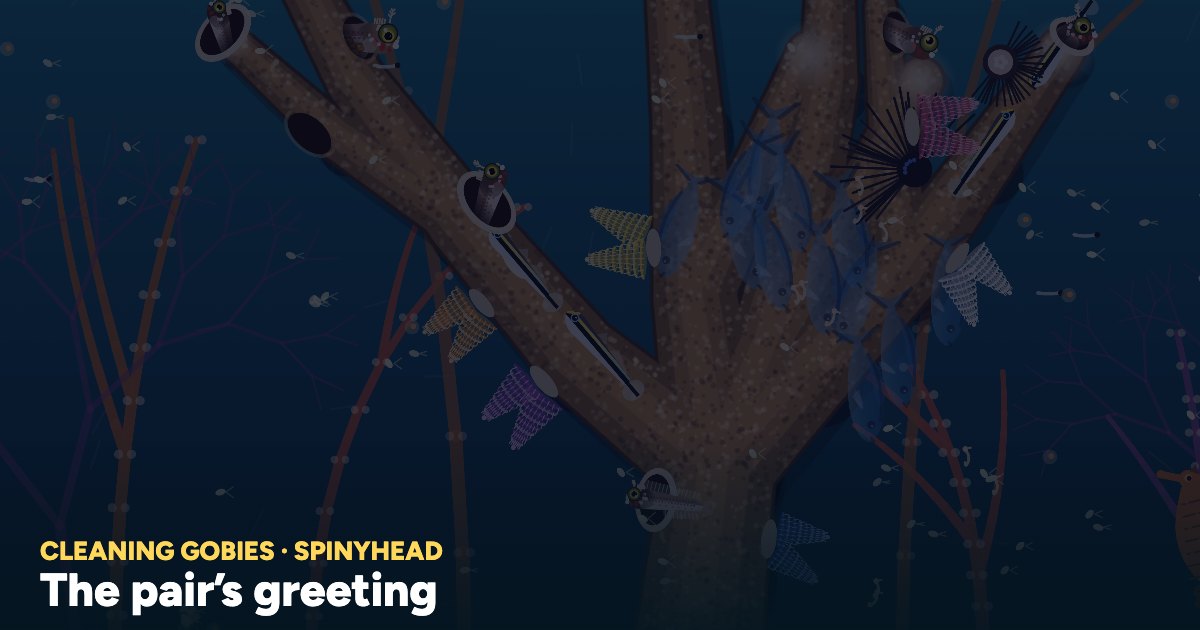
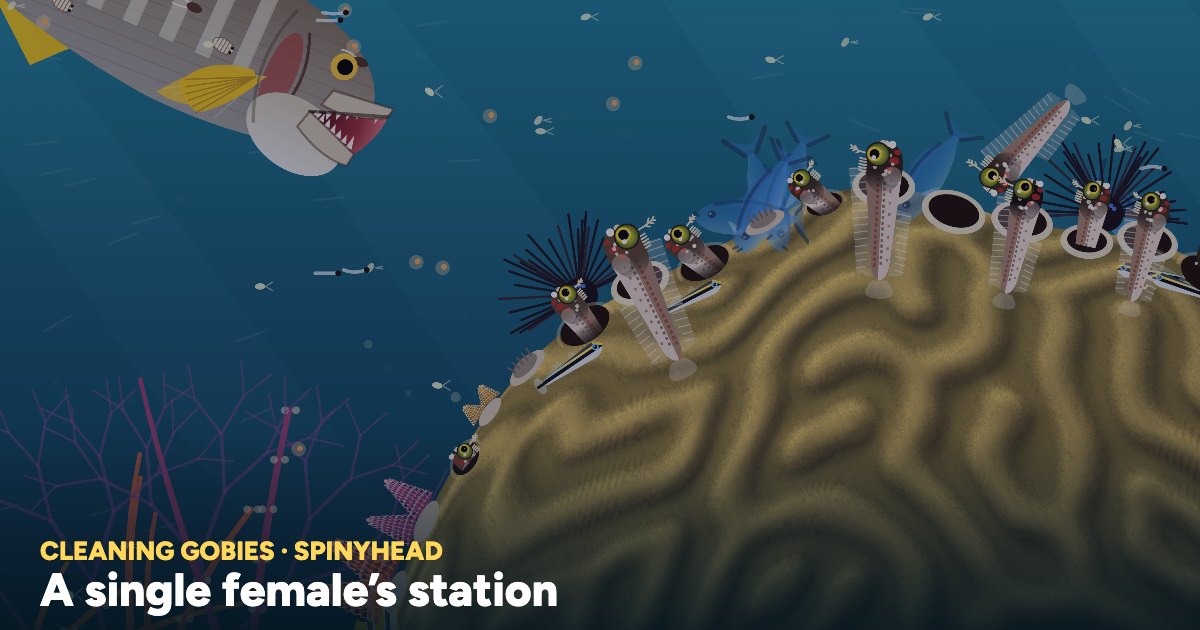
A large intruder goby of the opposite sex is approached, inspected, and then ignored: it is no threat to the pair. A cleaning goby is typically only concerned with intruding gobies of the same sex as itself.
Species involved
- sharknose goby Elacatinus evelynae resident cleaner goby that defends its station and pair against same-sex intrude
About intrasexual territorial aggression (same-sex aggression in pair-bonded, territorial fish), with intruder discrimination
Many territorial animals do not treat every intruder alike. They respond according to what the intruder could cost them, and for an animal that lives in a pair, the main threat is usually a rival of its own sex. A same-sex intruder may compete for the mate, the shared territory and the resources in it. An opposite-sex intruder does not threaten the existing pair bond in the same way. The notebook describes a sharknose goby that approaches a large opposite-sex intruder, inspects it, and then ignores it. Aggression is saved for gobies of the resident's own sex.
Why it matters
Selective aggression saves time and energy and avoids the injury risk of fights that bring no benefit. Chasing every large fish would take time away from cleaning, which is the goby's feeding and social activity. Directing attacks at same-sex rivals protects the resident's access to its mate and to its cleaning station, and so protects its reproductive success. Because stations are valuable, this can help keep a pair or small group stable at one site. It also means the number and sex of gobies at a station reflect who the residents accept and who they exclude.
On coral reefs
A diver watching a cleaning station, usually on a coral head or sponge, may see a goby dart at a newcomer that is another goby, approach it, and either chase it off or let it be. Chases, rapid approaches and displays are directed at some intruders. Others are nosed briefly and then left alone. The pattern is easy to miss without watching individual gobies for a while, because the fish are small and quick and the interactions are brief.
Who studied it
The notebook's source for this entry is Harding's 1993 M.S. thesis at Oregon State University, which studied the behaviour of cleaning gobies. The wider idea that territorial animals respond more strongly to same-sex rivals comes from general work on territoriality, pair bonds and mate competition in fishes and birds. Cleaning gobies of the genus Elacatinus have since been used as study animals for the social organization and pair-living of small reef fishes.
Elsewhere in the animal kingdom
Same-sex-biased territorial defence is widespread among pair-living animals. Pair-forming reef fishes such as many butterflyfishes and anemonefishes defend shared territories, and pair-living songbirds and other monogamous birds often respond more strongly to intruders of their own sex. Mammals and fishes that defend a mate or a breeding site show similar patterns.
Doubts and open questions
It is not always clear whether an ignored opposite-sex intruder is truly harmless or is simply tolerated for another reason, such as a possible mating opportunity. Sex-specific responses also depend on how reliably the resident can tell the sexes apart, and which cues it uses (size, colour or behaviour) is not settled for every species.
Related behaviors
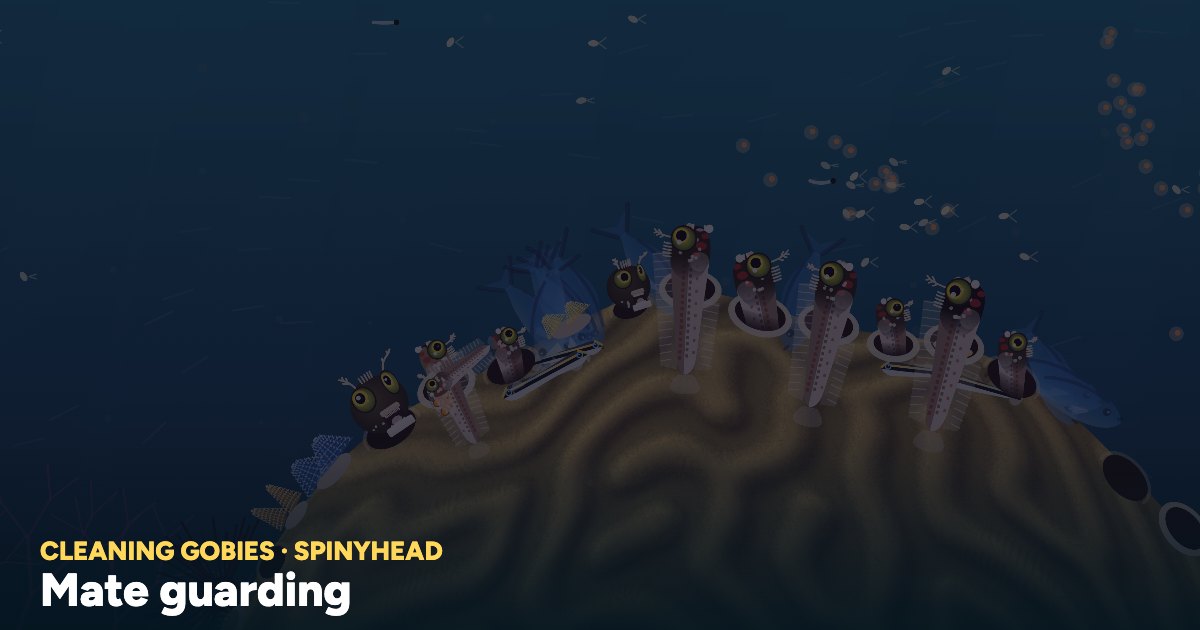
- mate guarding The animal stays close to its mate and keeps rivals away from it, whereas here the focus is on which intruders are chased from a territory.
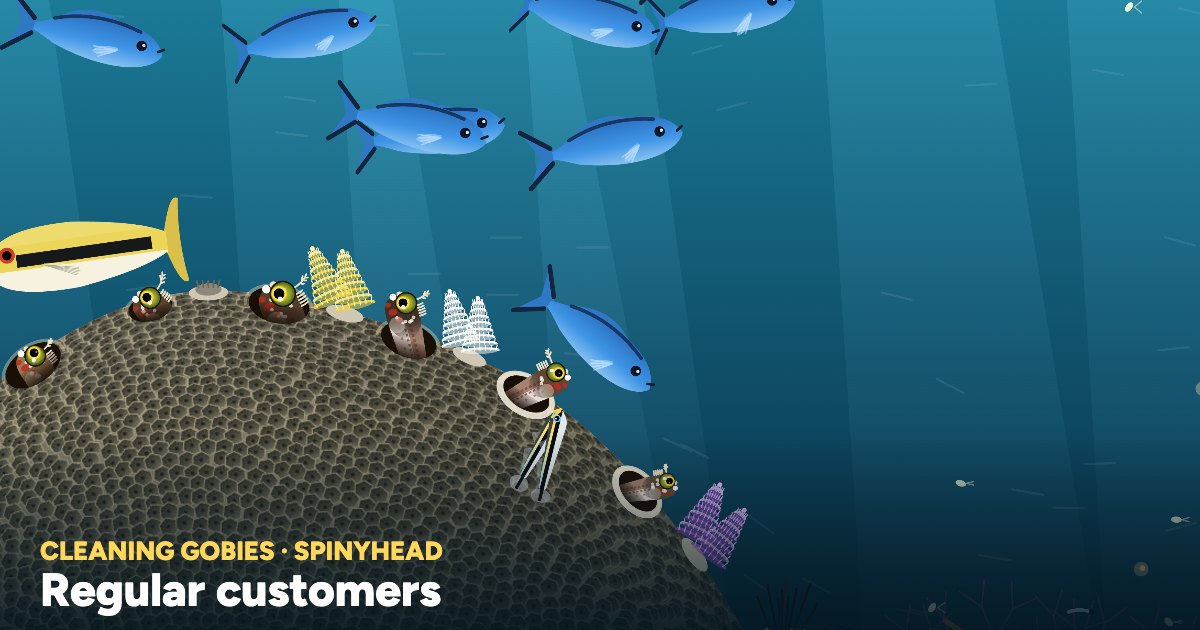
- cleaning symbiosis This is a cooperative relationship in which cleaners remove parasites from client fish, whereas same-sex aggression is competition between gobies of the same species.
- interspecific territoriality Here the territory holder excludes competitors of other species, whereas this behaviour is aimed at members of the same species.
- dear enemy effect Territory holders respond less aggressively to known neighbours than to strangers, whereas here the response depends on the intruder's sex.
Spinyhead is a free game you play in your browser: you are a spinyhead blenny, a fish about 3 cm long living in a worm hole on a Caribbean coral head. Feed, fight for a better hole, court, raise eggs and dodge predators, while everything around you behaves the way field biologists have seen it behave. Every behavior in the game is backed by a published study or careful observation; there are 71 on these pages, and more in the game’s field notebook waiting to be found.
More cleaning gobies
Other reef behaviors to discover