 SpinyheadPlay free
Twilight hunt

Behavior: Crepuscular (twilight) predation, or the twilight feeding peak by piscivores
Dusk and dawn are the most dangerous times on a reef: in the changing light, piscivores catch prey far more often than at midday.
Species involved
- graysby Cephalopholis cruentata ambush piscivore active at dusk and dawn
- coney Cephalopholis fulva ambush piscivore active at dusk and dawn
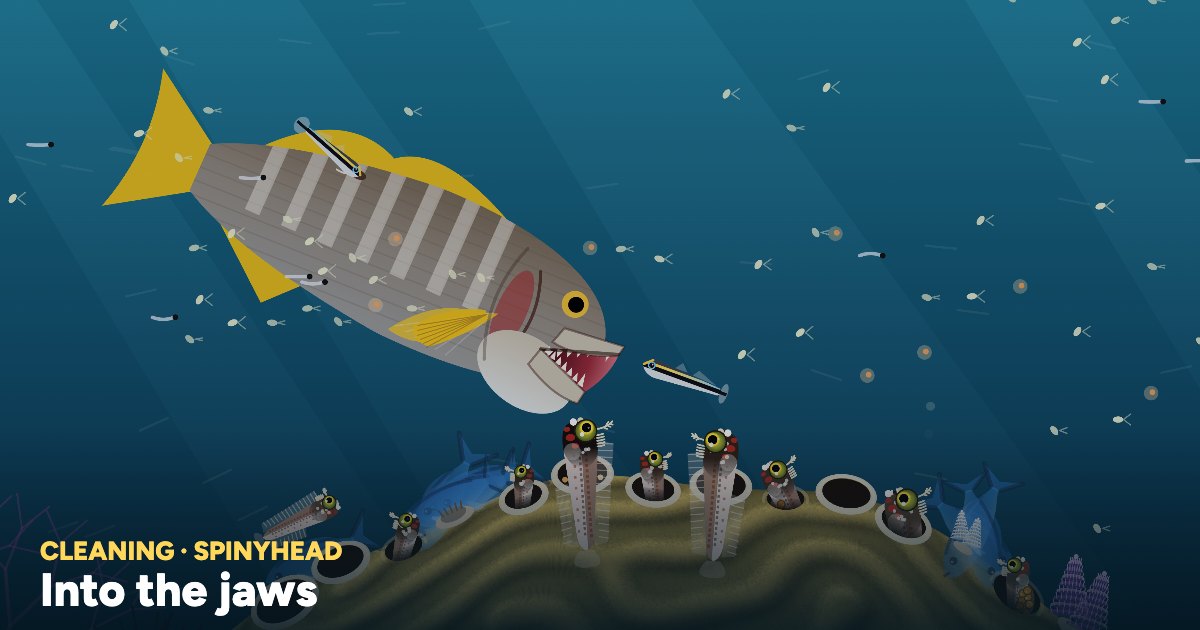
- schoolmaster snapper Lutjanus apodus predator that hunts around the light changes
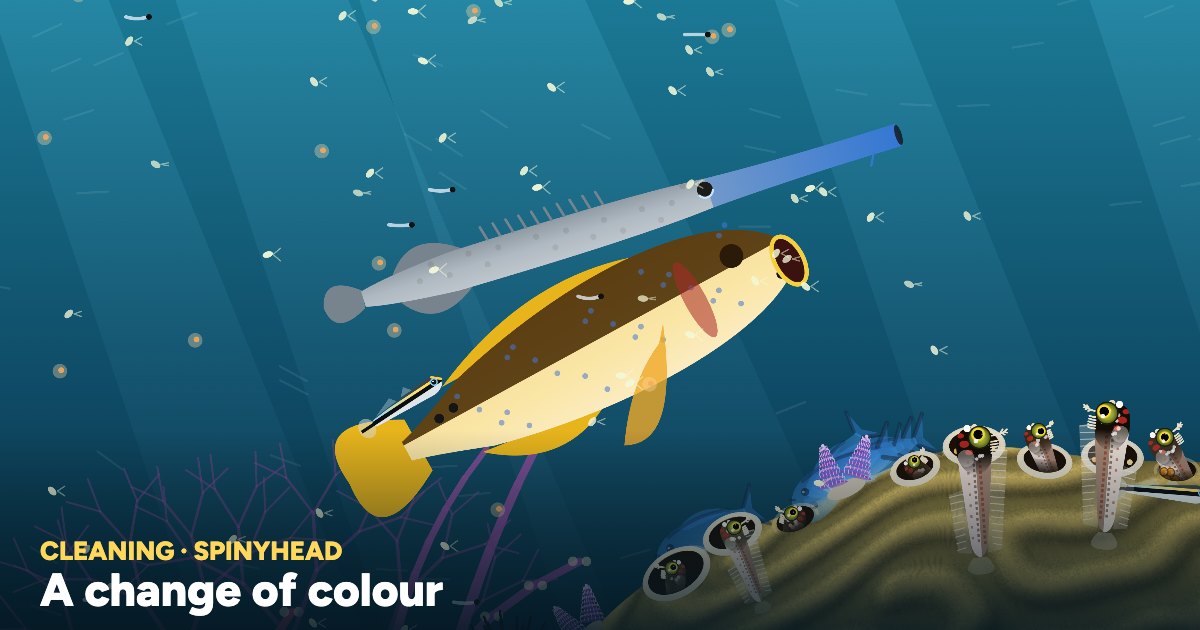
- trumpetfish Aulostomus maculatus stalking predator of small fishes
- Caribbean reef shark Carcharhinus perezi large predator on the reef at low light
- blue chromis Chromis cyanea daytime plankton feeder that is potential prey as it moves to shelter
- French grunt Haemulon flavolineatum juveniles that leave daytime shelter at dusk to forage, so they are exposed
- bluehead wrasse Thalassoma bifasciatum daytime fish that must reach its night shelter
About crepuscular (twilight) predation, or the twilight feeding peak by piscivores
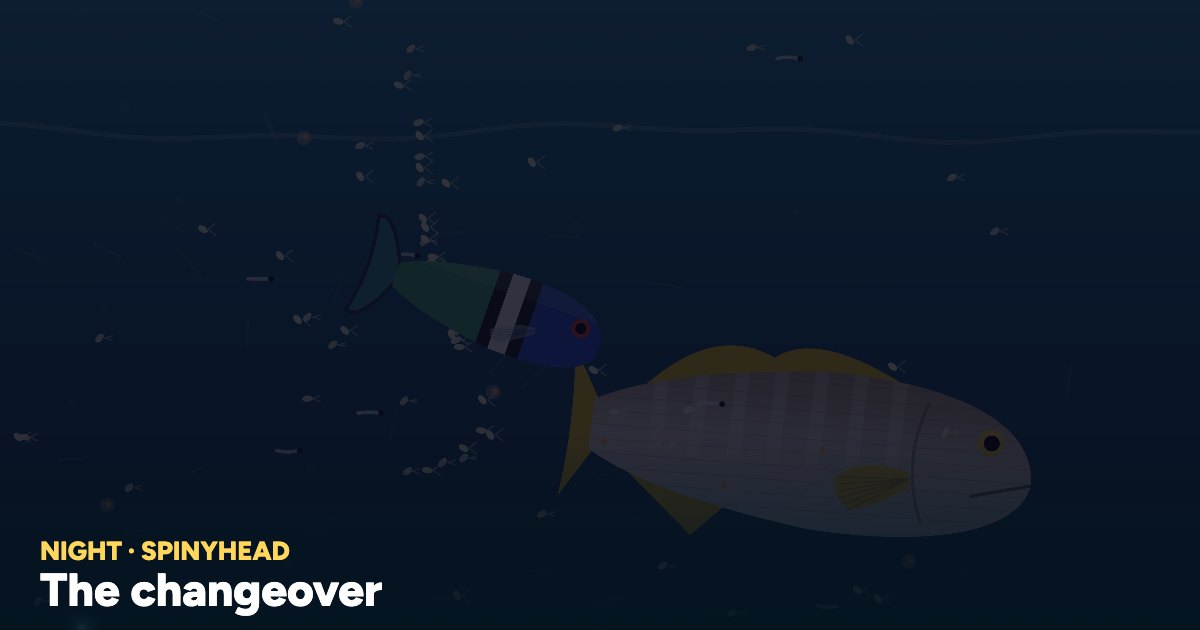
Twilight predation is the observation that many predatory fishes feed most successfully at dusk and dawn, when light is changing between day and night. On a reef the fish community is largely swapped at these times. Daytime species stop feeding and head for shelter, and nocturnal species come out. During the handover, prey are travelling and are in a mix of day and night routines, while predators are already positioned and attentive.
Why it matters
For predators, twilight is a chance to make many kills in a short time. For prey, it is a bottleneck of risk, so they hurry to shelter, travel in groups, and stay close to cover. The result is strong selection on the timing and routes of daily movements. These predator-driven movements also shape the food web, because they carry energy between habitats such as grunts moving from reef shelter to feeding grounds at night. Piscivores are often thought to gain a sensory edge in dim light: their eyes may cope with low light better than those of the prey, so prey may be less able to see them coming.
On coral reefs
A diver at dusk sees the reef shift. Damselfishes, wrasses and chromis drop toward the bottom and disappear into holes. Grunts and snappers gather and then move off to feed. Groupers, snappers and trumpetfish become more active, and small fish dart for cover. Sharks and large jacks are more often noticed at these times. Fish and divers see less as the light fades, so the transition passes quickly into night.
Who studied it
The notebook cites Hobson 1972 (Fishery Bulletin 70:715), a study of how Hawaiian reef fishes behave during the evening and morning transitions between daylight and darkness. Hobson's work documented the orderly turnover of day and night fish communities and that predators concentrate their feeding on these transitions. Later studies on other reefs have followed up the role of changing light in foraging and predation.
Elsewhere in the animal kingdom
Dusk and dawn activity peaks, called crepuscular activity, are common in animals generally. Examples include many predatory fishes in lakes and temperate seas, bats and owls hunting at dusk, and deer and rabbits that feed at twilight. In freshwater, pike and walleye are known for dim-light feeding.
Doubts and open questions
There is discussion about how much of the twilight peak comes from the predators' sensory advantage in dim light and how much from prey being exposed while moving between shelter and feeding areas. Predation rates also differ between reefs and between species, so twilight is not equally dangerous everywhere.
Related behaviors
- diel vertical or nocturnal feeding migration Fish move between daytime shelter and night feeding grounds on a daily schedule, whereas twilight predation is the predators' exploitation of that movement.
- ambush predation This is a hunting tactic of waiting hidden and striking, which can be used at any time of day, not only in the changing light.
- nocturnal predation Predators like morays and some squirrelfishes hunt in full darkness rather than during the light transition.
- schooling as anti-predator behaviour A defence by prey that dilutes individual risk, often used by fish during the dusk shelter run.
Spinyhead is a free game you play in your browser: you are a spinyhead blenny, a fish about 3 cm long living in a worm hole on a Caribbean coral head. Feed, fight for a better hole, court, raise eggs and dodge predators, while everything around you behaves the way field biologists have seen it behave. Every behavior in the game is backed by a published study or careful observation; there are 71 on these pages, and more in the game’s field notebook waiting to be found.
More night


Other reef behaviors to discover