 SpinyheadPlay free
Hatching

Behavior: Pelagic larval dispersal (planktonic larval phase of a bipartite life cycle)
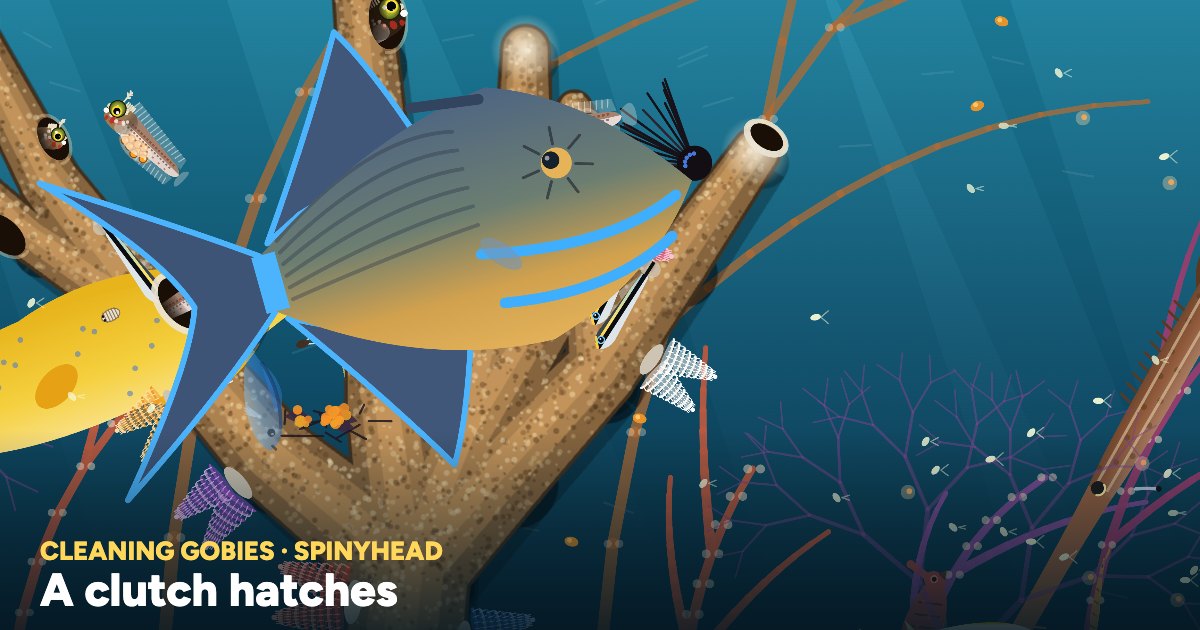
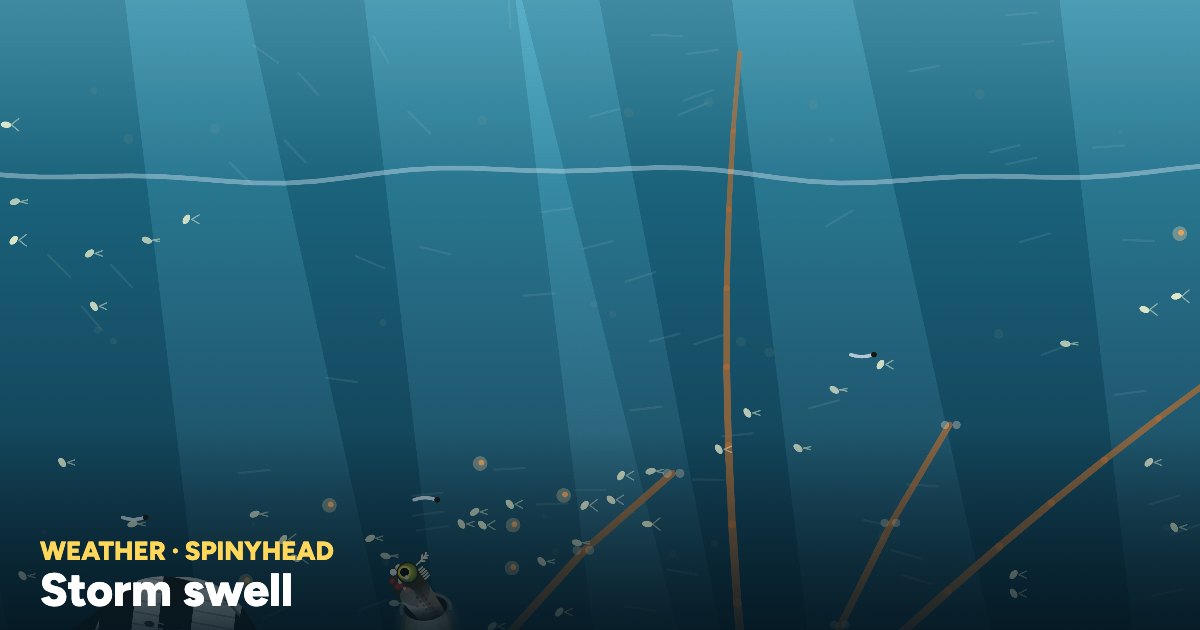
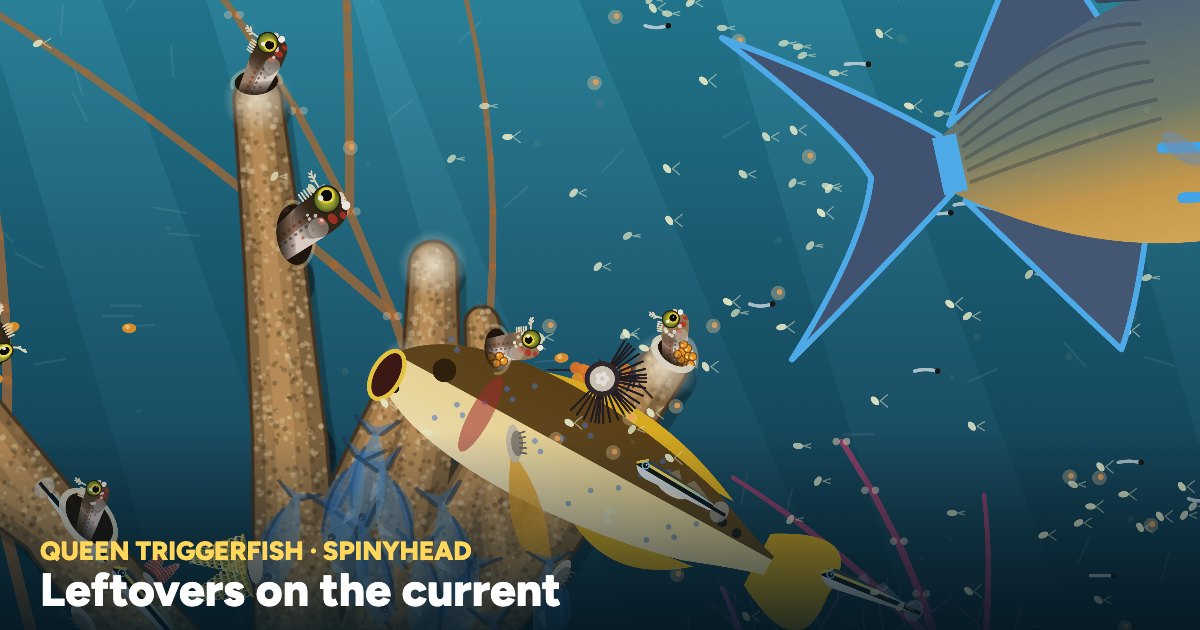
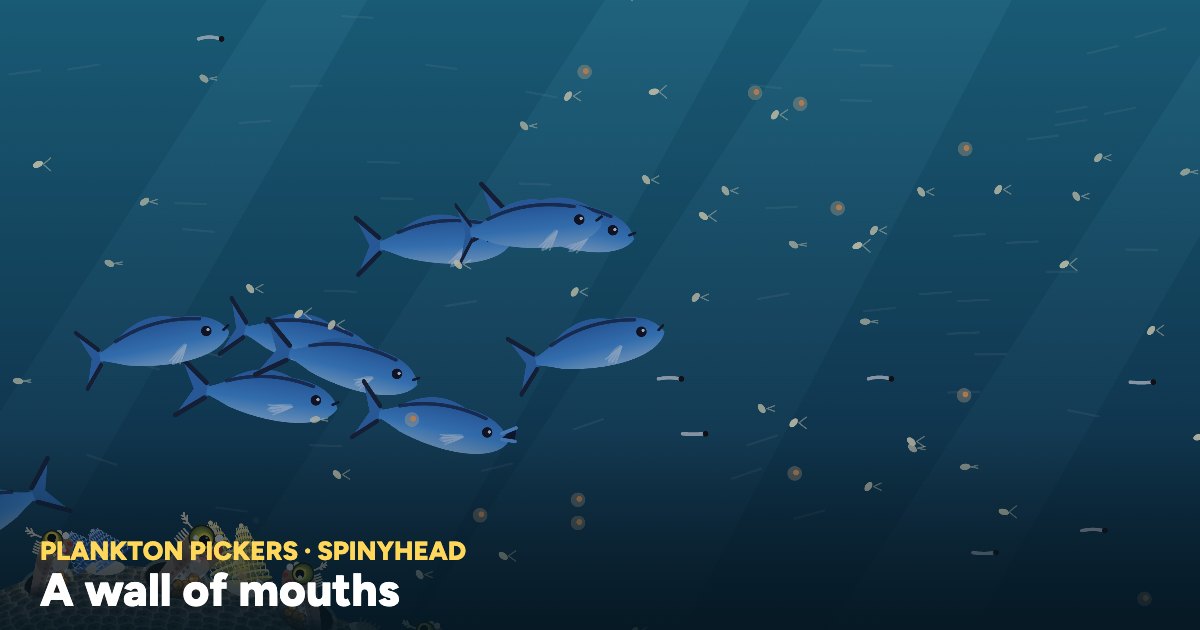
The eggs hatch into tiny larvae that drift away on the plankton for weeks. Few survive to settle on a reef.
Species involved
- spinyhead blenny Acanthemblemaria spinosa adults lay eggs in crevices; larvae drift in plankton then settle
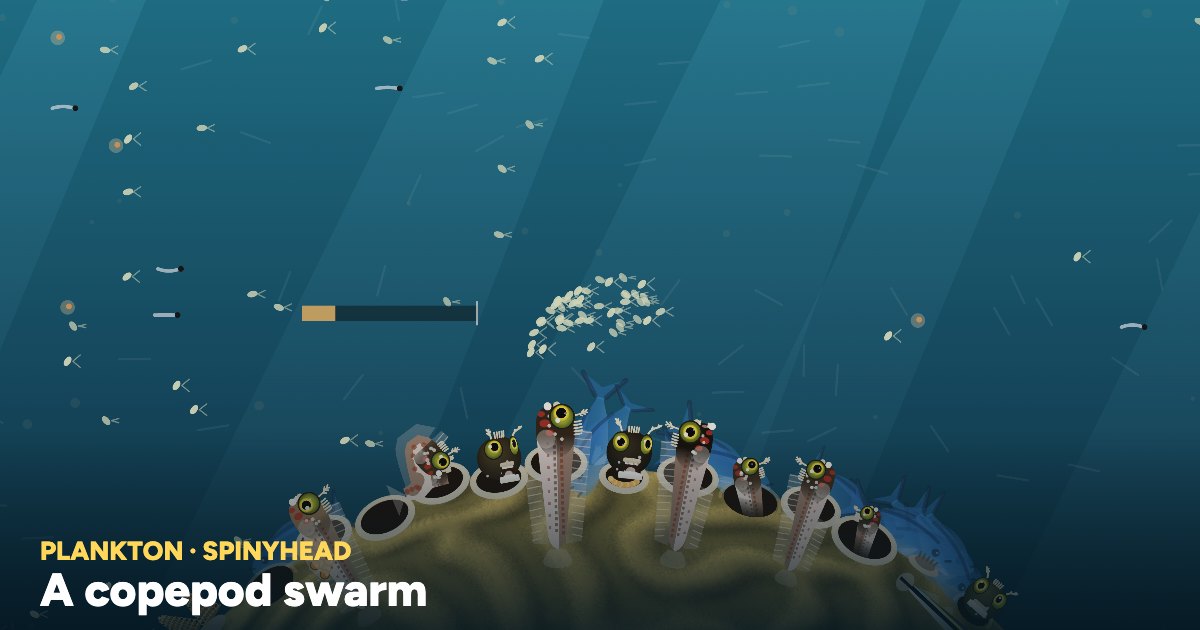
- planktonic copepods Copepoda food for drifting larvae
- blue chromis Chromis cyanea plankton-feeding reef fish; open-water predator of drifting prey and itself has
- bluehead wrasse Thalassoma bifasciatum reef fish with a pelagic larval stage, often used as a model for larval settleme
About pelagic larval dispersal (planktonic larval phase of a bipartite life cycle)
Most reef fishes have a two-part life cycle. Adults live on the reef and lay eggs, often in a nest, crevice or the water column. The eggs hatch into tiny larvae that leave the reef and drift in open water as part of the plankton. They feed on small plankton, grow and develop, and after a period of days to weeks they change form and swim back to a reef to settle. After settling they transform into juveniles that resemble small adults. The length of the drifting phase varies widely between species.
Why it matters
A drifting larval phase spreads offspring away from the parents' reef, which can link distant reef populations and allow colonisation of new or damaged habitat. It also lets larvae exploit plankton-rich open water, where there are fewer of the reef-dwelling predators that would eat eggs and small young. The cost is very high mortality: larvae can be eaten, starved, or carried to places with no suitable reef, so very few survive to settle, as the notebook notes. Because of this, the number of young arriving at a reef can vary greatly from year to year and can strongly shape the adult population. Larval supply also determines how well a reef can recover after disturbance.
On coral reefs
A diver rarely sees the larvae themselves, which are tiny and transparent and live in open water, often away from the reef. What is visible is the result: small newly settled juveniles appearing on the reef, often in pulses, and many of them disappearing within days as they are eaten. Egg-guarding fish such as blennies are seen tending nests before hatching, and the larvae leave soon after hatching, often at night.
Who studied it
The idea that reef fish have a dispersing larval stage is very old, and it was long assumed that larvae were carried passively by currents far from home. Later work, including studies using otolith (ear stone) microstructure and tagging of larvae, showed that many larvae are strong swimmers with sensory abilities, and that substantial numbers can return to or stay near their natal reef. Studies of settlement in Caribbean reef fishes, such as the bluehead wrasse, helped show how larval supply drives adult populations.
Elsewhere in the animal kingdom
A planktonic larval phase is widespread among marine animals. Corals, sea urchins, crabs, lobsters, barnacles, oysters and many other invertebrates release larvae that drift before settling. Among fishes, most reef species, including damselfishes, wrasses, gobies and groupers, have it, as do many open-ocean fishes. Freshwater and land animals with larval stages, such as many insects and amphibians, have a similar life-cycle pattern, but dispersal at sea is distinctive.
Doubts and open questions
A central question is how far larvae actually travel and how much they return to their home reef, which is debated and varies by species and place. Early views saw dispersal as largely passive, while newer evidence stresses larval swimming and behaviour. This matters for the design of marine protected areas, because it affects how far protected reefs can supply others.
Related behaviors
- Brood care (nest guarding) Parents protect the eggs before hatching, whereas larval dispersal describes the young after they have left the nest and gone to the plankton.
- Direct development Young hatch or are born as miniature adults and stay near the parents instead of drifting in the plankton, as in seahorses, where males brood the young.
- Larval settlement and recruitment This is the end of the dispersal phase, when larvae choose a reef and transform into juveniles.
- Spawning The release of eggs and sperm that comes before hatching and dispersal.
Spinyhead is a free game you play in your browser: you are a spinyhead blenny, a fish about 3 cm long living in a worm hole on a Caribbean coral head. Feed, fight for a better hole, court, raise eggs and dodge predators, while everything around you behaves the way field biologists have seen it behave. Every behavior in the game is backed by a published study or careful observation; there are 38 on these pages, and more in the game’s field notebook waiting to be found.
More breeding
Other reef behaviors to discover