 SpinyheadPlay free
Spawning
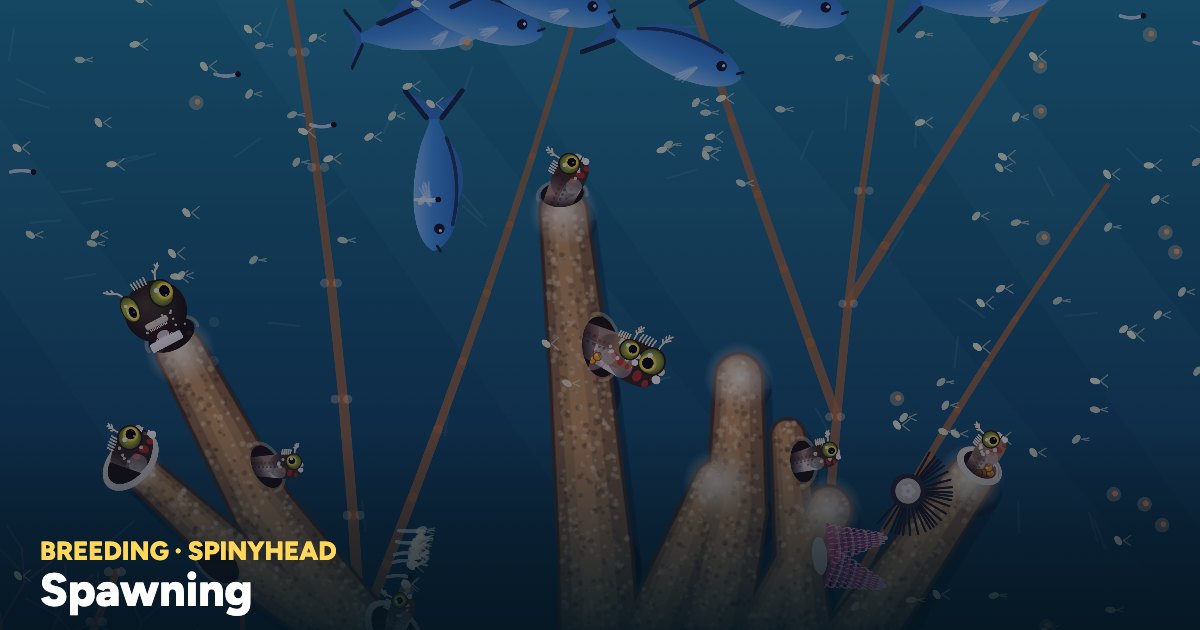
Behavior: Paternal care with cavity nesting (demersal egg-laying and nest guarding)
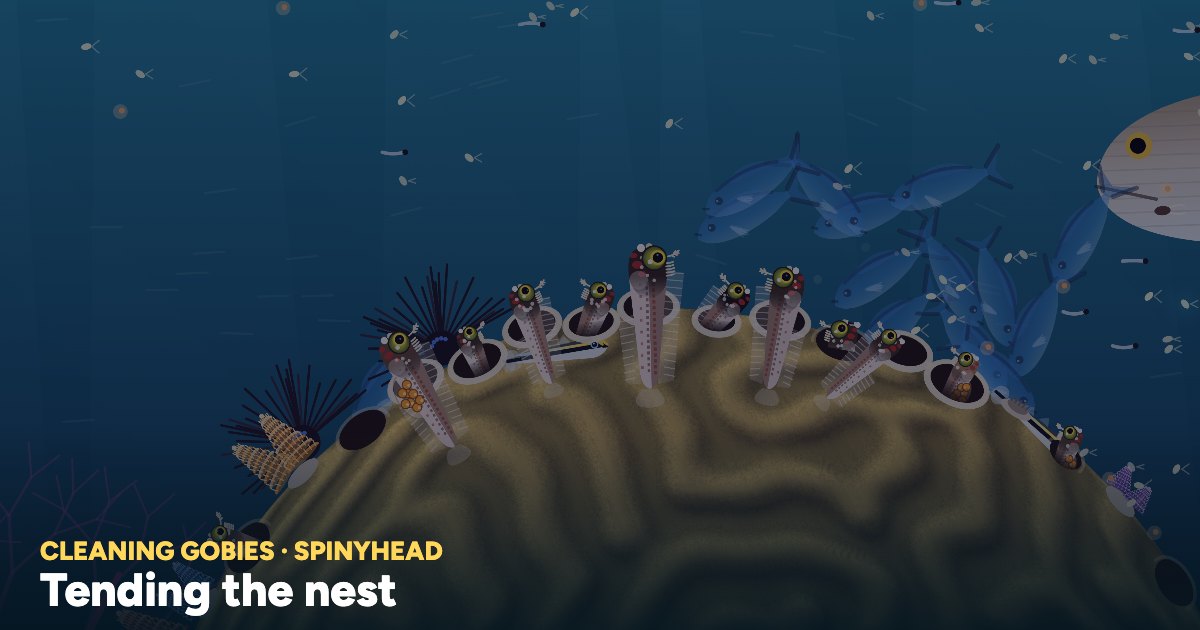
The female enters the male’s tube and lays her eggs on its walls; he fertilizes them. Each male defends his hole, and the eggs in it.
Species involved
- spinyhead blenny Acanthemblemaria spinosa male owns and guards the nest hole; female lays eggs in it
About paternal care with cavity nesting (demersal egg-laying and nest guarding)
In many fishes the eggs are not scattered into open water. They are laid on a solid surface (demersal eggs), often inside a cavity, and one parent stays to guard them. In the spinyhead blenny, a tube blenny, the notebook describes the female entering the male's hole and laying eggs on its walls. The male fertilizes them there. He defends his hole, and so the eggs inside it. The hole is both his home and the nursery, so holding a good one is central to his reproduction.
Why it matters
Laying eggs inside a small cavity protects them from many egg predators and lets a single guard cover the whole clutch. Guarding males can also keep the eggs clean and chase off intruders, though the details in this species are not covered in the notebook entry. For the male, defending a hole ties his reproductive success to the quality of his home and his ability to hold it. Because males compete for suitable holes, the supply of cavities can limit how many males breed, and so limits the local population. The planktonic larvae that hatch from the eggs help connect distant reef populations.
On coral reefs
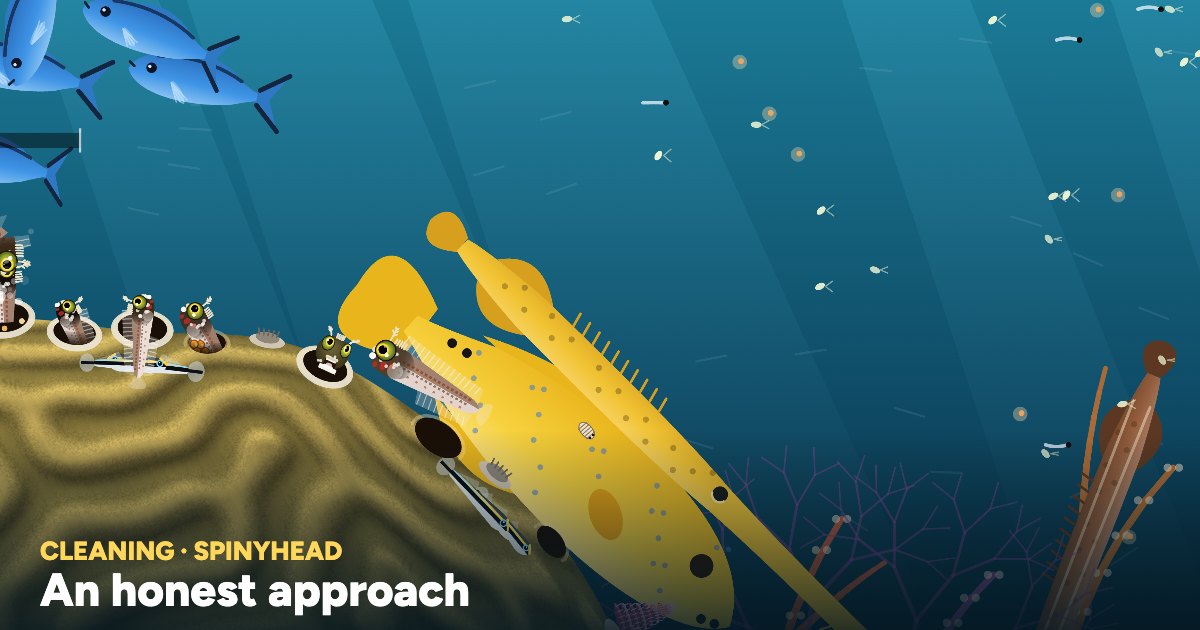
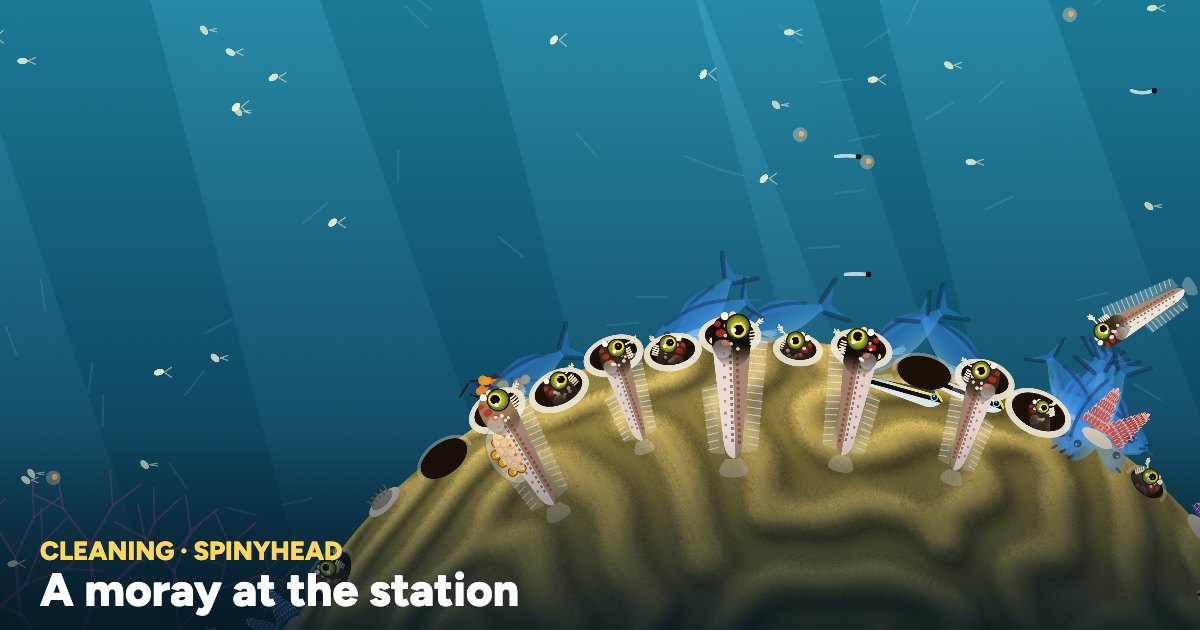
A diver sees small blennies sitting with only the head and front of the body sticking out of holes in dead coral rock, bobbing, flaring the fins, and driving off neighbours. The spawning itself takes place inside the hole and is rarely seen. Males that are guarding eggs stay close to their entrances.
Who studied it
Cavity-nesting and egg-guarding behaviour in tube blennies (Chaenopsidae) has been studied for decades as a model of territoriality and sexual selection in small reef fishes. The notebook's source for this entry is Clarke & Tyler 2003, published in Copeia (2003:241).
Elsewhere in the animal kingdom
Male-only egg guarding is common in fishes. Well-known examples are sticklebacks, many damselfishes and clownfishes, gobies, sunfishes and black basses, and some catfishes. Seahorses and pipefishes take paternal care further by brooding the eggs in a pouch or on the body, and cardinalfishes carry the eggs in the male's mouth.
Doubts and open questions
Biologists debate how much females choose males by the eggs already in a nest or by the quality of the hole, and how much male guarding is parental investment as opposed to simple defence of a territory. Guarding males in some nest-guarding fishes also eat some of their own eggs, so the benefits and costs of care are not simple.
Related behaviors
- filial cannibalism The guarding parent eats some of its own eggs, whereas simple egg guarding protects them.
- mouthbrooding The parent carries the eggs in its mouth instead of guarding them in a fixed nest.
- pouch brooding (seahorses) The male carries the fertilized eggs in a body pouch instead of leaving them on the walls of a hole.
- broadcast (pelagic) spawning Eggs and sperm are released into open water and the parents give no care, as in the bluehead wrasse.
- territoriality Defence of a site against rivals, which may or may not involve eggs.
Spinyhead is a free game you play in your browser: you are a spinyhead blenny, a fish about 3 cm long living in a worm hole on a Caribbean coral head. Feed, fight for a better hole, court, raise eggs and dodge predators, while everything around you behaves the way field biologists have seen it behave. Every behavior in the game is backed by a published study or careful observation; there are 38 on these pages, and more in the game’s field notebook waiting to be found.
More breeding

Other reef behaviors to discover