 SpinyheadPlay free
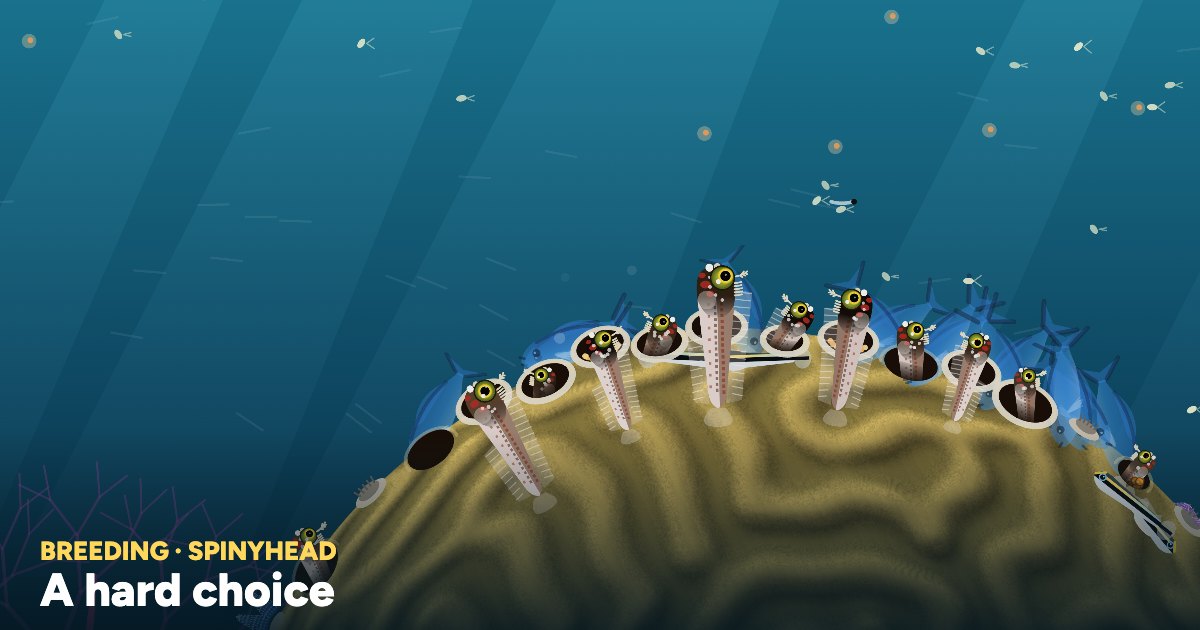
A hard choice
Behavior: Filial cannibalism
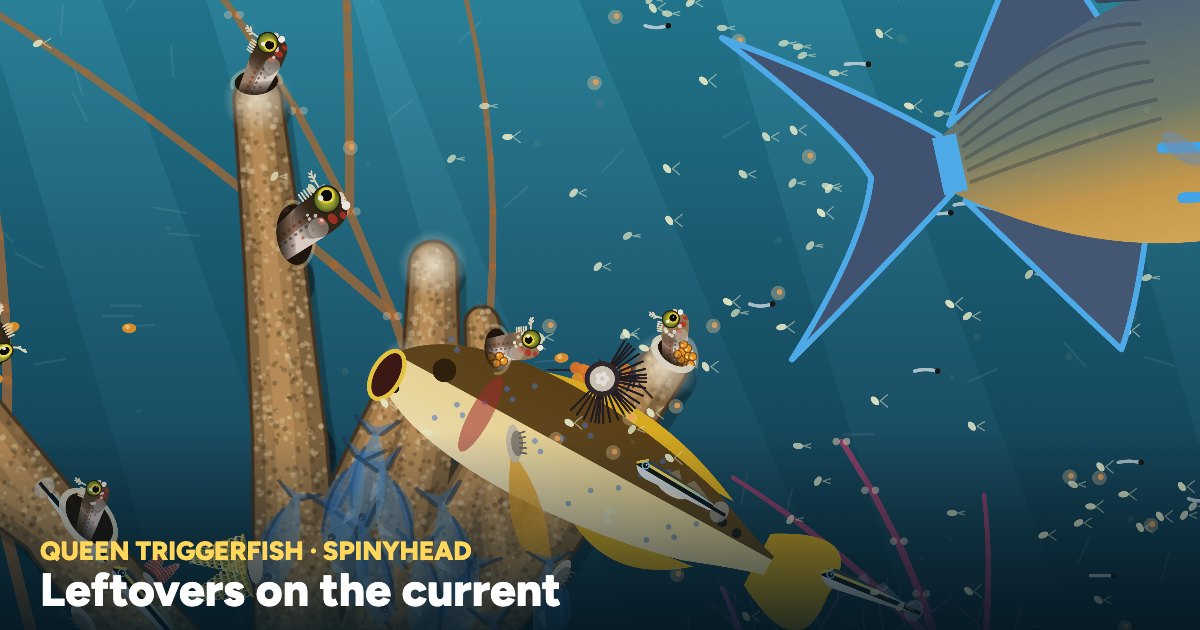
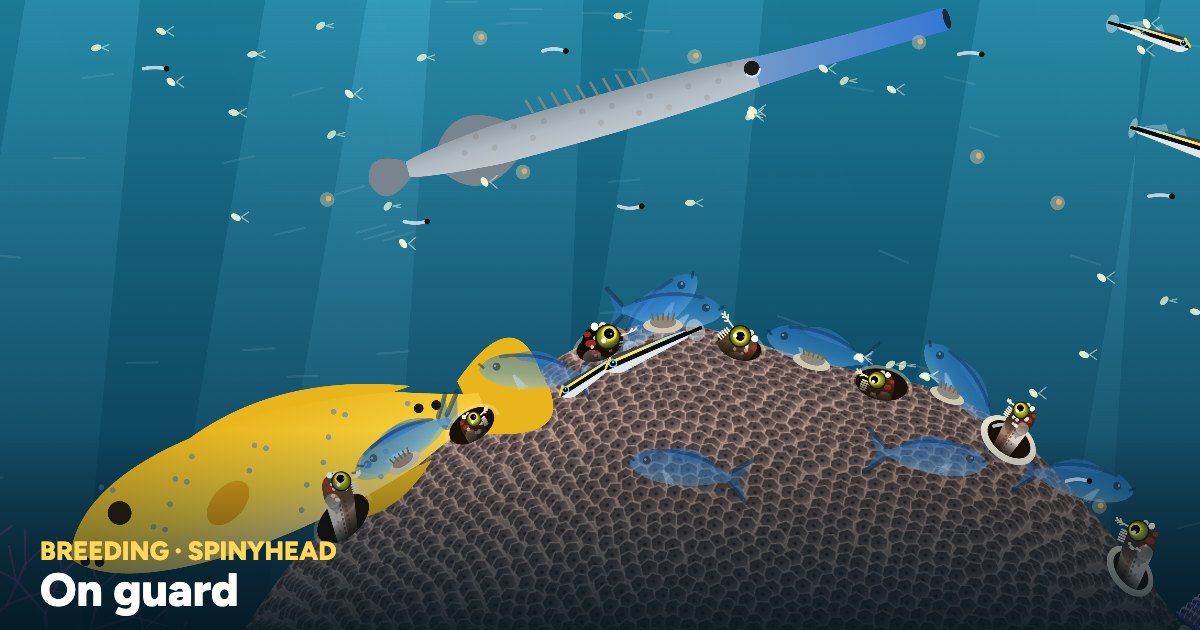
A hungry father may eat some of his own eggs to keep going, and keep fanning the rest. Fish biologists call it filial cannibalism.
Species involved
- spinyhead blenny Acanthemblemaria spinosa egg-guarding male that may eat some of its own eggs while tending the rest
About filial cannibalism
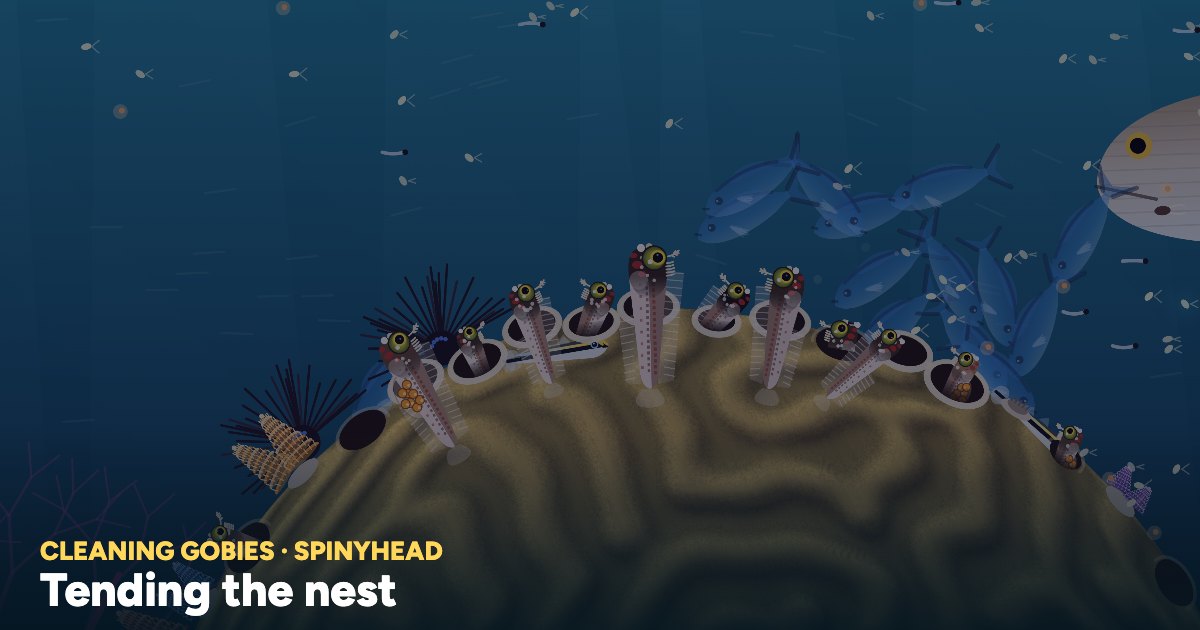
Filial cannibalism is the eating of an animal's own offspring, usually eggs or newly hatched young, by a parent. It is best known in fishes that guard a nest or clutch, where the guarding parent is most often the male. The parent may eat part of the brood (partial filial cannibalism) or the whole clutch (total filial cannibalism). In the game, a hungry male spinyhead blenny can eat some of the eggs he guards so that he can keep fanning and defending the remainder.
Why it matters
The main idea is that eggs are both a reproductive investment and a source of food. A guarding male often feeds little while tending eggs, so eating a few can supply energy that lets him keep guarding the rest through to hatching. Some hypotheses also propose that eating eggs lets a parent get rid of eggs that are diseased, poorly developed or fewer than the nest can support, or give up a clutch that is too small to be worth guarding. The cost is lost offspring in the short term. The benefit is a better chance that the remaining eggs survive, and that the male stays in good enough condition to breed again. The behaviour can therefore shape how many young a male raises per clutch and how he balances current against future reproduction.
On coral reefs
A diver would rarely see it directly. Male blennies and many other reef fishes guard eggs in a small hole or nest and fan them with their fins, so the clutch is hard to see. When it does happen it looks like a guarding male mouthing or picking at the egg mass, and a clutch that is smaller or patchier than before. Because it is subtle and quick, most of what is known comes from careful observation of nests and from aquarium or field experiments.
Who studied it
Filial cannibalism was noticed by aquarists and naturalists long ago and was once often dismissed as a stress response or abnormal behaviour in captivity. Later work showed it to be widespread in the wild and treated it as an adaptive strategy tied to energy needs and parental investment. Manica 2002 in Biological Reviews, is a review of the topic that compares the main hypotheses for why parents eat their own young.
Elsewhere in the animal kingdom
It is known in many egg-guarding fishes, including sunfishes and gobies, sticklebacks, damselfishes and cichlids, and some mouthbrooding fishes. It also occurs outside fishes in some amphibians, insects, spiders and mammals, where parents or mothers may eat part of a brood. It is most commonly studied in fishes with male parental care.
Doubts and open questions
Researchers disagree about which explanation matters most in a given species: energy gain, clearing out bad eggs, or reducing the brood to a manageable size. Often the eggs eaten are not clearly worse than those left, and the benefits can be hard to measure in the field. Some cannibalism may also be a by-product of egg handling, with eggs swallowed by accident.
Related behaviors
- infanticide Individuals kill young that are not their own, usually to benefit themselves, whereas filial cannibalism involves a parent eating its own offspring.
- egg predation Other animals eat eggs that are not their own, which is not a parental decision about the parent's own brood.
- paternal care Guarding and fanning eggs is the investment in offspring that filial cannibalism trades against.
- sibling cannibalism Young eat their own brothers and sisters rather than being eaten by a parent.
Spinyhead is a free game you play in your browser: you are a spinyhead blenny, a fish about 3 cm long living in a worm hole on a Caribbean coral head. Feed, fight for a better hole, court, raise eggs and dodge predators, while everything around you behaves the way field biologists have seen it behave. Every behavior in the game is backed by a published study or careful observation; there are 38 on these pages, and more in the game’s field notebook waiting to be found.
More breeding
Other reef behaviors to discover