 SpinyheadPlay free
Distracted diners
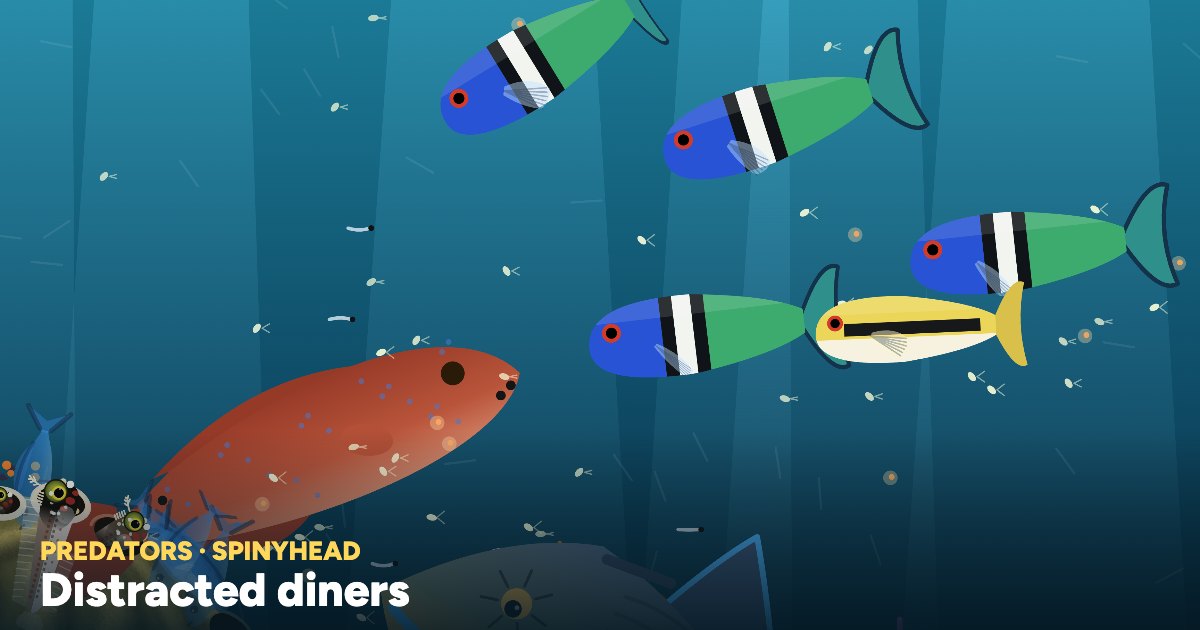
Behavior: Reduced vigilance and predation risk during group feeding or spawning (reproduction-vigilance trade-off)
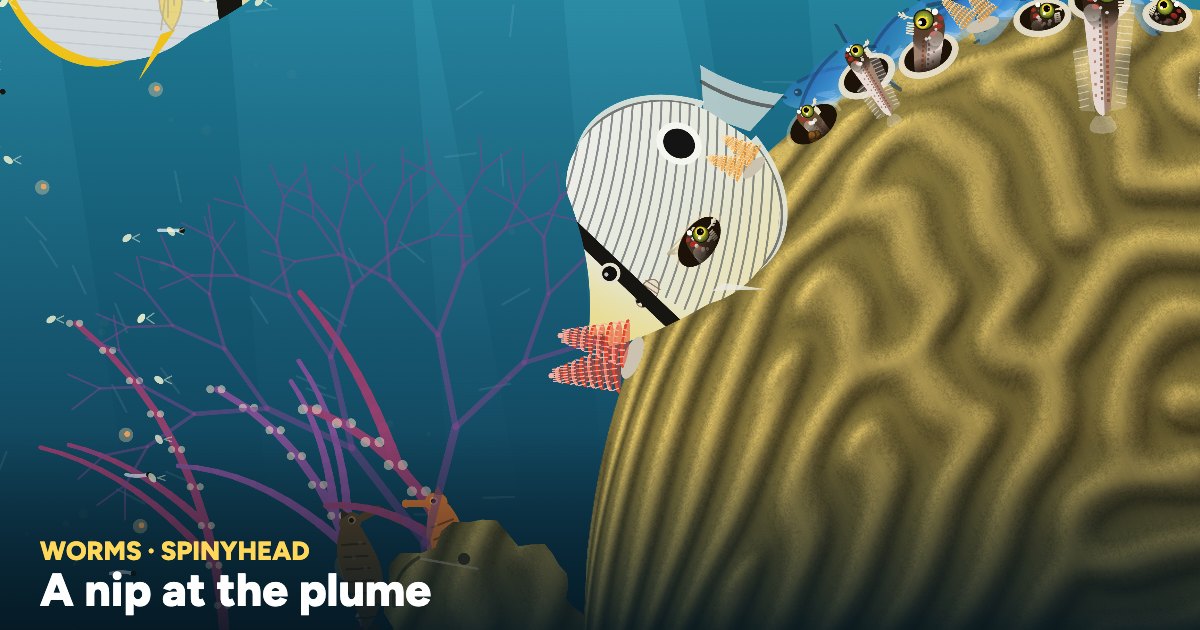
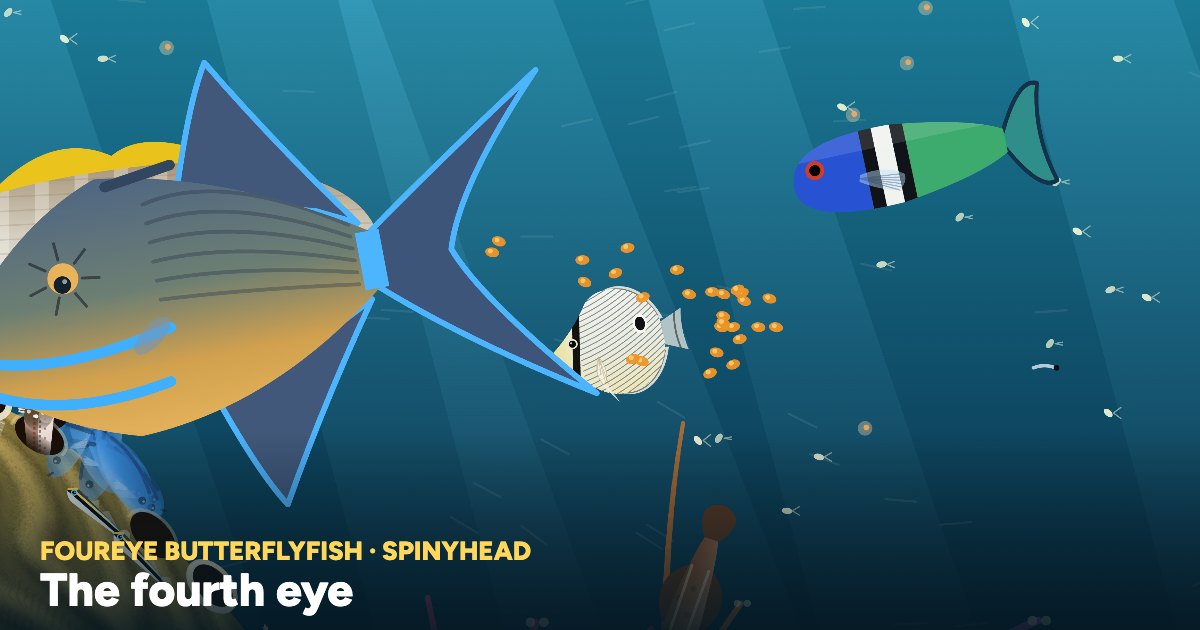
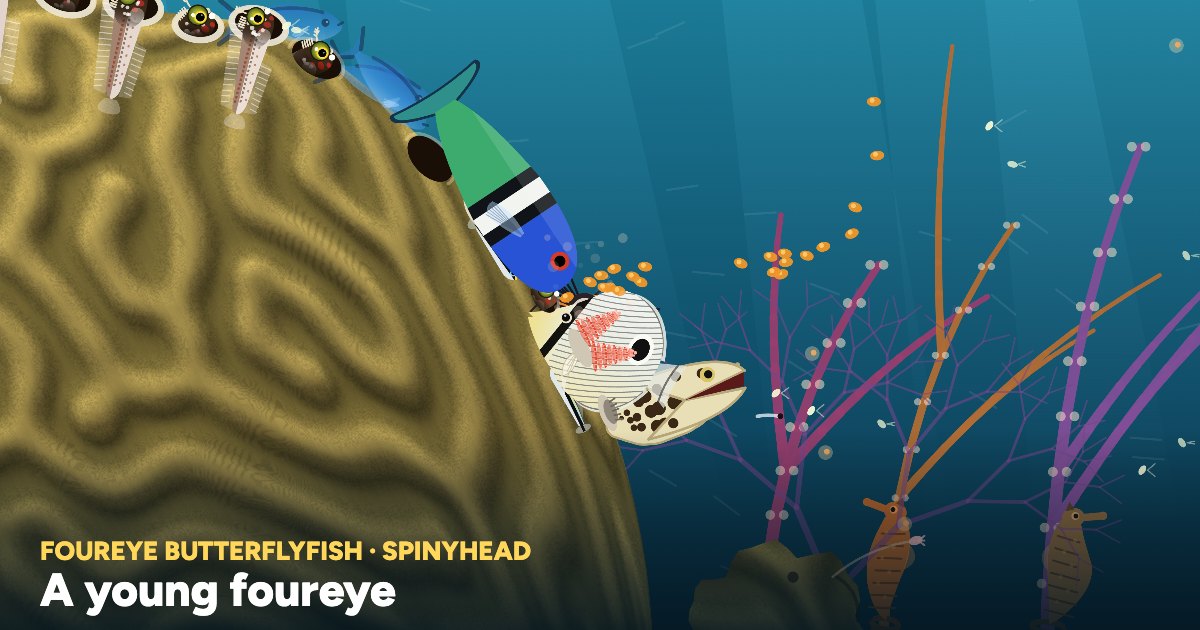
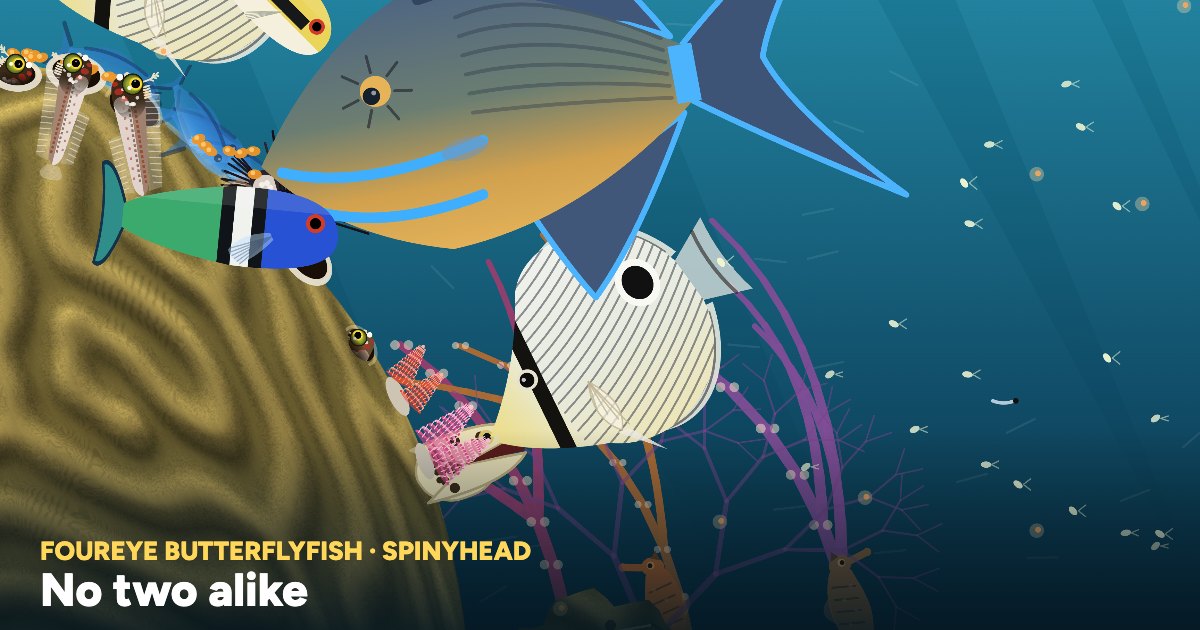
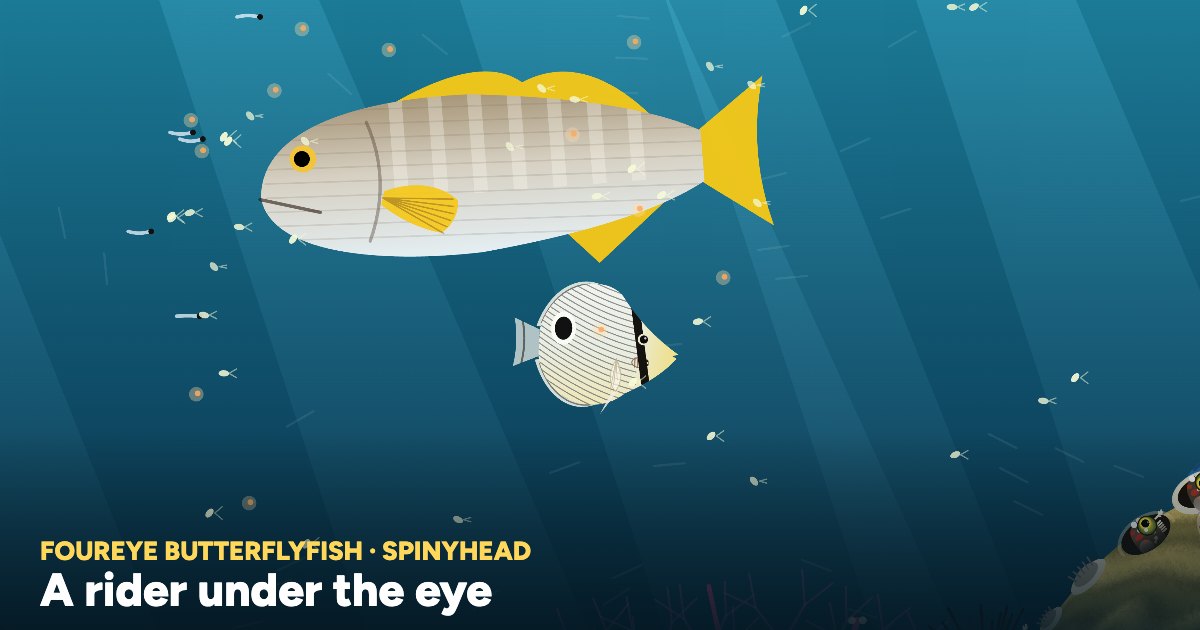
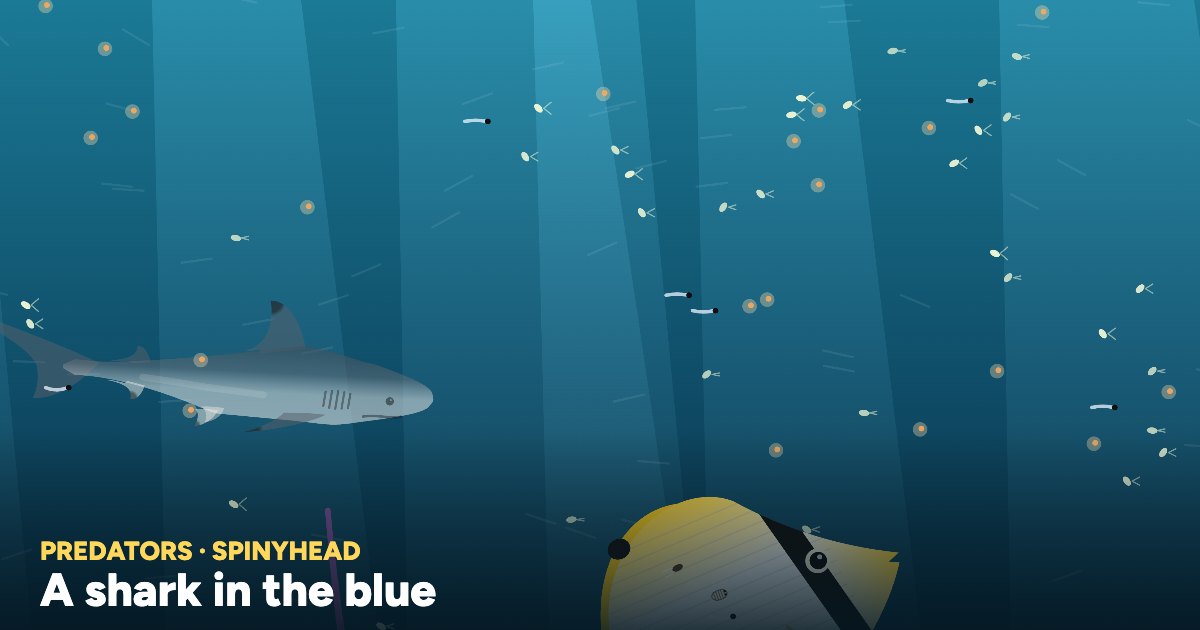
A crowd of fish feeding or spawning hard is distracted and noisy. Graysbys, snappers and coneys come to it and pick off wrasses too busy to watch out.
Species involved
- bluehead wrasse Thalassoma bifasciatum distracted prey while spawning or feeding
- graysby Cephalopholis cruentata predator drawn to the crowd
- coney Cephalopholis fulva predator drawn to the crowd
- schoolmaster snapper Lutjanus apodus predator drawn to the crowd
About reduced vigilance and predation risk during group feeding or spawning (reproduction-vigilance trade-off)
An animal has limited attention. While it feeds intensely or courts and spawns, it watches less for predators and is slower to flee. When many individuals do this together, the gathering is also noisy and conspicuous, so it can draw in predators from some distance. Predators can then pick off individuals that are preoccupied. The behaviour is not a special act by the predator. It is an opportunistic response to prey that are momentarily less careful.
Why it matters
For the prey, reproduction or feeding carries a risk that quiet periods do not. This can shape when and where animals spawn, how large the groups are, and how much they stay alert. For predators, a crowd of distracted prey is an efficient place to hunt. At the community level, predation concentrated at feeding and spawning sites is one cost that balances the benefits of aggregating, such as finding mates, diluting individual risk and feeding together. It is part of the selection acting on the mating systems of reef fishes.
On coral reefs
A diver may see a bluehead wrasse spawning site, where fish rush upward in pairs or groups and release gametes into the water. Resident groupers such as graysbys and coneys, and snappers, may hang close to the site or make quick dashes at the participants. Predators are often seen on the margins of a busy feeding school or spawning site.
Who studied it
The notebook cites Robertson & Hoffman 1977 (Z. Tierpsychol. 45:298), a study of how female mate choice and predation shape the mating systems of tropical wrasses and their relatives. Predation was treated there as one of the costs and constraints on spawning behaviour. Bluehead wrasses were later studied in detail as a model for reef-fish mating systems, but I cannot confidently attribute specific predation findings beyond the notebook source.
Elsewhere in the animal kingdom
The idea is widely applicable. Large spawning aggregations of groupers and snappers are known to attract predators such as sharks. Calling frog choruses can attract predators that locate prey by sound, and schooling fish that feed in a frenzy may lose vigilance. Many groups of animals face some trade-off between reproduction or feeding and watching for predators.
Doubts and open questions
It is hard to measure how much predation limits spawning, because attacks are fast and often unseen. Predators may simply attack whatever is common and accessible rather than selecting distracted individuals. Wrasses may reduce risk by choosing the timing and place of spawning, and group size may also offer a dilution benefit, so the net cost is difficult to judge.
Related behaviors
- dilution effect Being in a group lowers each member's chance of being the one attacked, whereas distraction raises the risk for individuals within the group.
- ambush predation The predator hides and strikes from concealment, rather than exploiting prey that are distracted by feeding or spawning.
- predation on spawning aggregations A broader term that includes predators eating adults, eggs or larvae at spawning sites, not only distracted adults.
- vigilance trade-off A general term for any loss of predator watchfulness while an animal does something else, and the usual framework for this behaviour.
Spinyhead is a free game you play in your browser: you are a spinyhead blenny, a fish about 3 cm long living in a worm hole on a Caribbean coral head. Feed, fight for a better hole, court, raise eggs and dodge predators, while everything around you behaves the way field biologists have seen it behave. Every behavior in the game is backed by a published study or careful observation; there are 71 on these pages, and more in the game’s field notebook waiting to be found.
More predators
Other reef behaviors to discover