SpinyheadPlay free
The snapper’s run
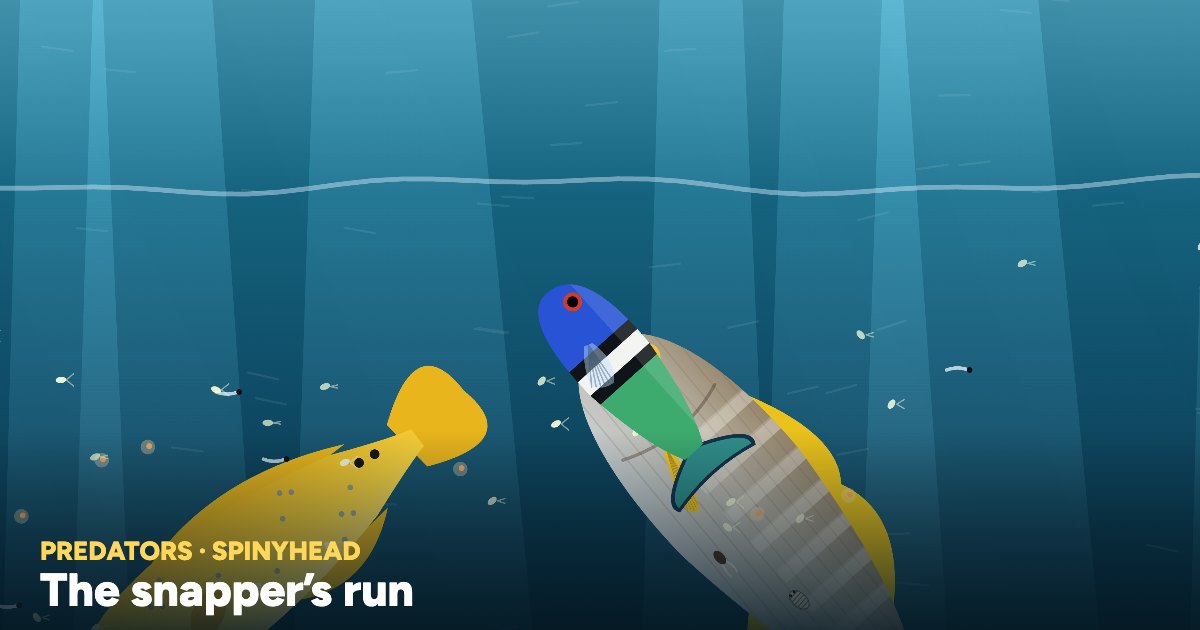
Behavior: Active pursuit predation (cruising and rush attack; piscivory by a roving predator)
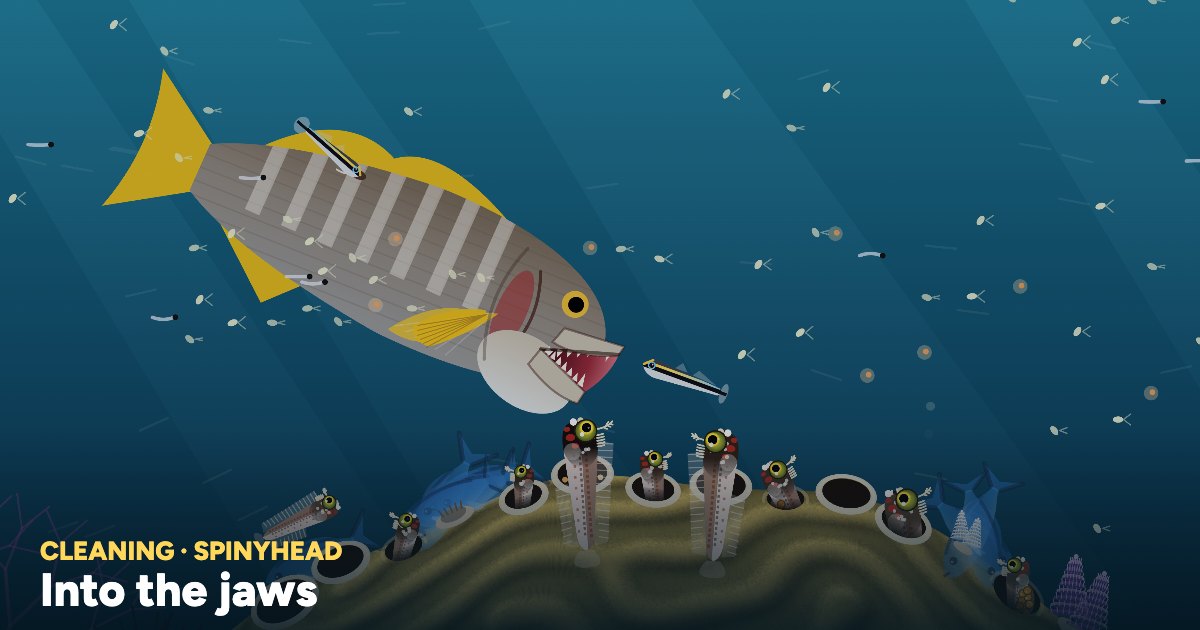
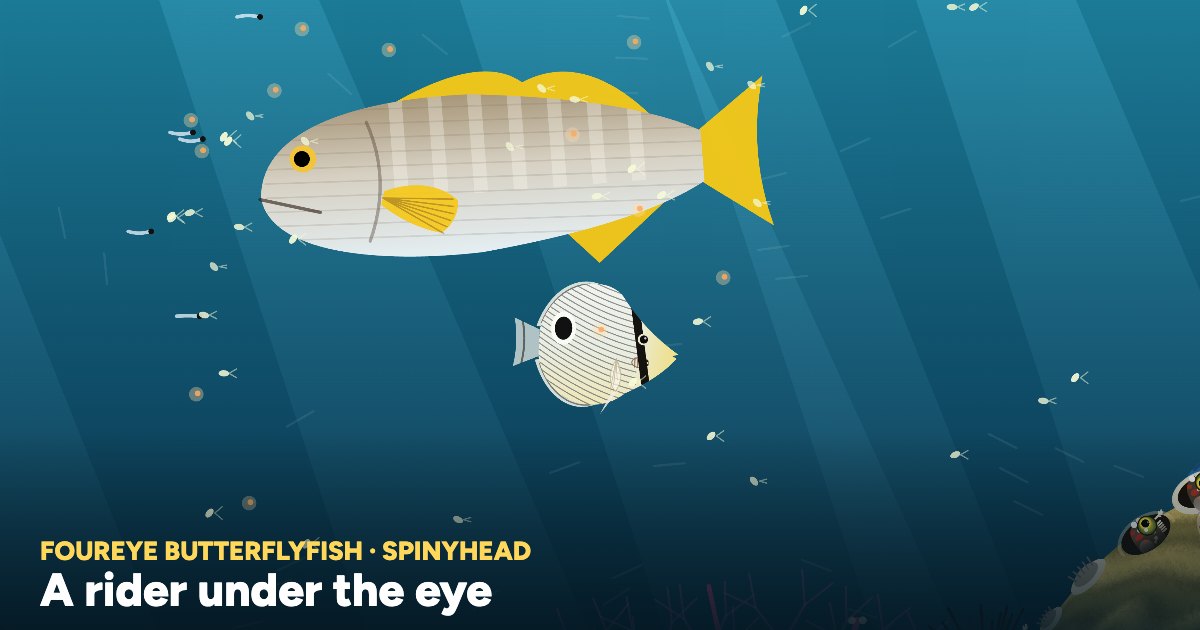
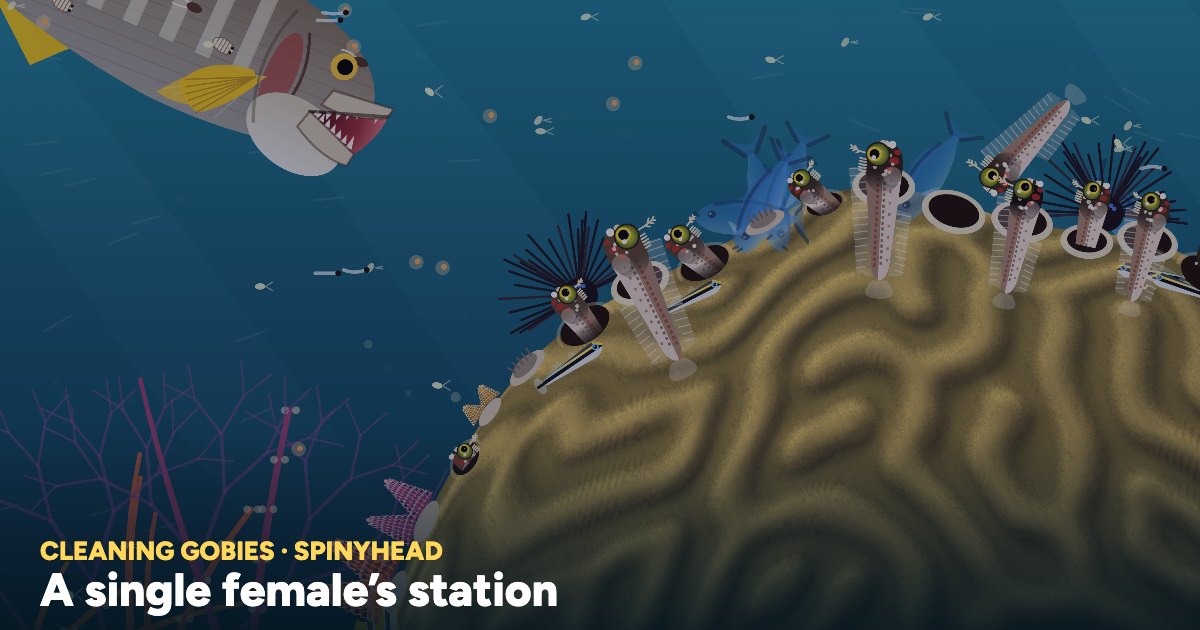
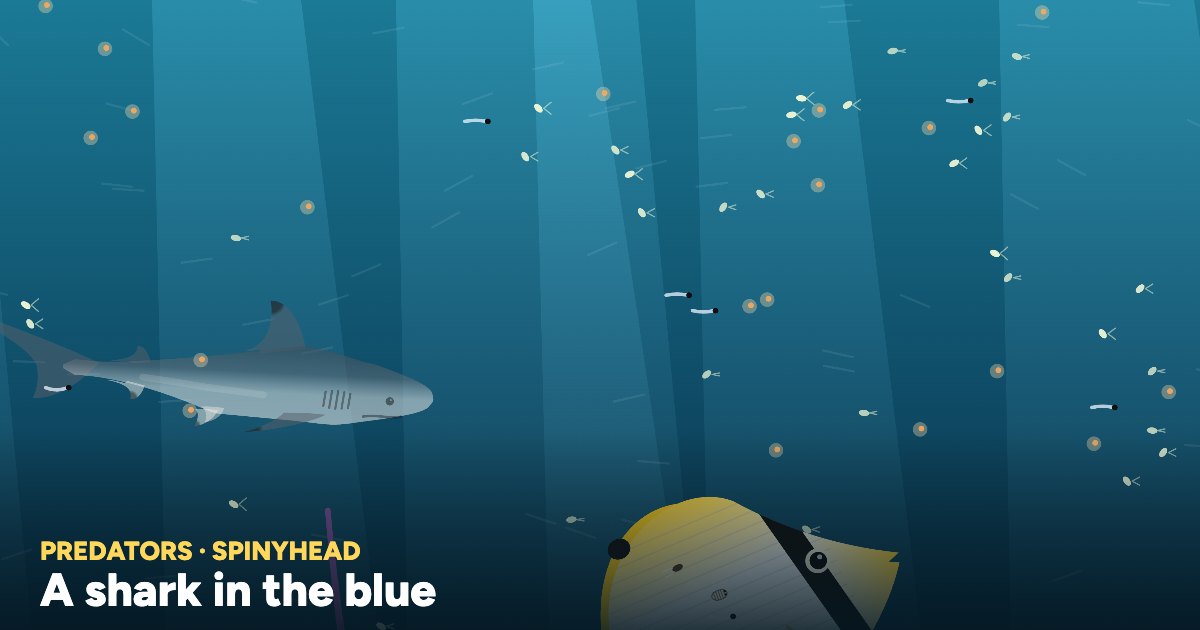
A schoolmaster snapper cruises, then sprints to run down a fish that has let its guard slip, often a wrasse busy feeding.
Species involved
- schoolmaster snapper Lutjanus apodus roving predator that cruises, then sprints at prey
- bluehead wrasse Thalassoma bifasciatum typical prey, often caught while busy feeding
About active pursuit predation (cruising and rush attack; piscivory by a roving predator)
Active pursuit predation is a hunting mode in which a predator searches or cruises through an area and then accelerates in a short, fast rush at a chosen prey animal. It contrasts with ambush hunting, where the predator waits motionless. The schoolmaster snapper is a mid-sized, mainly nocturnal predator of Caribbean reefs that eats fishes and a range of invertebrates such as crabs and shrimps. In the game the attack succeeds mainly against fish that have lowered their vigilance, for example a wrasse absorbed in feeding. The notebook gives no source for this entry, so the specific details come from the game's design rather than a cited study.
Why it matters
For the predator, a burst attack is energetically cheap compared with constant chasing, and it works best when prey are distracted or far from shelter. For prey, feeding and watching for predators compete for attention and often for position in the water, so foraging carries a real risk of being eaten. This trade-off shapes where and when small reef fishes feed, how close they stay to cover, and how much time they spend scanning. Predation by snappers, groupers and other piscivores also helps regulate small-fish numbers and moves energy up the reef food web.
On coral reefs
A diver may see a snapper drifting slowly along the reef edge or over sand and rubble, sometimes loosely following other fish. The strike is a sudden dart, often over in a second, after which the snapper either returns with a fish or the school of prey scatters into the reef. Nearby fishes often dive for shelter or bunch up when a snapper approaches.
Who studied it
The idea that foraging animals trade off food intake against predation risk was developed in behavioural ecology in the second half of the twentieth century and has been tested in many fish species. Studies of reef fish predation, including work using tethered prey and visual census of predators, have shown that piscivorous reef fishes take many small fishes, especially young ones. I cannot confidently attribute the specific snapper-wrasse details to a named study.
Elsewhere in the animal kingdom
Cruise-then-sprint hunting is widespread among predatory fishes, such as barracuda, jacks and many sharks, and among land predators like wolves, cheetahs and hawks that approach and then burst forward. Pike and many freshwater piscivores use a related approach, combining stalking with a short, fast strike. The need for prey to balance feeding against vigilance is documented across birds, mammals and fishes.
Doubts and open questions
Researchers still discuss how much predators actually select inattentive individuals versus simply taking whichever prey are easiest to reach, and how much of a reef's small-fish mortality is due to such strikes compared with other causes. Snappers are also fairly opportunistic feeders, so how strongly they target fish rather than invertebrates varies with place, size and time of day.
Related behaviors
- ambush predation The predator waits motionless, often camouflaged, and strikes only when prey comes within range, as a frogfish does, rather than cruising and chasing.
- aggressive mimicry The predator lures prey by imitating something harmless or attractive instead of relying on speed.
- cooperative hunting Several predators coordinate their attacks, whereas the snapper's run is a single animal's strike.
- vigilance trade-off (foraging versus predator scanning) This is the prey's side of the interaction, describing how feeding lowers attention to danger.
Spinyhead is a free game you play in your browser: you are a spinyhead blenny, a fish about 3 cm long living in a worm hole on a Caribbean coral head. Feed, fight for a better hole, court, raise eggs and dodge predators, while everything around you behaves the way field biologists have seen it behave. Every behavior in the game is backed by a published study or careful observation; there are 71 on these pages, and more in the game’s field notebook waiting to be found.
More predators
Other reef behaviors to discover