 SpinyheadPlay free
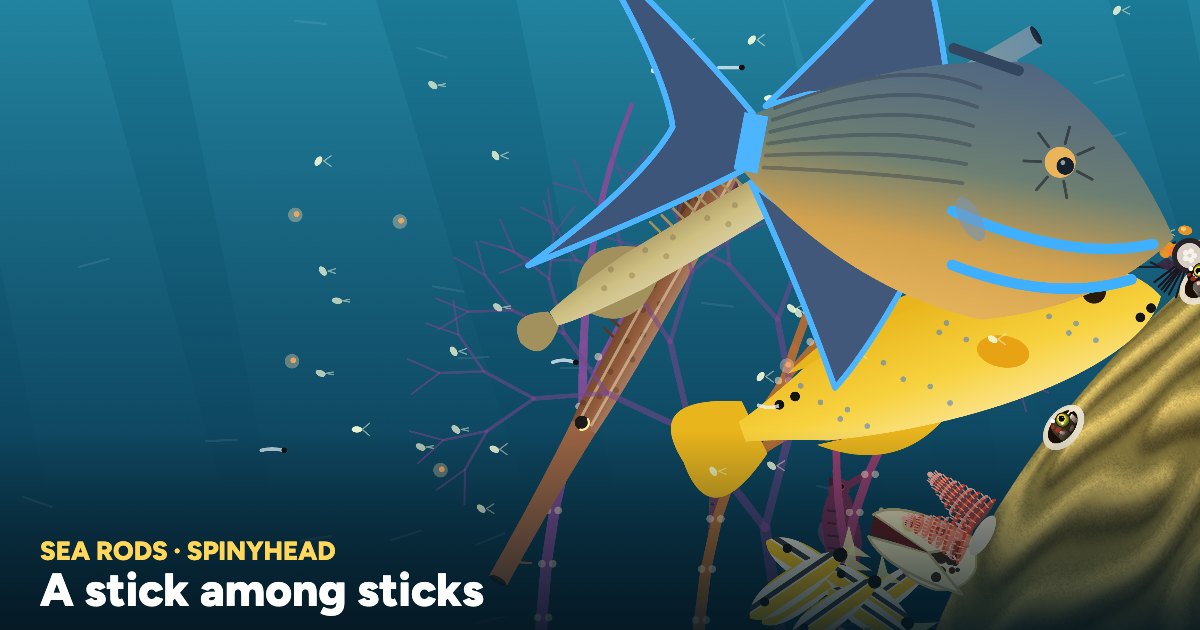
Out of the sea rods

Behavior: Ambush predation (sit-and-wait predation, with camouflage and use of cover; the trumpetfish also shows 'stalking' or 'hi
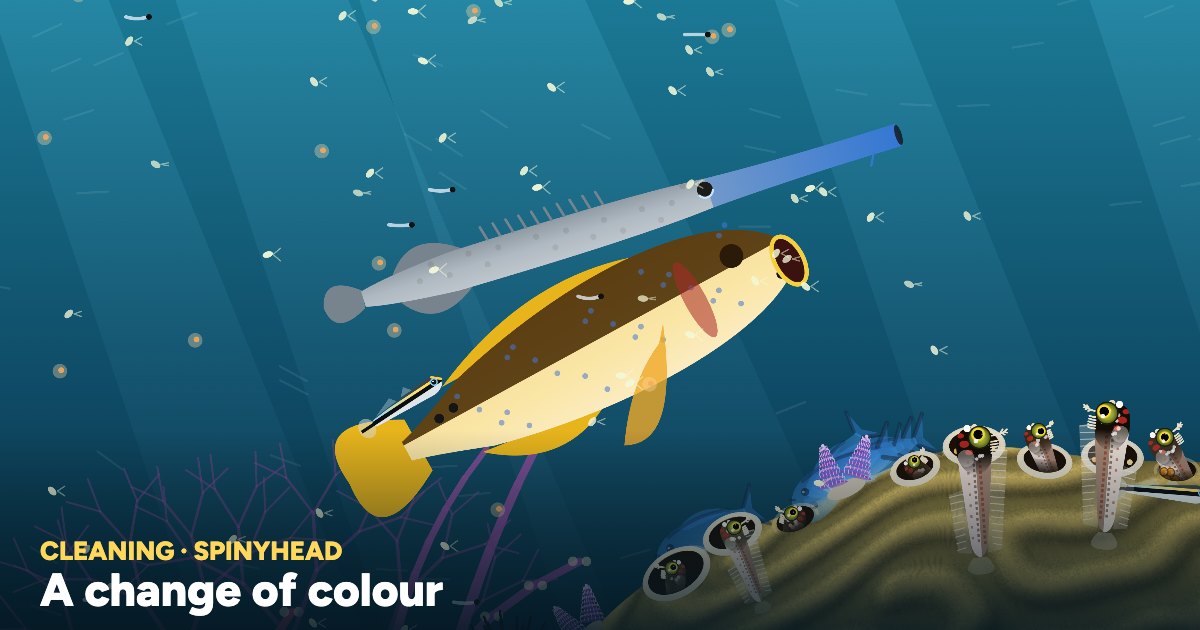
From its hiding place in the sea rods the trumpetfish sucks in a passing grunt or wrasse.
Species involved
- trumpetfish Aulostomus maculatus ambush predator hiding among sea rods
- sea rods (gorgonians) Plexauridae vertical cover the predator hides in
- French grunt Haemulon flavolineatum prey (juveniles)
- bluehead wrasse Thalassoma bifasciatum prey
About ambush predation (sit-and-wait predation, with camouflage and use of cover; the trumpetfish also shows 'stalking' or 'hi
Ambush predation, also called sit-and-wait predation, is a hunting strategy in which a predator stays still or nearly still, concealed or camouflaged, and strikes when prey comes within range instead of chasing it. The trumpetfish is a long, thin fish that can hang motionless, often head-down or aligned with vertical structures such as sea rods, so that its body blends with the branches. When prey comes close, it opens its small mouth and expands its throat, drawing the prey in with a fast suction strike. The notebook entry describes this from a hiding place in the sea rods, with a grunt or wrasse as the victim.
Why it matters
Ambush hunting saves energy compared with active pursuit and lets a predator catch prey that would outswim it in open water. Hiding in cover also lowers the predator's own risk of being seen, by prey or by larger predators. For prey populations, the constant risk of a hidden attacker affects where small fishes feed and shelter, and how closely they stay to shelter or to each other. Trumpetfish take mostly small fishes, so they contribute to the flow of energy from small reef fishes to higher levels of the food web.
On coral reefs
A diver may see a trumpetfish hanging vertically among sea rods or sea whips, its long body matching the branches, sometimes slowly swaying with the surge. Colour can vary and may change between brownish, grayish and yellowish forms. The strike is so fast that it is easy to miss. Trumpetfish are also often seen drifting close above or beside larger, harmless fishes as a way of approaching prey, a related but distinct tactic.
Who studied it
Hunting by stealth and concealment in reef fishes has been described for a long time in natural history and in reef fish ecology. Trumpetfish have been noted in the field for their habit of hiding vertically and for approaching prey while shadowing other fishes. Suction feeding in elongate, tube-mouthed fishes such as trumpetfishes and their relatives has also been studied in functional morphology. I cannot name specific studies here with confidence, and the notebook gives no source.
Elsewhere in the animal kingdom
Sit-and-wait ambush predation is widespread. Well-known examples include frogfishes and scorpionfishes on reefs, flatfishes buried in sediment, pike and other ambush fishes in freshwater, crocodilians, many snakes such as vipers, praying mantises, trapdoor spiders and crab spiders. Other animals that use suction strikes in ambush include anglerfishes.
Doubts and open questions
Researchers are still discussing how much of a trumpetfish's success comes from camouflage alone, versus the use of other fishes as a screen when it approaches, and how much it matters whether prey can see the predator at all. How such flexible strategies are chosen in the field is not fully settled.
Related behaviors
- aggressive mimicry The predator imitates something harmless or attractive, such as a lure or a harmless fish, to draw prey in, rather than only hiding.
- shadowing (following or associating with non-predatory fishes) The predator hides its approach behind a harmless species instead of staying fixed in cover.
- active pursuit predation The predator chases prey over distance, rather than waiting for it to come close.
- lure-based hunting (as in frogfish) The predator waves a bait-like appendage to attract prey, rather than relying only on camouflage.
Spinyhead is a free game you play in your browser: you are a spinyhead blenny, a fish about 3 cm long living in a worm hole on a Caribbean coral head. Feed, fight for a better hole, court, raise eggs and dodge predators, while everything around you behaves the way field biologists have seen it behave. Every behavior in the game is backed by a published study or careful observation; there are 71 on these pages, and more in the game’s field notebook waiting to be found.
More sea rods
Other reef behaviors to discover