 SpinyheadPlay free
Never saw it coming
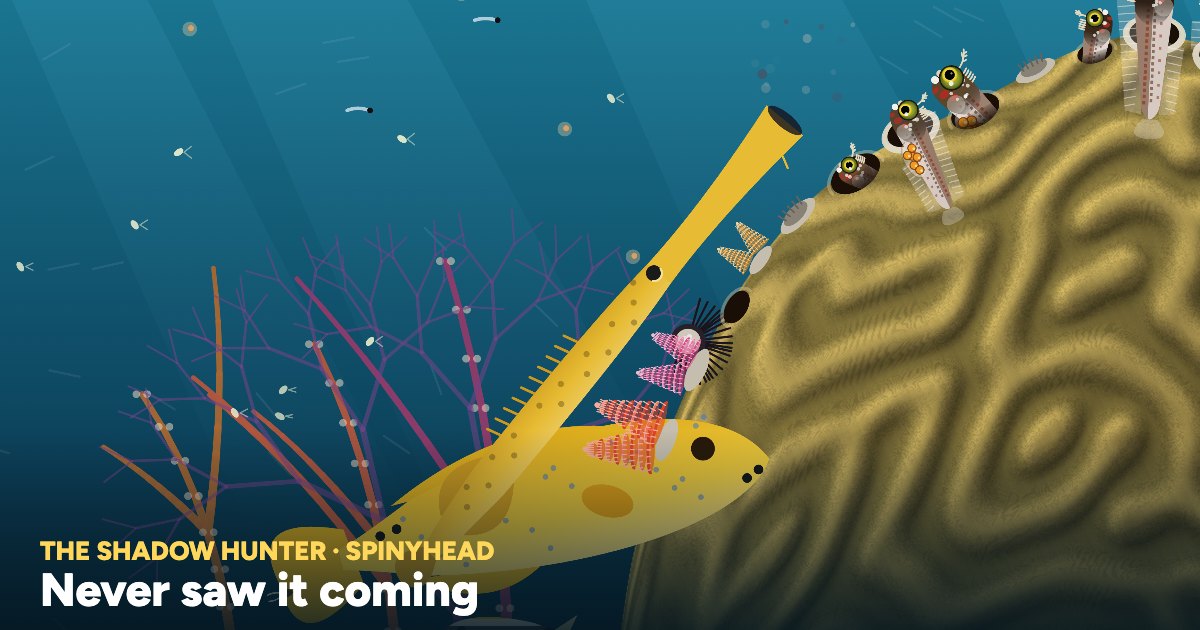
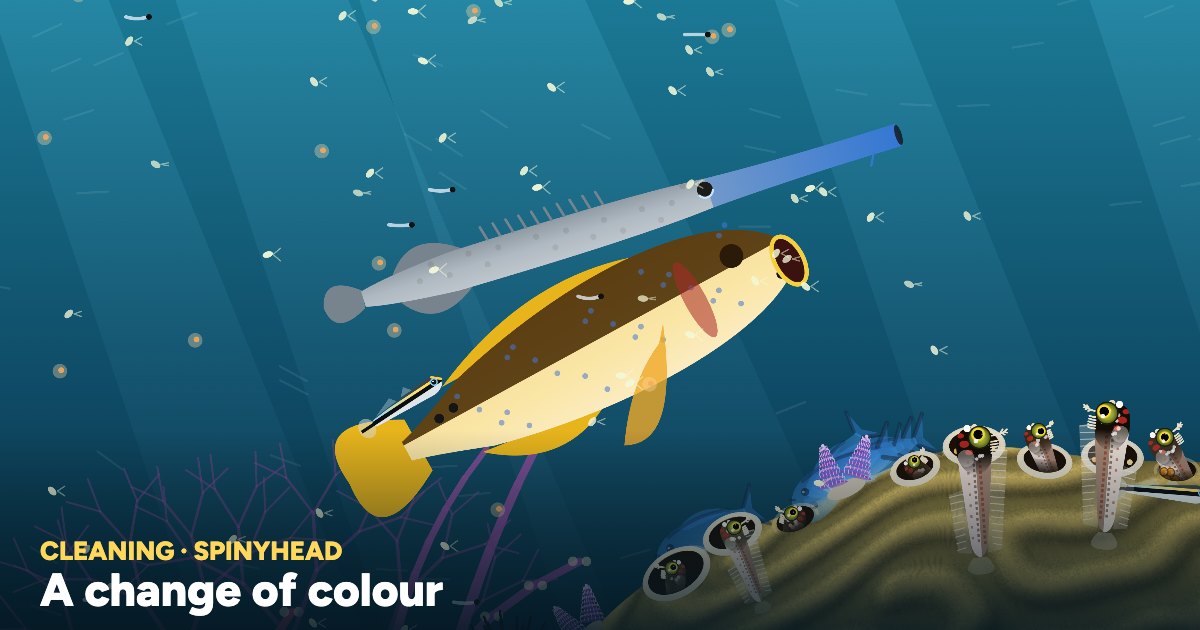
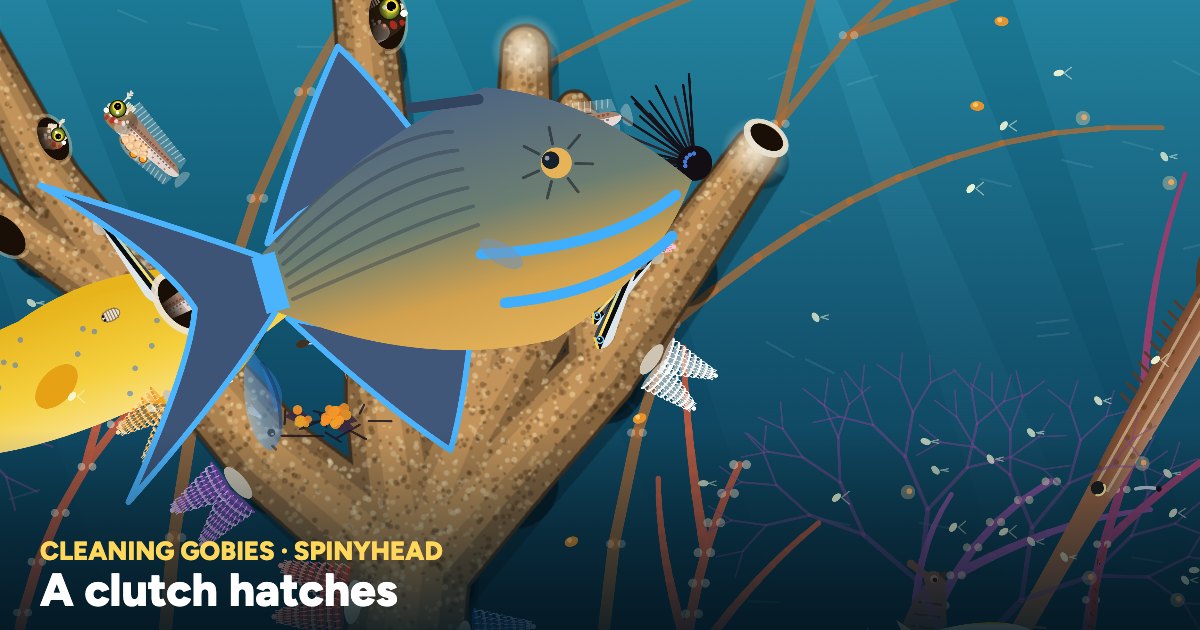
Behavior: Shadowing (associative hunting, or concealment by association): an ambush predator hides alongside a larger, non-threate
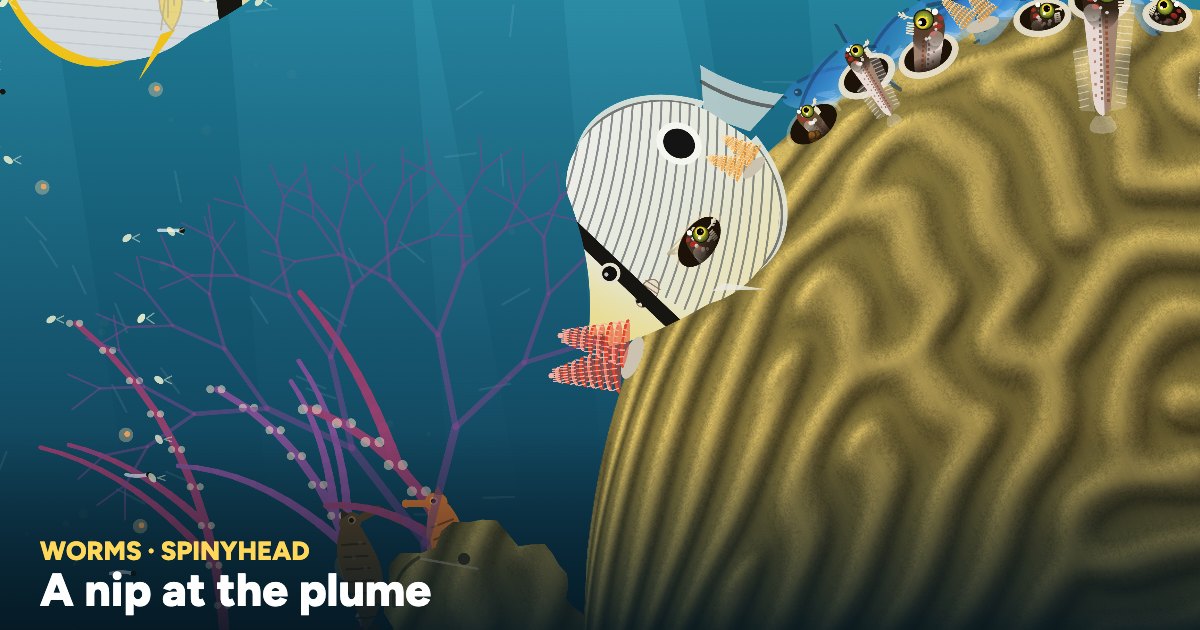
Shadowing works on blennies too: a fish that darts far from its hole as the coney cruises by may meet the trumpetfish instead.
Species involved
- trumpetfish Aulostomus maculatus shadowing predator that strikes the exposed blenny
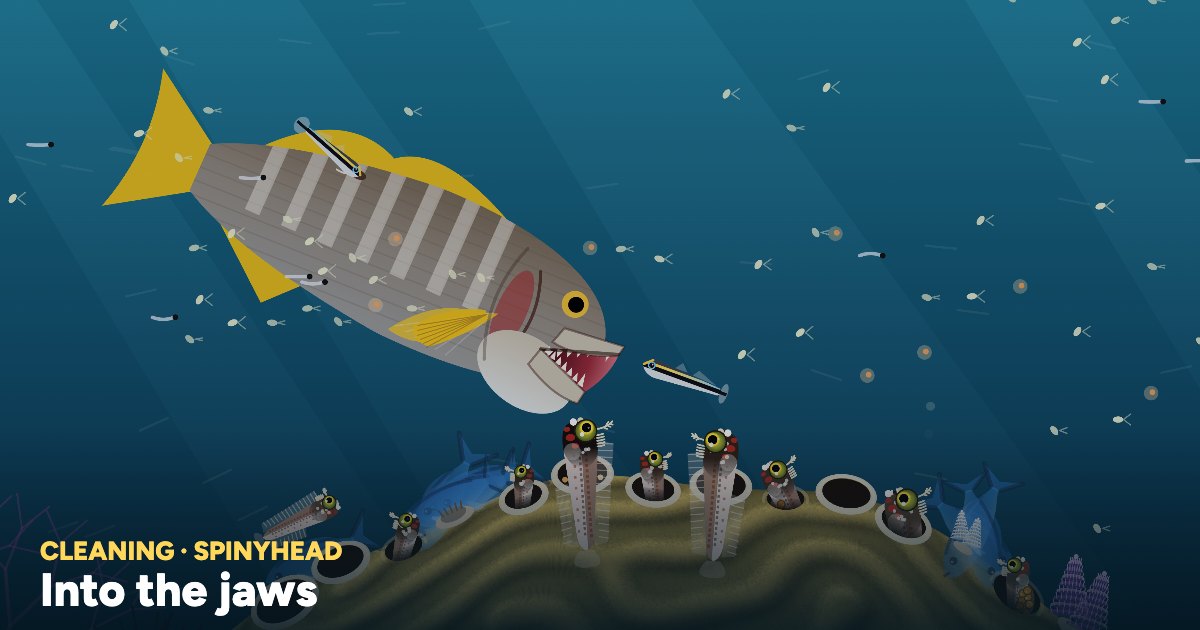
- coney Cephalopholis fulva the larger fish that is shadowed and whose passing makes the blenny bolt
- spinyhead blenny Acanthemblemaria spinosa prey that leaves its hole in alarm
About shadowing (associative hunting, or concealment by association): an ambush predator hides alongside a larger, non-threate
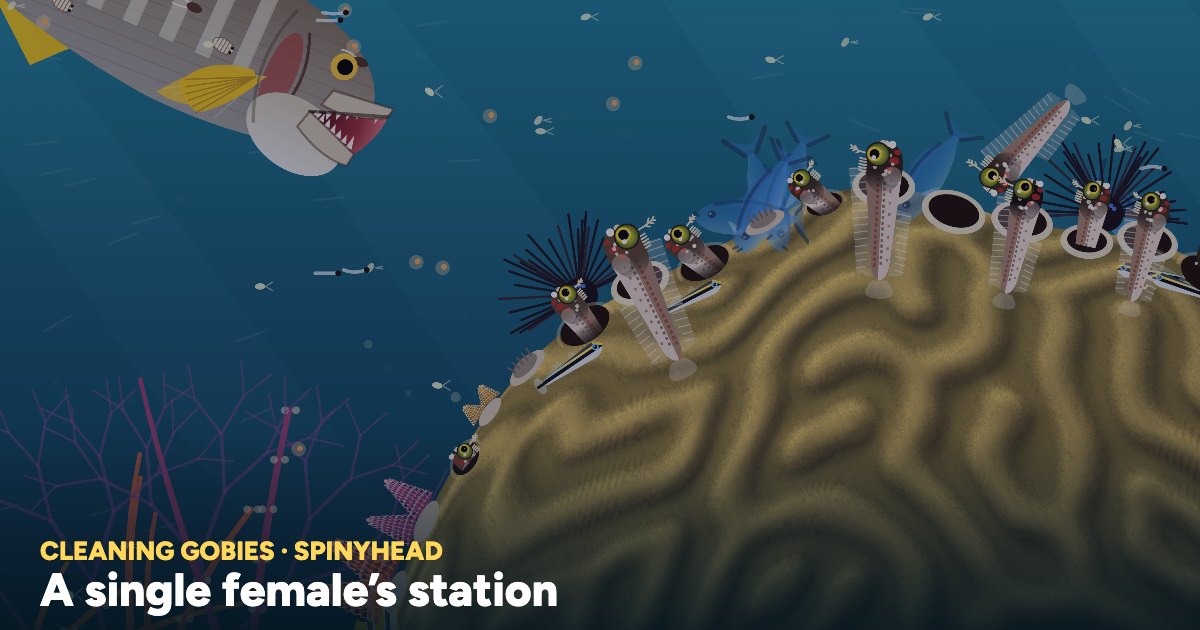
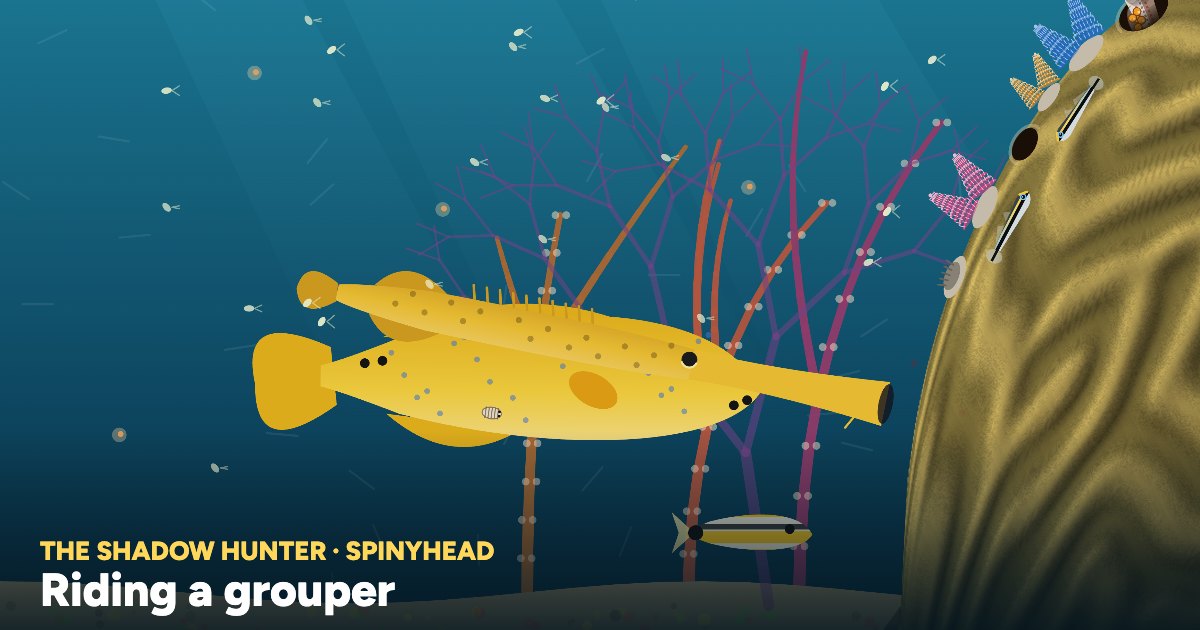
Shadowing is a hunting tactic in which a predator swims close alongside, behind or above another, usually larger, fish and uses it as a moving screen. The prey sees a familiar, often harmless, shape drifting past instead of a slim predator approaching. The predator can get within striking distance before the prey reacts. The trumpetfish is the classic Caribbean example. It is long, thin and able to hold itself in line with the host's body. In this notebook entry the effect works differently. The coney's approach makes a blenny flee its hole, and the trumpetfish, travelling in the coney's wake, is then in position to strike.
Why it matters
For the predator, shadowing reduces the chance of being seen and so raises the chance that a strike succeeds. It also lets the predator cross open reef where a lone slender fish might be noticed. For the prey, the cost is severe. Small fish that rely on a nearby shelter, such as a blenny at its hole, are most vulnerable when they stray from it. A disturbance by one predator can push them into the path of another. Blennies therefore face a trade-off between fleeing a threat and staying close to cover. On the reef, such tactics add to the predation risk that shapes how far small fishes range from shelter.
On coral reefs
A diver may see a trumpetfish hanging motionless, often head-down or lined up against the flank of a bigger fish, and moving with it across the reef. Small fish nearby may scatter or retreat into holes as the larger fish passes. The trumpetfish may then peel away and dart at one of them. Trumpetfish are usually seen shadowing large herbivores such as parrotfish, and sometimes other fishes.
Who studied it
Trumpetfish have long been known as ambush predators that use camouflage, colour change and a head-down posture. Field observers on Caribbean reefs also recorded them tracking larger fishes, especially herbivores, while hunting. This led to the idea that the larger fish serves as a moving blind. The notebook gives no source for this entry.
Elsewhere in the animal kingdom
Following or shadowing associations are known in many fishes. Examples include other trumpetfish and cornetfish in the Indo-Pacific, and goatfish that are followed by opportunistic fishes that snap up prey the goatfish disturb. On land, birds such as egrets follow grazing animals to catch the insects they flush, though that is more a flushing benefit than concealment.
Doubts and open questions
It is debated how much of the benefit comes from concealment and how much from the host disturbing prey, and how often shadowing actually raises capture success. The effect on the shadowed fish is usually thought to be neutral, but this is not always clear. Here the coney is itself a small-fish predator, whereas trumpetfish usually shadow non-predatory herbivores. The interaction in the notebook is therefore a game scenario of the general behaviour, not a standard case.
Related behaviors
- Aggressive mimicry The predator imitates a harmless species or object, whereas a shadowing predator only hides behind a real, different animal.
- Ambush predation The predator waits motionless in one place instead of moving along with another animal.
- Cooperative hunting between species Both partners actively hunt together and benefit, as in grouper and moray hunting, whereas a shadowed fish does not take part.
- Flush-pursuit foraging One animal chases prey out of cover for another to catch, which depends on the disturbance and not on concealment.
Spinyhead is a free game you play in your browser: you are a spinyhead blenny, a fish about 3 cm long living in a worm hole on a Caribbean coral head. Feed, fight for a better hole, court, raise eggs and dodge predators, while everything around you behaves the way field biologists have seen it behave. Every behavior in the game is backed by a published study or careful observation; there are 71 on these pages, and more in the game’s field notebook waiting to be found.
More the shadow hunter
Other reef behaviors to discover