SpinyheadPlay free
Spines on guard

Behavior: Shadow response and spine-pointing defence (a defensive predator-avoidance reflex in sea urchins)
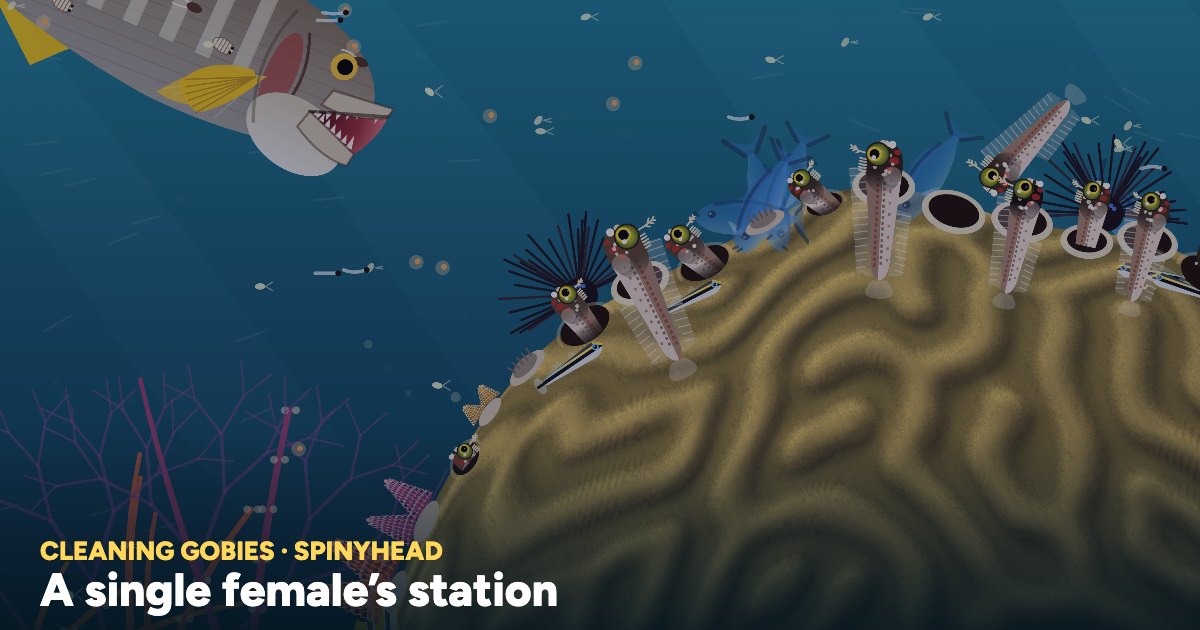
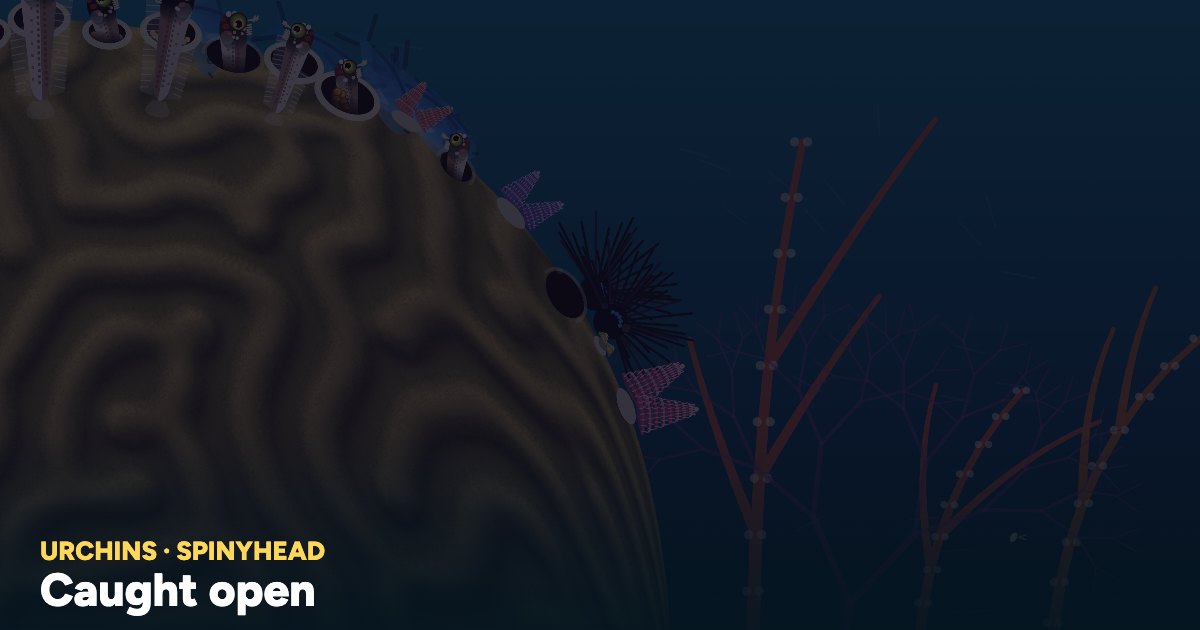
Diadema react to a passing shadow by swinging their long spines toward it, a forest of needles pointed at the threat.
Species involved
- long-spined sea urchin Diadema antillarum the urchin that senses shadows and aims its spines at the threat
About shadow response and spine-pointing defence (a defensive predator-avoidance reflex in sea urchins)
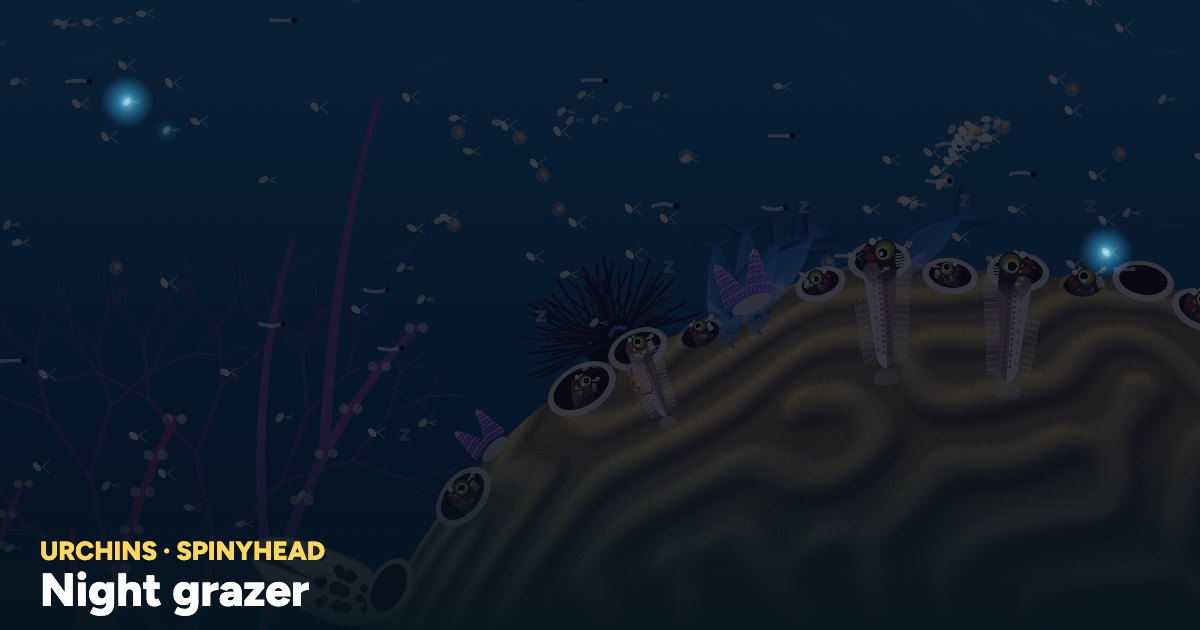
Diadema antillarum has no eyes in the usual sense, but its skin and spines are sensitive to light. When the light falling on it suddenly drops, as when a diver, fish or boat passes overhead, the urchin moves its long, hollow spines. The spines pivot on ball-and-socket joints at their bases and can swing to point toward the source of the shadow. Nearby spines tend to converge on the same direction, so the threat meets a dense cluster of sharp points. Urchins may also wave the spines slowly and move them in response to touch or chemical cues.
Why it matters
The response is a cheap, quick form of defence for an animal that cannot flee fast. Pointing spines at an approaching predator makes it harder for the predator to bite or grasp the soft body. This is especially important in daytime, when the urchin is often sheltered in crevices or aggregated in groups. The spines are brittle and can break off in the skin of a predator or a careless human, which adds to the deterrent. Because Diadema was once a major grazer of algae on Caribbean reefs, its ability to survive predators helped shape how much algae was kept in check and how coral recruits fared.
On coral reefs
A diver approaching a Diadema in a crevice will often see the spines lean and track the hand or the body as it moves, sometimes in a quick wave of motion. Urchins wedge themselves under ledges and among coral heads, with spines fanned outward at the entrance. Small fishes and shrimps sometimes shelter among the spines, and the urchin does not appear to turn the spines on them in the same way.
Who studied it
The light sensitivity of sea urchin skin and the shadow reaction of Diadema have been known to zoologists for a long time, and the species has been used in studies of echinoderm behaviour and sensory biology. Researchers have investigated how an animal without proper eyes can respond to changes in light, and in some work whether the whole body surface acts as a kind of compound eye. The notebook entry gives no source.
Elsewhere in the animal kingdom
Spine or defensive posturing is widespread among urchins and also appears in other spiny animals, such as pufferfish and porcupinefish that inflate and erect spines. Shadow reflexes are common in many sessile or slow animals, for example the withdrawal of Christmas tree worms into their tubes when a shadow passes. Diadema is among the best-known urchins for its long, needle-like spines and active spine movement.
Doubts and open questions
How much of the response is true directional vision, and how much simple reaction to changes in light across the body, is still discussed. It is also uncertain how effective spine pointing is against different predators, since some fishes, such as triggerfish, can get around the spines by attacking from underneath or flipping the urchin.
Related behaviors
- withdrawal reflex (shadow response in tube worms) The animal pulls itself into a shelter on a shadow cue instead of pointing weapons at the threat.
- aposematism (warning coloration) The animal advertises its defences with conspicuous signals rather than reacting to a threat.
- inflation defence in pufferfishes A fish makes itself larger and spinier by inflating the body rather than aiming spines.
- crevice sheltering The animal avoids predators by hiding in refuges instead of actively reacting to them.
Spinyhead is a free game you play in your browser: you are a spinyhead blenny, a fish about 3 cm long living in a worm hole on a Caribbean coral head. Feed, fight for a better hole, court, raise eggs and dodge predators, while everything around you behaves the way field biologists have seen it behave. Every behavior in the game is backed by a published study or careful observation; there are 71 on these pages, and more in the game’s field notebook waiting to be found.
More urchins
Other reef behaviors to discover