 SpinyheadPlay free
A fight for a hole
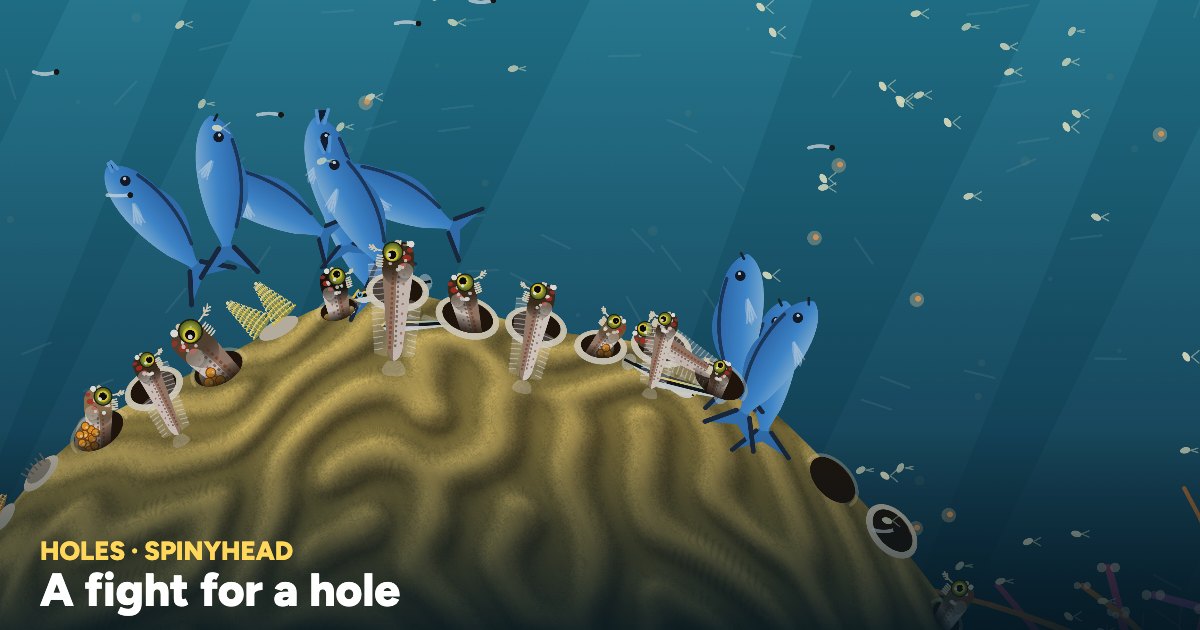
Behavior: Competition for shelter (contest competition over refuge holes)
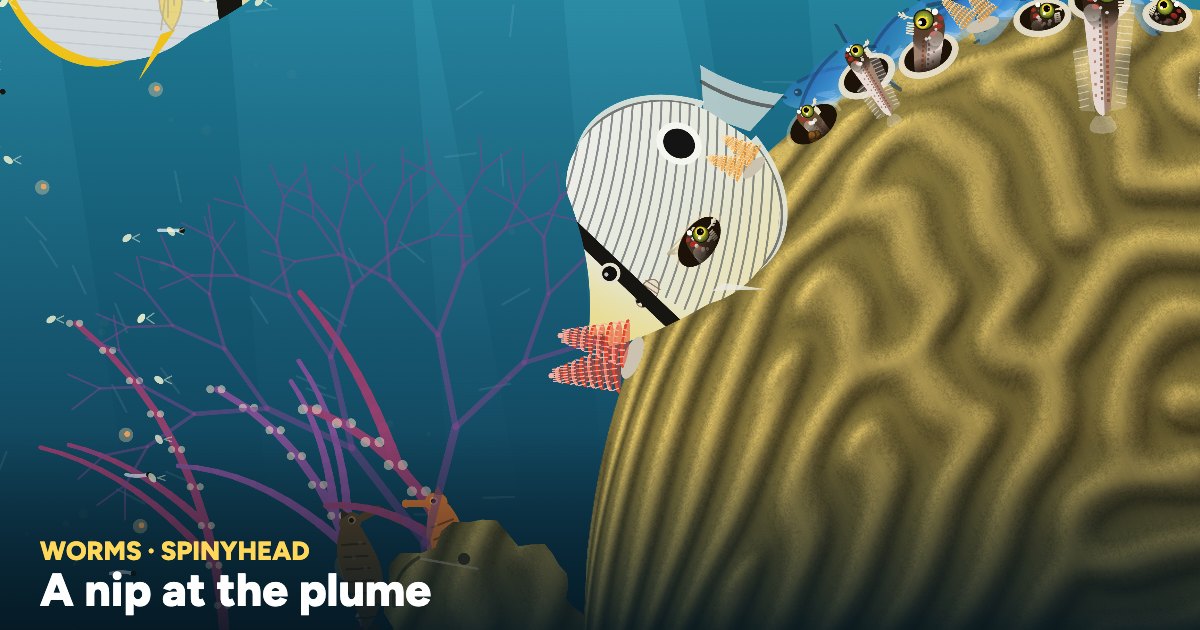
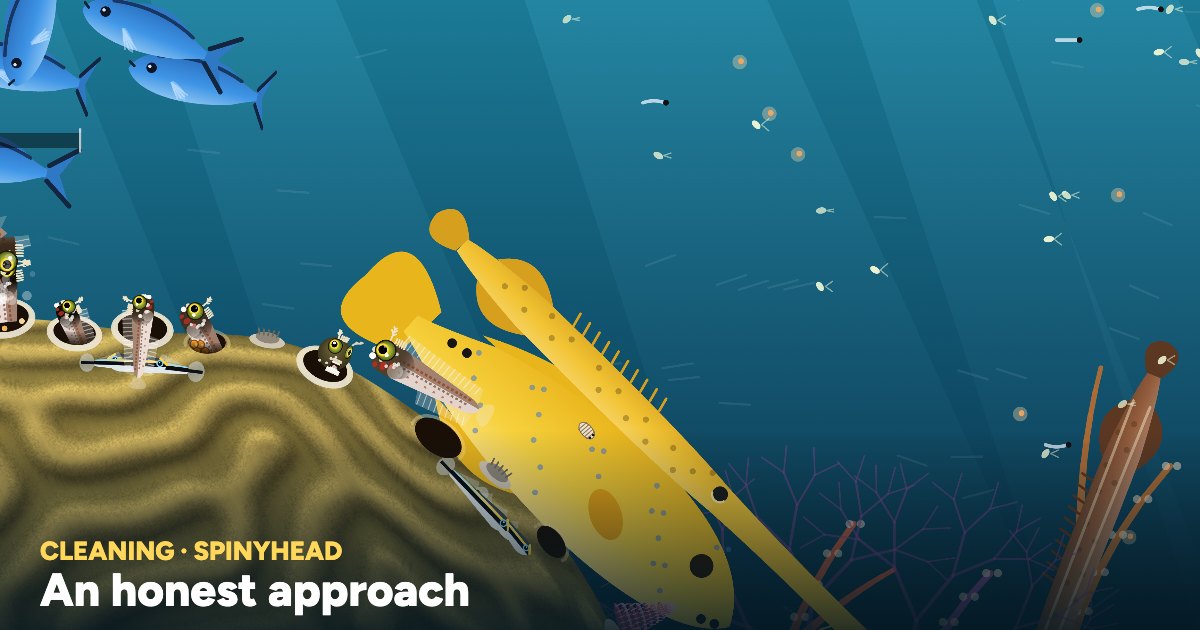
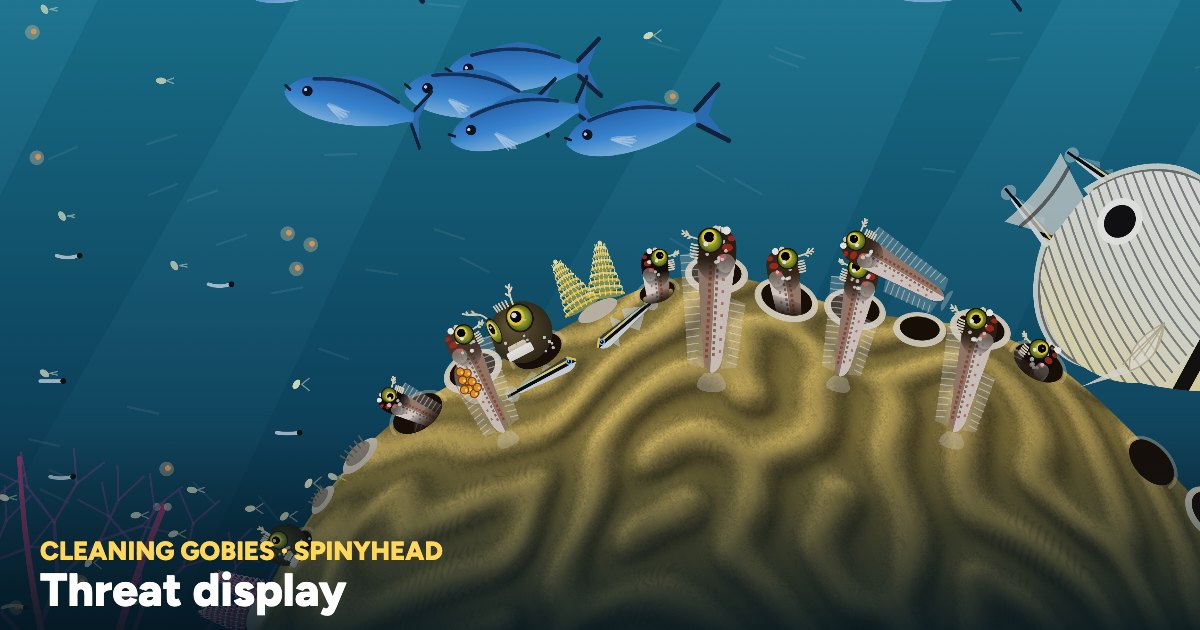
Spinyhead blennies compete for shelter holes: a challenger bites and pulls at the resident to lever it out. Better holes go to bigger, well-fed fish.
Species involved
- spinyhead blenny Acanthemblemaria spinosa resident and challenger contesting shelter holes
About competition for shelter (contest competition over refuge holes)
Many small reef fishes depend on a hole in the reef as a refuge from predators, and a hole of the right size can be scarce. Tube blennies such as the spinyhead blenny live in small holes in dead coral and rock, with only the head poking out. When another blenny wants a hole that is already occupied, it can challenge the resident directly. The notebook describes the challenger biting and pulling at the resident to lever it out. This is interference competition: individuals fight over a limited resource rather than just using it up.
Why it matters
A good hole gives protection from predators and a place to feed from and, for males, to court and guard eggs. Fish that lose contests may end up in poorer holes or exposed, where they are likely to be eaten. Because bigger, well-fed fish tend to win the better holes, body size and condition translate into survival and probably reproductive success. If suitable holes are limited, shelter supply can help set how many blennies a patch of reef supports, and it can shape the size structure of the population. Because blennies are prey for larger fishes, this may also affect the reef food web.
On coral reefs
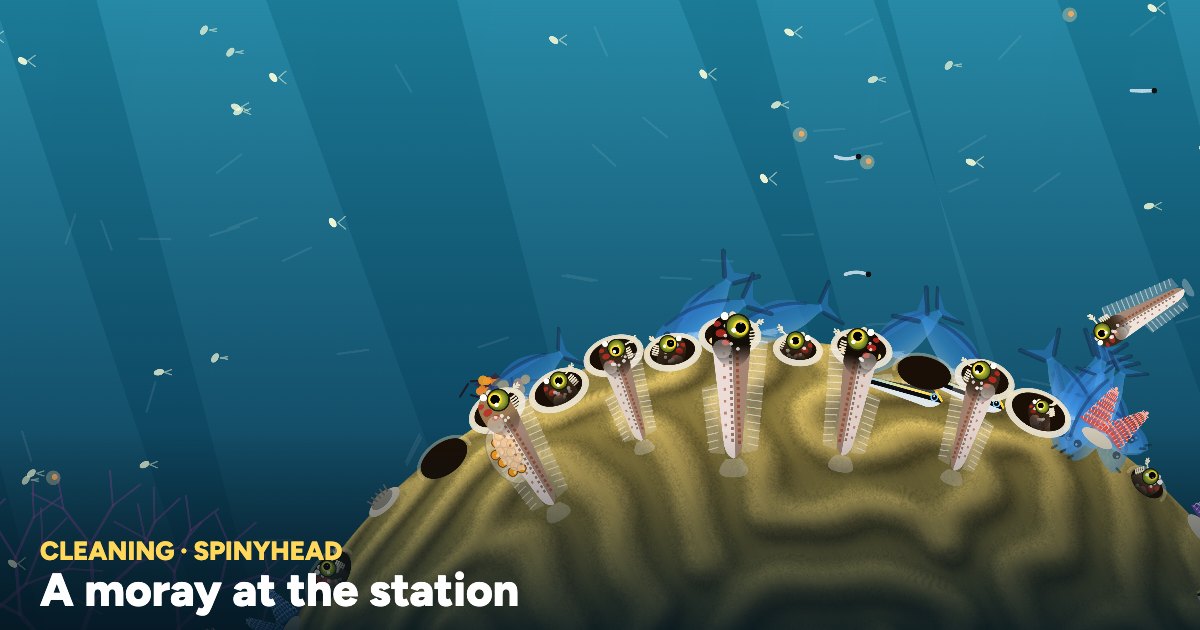
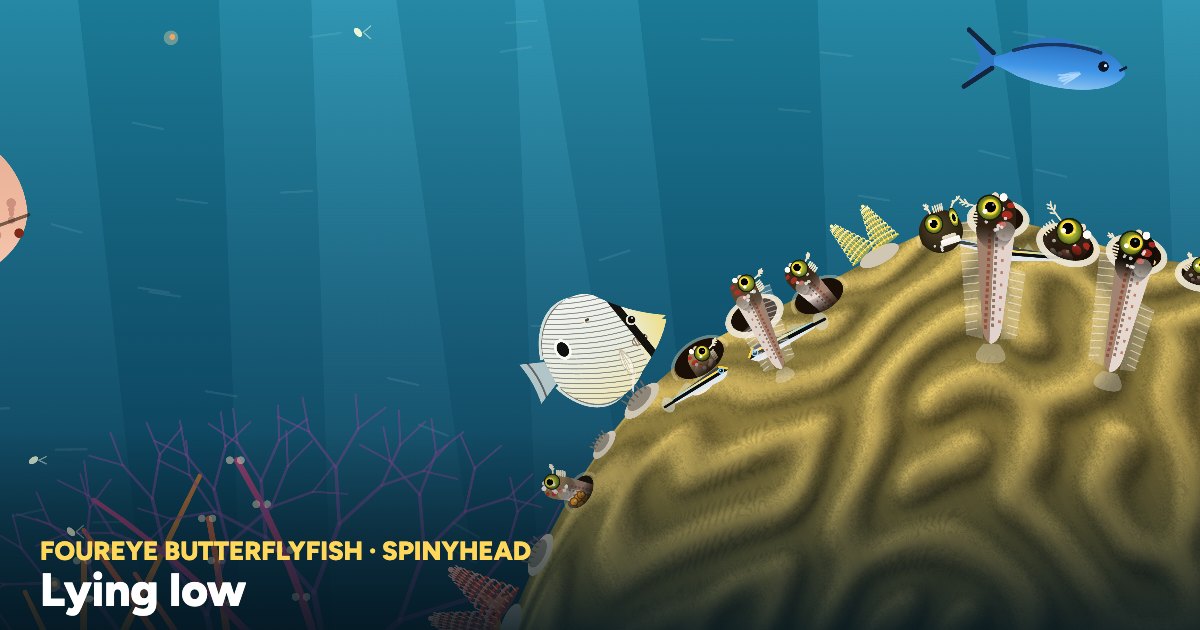
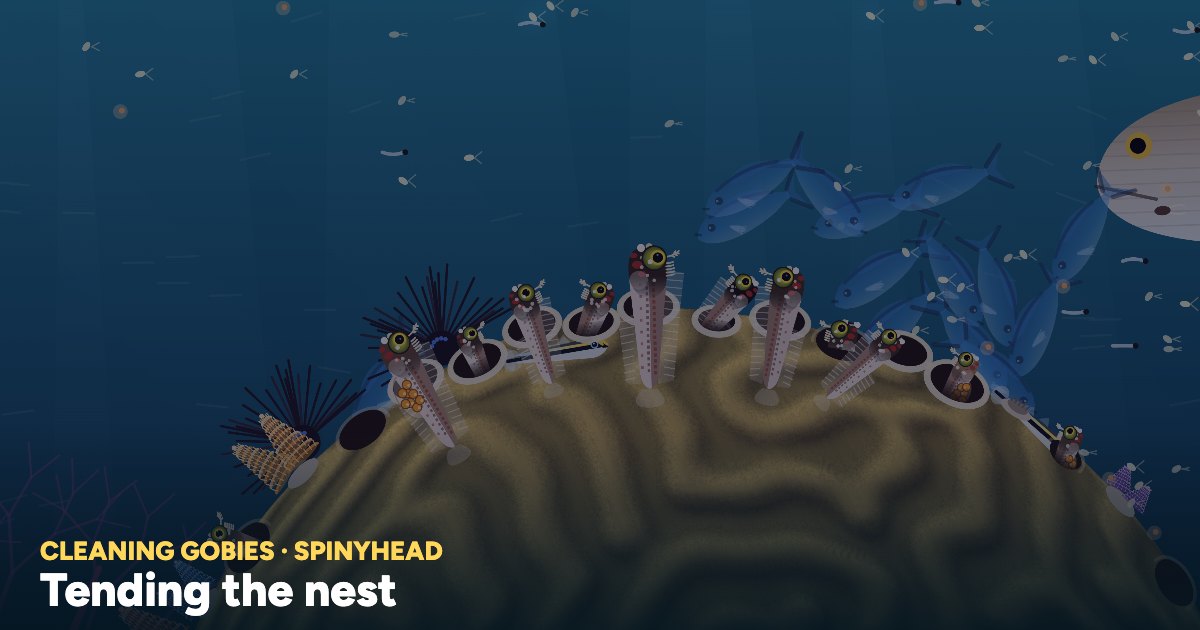
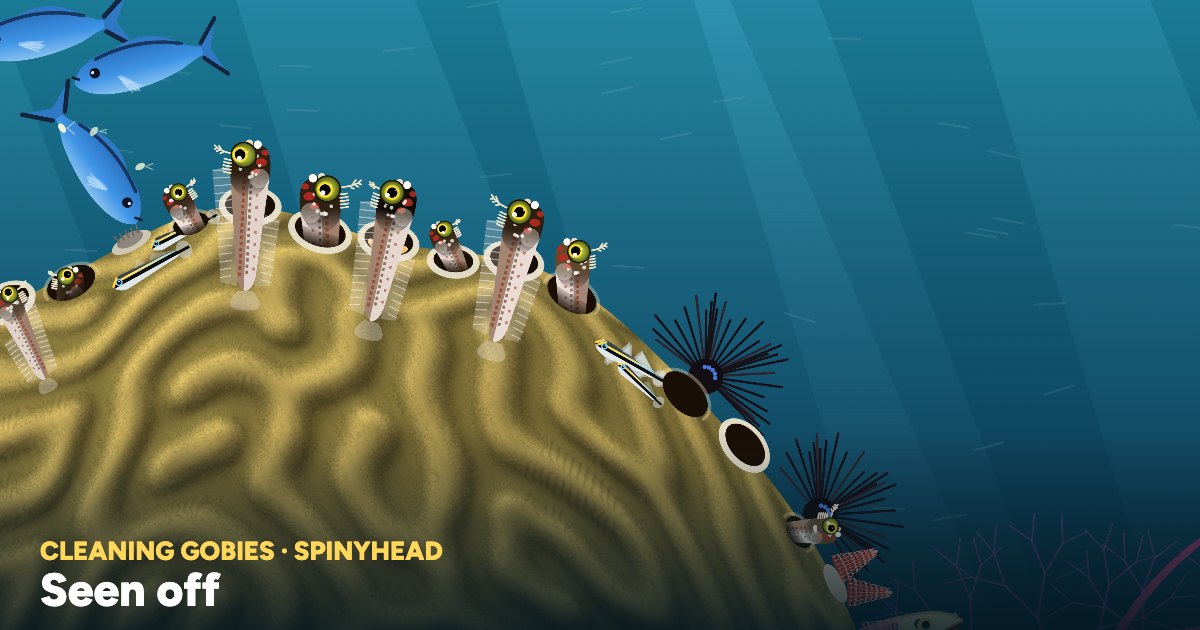
A diver sees spinyhead blennies as small heads with spiny brows poking out of holes in dead coral heads and rock. The holes are often packed closely together. Disputes are quick and easy to miss: one blenny leaves its hole and bites at a neighbour's head, or a resident lunges out to drive off an intruder. Holes that stay empty are often too small or too large for the fish nearby.
Who studied it
Competition for shelter holes in this species was studied experimentally by Buchheim and Hixon, whose 1992 paper in the Journal of Experimental Marine Biology and Ecology (vol. 164, p. 45) is the notebook's source. It is part of a wider body of work, much of it by Mark Hixon and colleagues, on how refuges and predation limit reef fish populations and on how the availability of holes shapes reef fish communities.
Elsewhere in the animal kingdom
Contests over cavities are widespread. Hermit crabs fight over empty shells, and mantis shrimps fight over burrows and cavities. Clownfish compete for anemones, with size deciding rank. Lobsters and octopuses also compete for dens, and many burrowing fishes defend burrows against intruders.
Doubts and open questions
Contest outcomes may depend on body size, on how hard a fish is willing to fight, or on prior residency, and it is not always easy to tell these apart. How strongly shelter, as opposed to larvae arriving from the plankton or predation, limits reef fish numbers varies between places and species.
Related behaviors
- Territoriality Territorial animals defend a whole area and its resources, while here the contest is over one specific refuge.
- Shell fighting in hermit crabs This is a similar contest over a portable shelter rather than a fixed hole in the reef.
- Mate guarding The guard defends a partner, not a physical refuge.
Spinyhead is a free game you play in your browser: you are a spinyhead blenny, a fish about 3 cm long living in a worm hole on a Caribbean coral head. Feed, fight for a better hole, court, raise eggs and dodge predators, while everything around you behaves the way field biologists have seen it behave. Every behavior in the game is backed by a published study or careful observation; there are 71 on these pages, and more in the game’s field notebook waiting to be found.
More holes
Other reef behaviors to discover