 SpinyheadPlay free
The midday rush

Behavior: Traditional mating sites (site-specific, lek-like spawning) with pair and group spawning
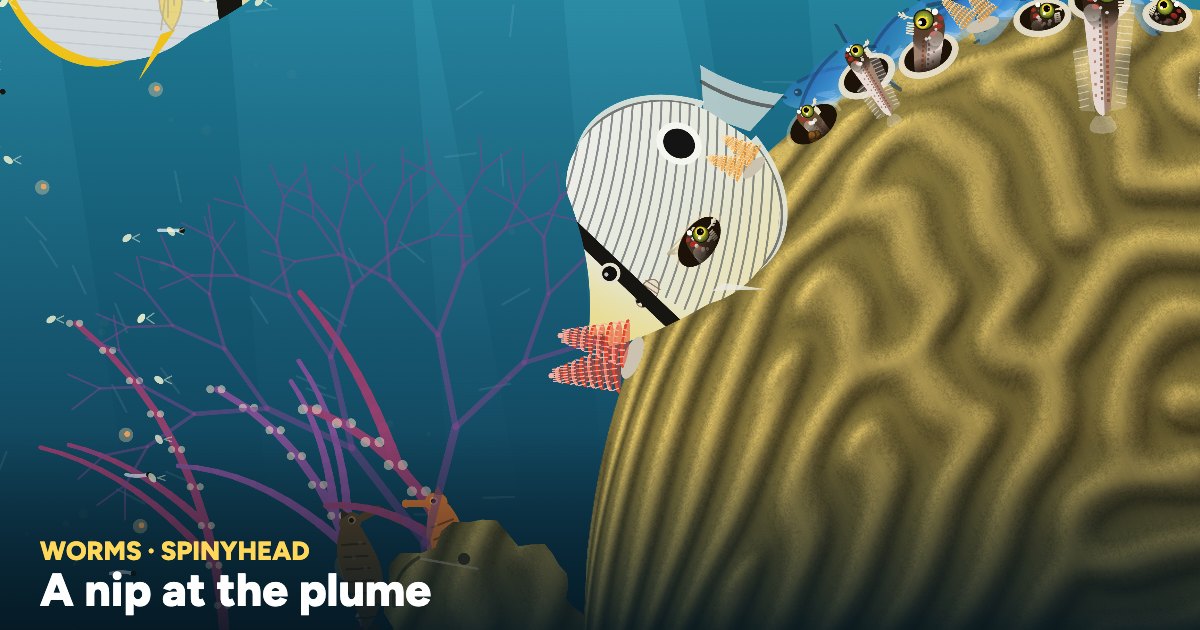
Bluehead wrasses spawn every day, around midday, at the same few sites, used for generations. A big blue-headed male loops over his site courting; groups of yellow females and males rush up together and burst into a milky puff of eggs and sperm. While they spawn they ignore the blennies.
Species involved
- bluehead wrasse Thalassoma bifasciatum spawns daily at fixed traditional sites; males court, females and small males ru
- spinyhead blenny Acanthemblemaria spinosa neighbouring bystander, ignored during spawning
About traditional mating sites (site-specific, lek-like spawning) with pair and group spawning
Many reef fishes release eggs and sperm into open water, and in some the spawning is concentrated at particular spots on the reef. In the bluehead wrasse, spawning takes place at the same few locations day after day. Large, blue-headed terminal-phase males defend or display over these sites and court arriving females. Females also spawn in groups with smaller yellow initial-phase males, which can mate without holding a site. At the climax, fish rush upward together and release a cloud of eggs and sperm. The eggs are pelagic and drift away with the current.
Why it matters
Using fixed sites concentrates females and males where mates are easy to find, so mating is efficient. For terminal-phase males, holding a good site is a route to many matings, which makes male reproductive success very uneven. Smaller males gain fertilisations by joining group spawnings or by sneaking. Releasing eggs at the reef edge in strong current carries them off the reef, which probably lowers the risk of egg predation, though that benefit is an interpretation. The strong site fidelity means a site's use is a property of the local population's history, not just of the habitat. Spawning is also risky because it takes fish into open water, and it is a time of intense, conspicuous activity.
On coral reefs
A diver at the right time of day, usually around midday or the afternoon, sees a large blue-headed male cruising or looping over a patch of reef edge. Yellow fish gather, and a pair or group suddenly dashes upward a short way into the water and bursts into a milky puff, then dives back to the reef. The same spot is used repeatedly, and other reef residents such as blennies carry on largely undisturbed.
Who studied it
Robert Warner studied bluehead wrasse mating systems on Caribbean reefs for many years. His 1988 paper in Nature (335:719), the notebook's source, reported that mating-site preferences are traditional. As I recall, sites stayed in use even after the resident fish were replaced by others, so the sites were not simply the best habitat chosen afresh by each fish. This was an early demonstration of a socially maintained tradition in a fish.
Elsewhere in the animal kingdom
Mating at fixed, traditional arenas is best known from lekking birds such as sage grouse and ruffs, and from mammals such as Uganda kob. Among fishes, many species use fixed spawning sites or aggregations to which they return year after year, such as Nassau grouper on Caribbean reefs. Cichlids in African lakes also use display arenas.
Doubts and open questions
The main question is whether site use reflects tradition passed between generations of fish or independent assessment of site quality, such as current, position on the reef or the number of females visiting. The evidence suggests both matter, and the weight given to each is still discussed.
Related behaviors
- lek mating Males gather at display arenas that offer no resources except mating opportunities, whereas traditional sites in wrasses are specific places on the reef that are used by custom.
- spawning aggregation Large numbers of fish gather, often seasonally, to spawn, whereas the wrasse behaviour is a daily event at small fixed sites.
- sex change (protogynous hermaphroditism) Individuals change from female to male, which is linked to the wrasse mating system but is a separate phenomenon from site use.
- sneaker male mating Small males steal fertilisations from large males, whereas traditional site use describes where spawning happens.
Spinyhead is a free game you play in your browser: you are a spinyhead blenny, a fish about 3 cm long living in a worm hole on a Caribbean coral head. Feed, fight for a better hole, court, raise eggs and dodge predators, while everything around you behaves the way field biologists have seen it behave. Every behavior in the game is backed by a published study or careful observation; there are 71 on these pages, and more in the game’s field notebook waiting to be found.
More spawning wrasses

Other reef behaviors to discover