SpinyheadPlay free
Egg thieves
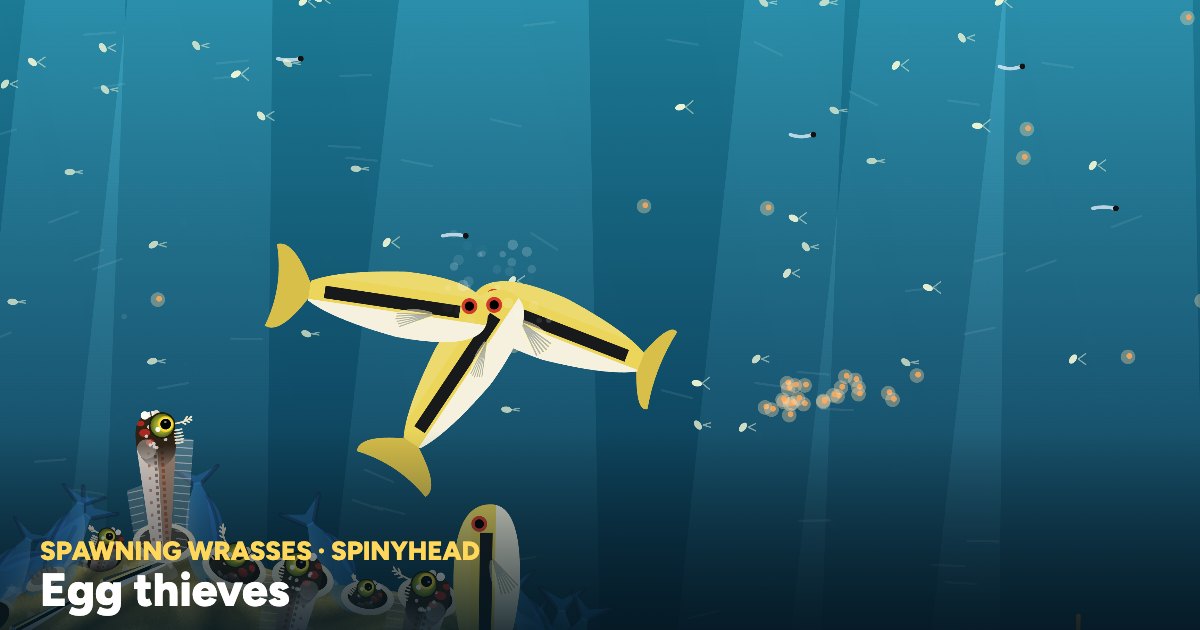
Behavior: Egg predation at spawning sites (heterospecific egg-eating, or oophagy, by planktivores)
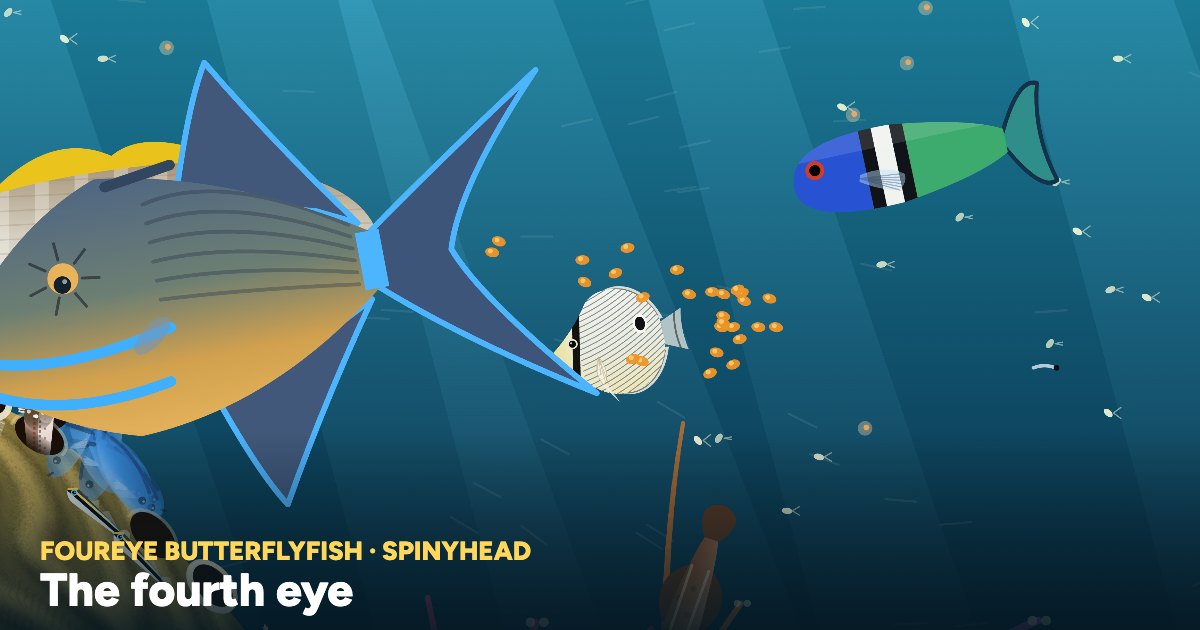
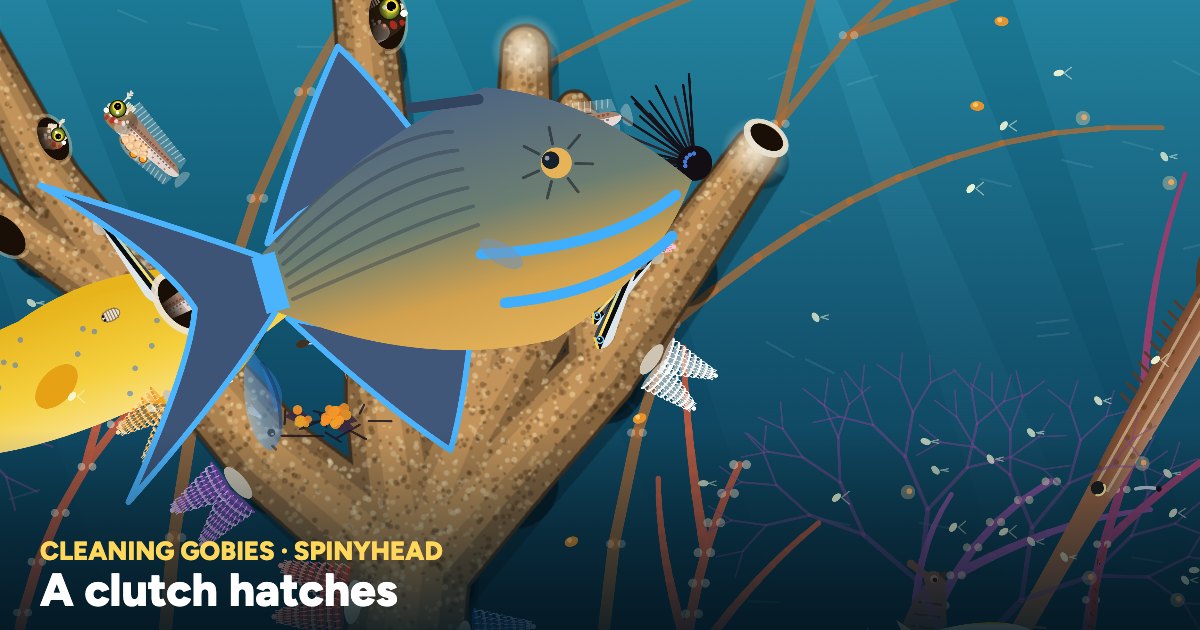
Freshly spawned eggs are a rich, easy meal, and planktivores crowd in to eat them.
Species involved
- bluehead wrasse Thalassoma bifasciatum pelagic spawner whose eggs are eaten
- blue chromis Chromis cyanea planktivore that can feed on drifting eggs
About egg predation at spawning sites (heterospecific egg-eating, or oophagy, by planktivores)
Many reef fishes shed their eggs freely into open water rather than guarding them on the bottom. Newly released eggs are small, nutritious, undefended and drift in the water column, so they are effectively a pulse of plankton. Fishes that normally feed on plankton gather near spawning groups and eat the eggs, which are sometimes still visible as a cloud right after a spawning rush. The behaviour is predation on a very early life stage, taken opportunistically by animals that are not the parents.
Why it matters
For the spawners, egg predation can remove a large share of a spawning event's output, so it acts as a selective pressure on when and where they spawn. Spawning at the reef edge, where currents carry eggs quickly offshore, away from the crowd of egg-eaters, is one proposed response. For the egg-eaters it is a cheap, concentrated meal. In the wider community it moves energy from benthic-spawning adults to planktivores and into the plankton, and it is one reason much of the reef's reproductive output never becomes larvae.
On coral reefs
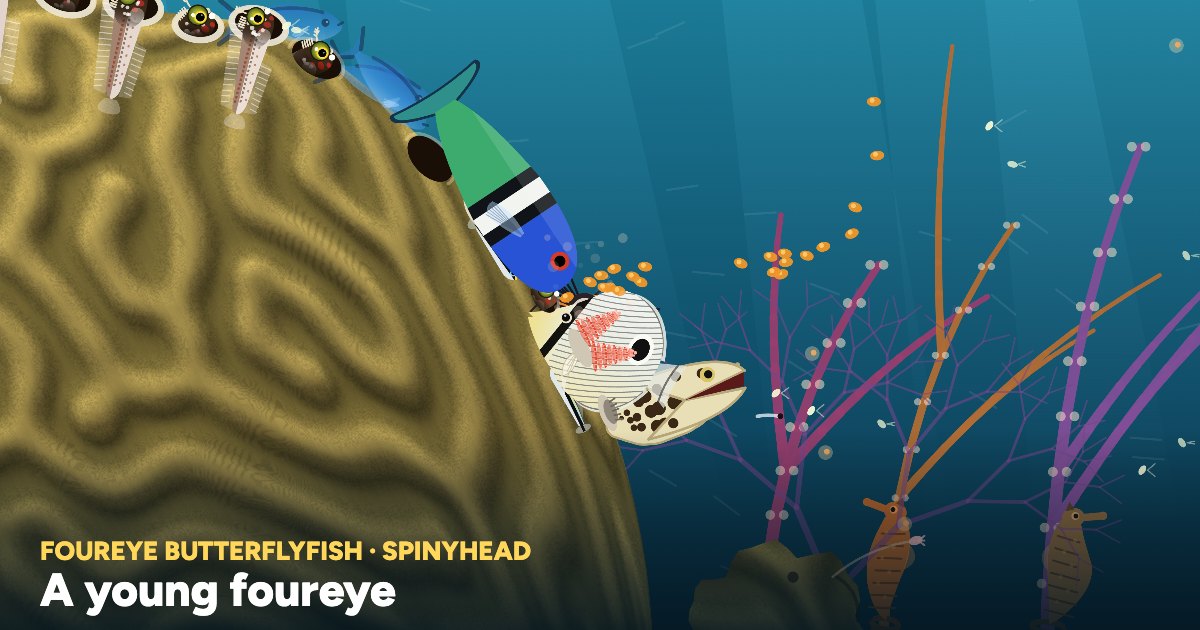
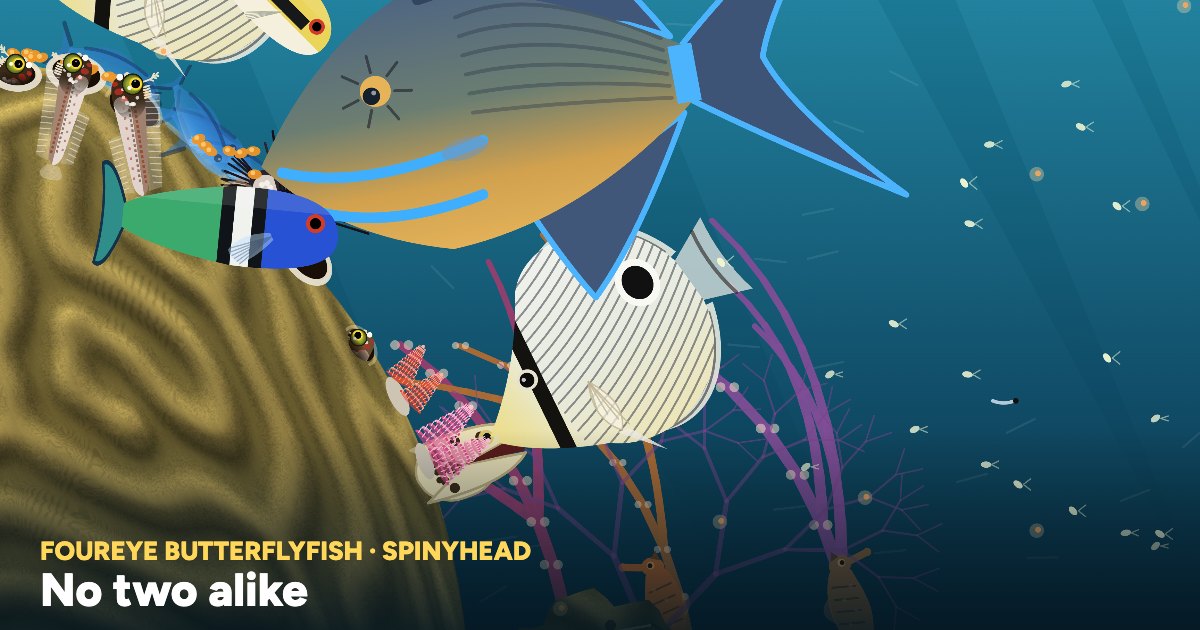
A diver watching bluehead wrasse at a spawning site sees a pair or a small group rush upward and release a puff of gametes. Planktivores that are hovering nearby, such as chromis, may dart into the cloud and feed on it. Spawning sites are often on the reef edge or a projecting point, and spawning takes place at particular times of day.
Who studied it
The notebook cites Robertson and Hoffman 1977 (Zeitschrift fuer Tierpsychologie), a study of female mate choice and predation in the mating systems of tropical wrasses and their relatives. It linked the choice of spawning site to predation risk to the eggs. Later long-term field work on bluehead wrasse, notably by Robert Warner and colleagues, examined how females choose spawning sites and how egg predation and currents affect egg survival.
Elsewhere in the animal kingdom
Egg predation at spawning aggregations is widespread. In streams, trout, suckers and minnows commonly eat the eggs of spawning salmonids and other fishes. At mass spawning aggregations of reef fishes, such as large snappers, plankton-feeding sharks and other fishes are known to feed on the released eggs. Many other marine animals, including some crustaceans, also eat drifting eggs.
Doubts and open questions
How strongly egg predation shapes the spawning behaviour of wrasses is still discussed. Later work suggested that females often use traditional spawning sites rather than flexibly choosing the safest spot, so predation may be only one of several influences. The actual loss to egg predators is hard to measure because eggs disperse so quickly.
Related behaviors
- filial cannibalism Parents eat their own eggs or young, usually in guarded nests, rather than other species eating them.
- sneak spawning Smaller or non-territorial males dart in to release sperm at someone else's spawning, instead of eating the eggs.
- nest raiding Egg-eaters attack guarded benthic nests, whereas here the eggs are drifting in open water.
- predator satiation Mass synchronous spawning that swamps predators so more offspring survive, one possible counter to egg predation.
Spinyhead is a free game you play in your browser: you are a spinyhead blenny, a fish about 3 cm long living in a worm hole on a Caribbean coral head. Feed, fight for a better hole, court, raise eggs and dodge predators, while everything around you behaves the way field biologists have seen it behave. Every behavior in the game is backed by a published study or careful observation; there are 71 on these pages, and more in the game’s field notebook waiting to be found.
More spawning wrasses
Other reef behaviors to discover