SpinyheadPlay free
Planktonic copepods

Planktonic copepods are tiny free-living crustaceans, mostly about 0.5 to 2 mm long, that drift and swim in the water over the reef. They are the most abundant animals in the plankton and the main food of many small reef fishes, including the spinyhead blenny. Most of those that blennies eat are calanoid copepods, which carry long first antennae lined with sensory hairs that detect the water movement of an approaching predator.
How to recognize it
- a speck in the water, often with a jerky, hopping swim
- teardrop-shaped body
- long first antennae, held out to the sides
- often clear or faintly tinted, sometimes with a red or blue tinge
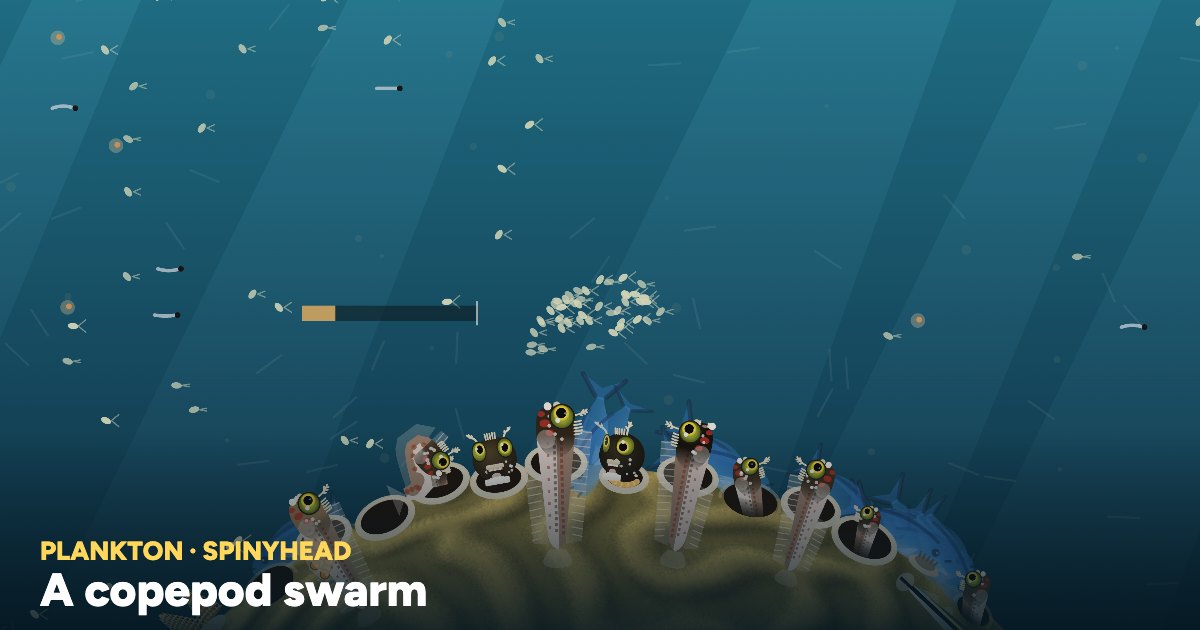
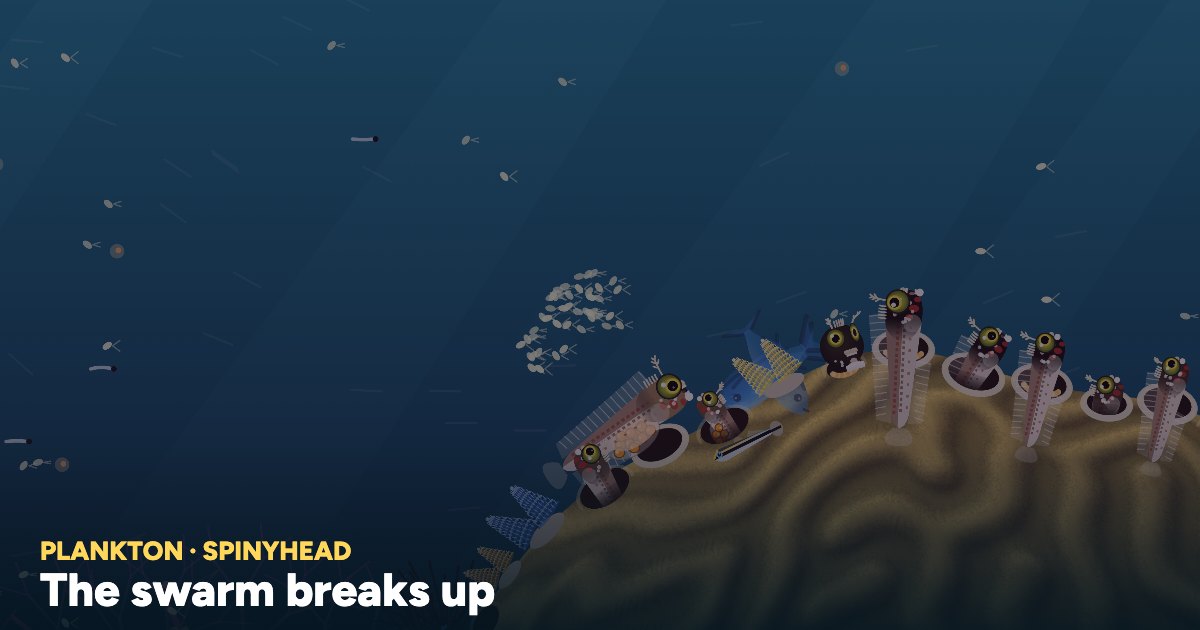
- gathers in dense swarms close to coral by day
| Size | Mostly about 0.5 to 2 mm long. |
|---|---|
| Range | Every ocean; on Caribbean reefs both open-water species and reef-associated species that shelter near the bottom by day. |
| Habitat | The water column over and around the reef; some reef species swarm close to coral and in its shelter by day and spread into the water at night. |
| Diet | Mostly phytoplankton and small particles filtered or picked from the water; some species also eat smaller animals. |
Life and behavior
Copepods hatch as nauplius larvae and pass through several molts before becoming adults. Many species migrate vertically each day, and many escape predators with sudden jumps of many body lengths in a few thousandths of a second. On reefs they are eaten by planktivorous fishes, corals, tube worms and many other filter feeders.
Its family: Copepods (Copepoda)
Copepods are a large group of small crustaceans with thousands of species, some free-living in the plankton or on the bottom, and others parasitic on fishes and invertebrates. Free-living copepods are among the most numerous animals on Earth and a key link between microscopic algae and fish.
Similar species
- parasitic copepods Copepoda Live attached to the skin, gills or mouth of fishes rather than swimming free in the plankton.